Visual Learning Normal Geometry Worksheets
3 filtered results
-
From - To
Welcome to our collection of Visual Learning Normal Geometry Worksheets, designed to make geometry concepts engaging and accessible for young learners. These thoughtfully crafted worksheets utilize vibrant visuals and interactive elements to enhance students' understanding of shapes, angles, and spatial relationships. Ideal for early grade classrooms, our resources foster critical thinking and problem-solving skills while catering to visual learners. Whether used for independent practice, group activities, or homeschooling, our worksheets provide a fun and effective way to reinforce geometry concepts. Explore our variety of templates to inspire a love for geometry in your students today!
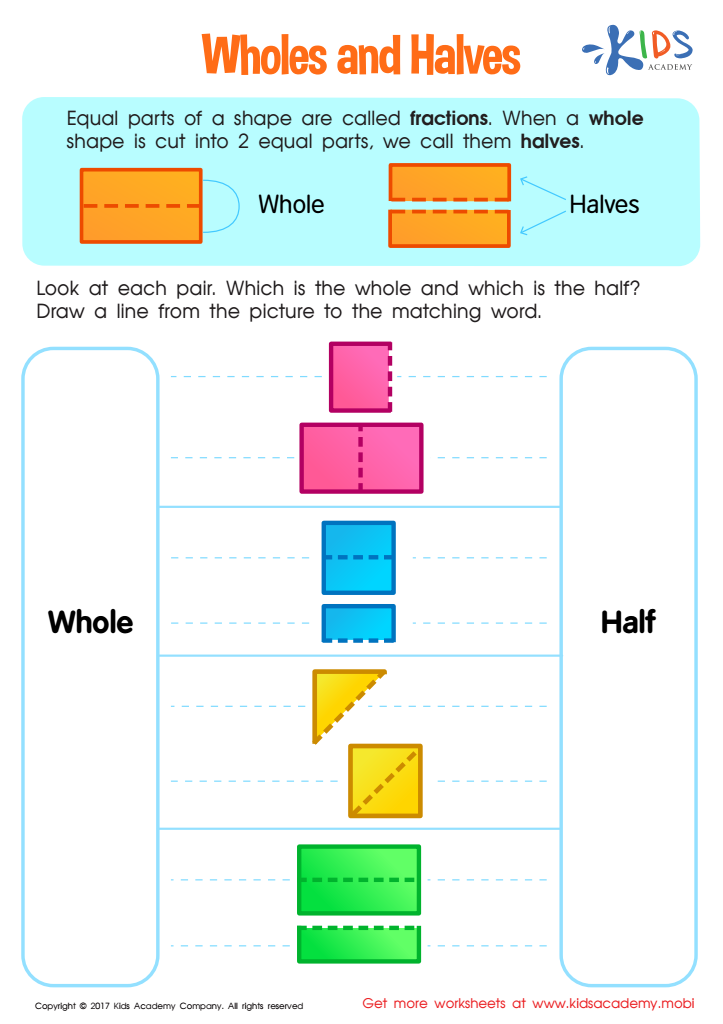
Wholes and Halves Worksheet
 Assign to My Students











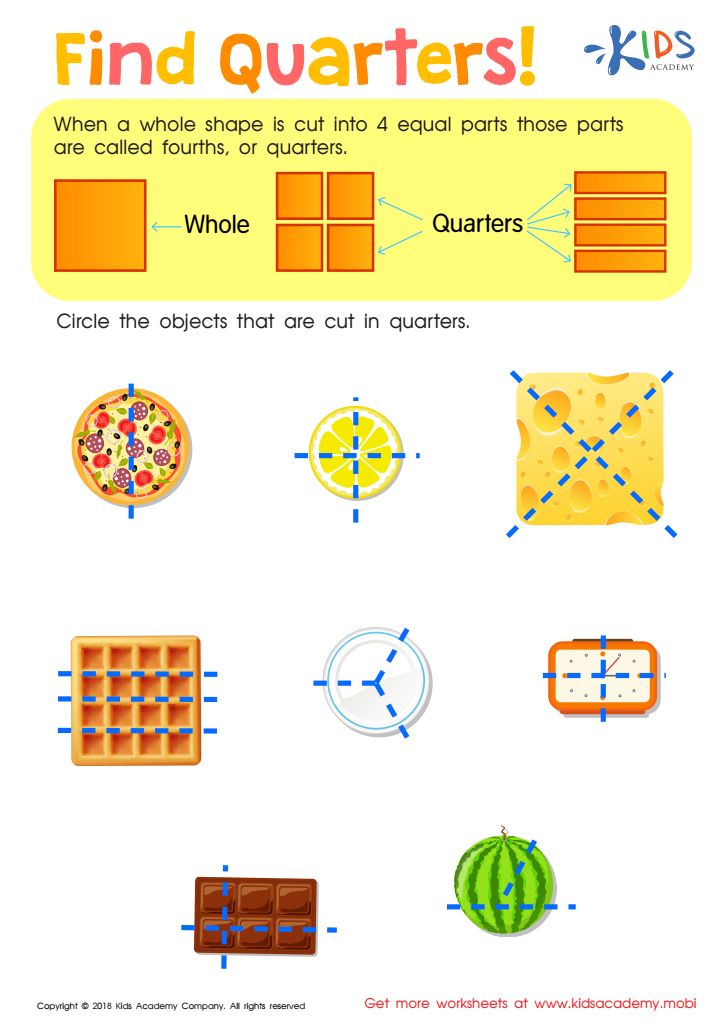
Find Quarters Worksheet
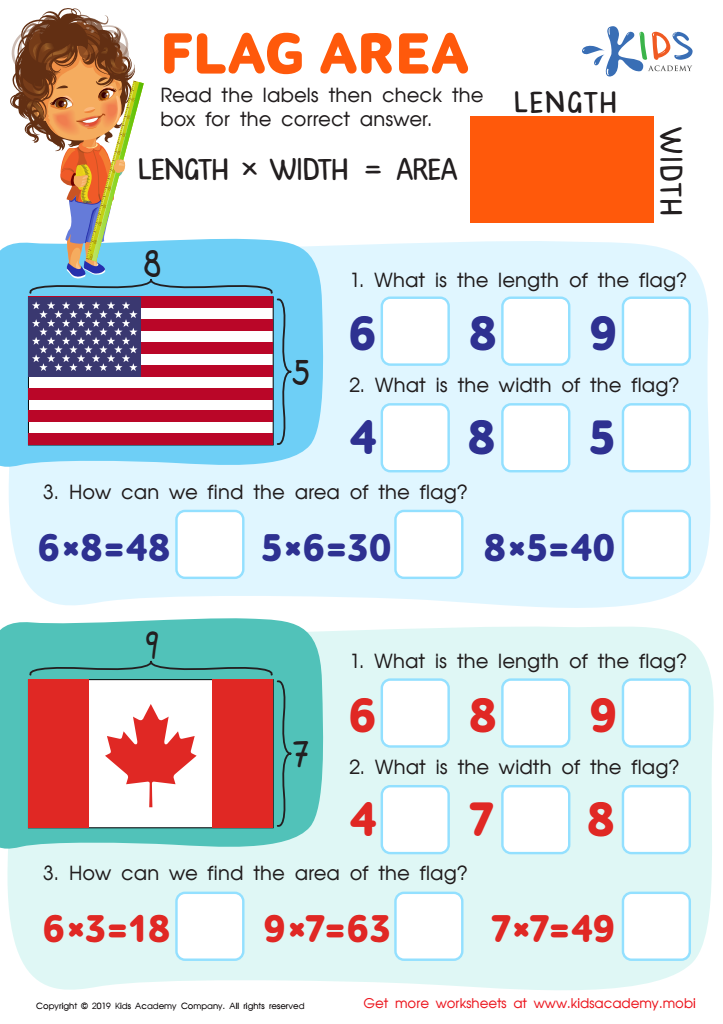
Flag Area Worksheet








Parents and teachers should prioritize visual learning in geometry because it fosters deeper understanding and helps students build critical spatial reasoning skills. Visual learning engages multiple senses, making abstract concepts more tangible. This multi-dimensional approach is essential in geometry, where students often encounter shapes, measurements, and spatial relationships. By using diagrams, models, and other visual aids, students can better grasp complex ideas, leading to improved retention and recall.
Moreover, visual learning caters to various learning styles, particularly beneficial for visual-spatial learners who may struggle with traditional, text-heavy instruction. Incorporating visual elements supports differentiated instruction, allowing all students to engage meaningfully with the material.
Additionally, understanding geometry visually prepares students for real-world applications, from architecture to engineering, enhancing their problem-solving skills. It also encourages creativity, as students employ innovative strategies to represent geometrical concepts.
By emphasizing visual learning in geometry, parents and teachers can nurture a positive attitude towards math, fostering curiosity and a love for learning. This approach not only strengthens foundational skills in geometry but also lays the groundwork for future academic success across disciplines, making it a crucial focus in early education.








