Enhancing Counting Skills Normal Numbers Worksheets
5 filtered results
-
From - To
Enhance your child's counting skills with our engaging Normal Numbers Worksheets! Designed for early learners, these printable worksheets make mastering number recognition and counting fun and interactive. With a variety of exercises, children can practice counting objects, matching numbers, and identifying sequential patterns — all while building a solid foundation in mathematics. Our worksheets cater to different learning styles, promoting independent learning and reinforcing essential counting concepts. Ideal for classroom or home use, these resources empower children to develop confidence in their abilities. Download the worksheets today and watch your young learners thrive as they embark on their number learning journey!
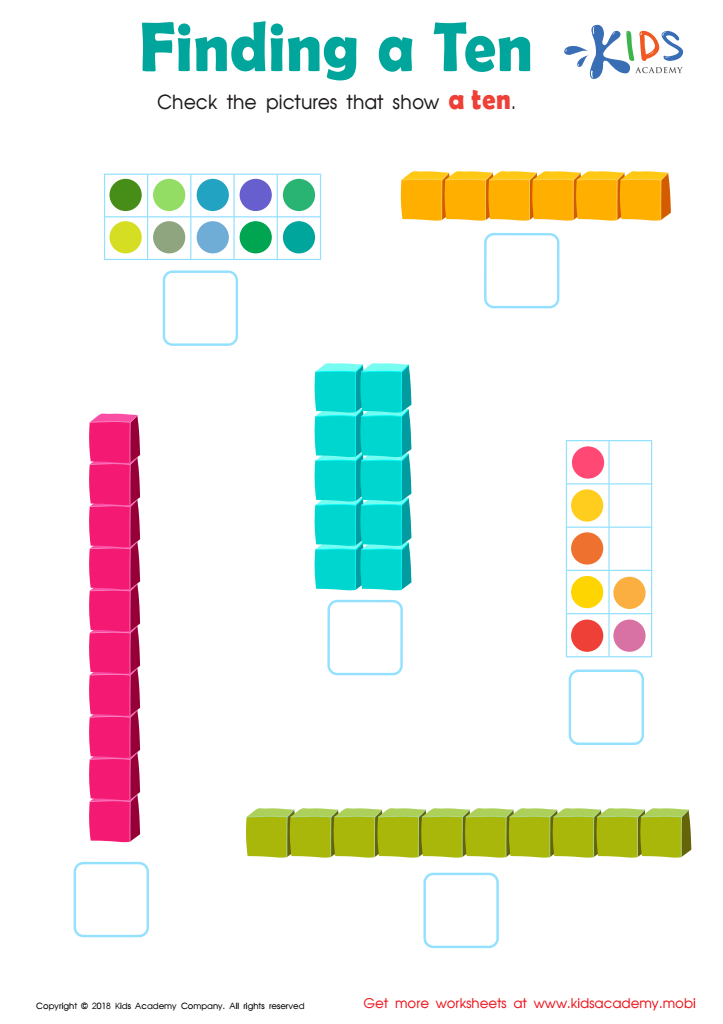
Finding a Ten Worksheet
 Assign to My Students
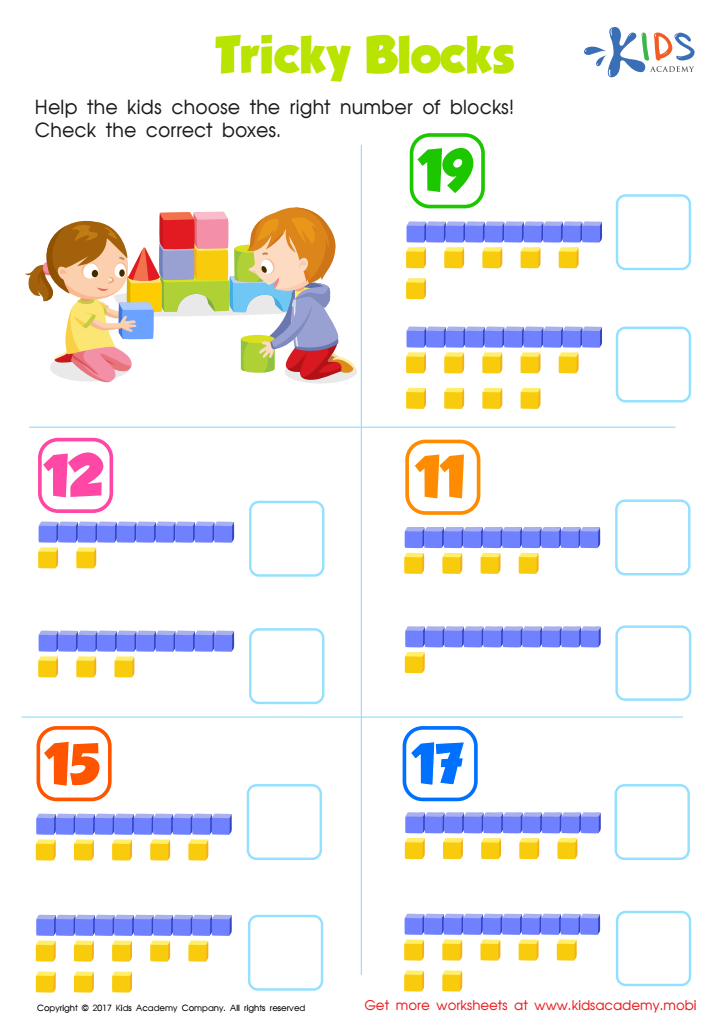
Tricky Blocks Worksheet
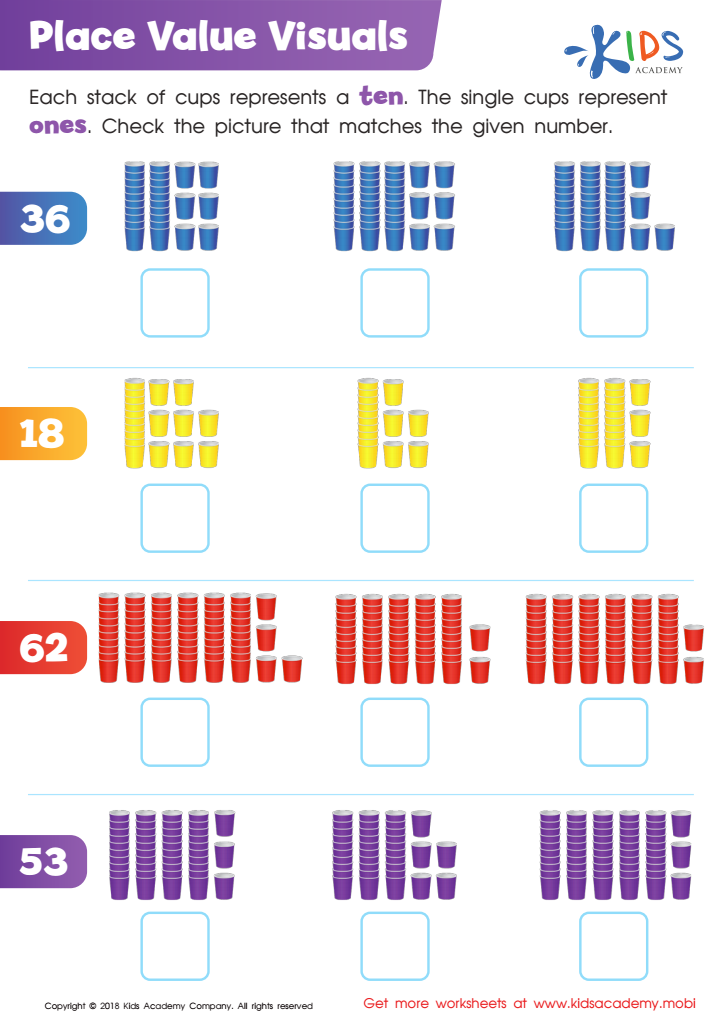
Place Value Visuals Worksheet
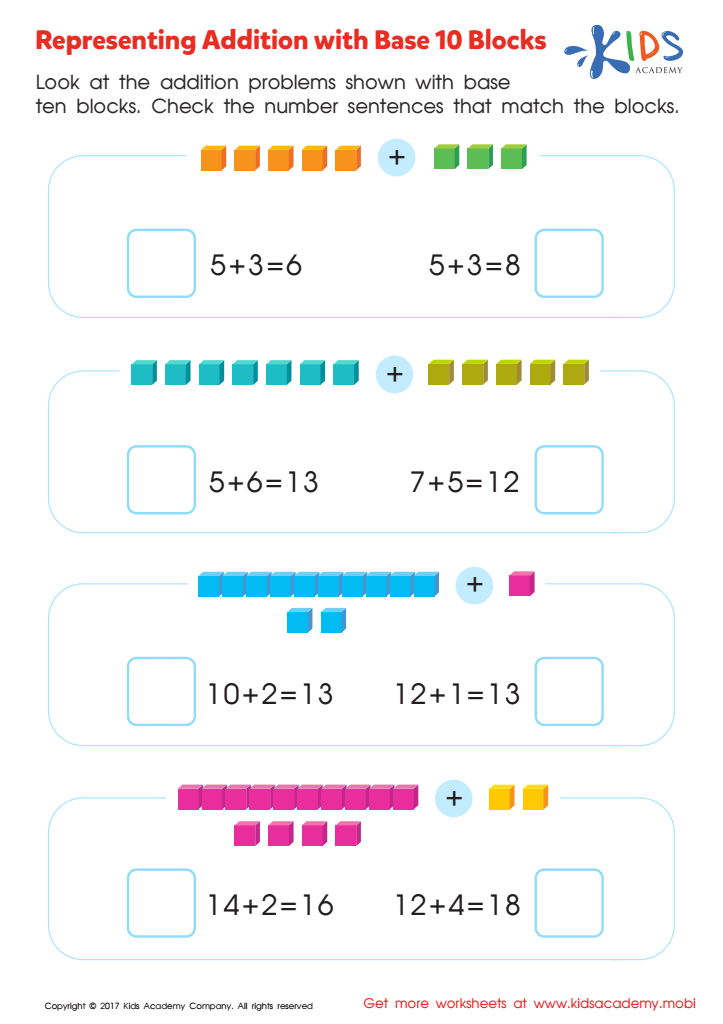
Representing Addition with Base 10 Blocks Worksheet
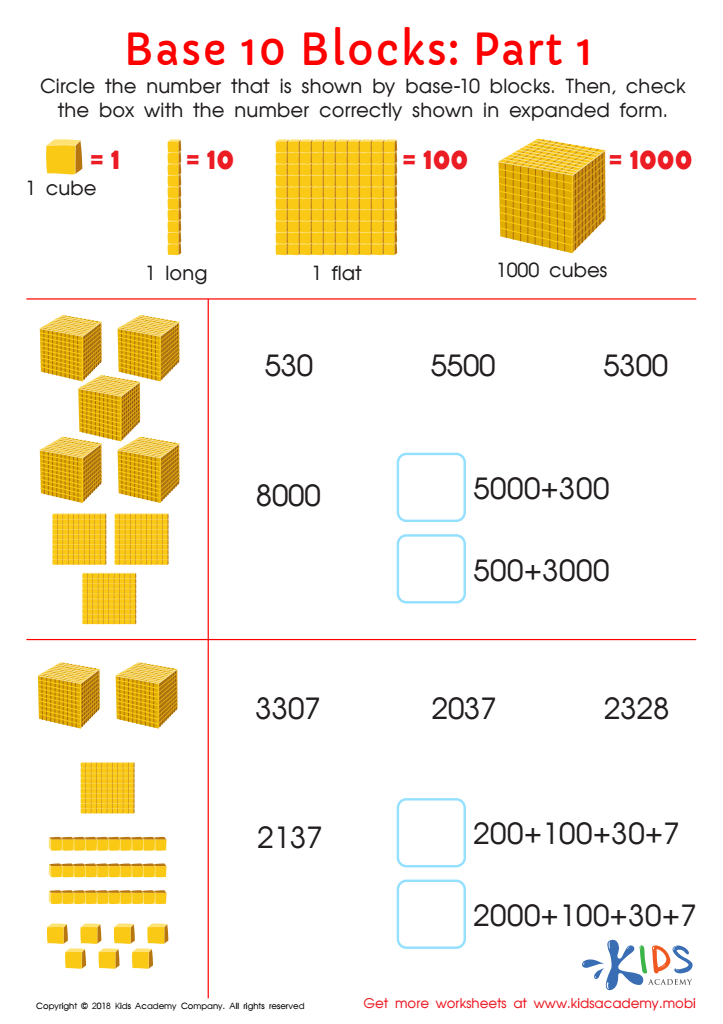
Base 10 Blocks Worksheet: Part 1








Enhancing counting skills with normal numbers is vital for early childhood development, and both parents and teachers play a crucial role in this process. First, counting forms the foundation of mathematics, and a strong grasp of counting empowers children to tackle more complex mathematical concepts later on. Engaging with counting activities fosters critical thinking and problem-solving skills, which are essential for academic success.
Moreover, counting helps children develop number sense, facilitating their understanding of quantities, comparisons, and patterns. This foundational knowledge enhances their confidence and enjoyment in math activities, paving the way for a positive attitude toward learning.
Additionally, counting is not only about academic growth; it also enhances cognitive and motor skills. Activities such as counting objects, songs, or games encourage interaction, language development, and social skills through collaborative play. For parents, incorporating counting into daily routines—whether during grocery shopping or cooking—creates meaningful learning experiences.
Finally, addressing counting skills early in life helps identify potential learning challenges. Early intervention is key to providing appropriate support, ensuring that every child has the opportunity to succeed. Thus, enhancing counting skills must be a shared commitment among parents and educators for children’s holistic growth and development.








