Comparing lengths Normal Math Worksheets
4 filtered results
-
From - To
Discover our engaging "Comparing Lengths Normal Math Worksheets" tailored for early learners! These worksheets help children practice comparing, measuring, and understanding lengths through fun activities and colorful visuals. Students will learn essential skills while developing their critical thinking abilities as they analyze different objects. The interactive format keeps young minds engaged, making math enjoyable! Ideal for classroom use or homework, our worksheets cater to various skill levels, ensuring each child progresses at their own pace. Download and print these resources easily to support your teaching and help your students build a strong foundation in math. Start their learning journey today!
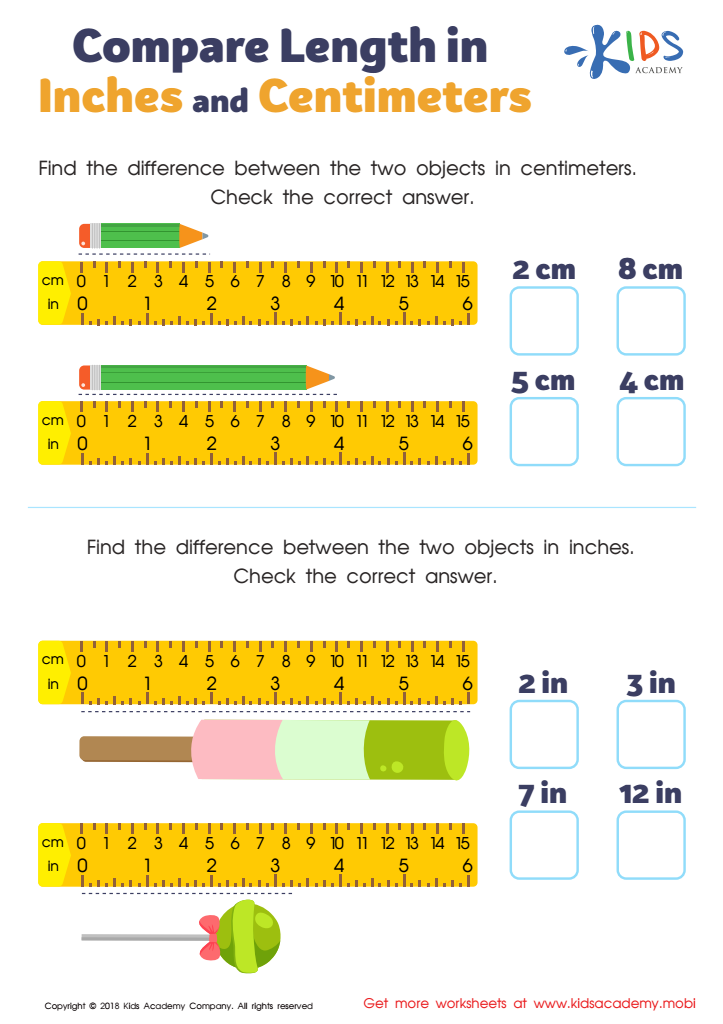
Compare Length in Inches and Centimeters Worksheet
 Assign to My Students
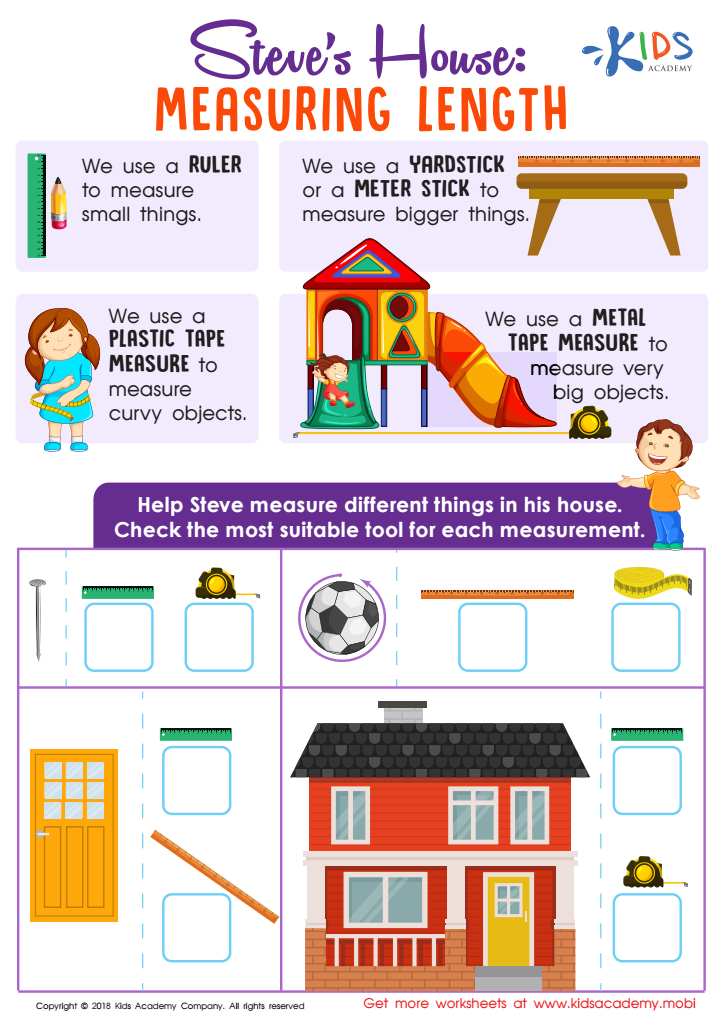
Steve's House: Measuring Length Worksheet
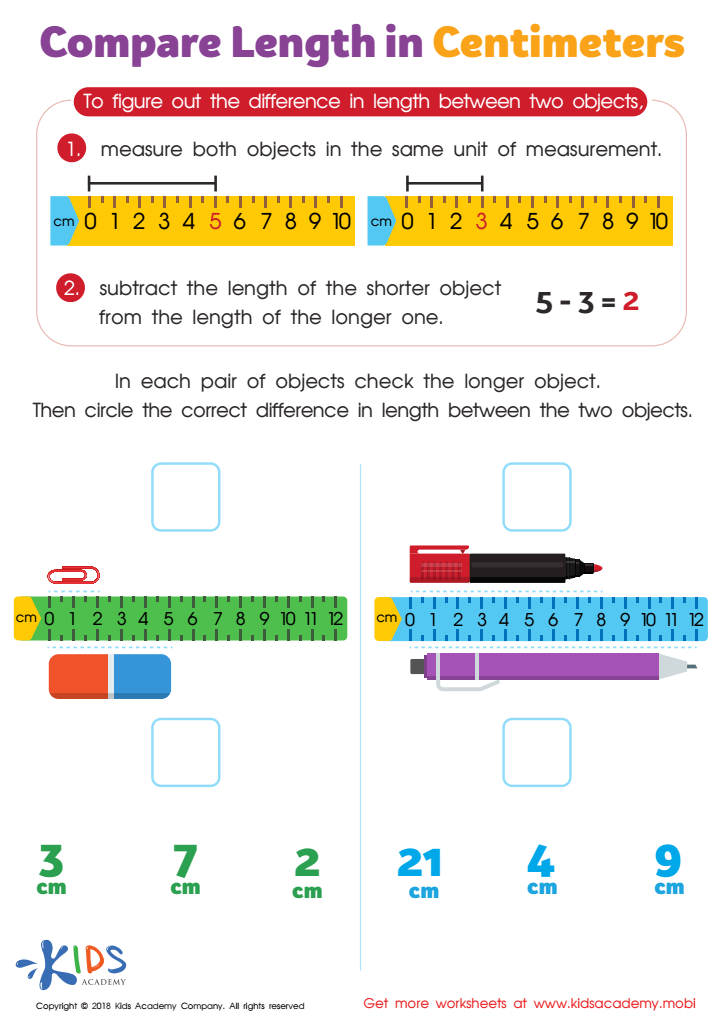
Compare Length in Centimeters Worksheet
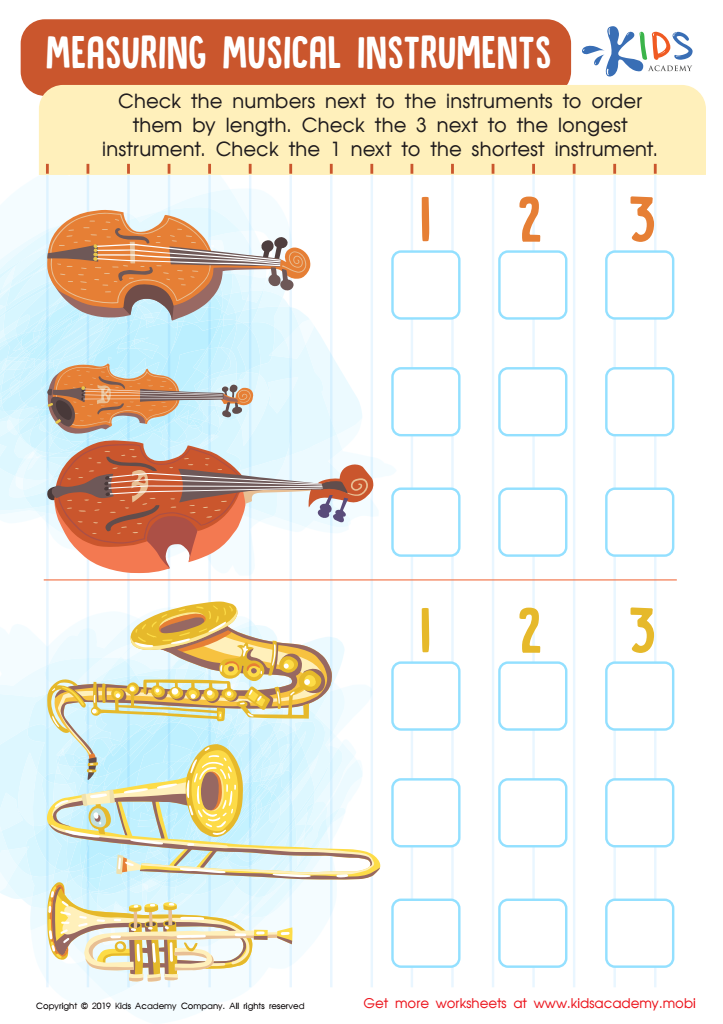
Measuring Musical Instruments Worksheet


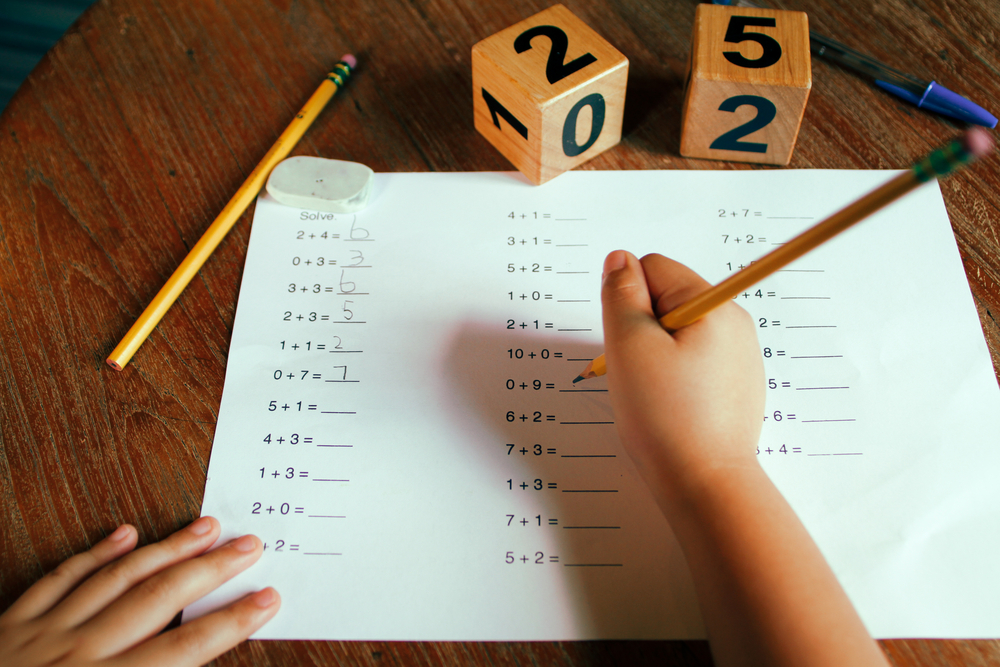





Comparing lengths is a fundamental concept in early math education that holds significant importance for both parents and teachers. Understanding how to measure and compare lengths helps children develop critical thinking skills and spatial awareness. It lays the groundwork for more advanced mathematical concepts, such as addition, subtraction, and measurement, which will be encountered in later grades.
From a practical perspective, learning to compare lengths empowers children to make decisions in everyday life. For instance, when choosing between two items, knowing which one is longer or shorter helps them understand size differences in real-world contexts, such as clothing, toys, and distance.
Furthermore, this skill fosters cooperation and communication. For example, children often work together to solve measurement problems, promoting teamwork and collaborative learning.
Teachers can use engaging activities—such as measuring classroom objects or comparing heights with peers—to make learning enjoyable, while parents can reinforce these concepts through everyday experiences. When involved in this area of learning, families support their children's mathematical development and inspire a lifelong interest in problem-solving. By prioritizing the comparison of lengths, parents and teachers play a crucial role in building a strong foundation for children's future academic success.








