Pattern recognition Normal Math Worksheets
9 filtered results
-
From - To
Enhance your student’s math skills with our engaging Pattern Recognition Normal Math Worksheets! Designed for early learners, these worksheets help children identify and complete patterns using shapes, numbers, and colors. Through fun and interactive activities, kids will develop critical thinking and boost their problem-solving abilities. Perfect for teachers and parents, our high-quality worksheets align with educational standards and are easy to incorporate into any lesson plan or at-home practice. With Kids Academy's resources, mastering pattern recognition becomes an enjoyable experience, laying a strong foundation for future math success. Download and print now to get started!
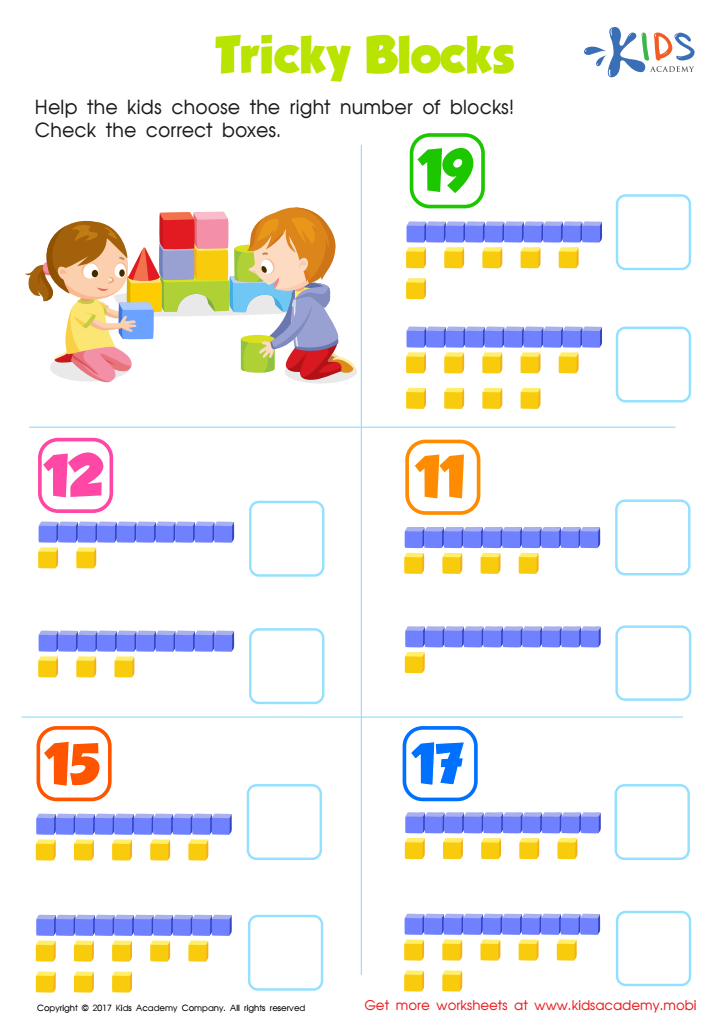
Tricky Blocks Worksheet
 Assign to My Students
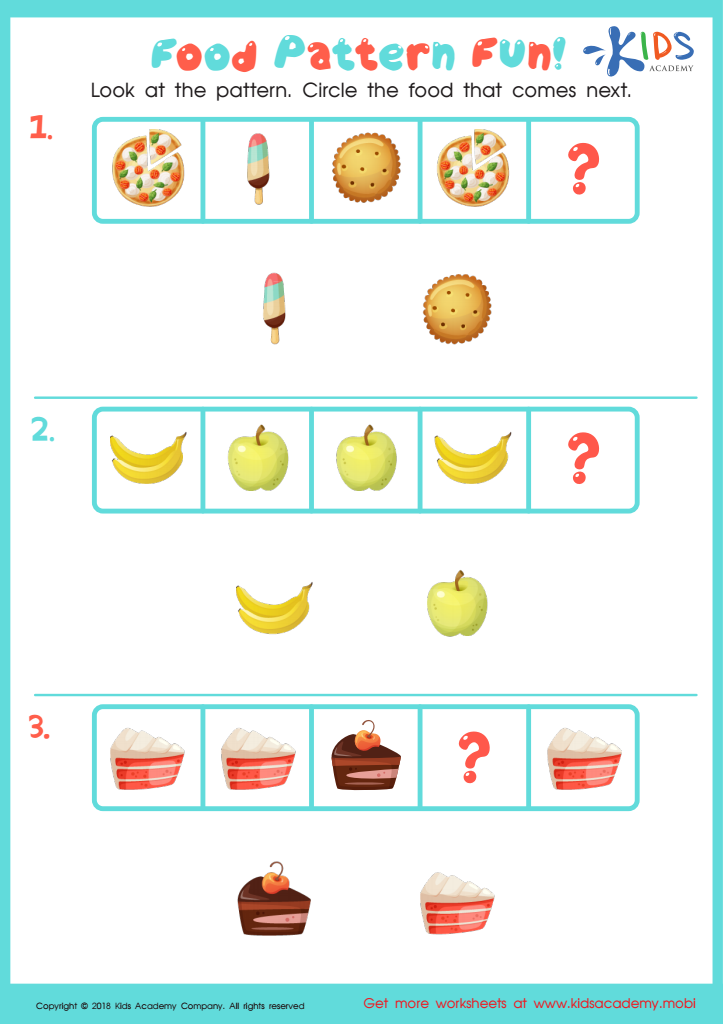
Food Pattern Fun Worksheet
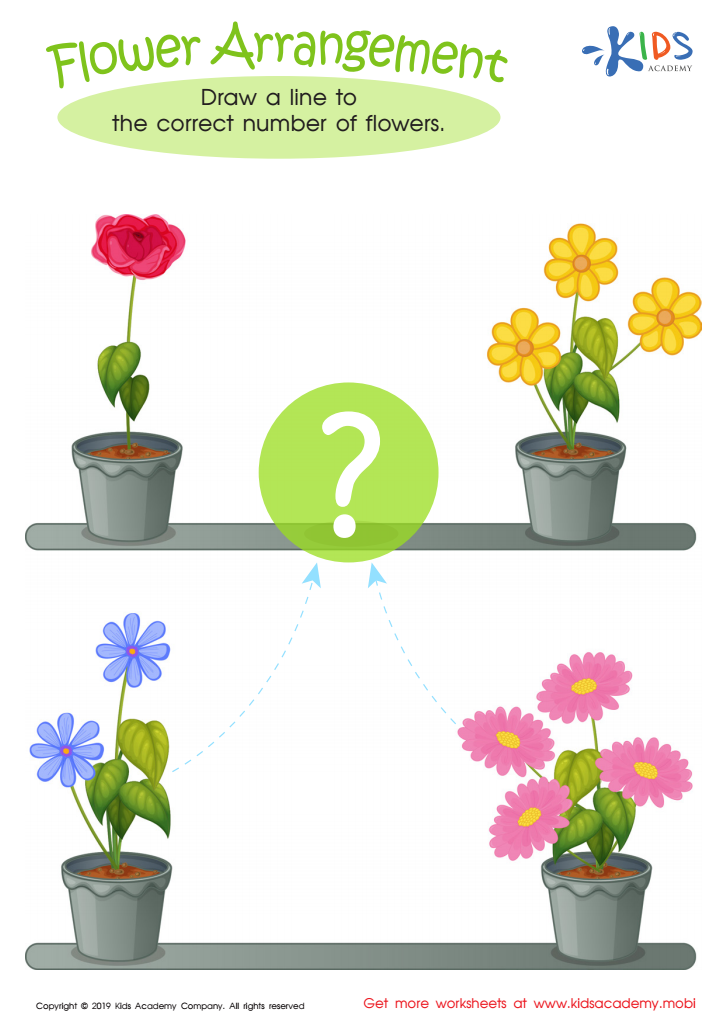
Flower Arrangement Worksheet
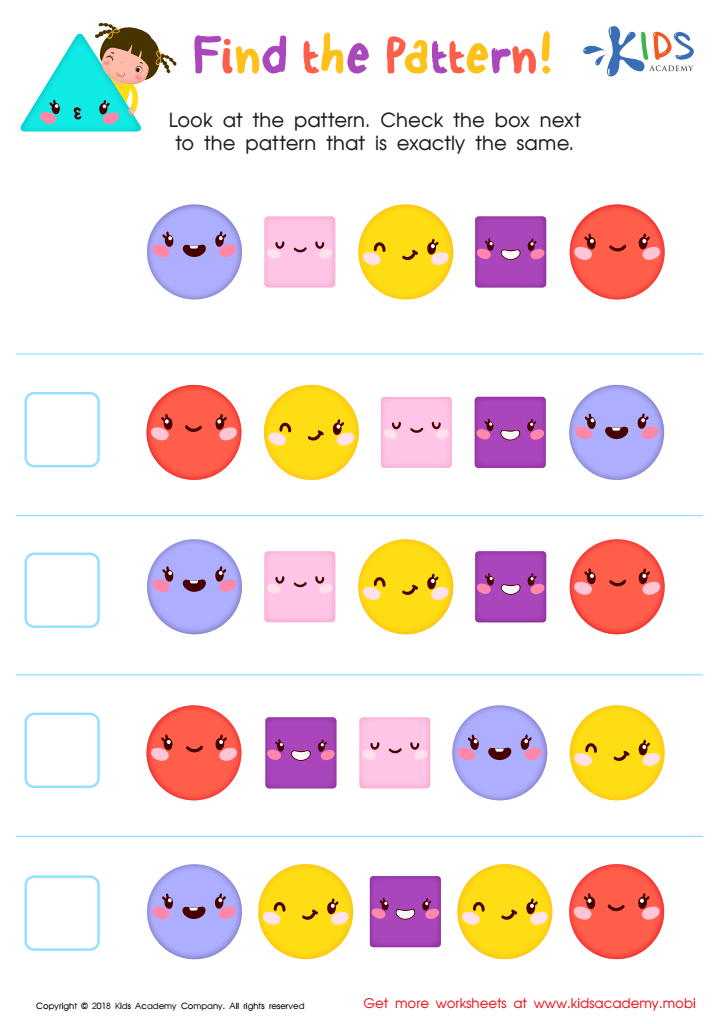
Find the Pattern Worksheet
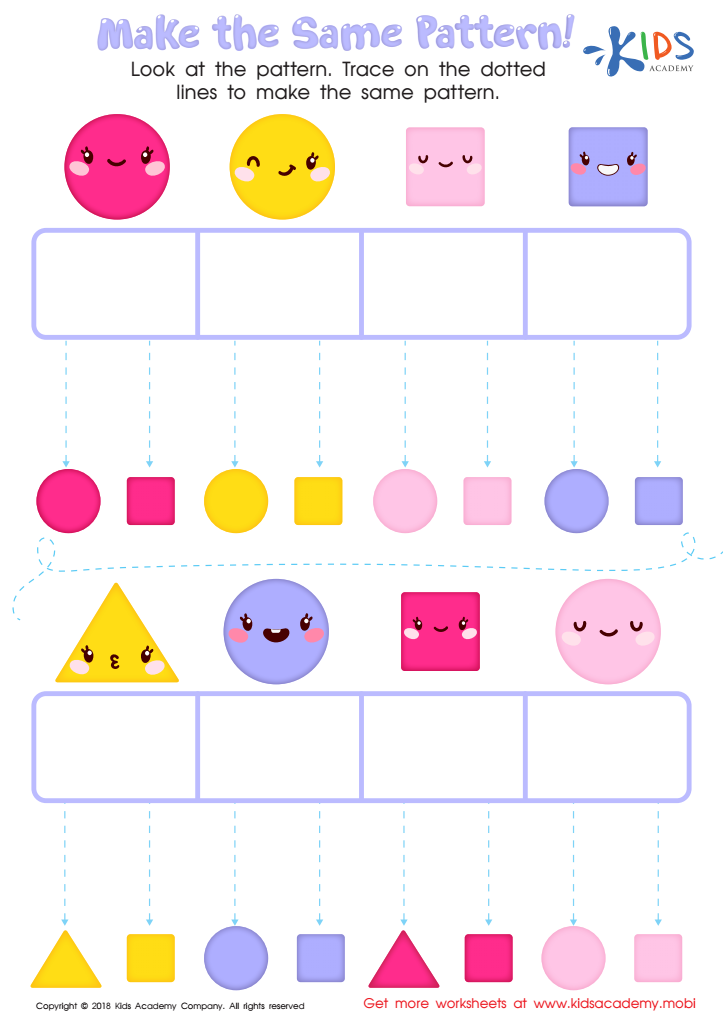
Make the Same Pattern Worksheet
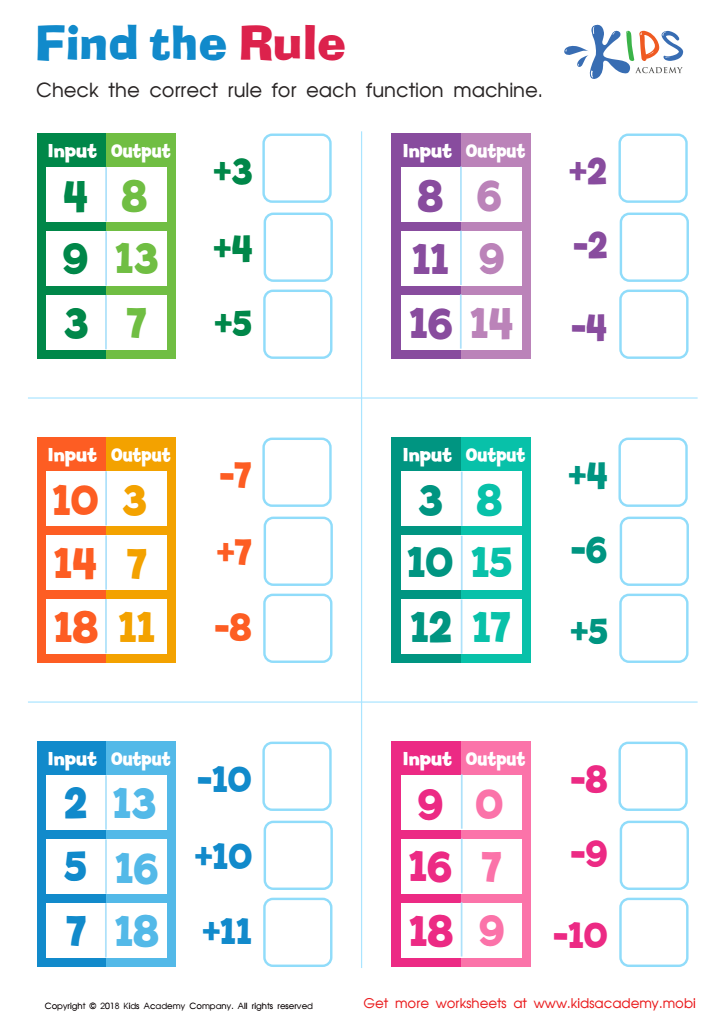
Find the Rule Worksheet
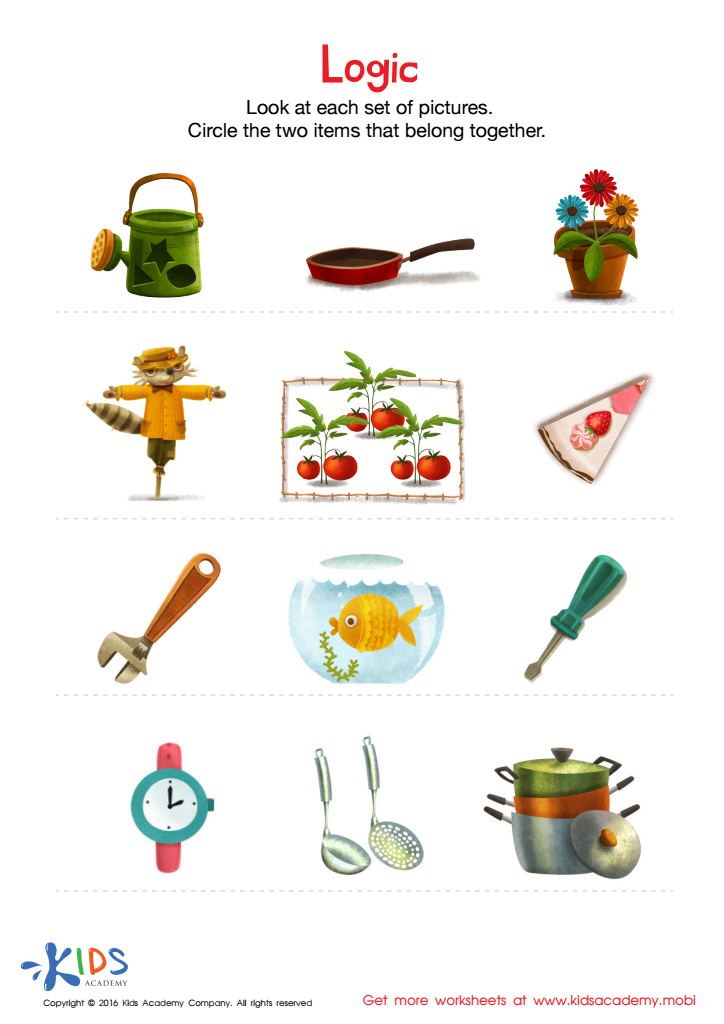
Logic Game Sorting Worksheet
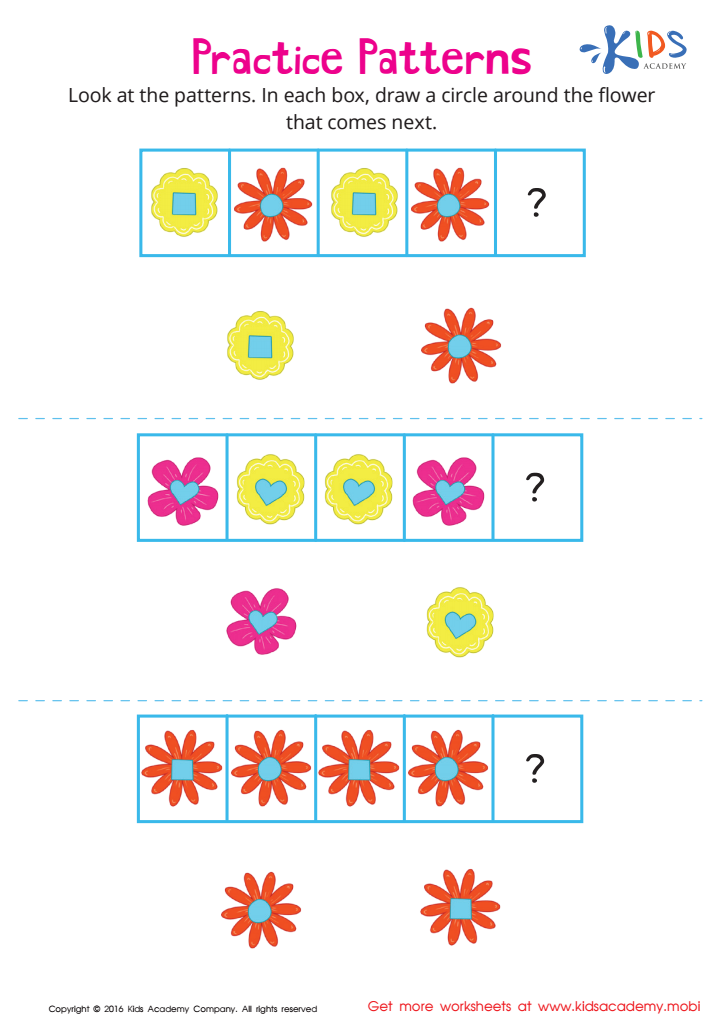
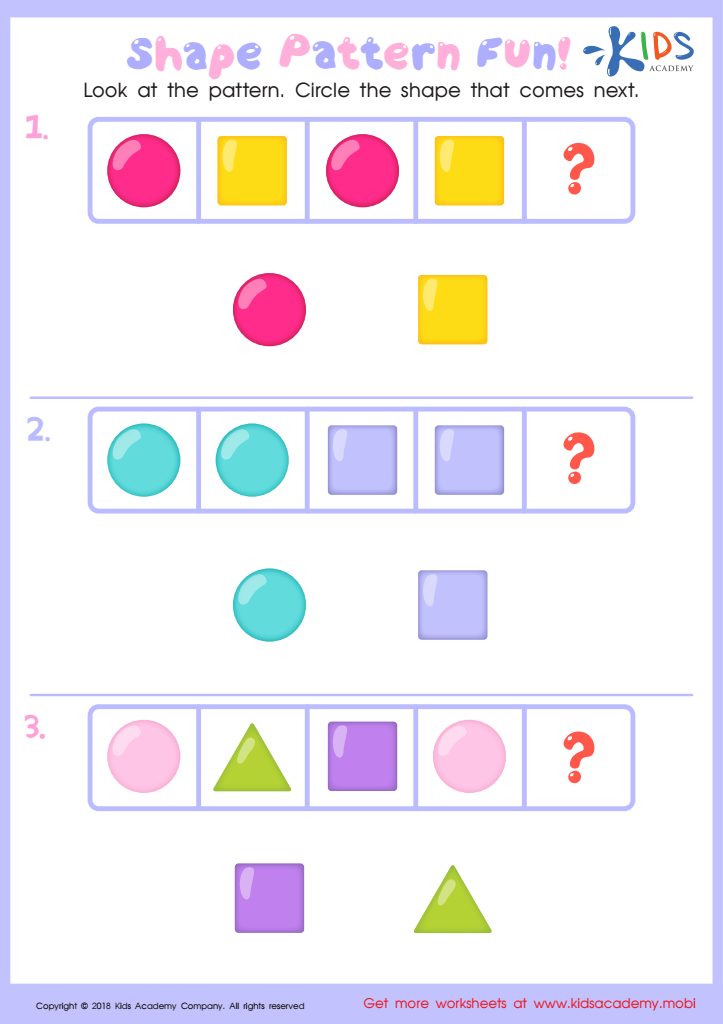
Shape Pattern Fun Worksheet







Parents and teachers should understand the value of pattern recognition in math because it serves as a foundational skill crucial for mathematical understanding and cognitive development. Recognizing patterns helps children make sense of the world by identifying relationships and structures, enabling them to predict and make calculations more effectively. It's the bedrock of arithmetic, algebra, geometry, and even advanced mathematical concepts.
For young learners, being able to spot and understand patterns boosts problem-solving skills. For instance, recognizing that 2, 4, 6, 8 follows a pattern of adding 2 each time helps students understand the concept of multiplication and multiples. These foundational skills are transferable across various subjects and real-life situations, like understanding time intervals, measuring quantities, and even in language development.
Engaging with pattern recognition exercises helps enhance critical thinking and decision-making capabilities. When students identify patterns, they're essentially training their minds to see connections, make generalizations, and establish logical conclusions. This mental agility supports learning in other academic areas and contributes to overall cognitive growth.
Moreover, a strong grasp of patterns can build self-confidence. As children reliably predict and solve pattern-based problems, they develop a sense of achievement and a positive attitude toward learning, which is essential for their long-term academic success. Investing time in helping children recognize and apply patterns it's an important step in nurturing mathematically proficient and confident individuals.








