Visual learning enhancement Normal Math Worksheets
4 filtered results
-
From - To
Visual Learning Enhancement (Normal Math Worksheets) by Kids Academy is designed to transform the math learning experience for early grades. These worksheets utilize vibrant visual aids and engaging activities to enhance kids' understanding of fundamental math concepts. By incorporating images, charts, and relatable scenarios, our resources cater to visual learners, making abstract ideas more concrete. Ideal for homeschooling or supplementary classroom material, our worksheets help children improve their problem-solving skills and build a solid foundation in math. Boost your child's confidence and academic performance with our expertly crafted worksheets, designed to support a variety of learning styles.
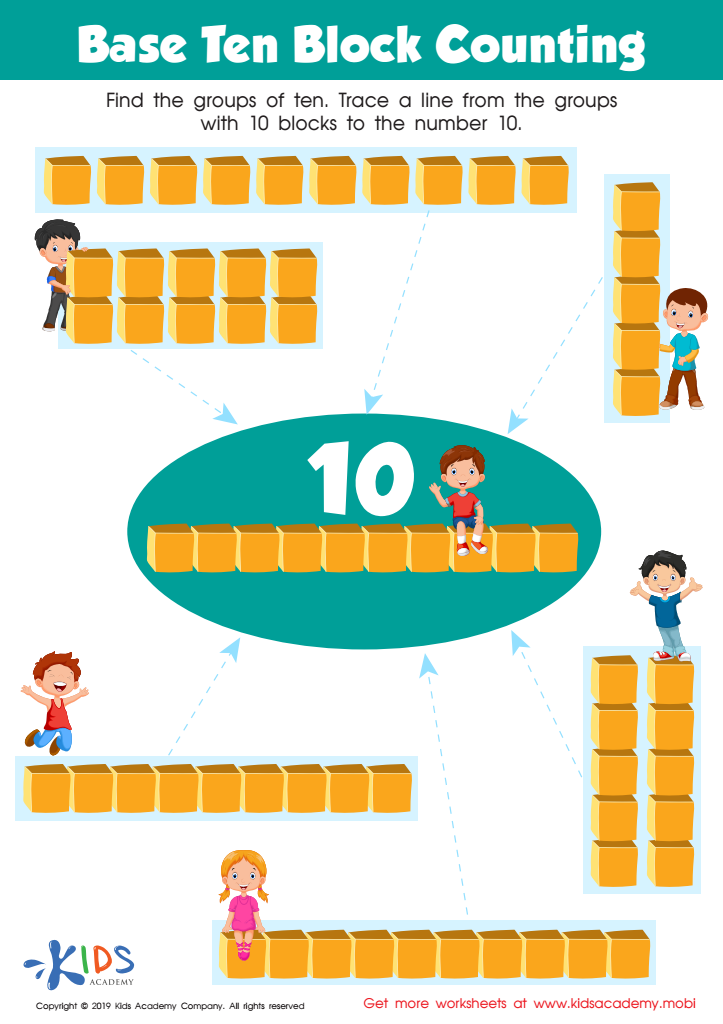
Base Ten Block Counting Worksheet
 Assign to My Students
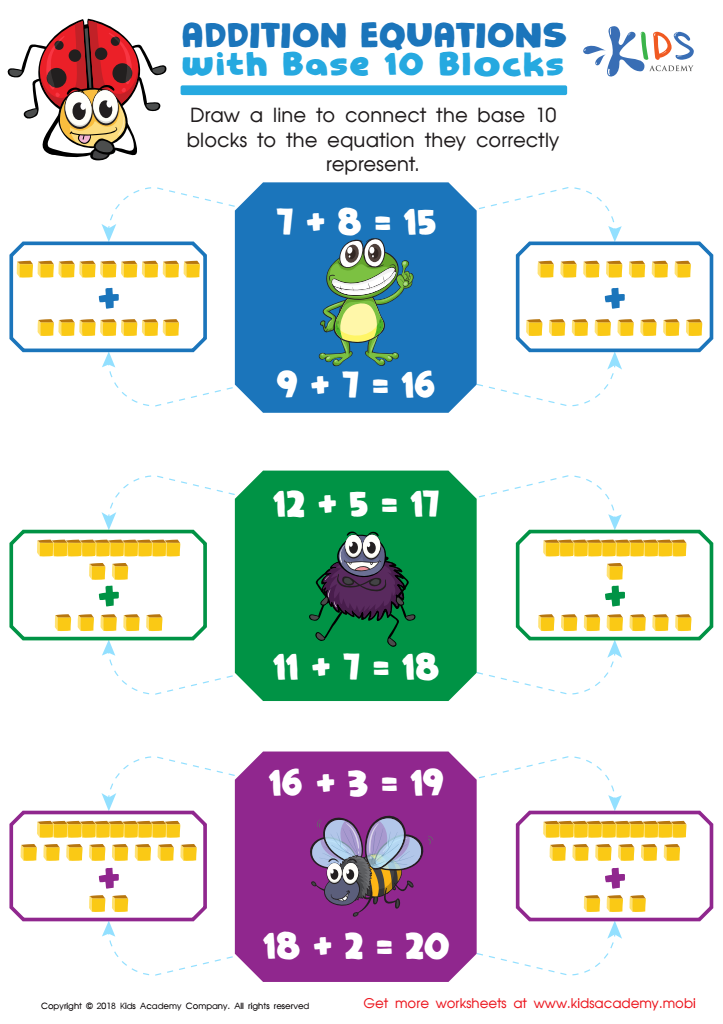
Addition Equations With Base 10 Blocks Worksheet
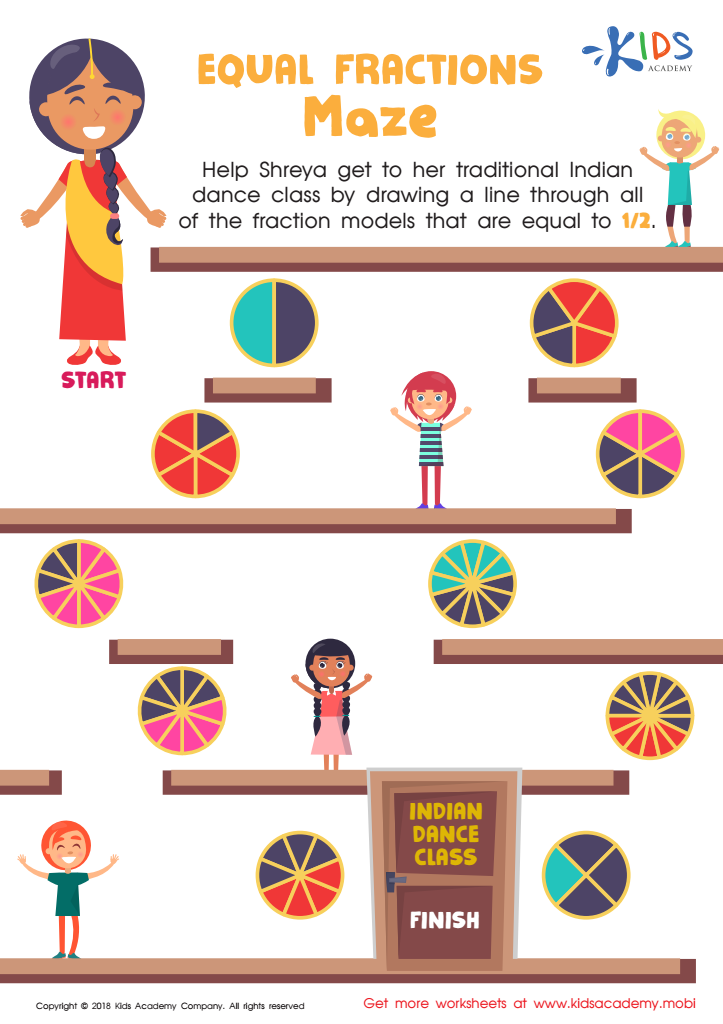
Equal Fractions Maze Worksheet
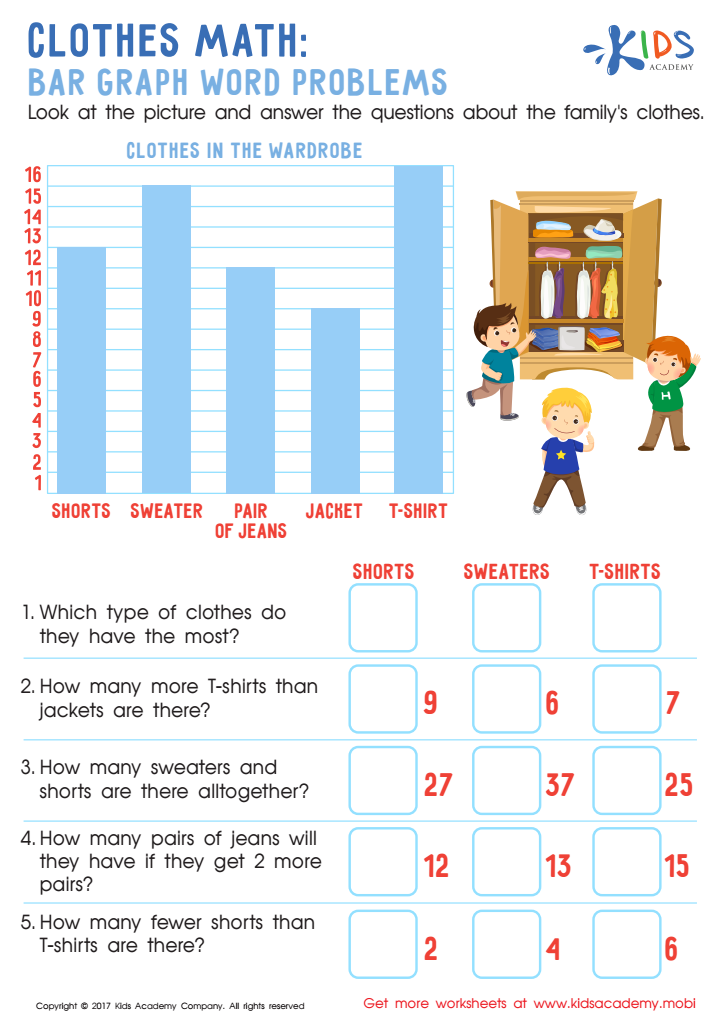
Clothes Math: Bar Graph Word Problems Worksheet







Visual learning enhancement in teaching mathematics is crucial for young learners, as it leverages the natural way children absorb and understand new information. Visual aids such as diagrams, charts, and manipulatives transform abstract concepts into tangible experiences, making math less intimidating and more enjoyable.
Parents and teachers should focus on visual learning because it caters to diverse learning styles, particularly for visual learners who comprise a significant portion of students. When children can visualize problems, patterns, and solutions, they develop a stronger grasp of fundamental math concepts like addition, subtraction, multiplication, and division.
Moreover, visual tools like number lines, graphs, and geometric shapes help in building connections between different mathematical ideas, promoting higher-order thinking skills. This approach also supports memory retention and recall. For example, color-coded charts can help children remember multiplication tables more easily.
Involving visual enhancements nurtures critical thinking and problem-solving skills by allowing children to see various methods of arriving at the same solution. This, in turn, builds math confidence and reduces math anxiety. When students enjoy learning math through visual means, they are more likely to stay engaged and motivated, setting a positive foundation for future academic success. Parents and teachers play pivotal roles in fostering such enriched learning environments.








