
Logical thinking Normal Matching Worksheets
3 filtered results
Difficulty Level
Grade
Age
-
From - To
Subject
Activity
Standards
Improve your child’s cognitive abilities with our "Logical Thinking Normal Matching Worksheets." These engaging and educational worksheets are designed to boost logical reasoning and critical thinking in young learners. Ideal for pre-school and elementary students, the exercises involve matching pairs, sequences, and categorical sorting, helping kids develop pattern recognition, problem-solving skills, and attention to detail. Each worksheet is visually appealing and progressively challenging, ensuring sustained interest and gradual learning progression. Perfect for classroom use or at-home practice, our worksheets make learning fun and effective. Download and print for an interactive, skill-building adventure today!
Favorites
With answer key
Interactive
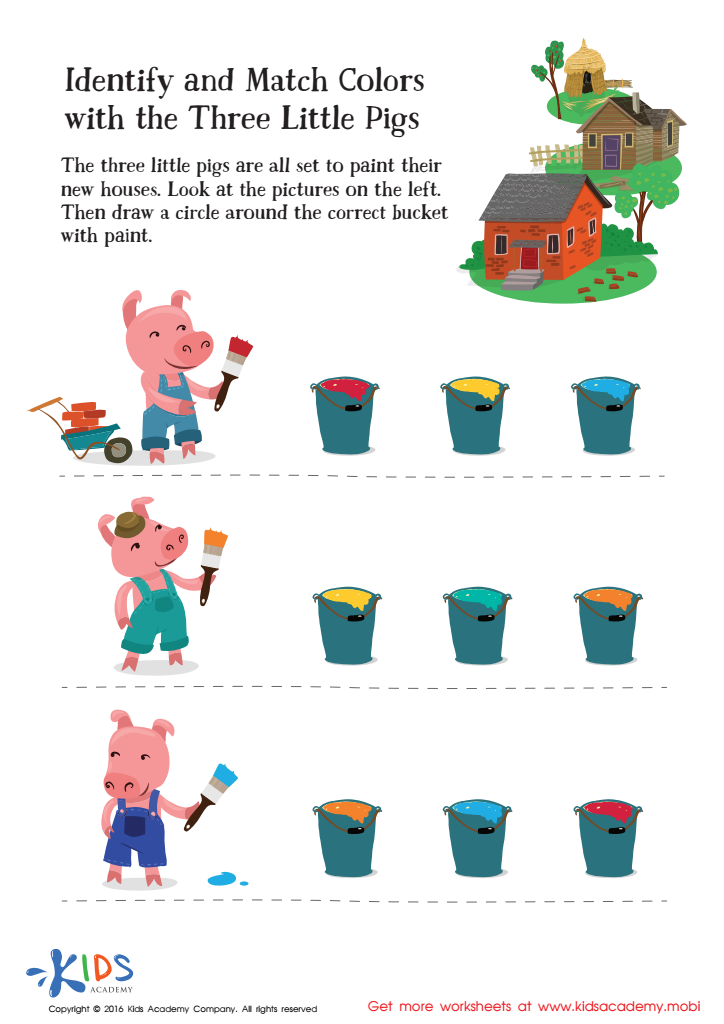
Fairy Tale Worksheet: Identify and Match Colors with Three Little Pigs
Help the 3 Little Pigs find the right color for their houses! This fun worksheet will have your child developing their problem solving and color recognition skills. It's a great way to start building the foundation for advanced logic skills. Plus, they'll love the Three Little Pigs coloring pages.
 Assign to My Students
Fairy Tale Worksheet: Identify and Match Colors with Three Little Pigs
Worksheet
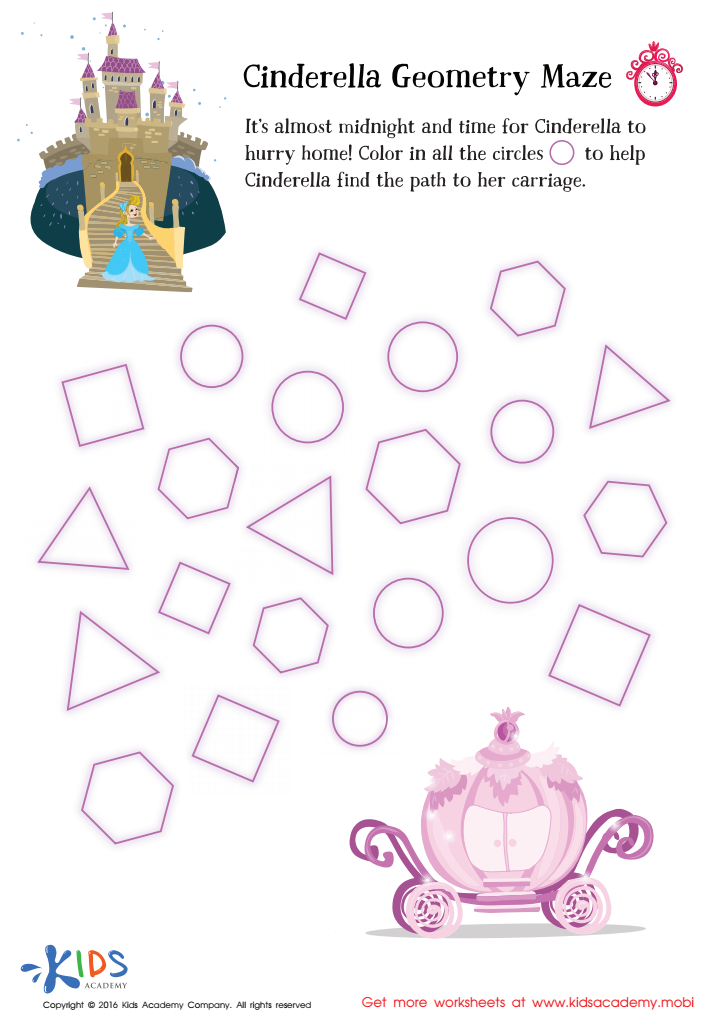
Cinderella Geometry Maze Worksheet
Help Cinderella hurry home! Your preschooler will have fun problem-solving and sorting shapes in this geometric maze. As they shade in the circles, they'll be helping their favorite princess reach her carriage on time. Not only that, but they'll strengthen their logic skills in the process. Get this and other fairy tale mazes to keep them entertained while learning.
Cinderella Geometry Maze Worksheet
Worksheet
Join Kids Academy for Free
Who is primarily going to use this learning content?








Logical thinking and normal matching are essential cognitive abilities that serve as foundations for a child's intellectual development and overall problem-solving skills. Parents and teachers should prioritize nurturing these skills in young children because they directly contribute to their ability to make reasoned decisions, analyze situations, and recognize patterns. By engaging in activities that involve logical thinking and matching, children enhance their understanding of cause-and-effect relationships and improve their organizational skills.
For instance, when a child practices matching objects based on color, shape, or size, they develop their ability to classify and categorize information, which is crucial for subjects like mathematics and science. Additionally, fostering logical thinking helps children approach problems methodically, breaking them down into manageable parts and fostering resilience and perseverance.
In a classroom or home environment, providing opportunities for children to engage in puzzles, sorting games, and critical thinking activities lays a strong foundation for future academic success. It also prepares them for real-life situations where logical reasoning is necessary. When parents and teachers work together to support the development of these skills, children are not only better equipped for school challenges but also for lifelong learning and problem-solving in everyday life.








