Cognitive Development Normal Preschool Geometry Worksheets
5 filtered results
Difficulty Level
Grade
Age
-
From - To
Subject
Activity
Standards
Enhance your child's cognitive development with our engaging preschool geometry worksheets! Designed for early learners, these interactive resources nurture critical thinking and spatial awareness through colorful activities. Your little ones will explore shapes, patterns, and spatial reasoning while having fun! Our worksheets support young minds in developing essential math skills needed for future success. Each task encourages problem-solving and boosts confidence in their abilities. Ideal for parents and educators, these printable resources can be a delightful addition to any learning environment. Visit us now to create meaningful learning experiences that inspire curiosity and a love for math in your preschoolers!
Favorites
With answer key
Interactive
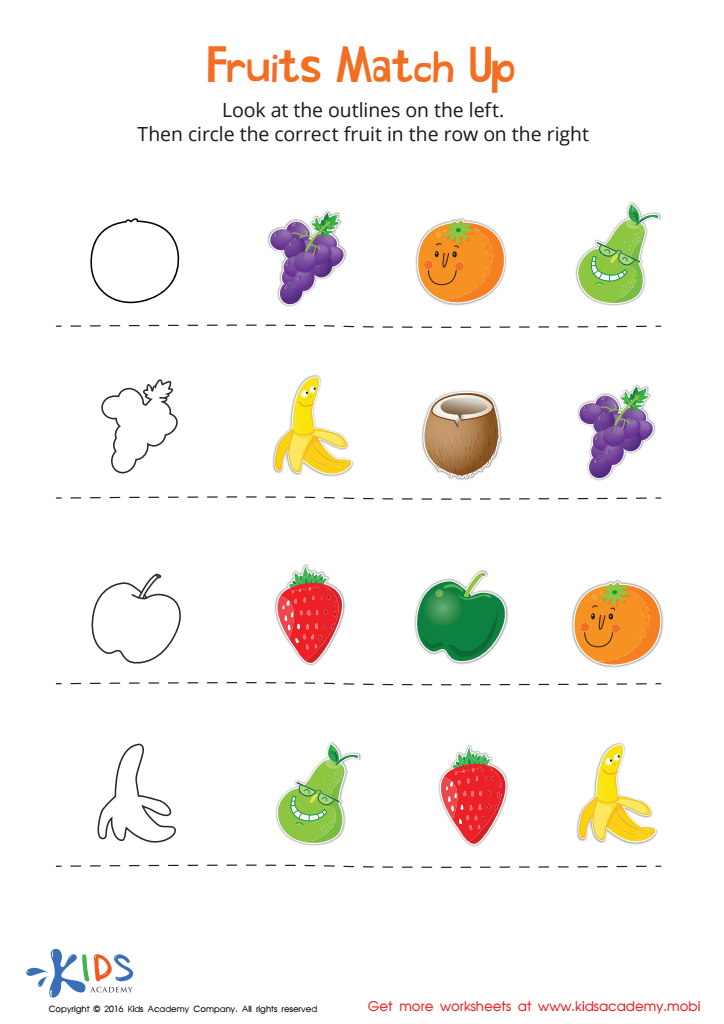
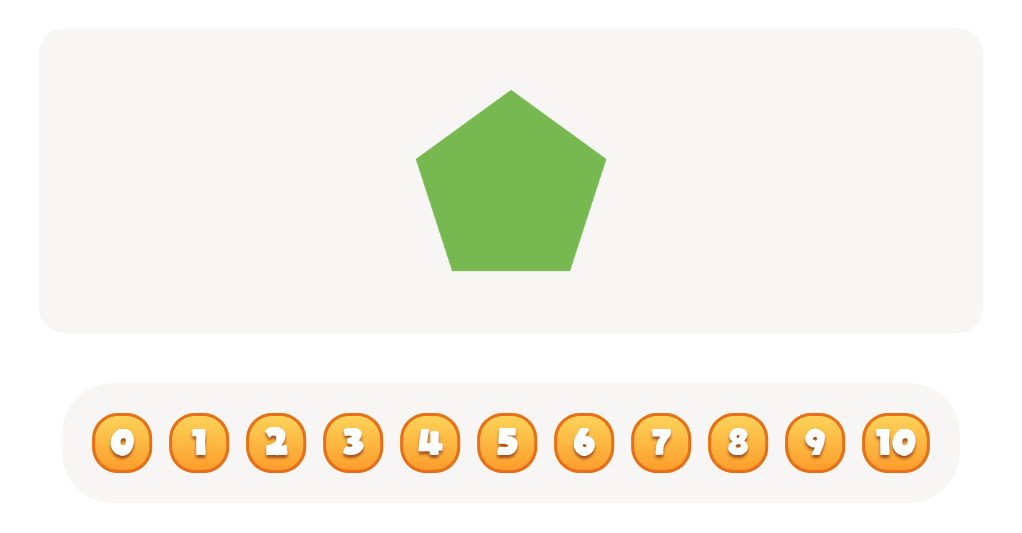
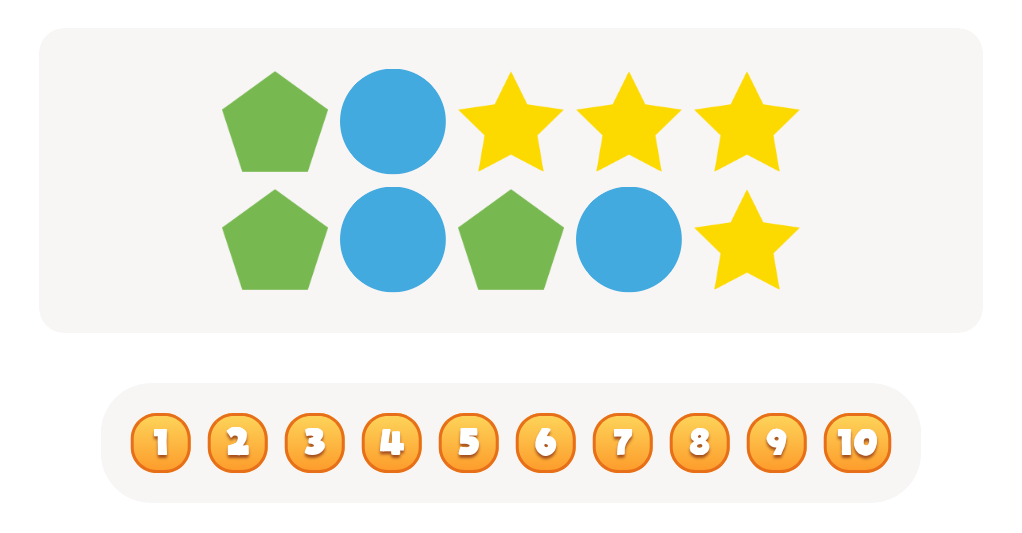
Fruits Match Up Worksheet
Motivate your child to count and sharpen their spatial reasoning skills with this vivid fruit worksheet.
 Assign to My Students
Fruits Match Up Worksheet
Worksheet




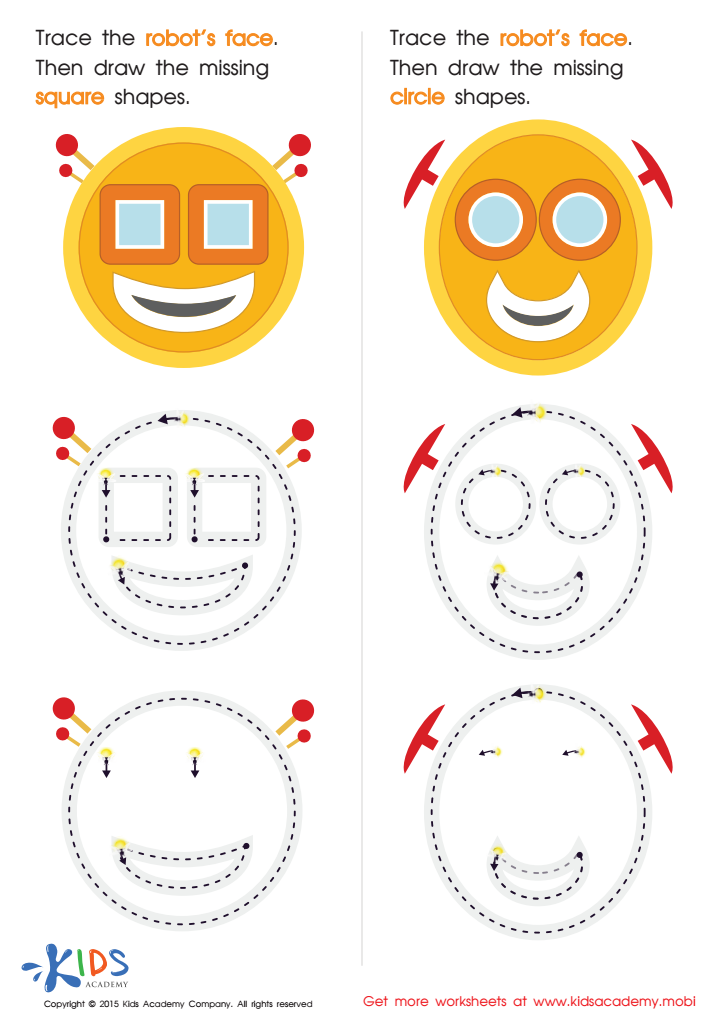
Practicing to Draw Circles And Squares Printable
Download our free printable geometry worksheets to learn shapes with your preschoolers. Trace Robot's face, draw the square parts and round shapes, remember the names for each one. Get more materials for kids at Kids Academy and make learning fun with our free printable geometry worksheets.
Practicing to Draw Circles And Squares Printable
Worksheet
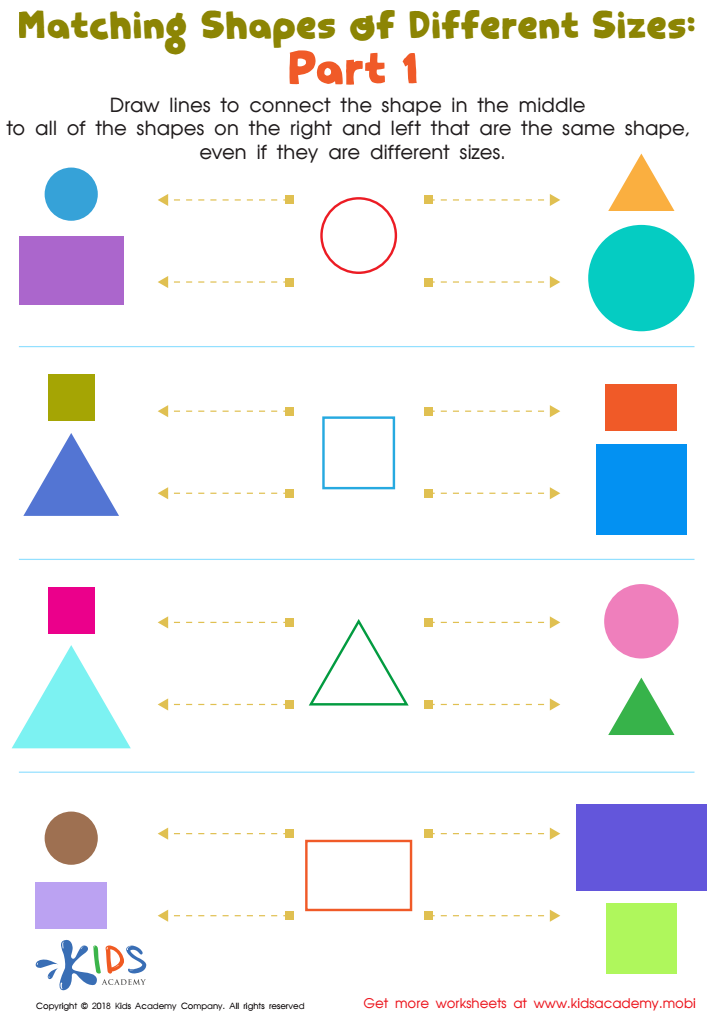
Geometry: part 1 Worksheet
Test your student's shape knowledge with this beginner-level geometry worksheet. This fun, challenging printable PDF will sharpen spacial recognition skills as they match shapes of different sizes. Get started now!
Geometry: part 1 Worksheet
Worksheet
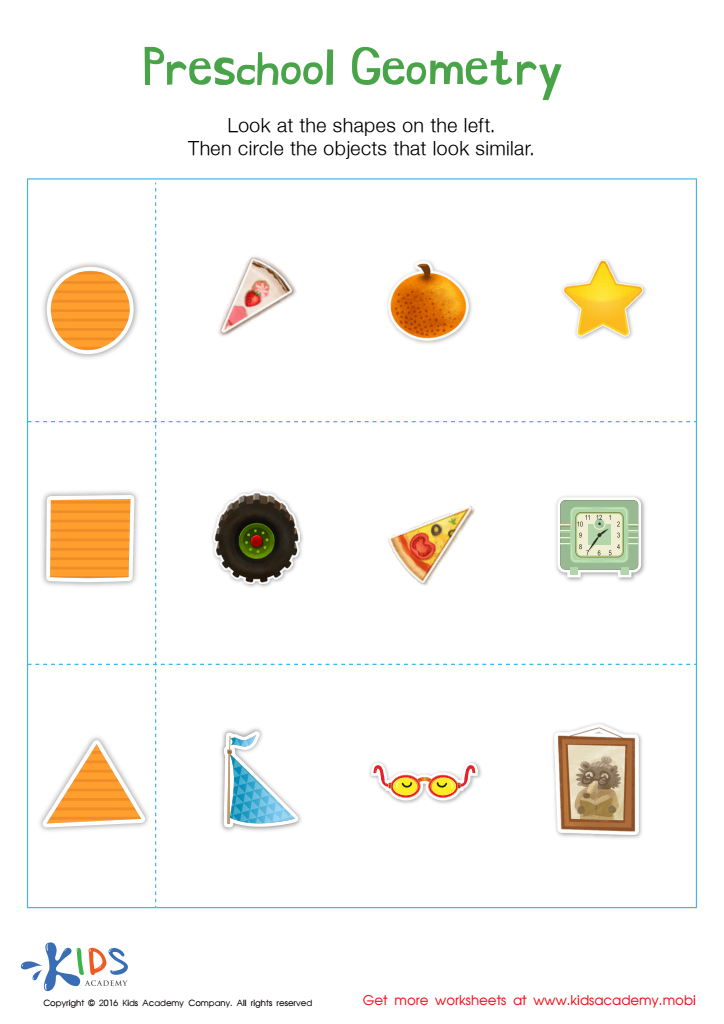
Preschool Geometry Match Up Worksheet
Teach your preschooler geometry using everyday objects. This printable worksheet helps them recognize, match, and follow directions like left and right. Start a conversation to extend their learning and they'll see how shapes appear in the world around them.
Preschool Geometry Match Up Worksheet
Worksheet
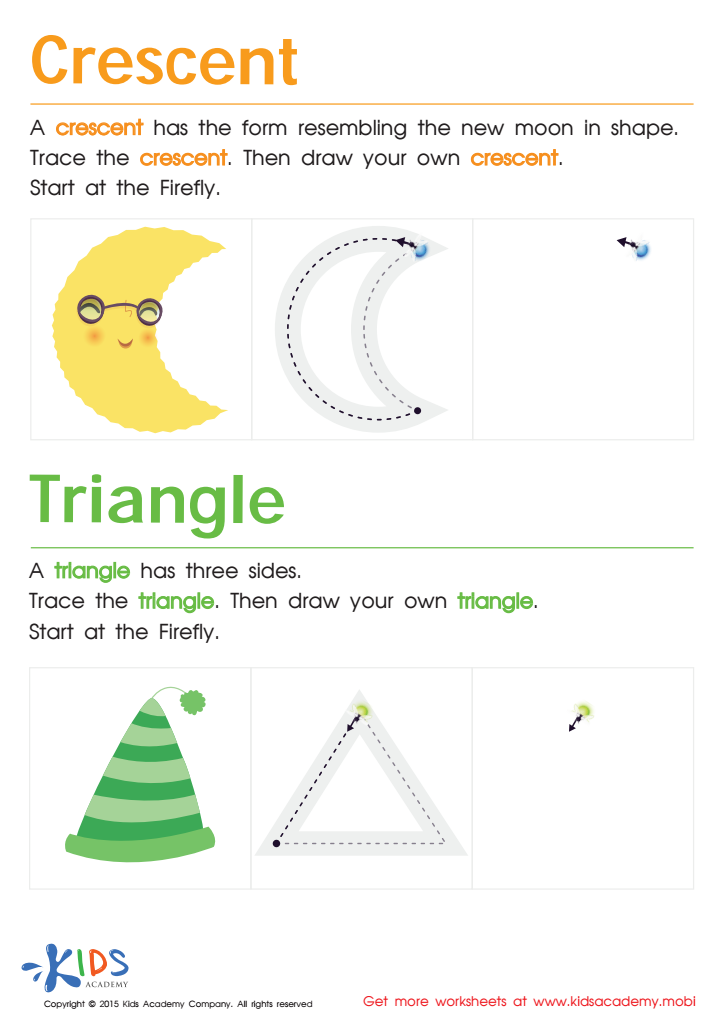
Learning to Draw Crescents And Triangles Worksheet
Help your kids draw a crescent and triangle with this free printable worksheet! Start by tracing a crescent in the form of the new moon, and then teach them that a triangle has three sides and looks like a hat. Find more geometry practice worksheets at Kids Academy!
Learning to Draw Crescents And Triangles Worksheet
Worksheet
Join Kids Academy for Free
Who is primarily going to use this learning content?








Cognitive development during preschool years is crucial as it lays the foundation for future learning and problem-solving skills. Understanding geometry is an essential component of this development because it encourages critical thinking, spatial awareness, and reasoning abilities. Early exposure to geometric concepts helps children recognize shapes, patterns, and spatial relationships, enhancing their ability to categorize and make sense of the world around them.
Parents and teachers should prioritize geometric learning since it aids in developing children's fine motor skills through hands-on activities like building blocks or drawing shapes. Additionally, engaging with geometric concepts fosters mathematical thinking early on, paving the way for more complex math understanding in later years. When children grasp the basics of geometry, such as recognizing and manipulating shapes, they become better equipped for tasks that involve measurement, symmetry, and problem-solving.
Promoting geometric understanding in preschool supports not only cognitive development but also boosts creativity, as children experiment with modeling and design. By incorporating geometric learning into play and everyday experiences, caregivers can create a rich learning environment that nurtures curiosity and intellectual growth, allowing children to thrive both academically and socially. Thus, prioritizing geometry's role in early childhood education benefits children long-term.