Critical Thinking Normal Animals Worksheets
4 filtered results
-
From - To
Enhance your students' learning experience with our "Critical Thinking Normal Animals Worksheets." Designed for early learners, these engaging worksheets encourage critical thinking skills through the fascinating world of animals. Each activity focuses on problem-solving, analysis, and evaluation, helping children understand animal behaviors, habitats, and characteristics. Perfect for classroom or home use, these worksheets make learning fun while promoting cognitive development. Encourage discussions and nurtures curiosity as kids explore different species and their roles in the ecosystem. Ideal for educators and parents alike, our worksheets are easy to implement and align with early science curriculum standards. Unveil the wonders of nature through critical thinking!
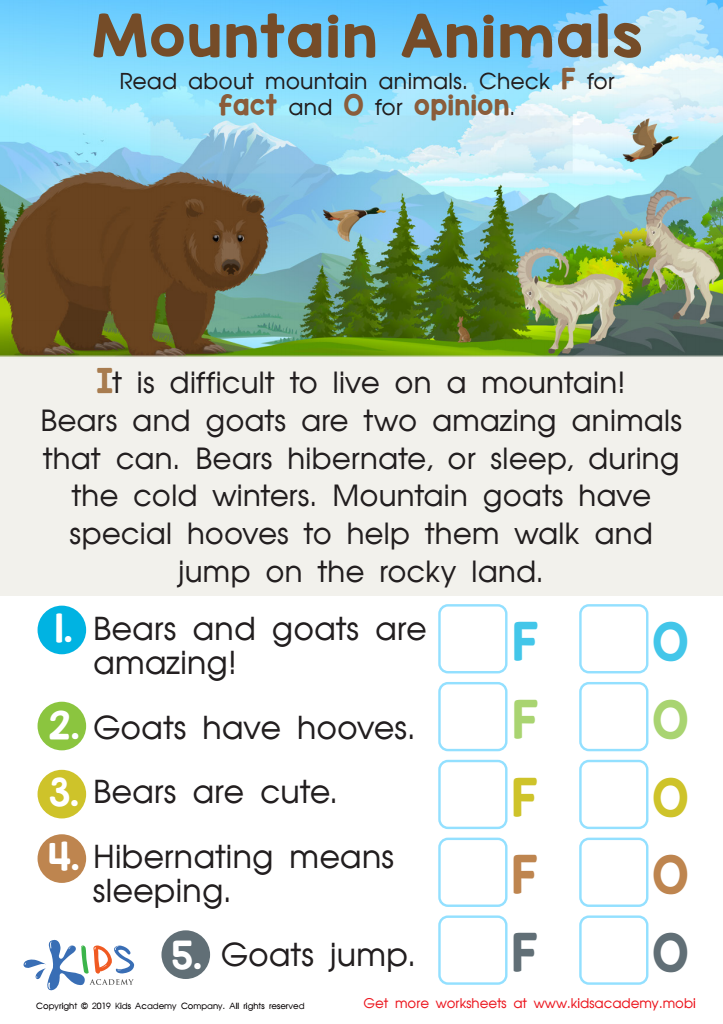
Mountain Animals Worksheet
 Assign to My Students
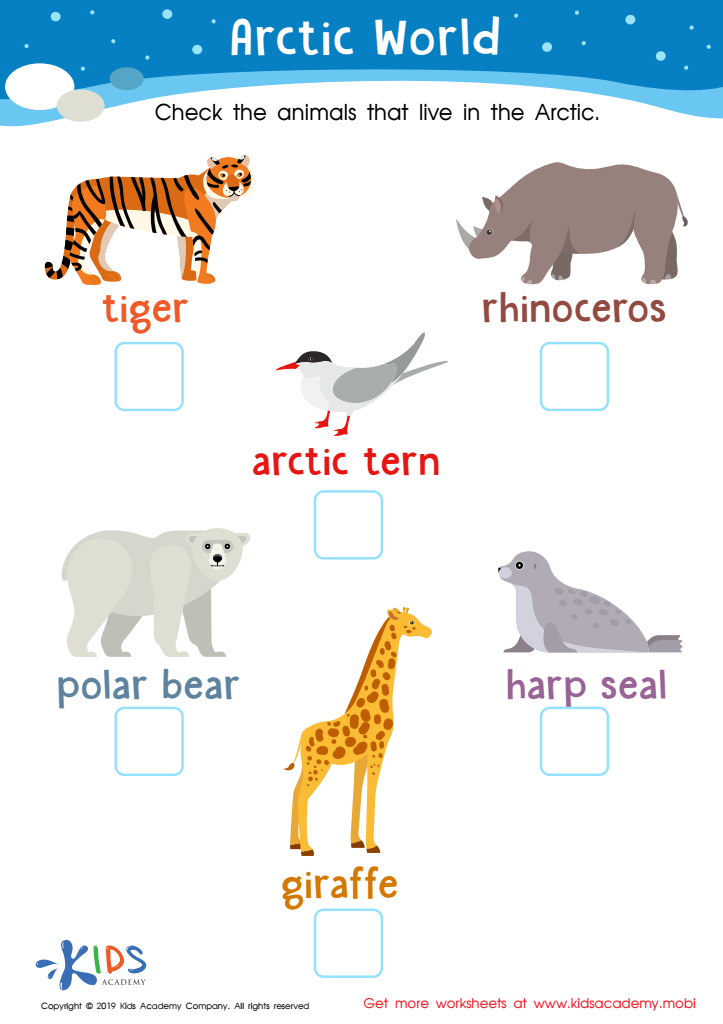
Arctic World Worksheet
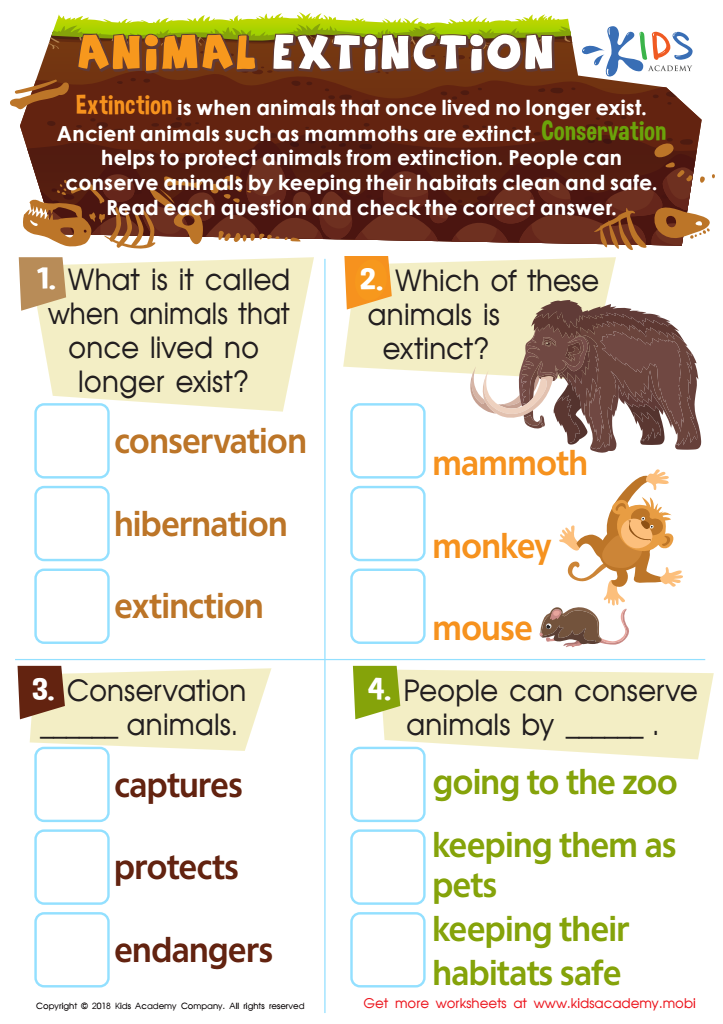
Animal Extinction Worksheet
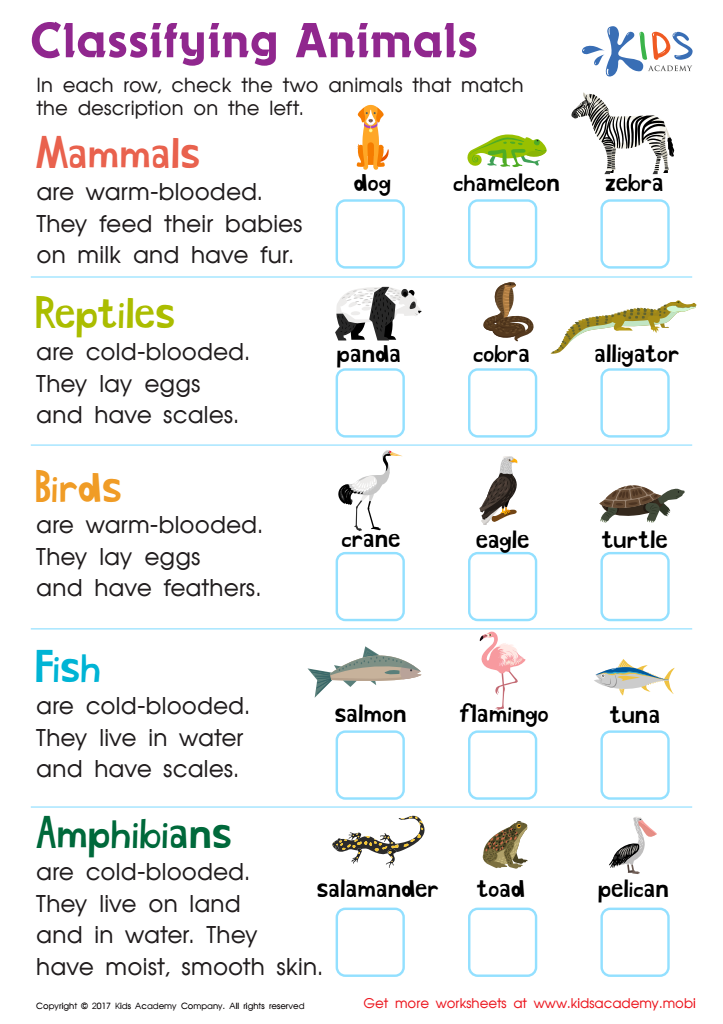
Classifying Animals Worksheet







Critical thinking is crucial for children's overall development, especially concerning their understanding of normal animals and their behaviors. By fostering critical thinking skills, parents and teachers help children make informed observations and analytical conclusions about the natural world around them. Understanding normal animals—those living according to their specific ecological and behavioral patterns—encourages curiosity and exploration.
When children learn to critically assess the behaviors of animals, they develop skills such as observation, classification, and reasoning. This not only enhances their scientific literacy but also cultivates empathy and respect for living creatures and their habitats. Parents and teachers play an essential role in guiding them through discussions about animal behaviors, adaptations, and environmental impact, which enriches children's knowledge and nurtures a consciousness about biodiversity.
Furthermore, critical thinking helps children question misconceptions and stereotypes about animals, aiding in clarity and understanding in an age rife with misinformation. By engaging in activities that promote investigation and inquiry, such as observing animals in various environments, children build lasting cognitive skills. Ultimately, teaching critical thinking regarding normal animals prepares children to become informed, responsible citizens of the planet, capable of making educated decisions about wildlife conservation and environmental stewardship.








