Understanding measurements Normal Grade 2 Worksheets
6 filtered results
-
From - To
Explore our engaging Grade 2 worksheets focused on understanding measurements! Designed for young learners, these printable resources help children master essential concepts of measurement through interactive activities and fun examples. Students will practice measuring length, weight, and volume, enhancing their numeracy skills while building confidence in handling real-world math problems. Each worksheet features colorful visuals and clear instructions, making learning enjoyable. Perfect for classroom or home use, our worksheets align with educational standards to support skill development. Whether it's inches, ounces, or liters, our resources empower second graders to grasp measurements and apply them in their daily lives! Download today and inspire learning!
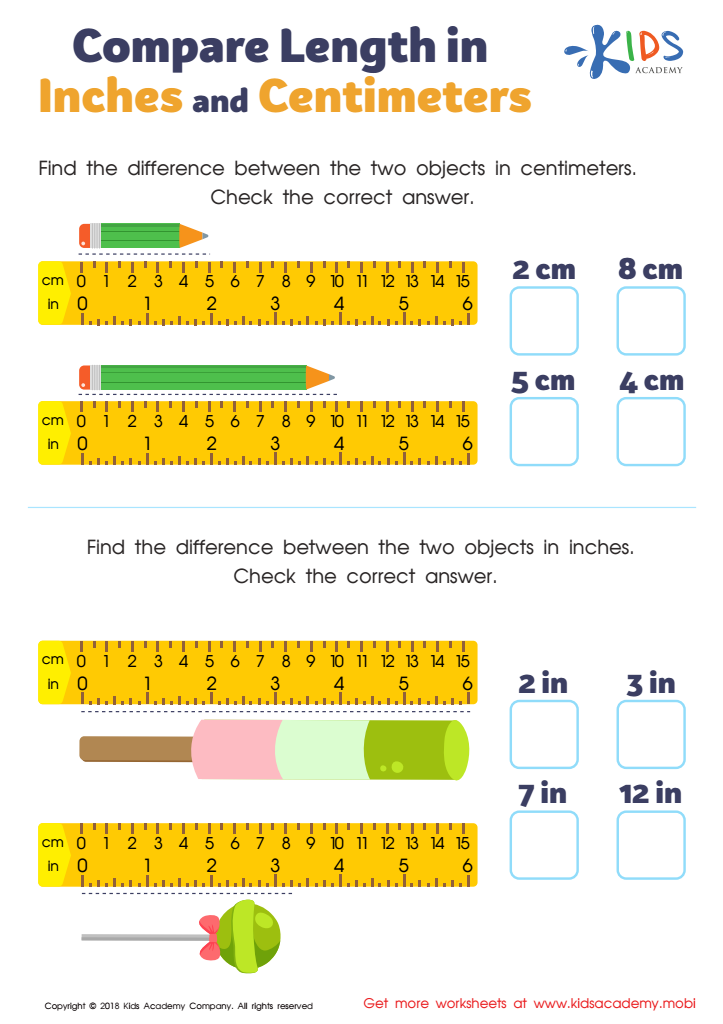
Compare Length in Inches and Centimeters Worksheet
 Assign to My Students
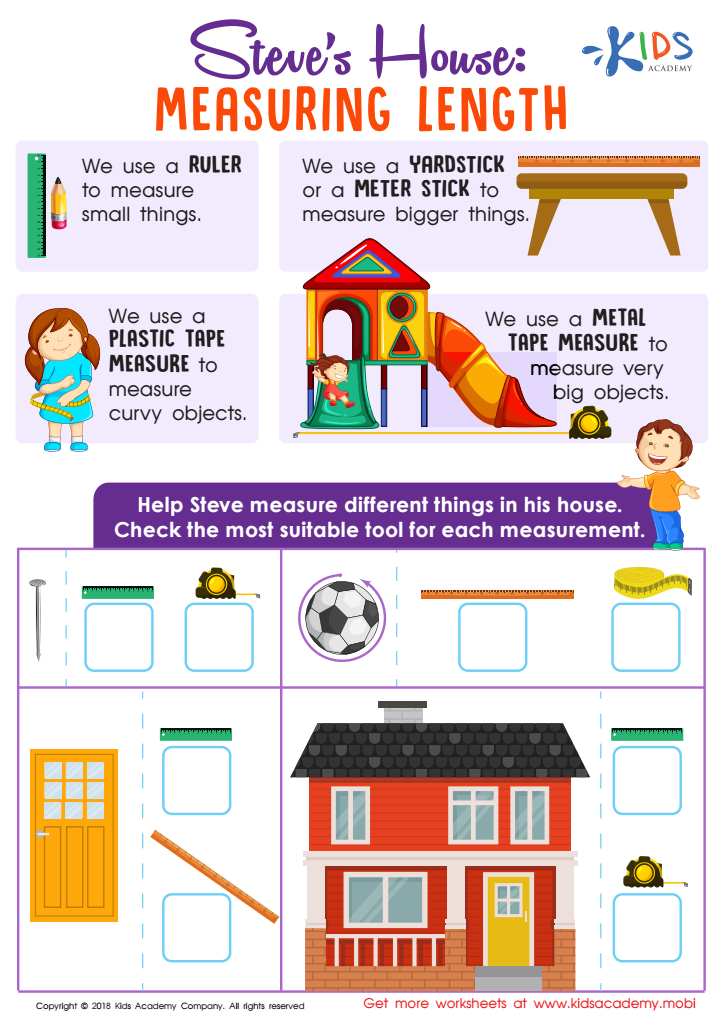
Steve's House: Measuring Length Worksheet
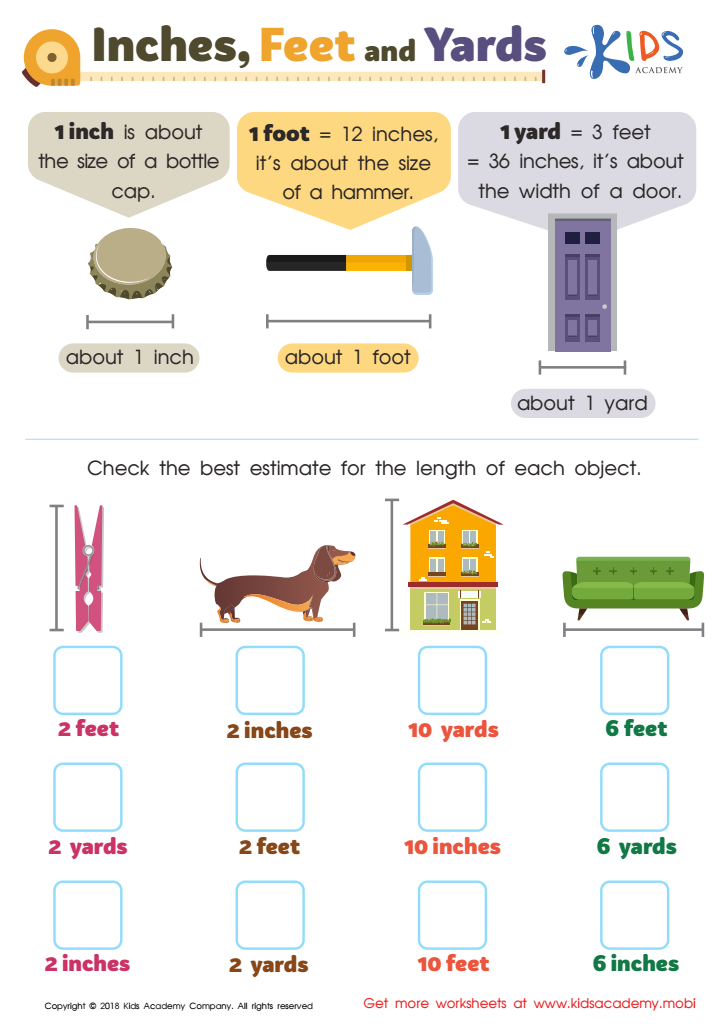
Inches, Feet and Yards Worksheet
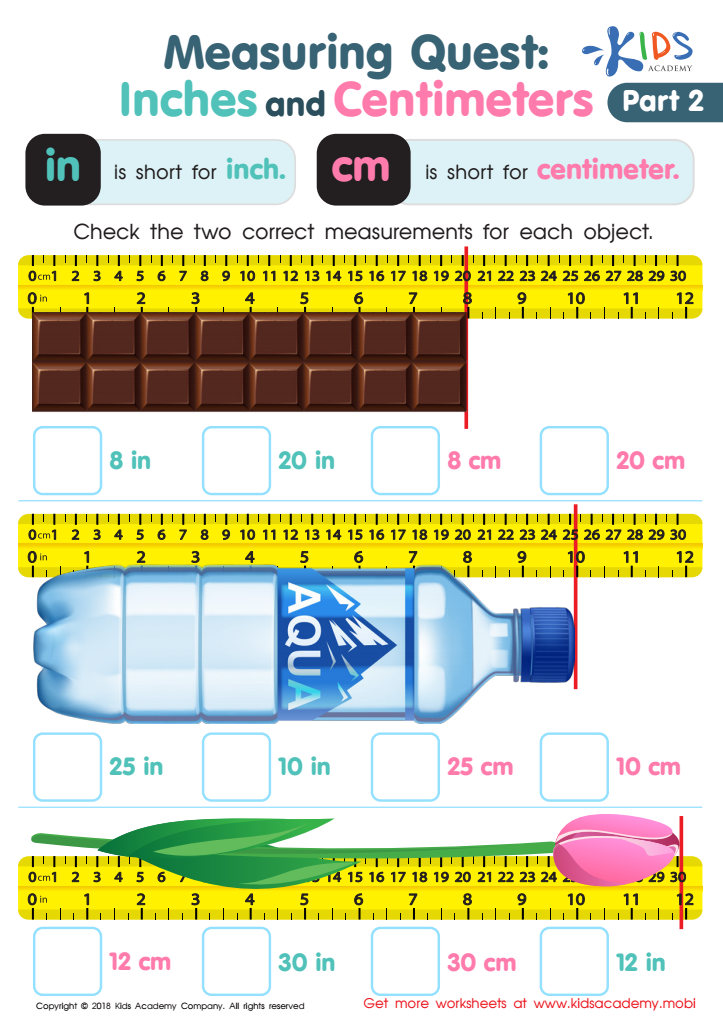
Measuring Quest: Inches and Centimeters - Part 2 Worksheet
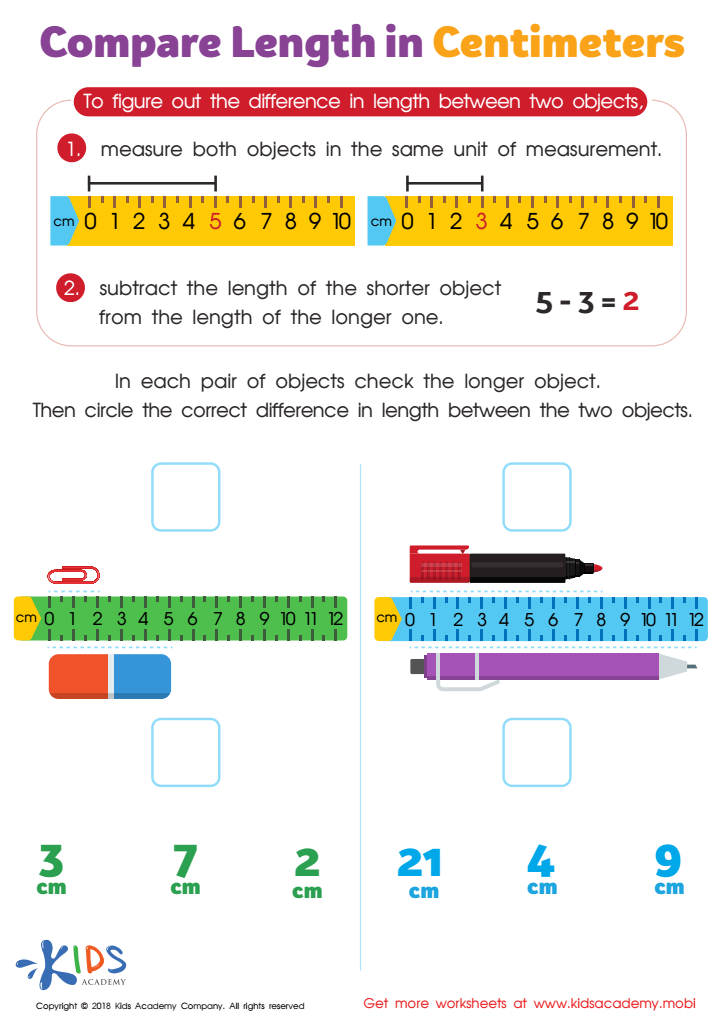
Compare Length in Centimeters Worksheet
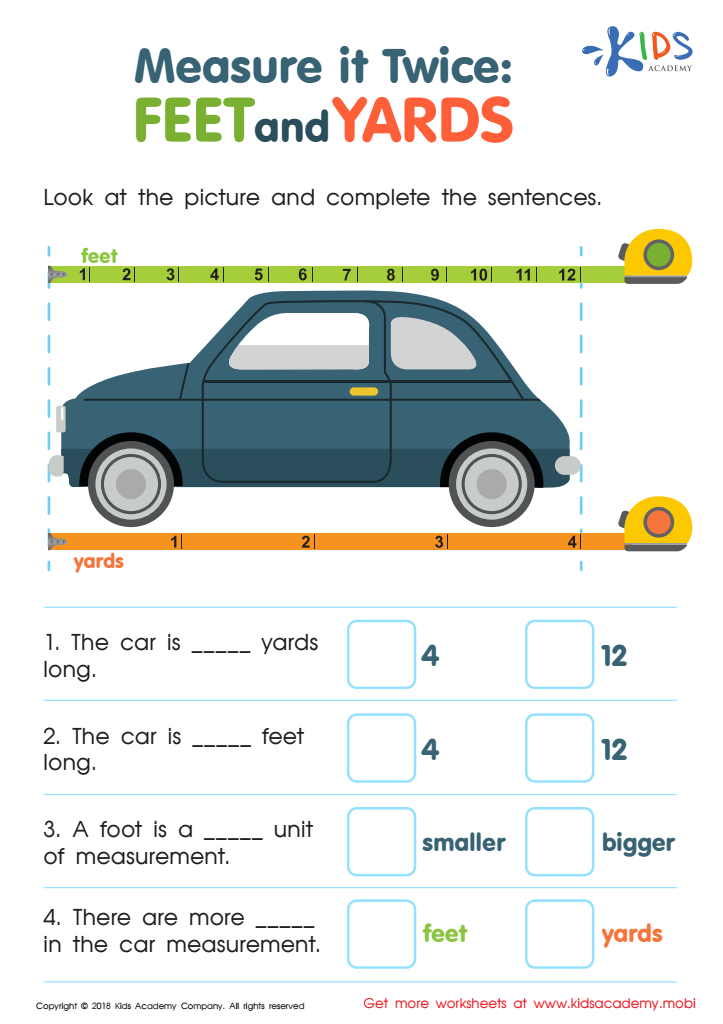
Measure It Twice: Feet and Yards Worksheet





Understanding measurements is crucial for Grade 2 students as it lays the foundation for essential life skills and academic concepts. In this stage, children begin to grasp the significance of measurement in practical contexts, such as cooking, crafting, or gardening. It helps in developing their ability to compare, quantify, and make sense of the world around them.
For parents and teachers, promoting measurement understanding can significantly enhance a child's critical thinking and problem-solving skills. Measurement teaches children to observe and analyze, encouraging them to ask questions like "How tall is this?" or "How much does this weigh?" These inquiries foster curiosity and a stronger grasp of math concepts, which are key for later subjects.
Additionally, measurement connects to various subjects beyond math, such as science and art. For instance, understanding volume can help in scientific experiments while knowledge of length and area is useful in art projects. By supporting measurement learning in Grade 2, adults not only aid children in mastering basic skills but also promote confidence and a love for learning, setting them on a successful educational path. Overall, engaging with measurements introduces kids to real-world applications, sparking interest in math and encourages a lifelong appreciation for numeracy.