Shape Recognition Normal Grade 2 Geometry Worksheets
5 filtered results
-
From - To
Explore our engaging Shape Recognition Normal Grade 2 Geometry Worksheets designed to enhance students’ understanding of shapes in a fun and interactive way! These worksheets provide a variety of exercises focusing on identifying, classifying, and comparing different geometric shapes including circles, squares, triangles, and more. Each worksheet is tailored to support young learners in developing critical thinking and spatial awareness skills. With colorful visuals and age-appropriate challenges, our materials make learning about geometry enjoyable. Ideal for both classroom and home use, these worksheets are perfect for reinforcing shape recognition in a dynamic learning environment. Get started today and watch your child's confidence in geometry grow!
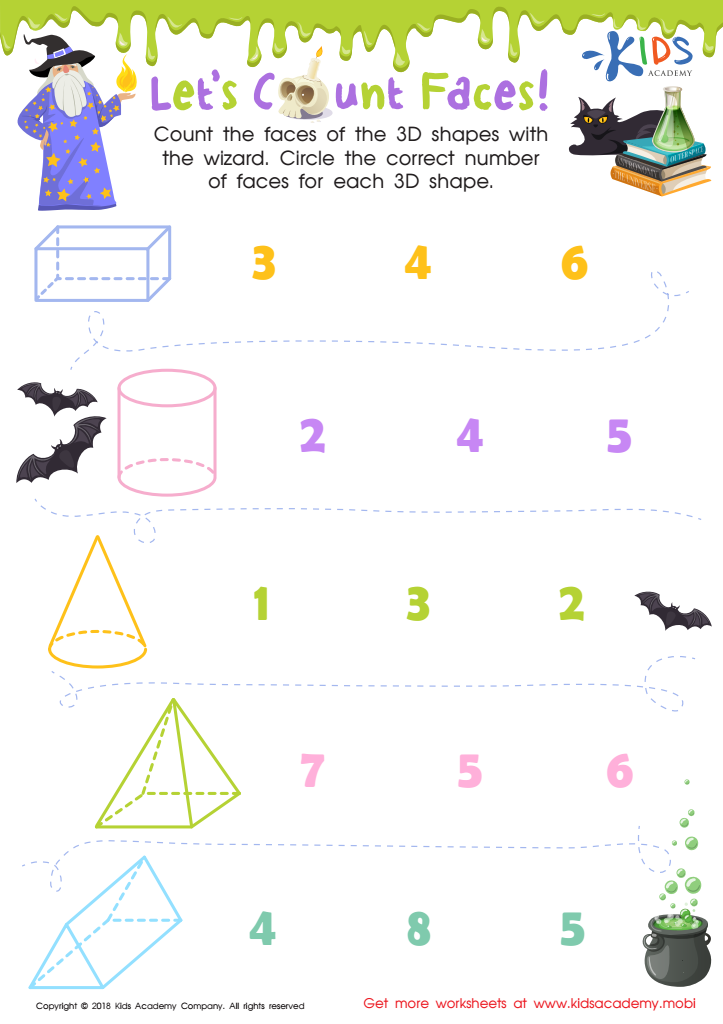
Let's Count Faces! Worksheet
 Assign to My Students
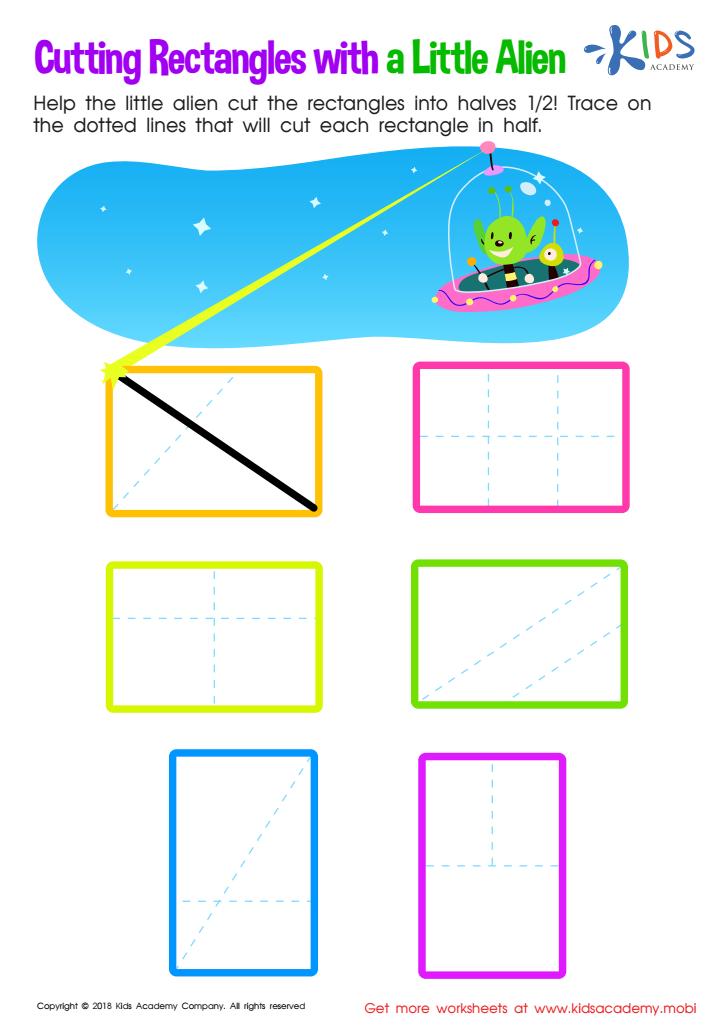
Cutting Rectangles with Alien Worksheet
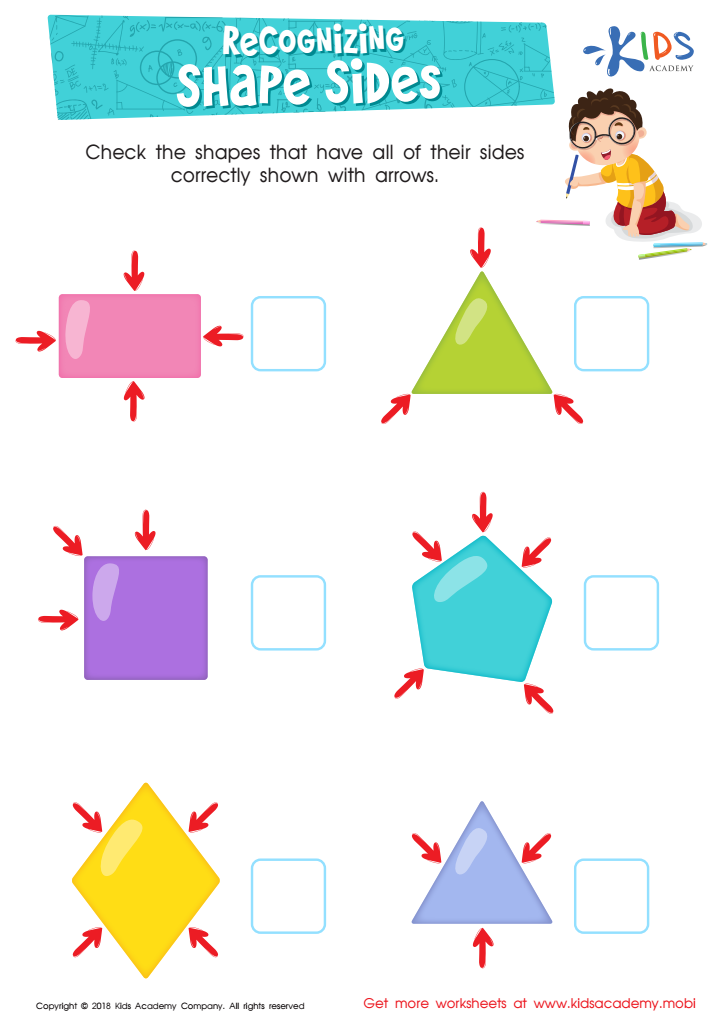
Recognizing Shape Sides Worksheet
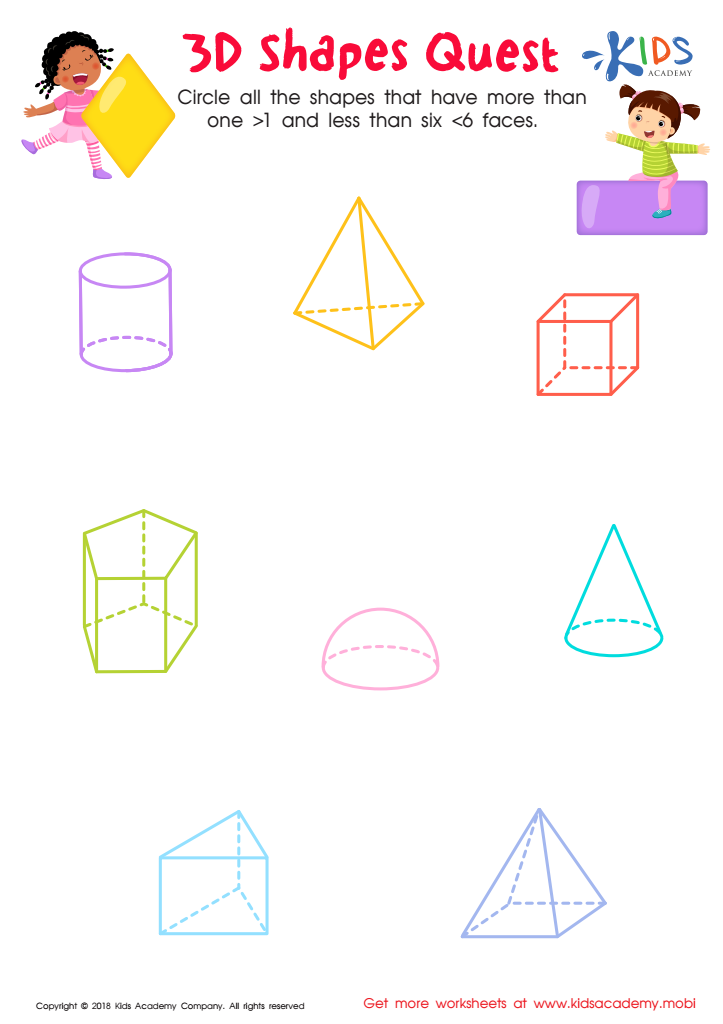
3D Shapes Quest Worksheet
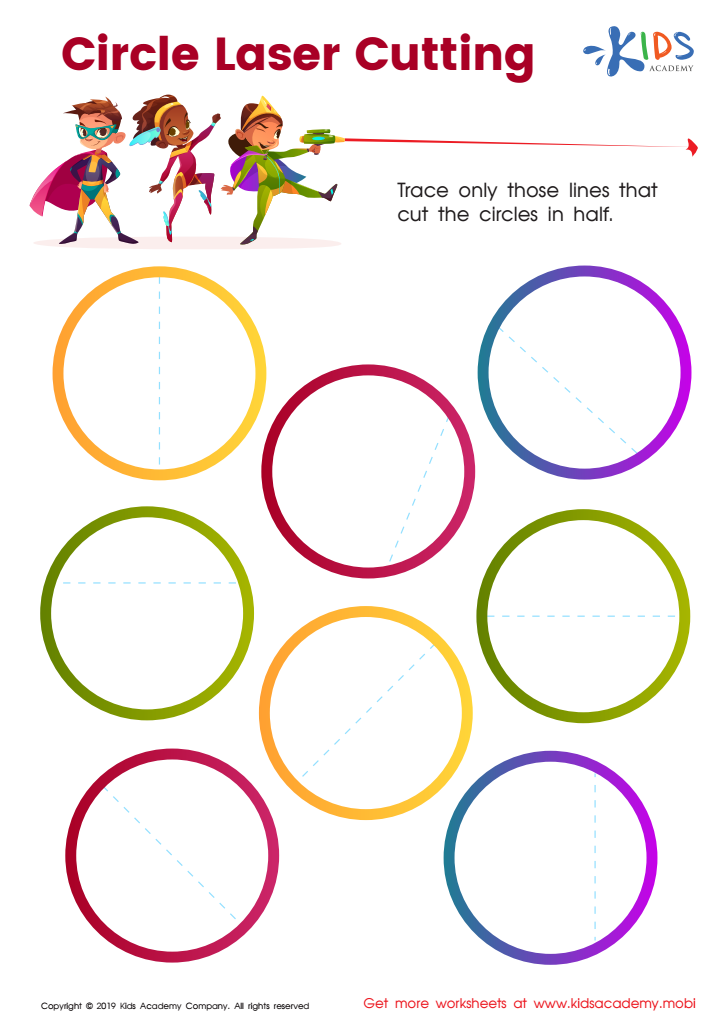
Circle Laser Cutting Worksheet








Shape recognition is a fundamental component of geometry that plays a significant role in a child's cognitive development, particularly in the second grade. Parents and teachers should care about this skill because it lays the groundwork for various mathematical understandings that children will encounter in later grades. Recognizing shapes helps students develop spatial awareness, enabling them to understand concepts such as symmetry, patterns, and the properties of different geometric figures.
Moreover, shape recognition fosters problem-solving skills, as children learn to categorize and compare different shapes. This analytical thinking is crucial not only in mathematics but in everyday life, where shape recognition can inform decisions, from understanding maps to engaging in art activities.
Additionally, shape recognition can be linked to an appreciation of visual and spatial relationships, enhancing a child’s creative expression and also benefiting subjects like science and technology, where geometry often plays a crucial role.
Ultimately, promoting shape recognition in Grade 2 encourages cognitive skills that contribute to a child’s overall academic success and enhances their ability to navigate the world around them. This early focus empowers children to build a strong mathematical foundation that they can draw on throughout their educational journey.