Enhancing problem-solving skills Normal Grade 3 Worksheets
5 filtered results
Difficulty Level
Grade
Age
-
From - To
Subject
Activity
Standards
Enhancing problem-solving skills is vital for third graders as they navigate more complex concepts. Our specially designed worksheets cater to developing critical thinking and analytical skills, fostering independent learning in a fun and engaging manner. Each worksheet provides various scenarios that encourage students to identify problems, think through solutions, and apply mathematical reasoning. The activities are aligned with educational standards, ensuring they effectively support curriculum goals. With vibrant visuals and age-appropriate challenges, these worksheets motivate learners to explore different problem-solving strategies. Equip your child with the tools they need to succeed academically while building confidence and resilience in their learning journey.
Favorites
With answer key
Interactive
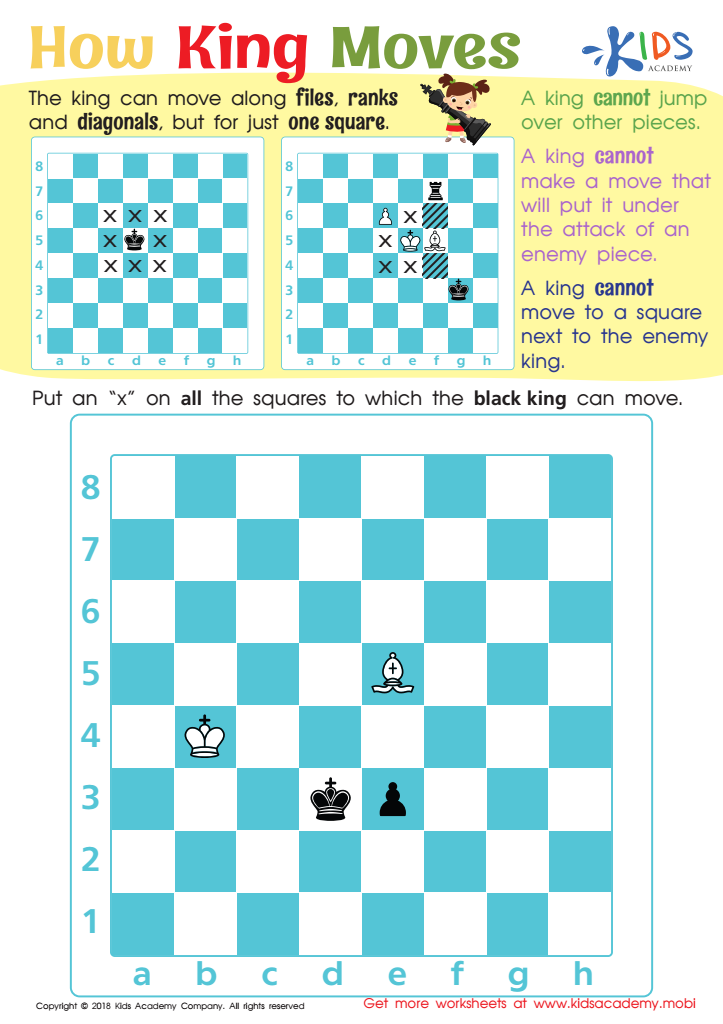
How King Moves Worksheet
Teach your kids the fundamentals of chess with this worksheet! The goal is to checkmate the opponent's king, so it must be protected at all times. The king moves along files, ranks, and diagonals (except one square at a time), and cannot move to a square next to the enemy king. Your kids will soon master the art of checkmate!
 Assign to My Students
How King Moves Worksheet
Worksheet
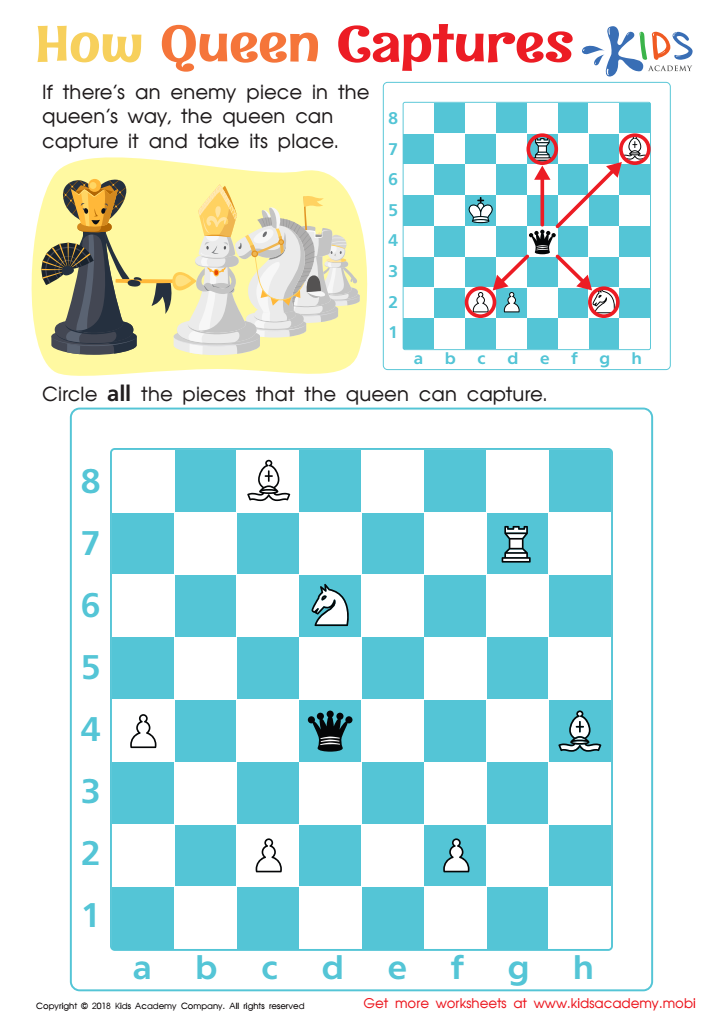
How Queen Captures Worksheet
Chess is a great game for sharpening math skills, strategic thinking, and knowledge of how each piece moves. If your child is interested, introduce them with this worksheet. It demonstrates how the queen can capture opposing pieces, such as another queen, and take their place.
How Queen Captures Worksheet
Worksheet
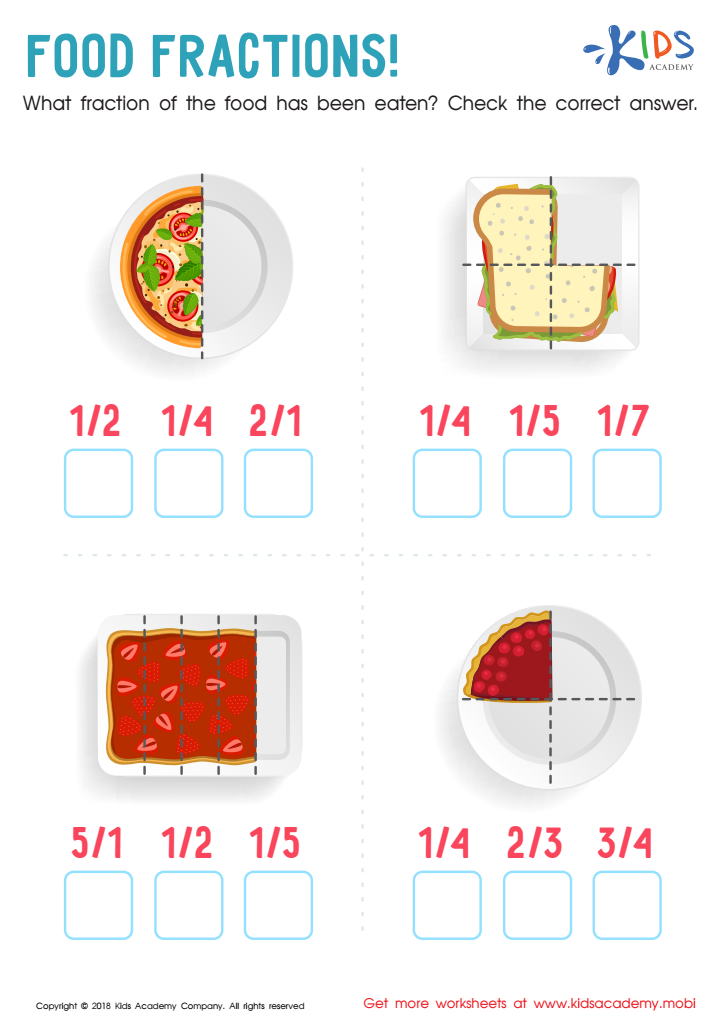
Food Fractions Worksheet
Test your child's understanding of fractions with this Food Fractions worksheet. Ask them to identify what fraction of the food in the four pictures has been eaten and select the correct answer from the options provided. See how well they understand your lessons!
Food Fractions Worksheet
Worksheet
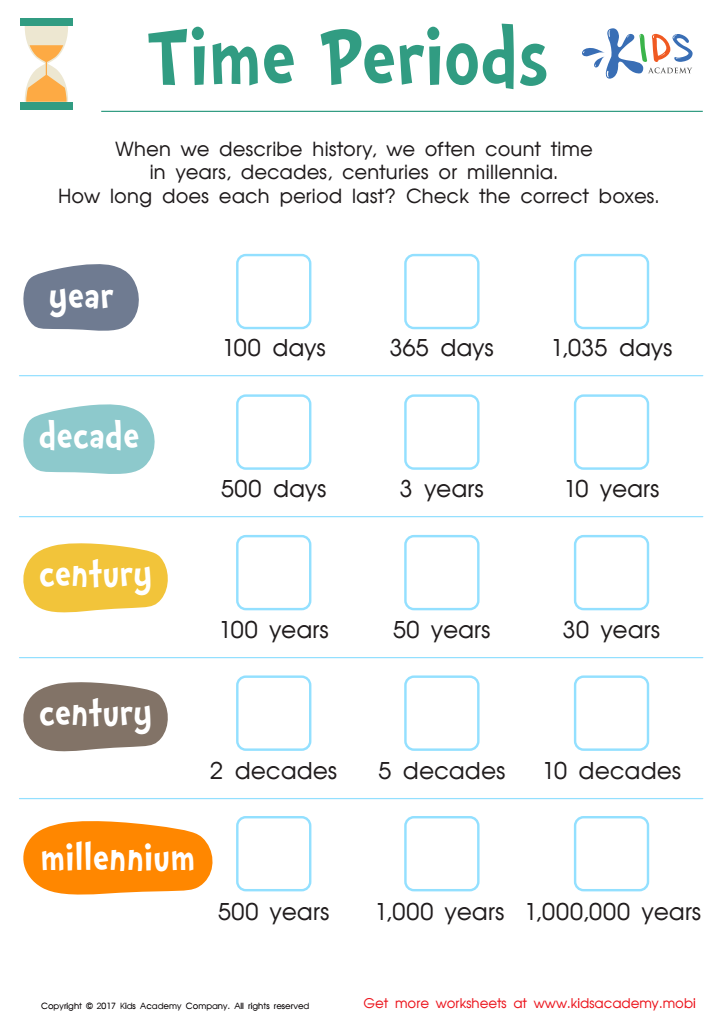
Time Periods Worksheet
Introduce your child to the concept of time periods with this worksheet! It quizzes kids on groupings of time such as decades and centuries, helping them understand that the earth was here long before them! Download the PDF to get started.
Time Periods Worksheet
Worksheet
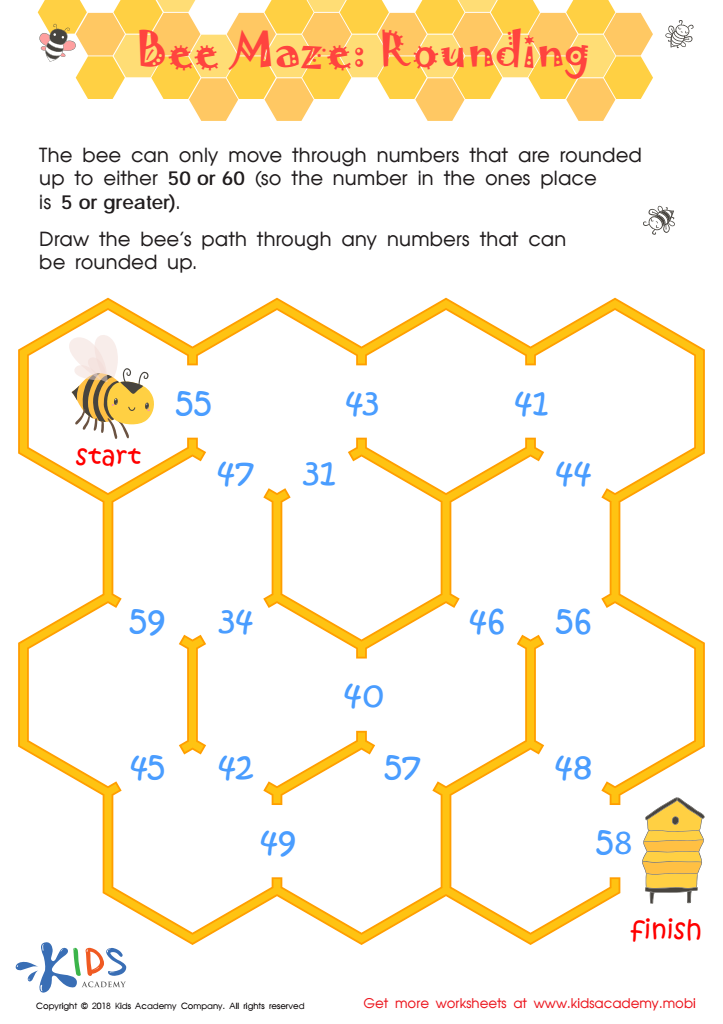
Bee Maze Rounding Worksheet
Round up the bee! Your child will practice rounding with this fun maze worksheet. Kids round up to 50 or 60, evaluating each number and guiding the bee to his home. Get ready for some thought-stretching fun!
Bee Maze Rounding Worksheet
Worksheet
Join Kids Academy for Free
Who is primarily going to use this learning content?








Enhancing problem-solving skills in third graders is crucial for several reasons. At this developmental stage, children are beginning to think more critically and independently. Teaching them effective problem-solving strategies not only fosters their cognitive growth but also equips them with essential life skills. When parents and teachers encourage children to tackle challenges, it instills confidence and resilience, realizing that difficulties are opportunities for learning.
Moreover, problem-solving skills promote creativity. As students learn to think outside the box and consider multiple solutions, they enhance their ability to innovate. This is vital for their academic success as they progress to higher grades where complex problem-solving tasks become more prevalent.
Additionally, strong problem-solving skills contribute to emotional and social development. Children learn to navigate conflicts with peers and manage frustrations, which improves their teamwork and communication abilities. Ultimately, supporting their problem-solving skills lays a foundation for a growth mindset, teaching children that effort and perseverance lead to success.
Therefore, parents and teachers should prioritize problem-solving instruction, creating environments where students can experiment, make mistakes, and grow. This investment is crucial for developing well-rounded, capable individuals ready to face a complex world.