Mental arithmetic skills Normal Grade 3 Math Worksheets
3 filtered results
-
From - To
Enhance your Grade 3 students' mental arithmetic skills with our specially designed math worksheets! These engaging and interactive resources are perfect for helping young learners practice essential math concepts, including addition, subtraction, multiplication, and division, all without the use of calculators. Our worksheets are crafted to foster quick thinking and improve problem-solving abilities through fun exercises and challenges. With a variety of formats and difficulty levels, these materials align perfectly with educational standards, making learning enjoyable and effective. Empower your students to gain confidence in their math skills while developing a strong foundation for future success. Get started today for an enriching experience!
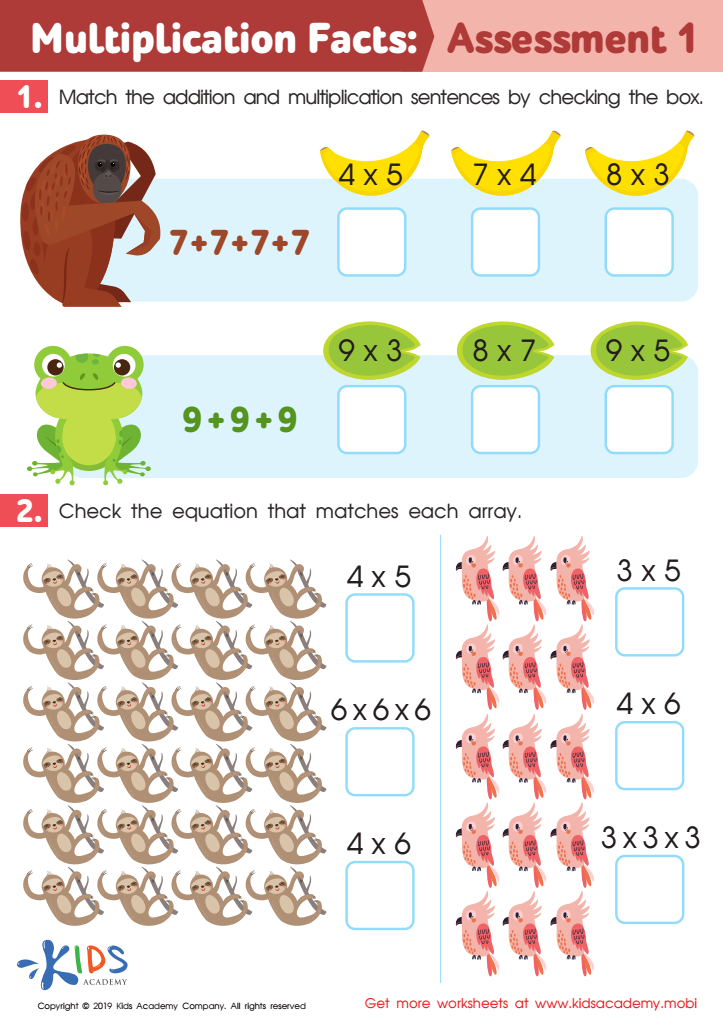
Multiplication Facts: Assessment 1 Worksheet
 Assign to My Students
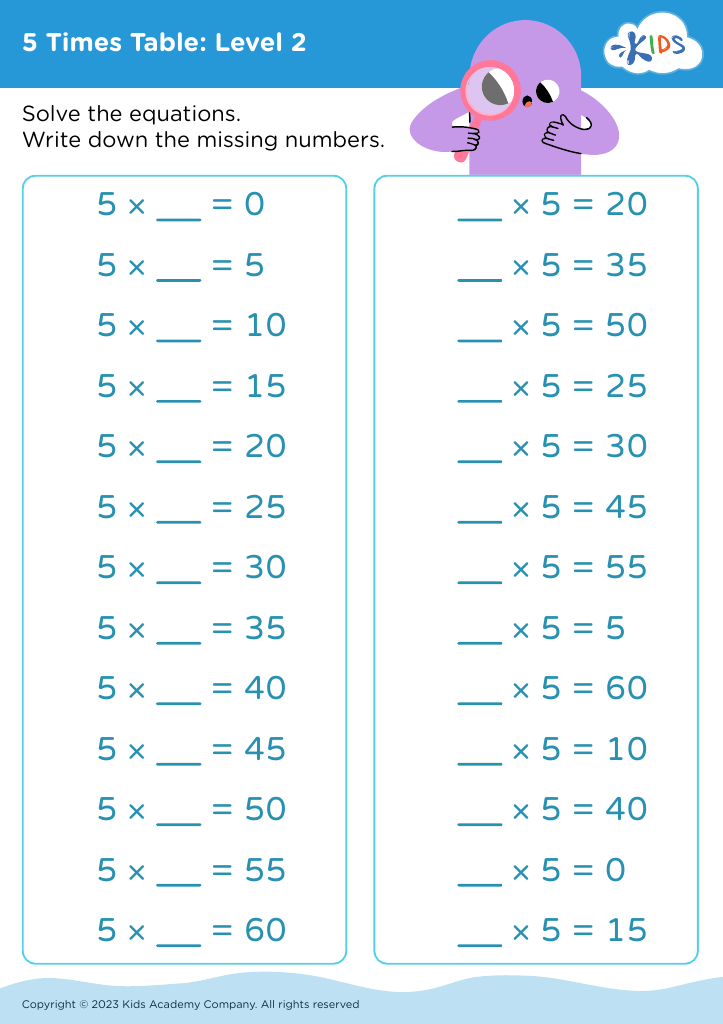
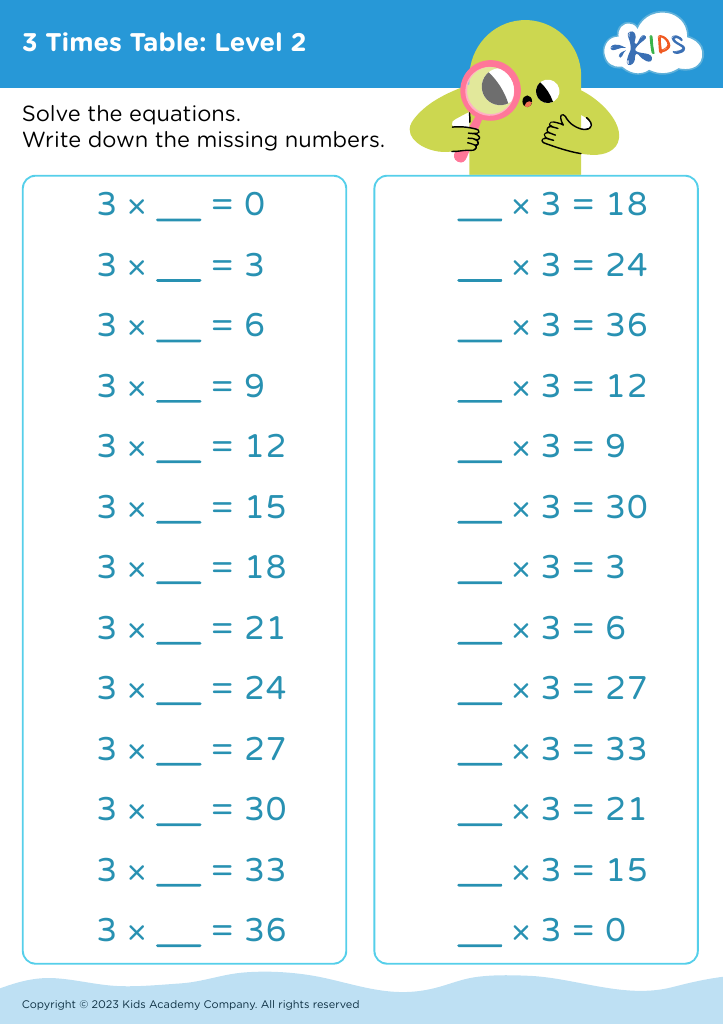






Mental arithmetic skills are essential for Grade 3 students, and parents and teachers should prioritize their development for several reasons. First, mastering mental math helps improve students' number sense, which is critical for understanding more complex mathematical concepts later on. By confidently performing calculations in their heads, children learn to recognize patterns, relationships, and the importance of number magnitudes.
Additionally, mental arithmetic fosters problem-solving and critical thinking abilities. When students can quickly compute sums, differences, products, and quotients, they can focus on the reasoning behind math problems rather than becoming bogged down by lengthy written calculations. This skill supports not only math success but also promotes persistence and resilience in tackling challenges.
Moreover, mental math skills boost self-confidence. As children practice and master calculations, they feel more assured in their abilities, encouraging a growth mindset and an enthusiasm for learning. Lastly, the everyday application of mental arithmetic in real-life situations—like budgeting, cooking, and shopping—illustrates its practical importance, making math relevant and engaging for students.
Overall, nurturing mental arithmetic skills in Grade 3 lays a solid foundation for future academic achievement and real-world applications.