Addition & Subtraction worksheets activities for Ages 4-8 - Page 2
26 filtered results
-
From - To
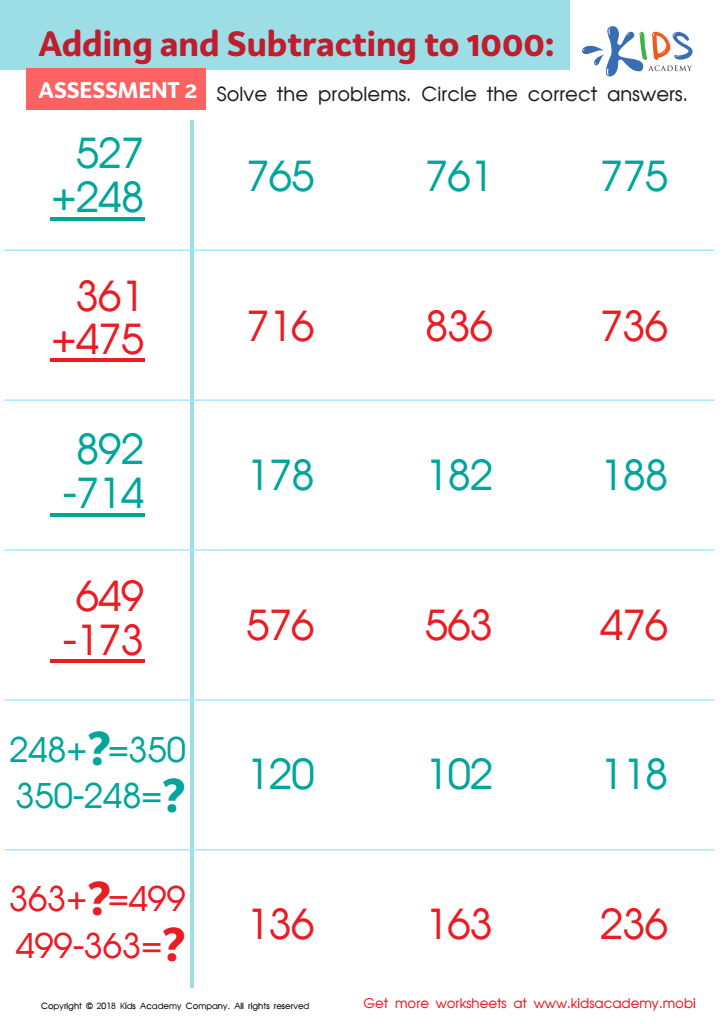
Adding and Subtracting to 1 Worksheet: Assessment 2
 Assign to My Students
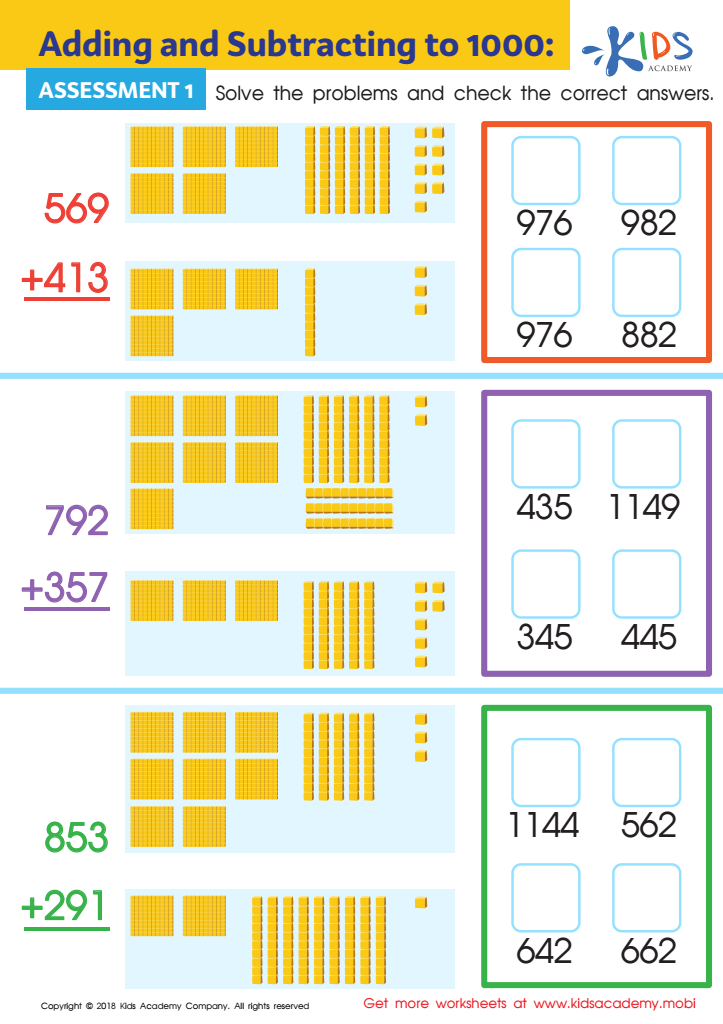
Adding and Subtracting to 1 Worksheet: Assessment 1








Parents and teachers should prioritize addition and subtraction activities for ages 4-8 because these foundational skills are essential for early mathematical understanding. Engaging children with these concepts boosts their confidence and lays the groundwork for more complex problem-solving in the future. Early exposure to addition and subtraction helps children develop critical thinking and reasoning skills, which are vital not only in math but also in everyday life.
These activities enhance cognitive development, as children learn to recognize patterns, classify objects, and make connections between numbers. Moreover, incorporating fun and interactive methods—such as games, puzzles, or relatable scenarios—during these activities captures children's interest and makes learning enjoyable.
Additionally, mastering basic addition and subtraction fosters numeracy, enabling children to grasp more complex topics like multiplication and division later on. Early skill development also supports the Common Core State Standards, ensuring that children meet educational benchmarks as they progress.
Ultimately, comfortable and competent youngsters in math demonstrate improved academic performance across various subjects, promoting greater engagement in school. By valuing early mathematical activities, parents and teachers equip children with the tools they need to succeed, setting the stage for lifelong learning and achievement.








