Fun and Engaging Printable Physical Science Worksheets for 5-Year-Olds - Knowledge Check Activities
2 filtered results
-
From - To
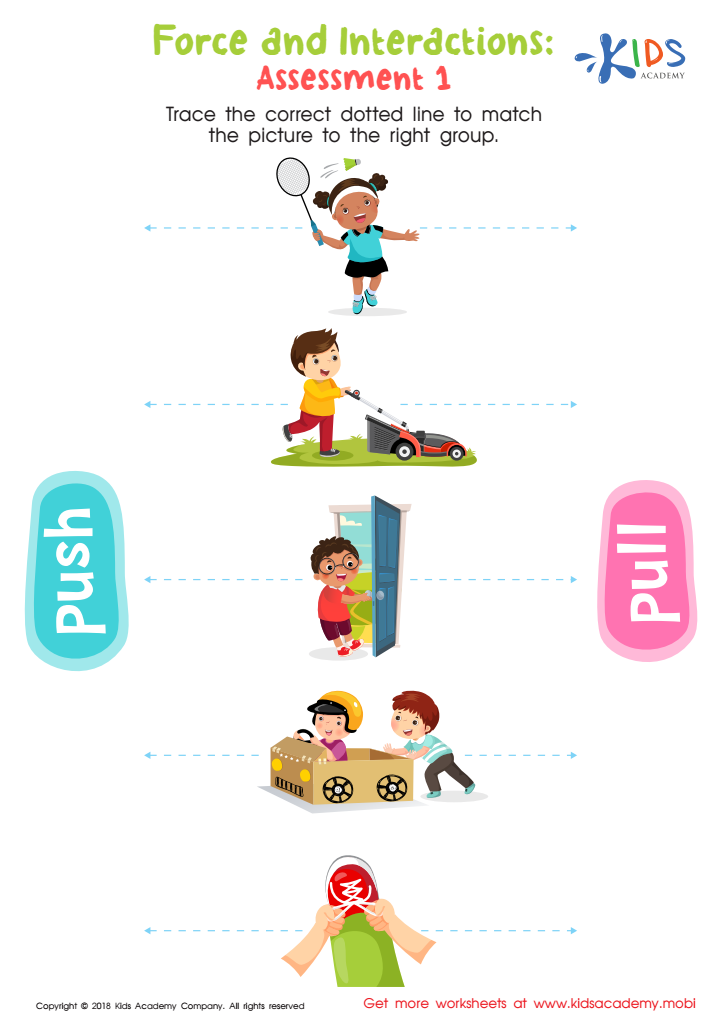
Force and Interactions: Assessment 2 Worksheet
 Assign to My Students
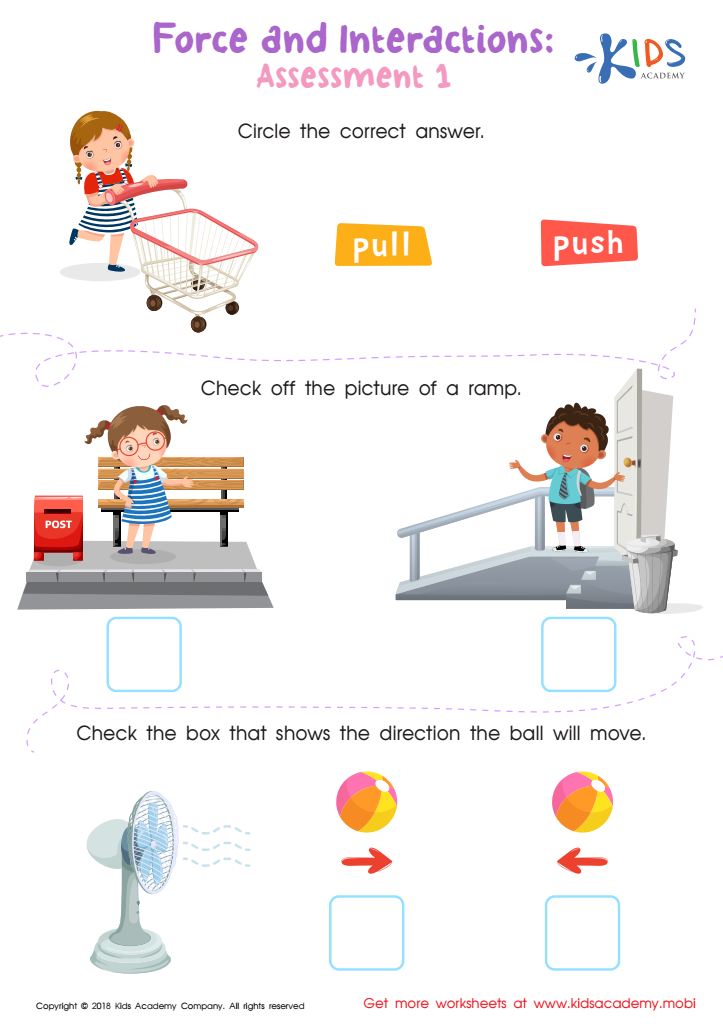
Force and Interactions: Assessment 1 Worksheet






.jpg)

Physical Science worksheets activities offer a myriad of benefits for students of all ages, making them an invaluable tool in the educational process. These activities encompass a broad range of topics from forces and motion to properties of matter, and energy transformations, providing a well-rounded foundation in physical science principles. Here’s why they are so useful:
Engagement and Interaction: Physical Science worksheets activities engage students in a hands-on manner, making abstract concepts tangible. This interactive approach not only captivates students' attention but also enhances their understanding by allowing them to apply theoretical knowledge in practical scenarios.
Reinforcement of Concepts: Through the repetitive yet varied approach of worksheets, students can reinforce their learning. This practice helps solidify concepts in their minds, making it easier to recall information during exams or apply knowledge in real-life situations.
Differentiated Learning: Not all students learn at the same pace or in the same way. Physical Science worksheets activities can be tailored to different learning styles and levels of understanding, ensuring that every student can grasp complex concepts at their own pace. This individualized approach boosts confidence and fosters a positive learning environment.
Critical Thinking and Problem Solving: Many worksheets are designed to challenge students to think critically and solve problems. This not only improves their analytical skills but also encourages a deeper understanding of physical science principles, as students must apply what they have learned in new and often complex situations.
Assessment Tool: Educators can use Physical Science worksheets activities as an effective assessment tool to gauge students’ understanding and progress. The results can guide future teaching strategies, highlighting areas that require more focus or introducing more advanced concepts when appropriate.
In conclusion, Physical Science worksheets activities are a cornerstone of effective science education. They transform abstract scientific theories into engaging, understandable, and applicable knowledge, laying a solid foundation for future scientific exploration and understanding.








