Physical Science worksheets activities for Ages 6-9
6 filtered results
-
From - To
Explore our engaging Physical Science worksheets and activities designed specifically for children aged 6-9! These resources encourage young learners to delve into the fundamentals of matter, energy, and the scientific principles that shape their world. Each worksheet combines fun exercises, hands-on activities, and critical thinking questions, making science accessible and enjoyable. Whether reinforcing classroom learning or stimulating curiosity at home, our printables foster a strong foundation in essential scientific concepts. Perfect for teachers and parents alike, these interactive activities inspire a lifelong love for science in young minds. Discover the joy of learning with our Physical Science worksheets today!
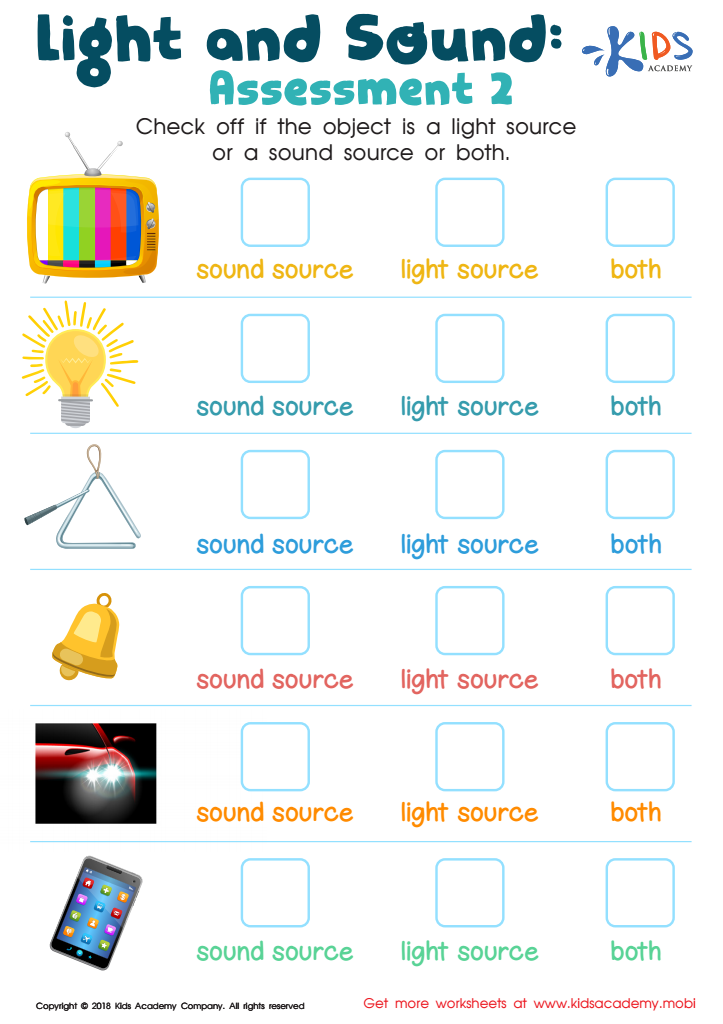
Light and Sound: Assessment 2 Worksheet
 Assign to My Students
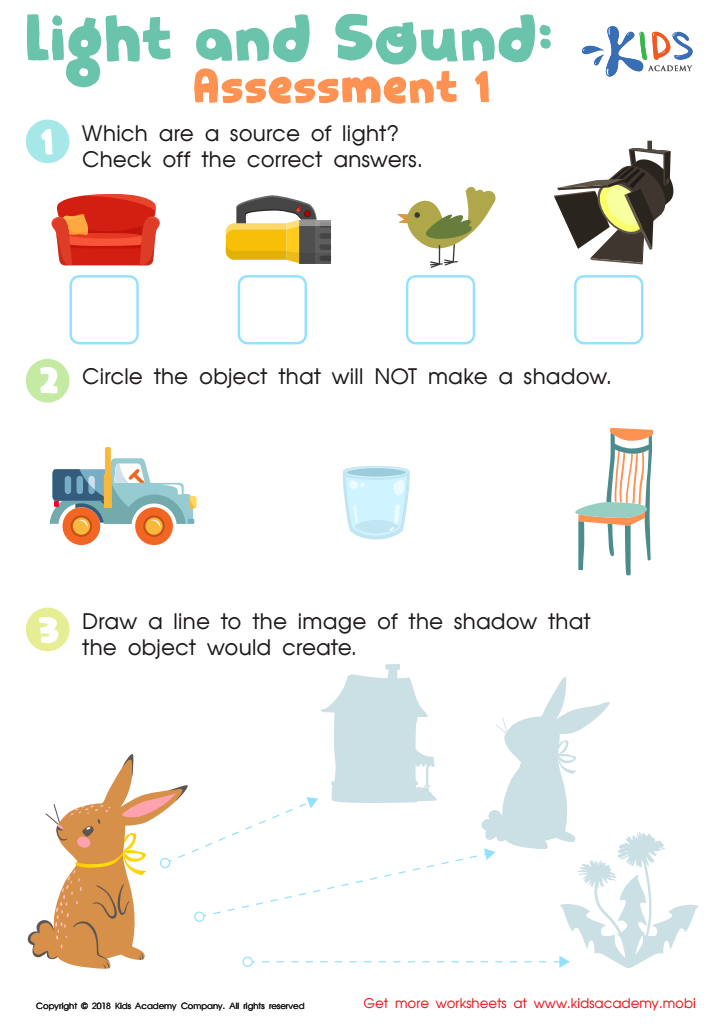
Light and Sound: Assessment 1 Worksheet
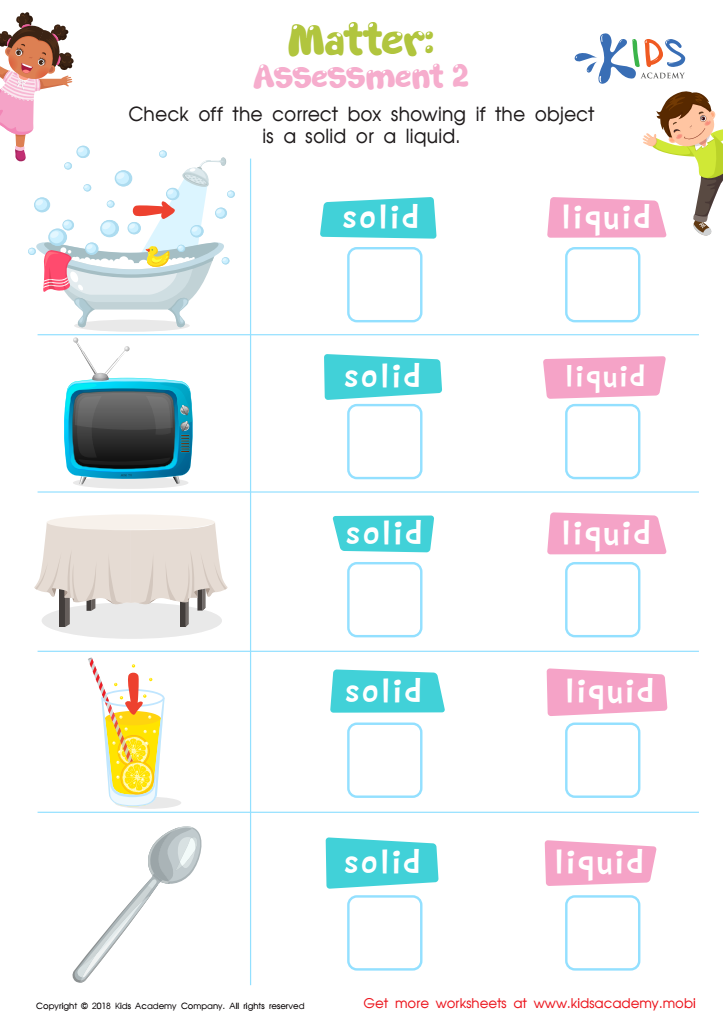
Matter: Assessment 2 Worksheet
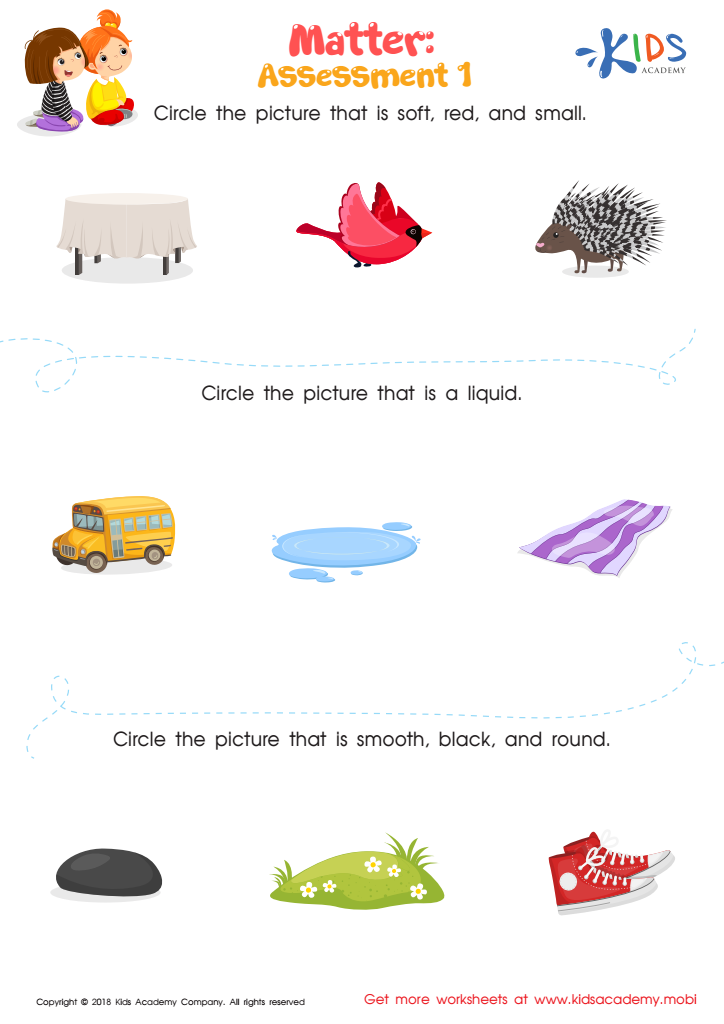
Matter: Assessment 1 Worksheet
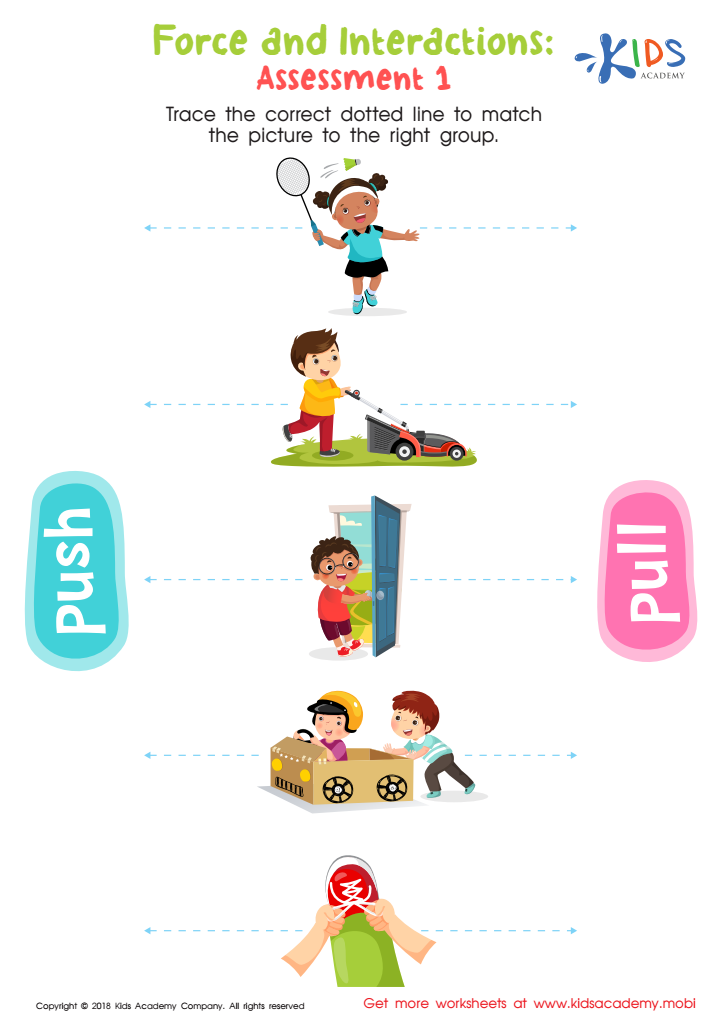
Force and Interactions: Assessment 2 Worksheet
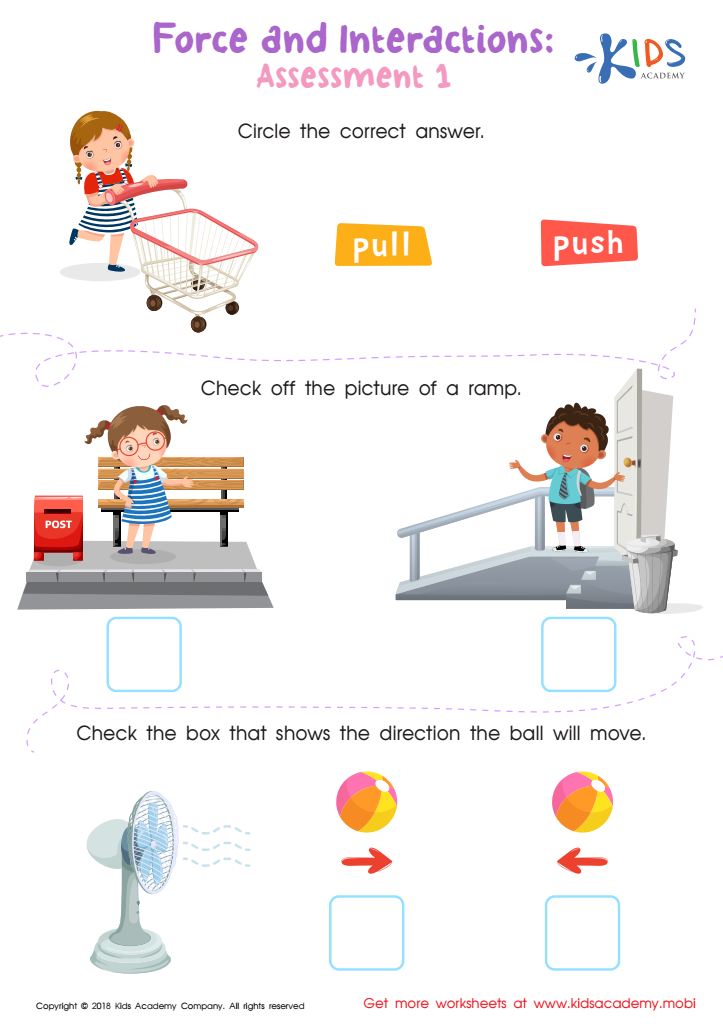
Force and Interactions: Assessment 1 Worksheet







Parents and teachers should prioritize Physical Science activities for children aged 6-9 because these experiences lay the foundation for critical thinking, curiosity, and a fundamental understanding of the world. At this developmental stage, children are naturally inquisitive and eager to explore their surroundings. Engaging them in hands-on physical science activities fosters a love for learning and promotes essential skills like observation, experimentation, and problem-solving.
Participating in physical science activities helps children grasp key concepts such as forces, motion, energy, and matter in a tangible way. For instance, simple experiments involving gravity or magnetism awaken their interest and comprehension of scientific principles, making abstract concepts concrete. Furthermore, such activities encourage teamwork and communication when done in groups, cultivating social skills alongside scientific literacy.
Additionally, developing a strong foundation in physical science can spark an interest in STEM (Science, Technology, Engineering, and Mathematics) fields, which are critical for future academic and career opportunities. As society increasingly relies on technology and innovation, early exposure to physical science is essential for preparing children to thrive in an ever-evolving world. By nurturing their curiosity through engaging science activities, adults play a vital role in shaping the scientists, engineers, and informed citizens of tomorrow.








