
Easy Tracing Shapes worksheets activities for 4-Year-Olds
2 filtered results
Difficulty Level
Grade
Age
-
From - To
Subject
Activity
Standards
Introducing our Easy Tracing Shapes Worksheets Activities, designed to captivate and educate young minds! Perfect for preschoolers and kindergarteners, these worksheets offer a fun, engaging way to develop fine motor skills and recognize geometric shapes. Our easy-to-follow activities guide little learners through tracing various shapes, helping to build a solid foundation in early geometry concepts. With vibrant designs and clear instructions, our Easy Tracing Shapes Worksheets Activities are an excellent resource for parents and teachers aiming to enhance children's learning experience. Dive into hours of educational fun and watch your child's confidence grow with each shape they master!
Favorites
With answer key
Interactive
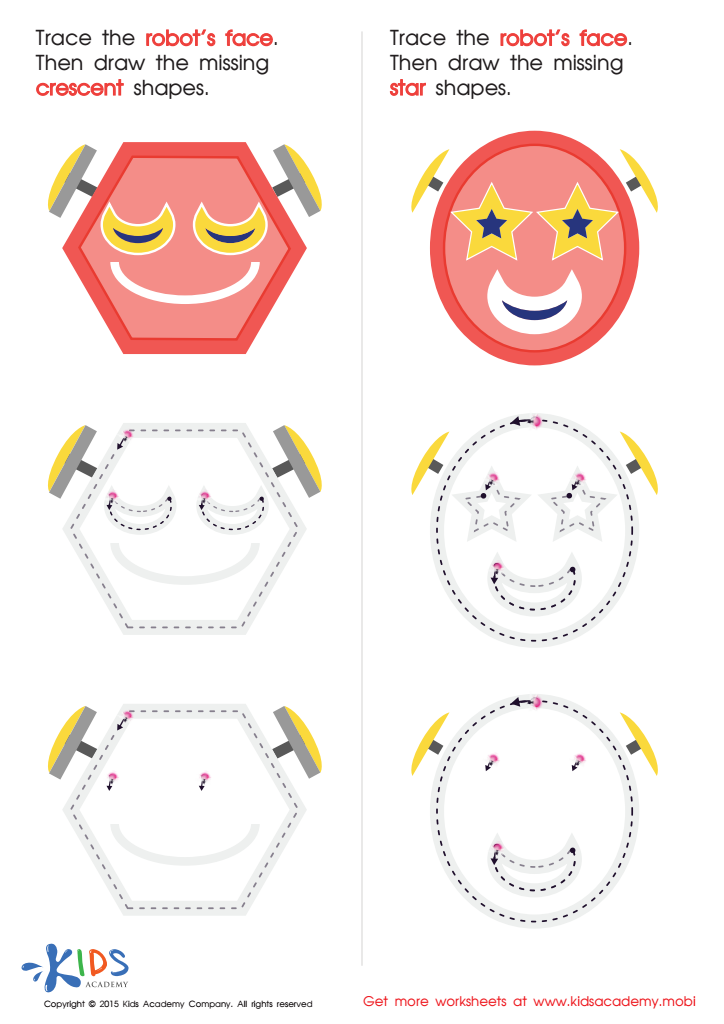
Composing a Robot's Face of Crescents And Stars Worksheet
Get free math geometry worksheets at Kids Academy! Help your child learn by practicing together - trace the robot's face and draw the missing crescent and star shapes. Be sure to remember their names! Have fun and learn with shapes for kids.
 Assign to My Students
Composing a Robot's Face of Crescents And Stars Worksheet
Worksheet
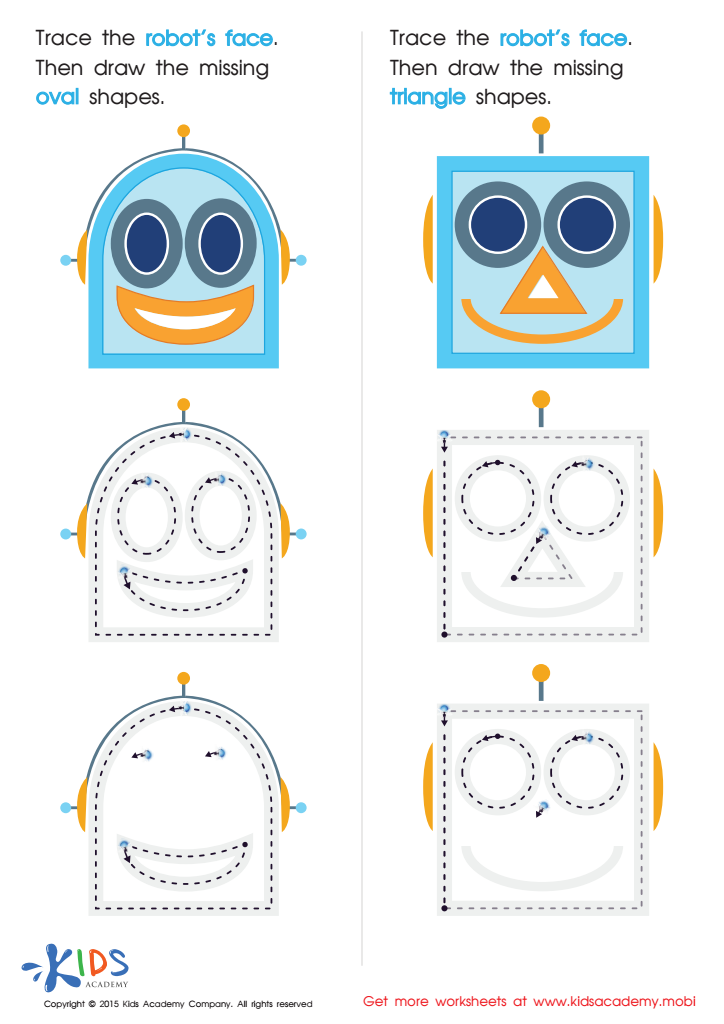
Drawing Ovals And Triangles with Fun Printable
Trace the face and draw missing ovals and triangles. Test your memory and recall shapes' names. Check if you remember how to draw them!
Drawing Ovals And Triangles with Fun Printable
Worksheet
Join Kids Academy for Free
Who is primarily going to use this learning content?








Easy Tracing Shapes worksheets activities are an invaluable resource for early childhood education, providing a foundation for the development of fine motor skills and spatial awareness in young learners. These activities, designed to be accessible and engaging, offer a structured approach to learning that can significantly enhance a child's ability to understand and interact with the world around them.
The utility of Easy Tracing Shapes worksheets activities lies in their simplicity and effectiveness. By guiding children through the process of tracing various shapes, these activities help to improve hand-eye coordination, a critical skill for writing, drawing, and many everyday tasks. As children trace over the lines, they learn to control their hand movements, improving precision and dexterity. This early practice is essential, setting the stage for more complex skills such as handwriting.
Moreover, Easy Tracing Shapes worksheets activities serve as an introduction to geometry, laying the groundwork for future mathematical understanding. Recognizing and naming shapes is not just a basic mathematical skill but also a key cognitive development milestone. As children engage with these worksheets, they learn to identify shapes in their environment, enhancing their observational skills and cognitive abilities.
Furthermore, these activities promote focus and patience. Completing a tracing worksheet requires a child to concentrate on the task at hand, fostering attention to detail and the ability to follow instructions. This discipline is beneficial across various aspects of learning and development.
In addition to the educational benefits, Easy Tracing Shapes worksheets activities are also highly accessible. Parents, caregivers, and educators can easily integrate these activities into a child’s daily routine, providing a productive and enjoyable learning experience without the need for specialized tools or materials.
In summary, Easy Tracing Shapes worksheets activities are a fundamental component of early childhood education. By fostering fine motor skills, introducing basic geometry, and promoting cognitive development, these activities equip children with the skills they need to succeed in their educational journey and beyond.








