Easy Tracing Lines and Curves worksheets activities for 5-Year-Olds
1 filtered results
-
From - To
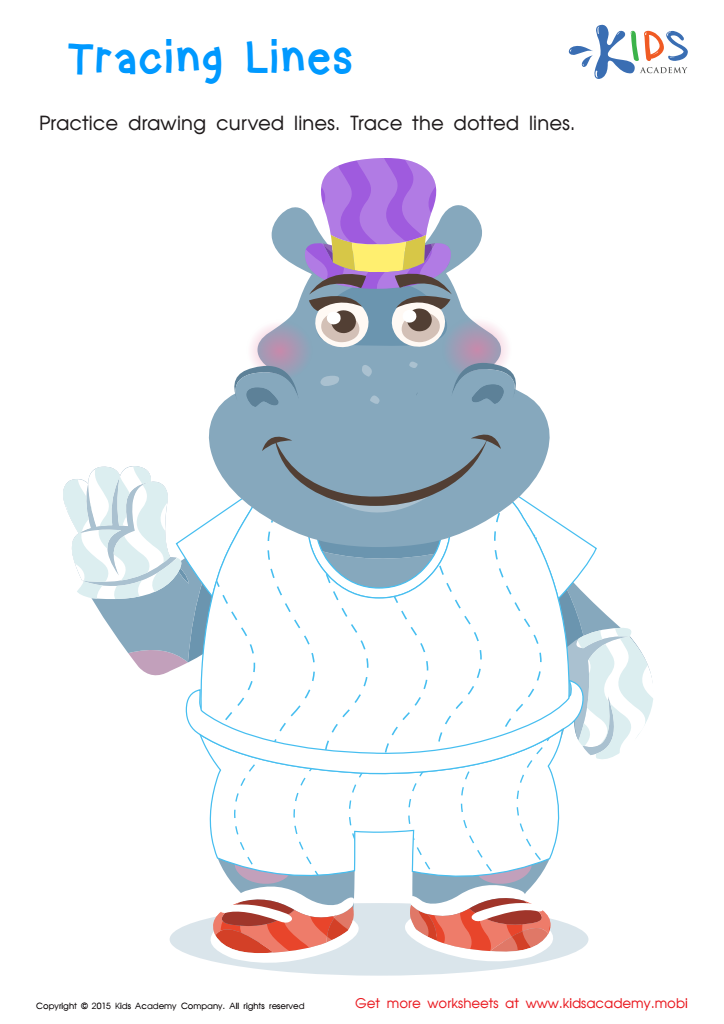
Tracing Lines Worksheet
 Assign to My Students





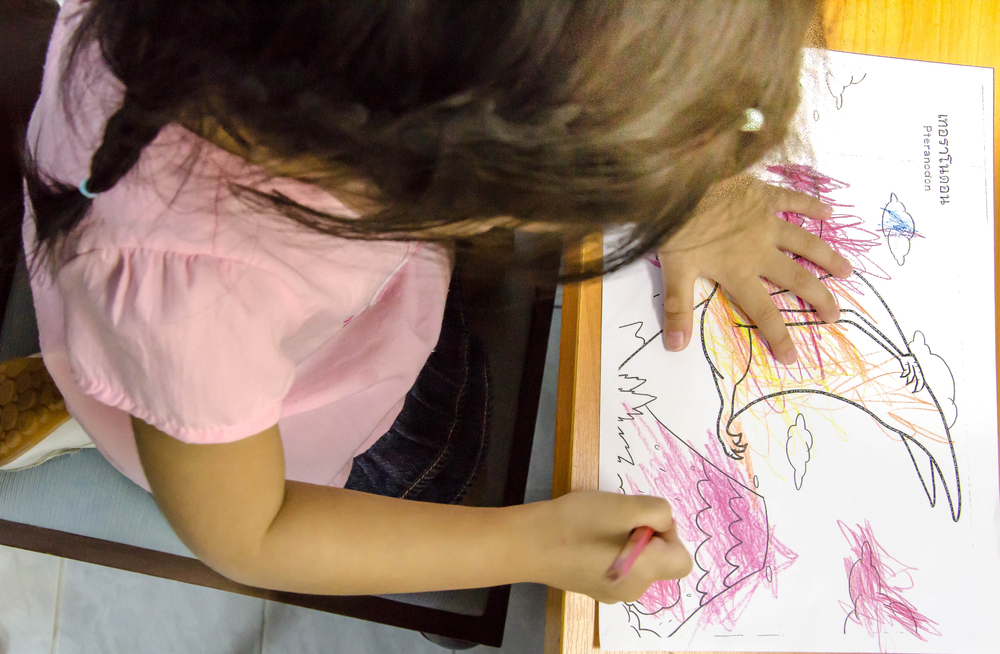


Easy Tracing Lines and Curves worksheets activities play a crucial role in a child's early development, offering a multitude of benefits that extend far beyond simple drawing skills. These engaging and straightforward activities are designed to cater to young learners, providing them with the foundational skills they need for future academic success and daily tasks.
First and foremost, Easy Tracing Lines and Curves worksheets activities are instrumental in enhancing fine motor skills. As children trace over lines and curves, they develop control over small muscles in their hands and fingers. This improved dexterity is essential not only for writing but also for other tasks requiring fine motor skills, such as tying shoelaces or buttoning clothes.
Moreover, these activities lay the groundwork for handwriting skills. Tracing lines and curves is a precursor to forming letters and numbers. By practicing these basic shapes, children learn the motions needed to write alphabet letters and numerals effectively and legibly. This early exposure helps to ease the transition into formal writing, making it less daunting for young learners.
Cognitive development is another significant benefit of Easy Tracing Lines and Curves worksheets activities. These exercises encourage children to follow directions, focus on the task at hand, and recognize patterns. Such skills are vital for academic achievement and problem-solving in everyday life.
Additionally, these tracing activities can enhance visual spatial skills. Children learn to understand and interpret the space around them and on the paper. They begin to grasp concepts like up and down, left and right, as well as the orientation of shapes and lines, which are critical for reading and mathematical reasoning.
Lastly, the simplicity and flexibility of Easy Tracing Lines and Curves worksheets make them accessible and enjoyable. Children can progress at their own pace, experiencing a sense of accomplishment with each line and curve they master. This boosts their confidence and fosters a positive attitude towards learning.
In conclusion, Easy Tracing Lines and Curves worksheets activities are more than just a pastime. They are a vital educational tool that prepares children for future learning challenges, making them an invaluable addition to early childhood education.








