
Extra Challenge Tracing Numbers worksheets activities for Ages 3-4
2 filtered results
Difficulty Level
Grade
Age
-
From - To
Subject
Activity
Standards
Unlock the world of numbers for your young learners with our Extra Challenge Tracing Numbers worksheets activities! Designed to engage and stimulate young minds, these activities offer a unique blend of fun and education. Perfect for preschoolers and kindergarteners, our worksheets provide an extra challenge to those eager to master their numerical skills early on. Through a series of carefully crafted tracing exercises, children will not only learn to recognize and write numbers but also develop their fine motor skills. Dive into our Extra Challenge Tracing Numbers worksheets today and watch your little ones flourish in their mathematical journey!
Favorites
With answer key
Interactive
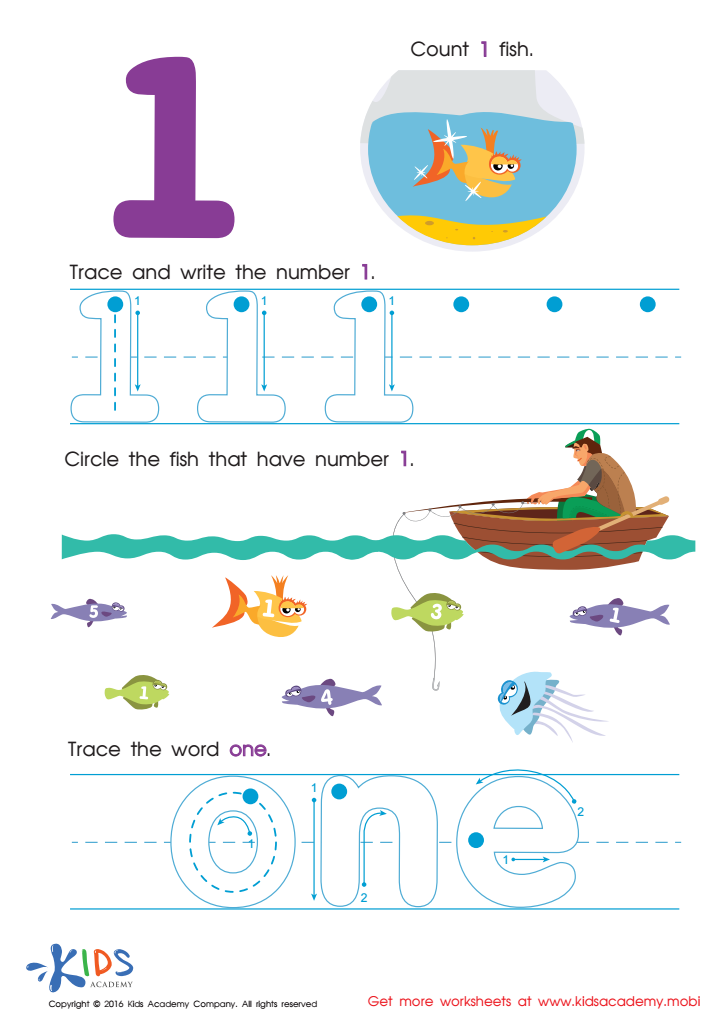
Learning to Write 1 Worksheet
Learning to write numbers can be easy and fun! Get this new number worksheet to help your child excel. Practice counting, tracing and writing the number “one”, then circle the fish with “1” on them. Revise spelling and have fun! Get more tracing numbers worksheets at Kids Academy and enjoy the learning process.
 Assign to My Students
Learning to Write 1 Worksheet
Worksheet
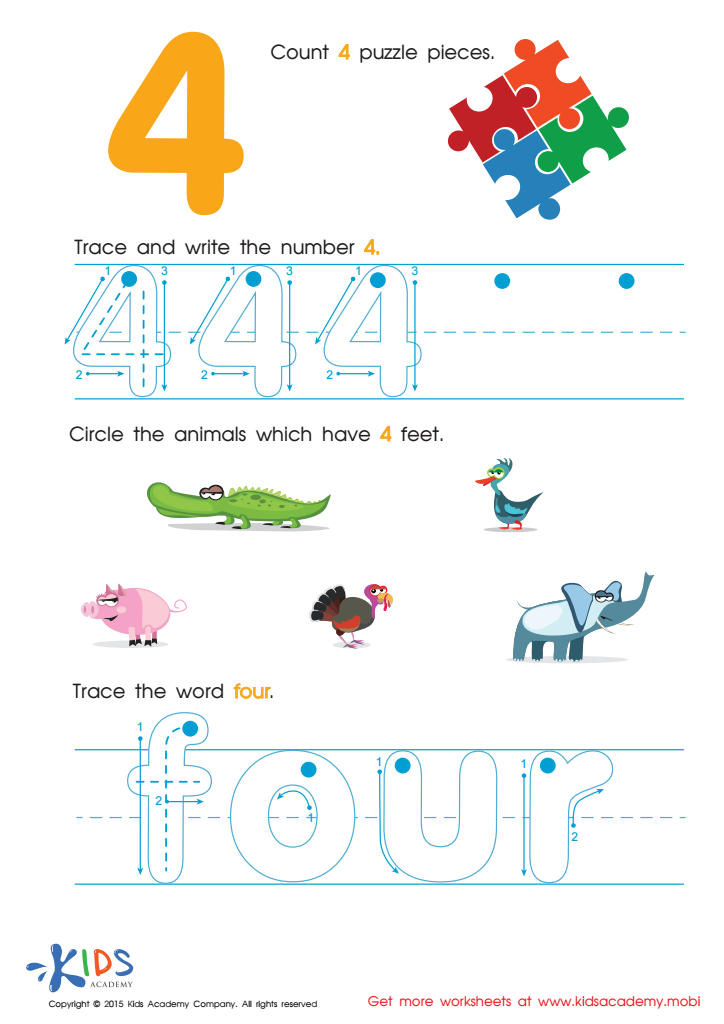
Teaching Children to Write Number 4 Worksheet
Count the pieces of the puzzle - there are four. Trace the number and write it. Circle the animals with four feet. Trace the word "four" too. Kids Academy offers tracing numbers worksheets for preschoolers, making studies easy and effective.
Teaching Children to Write Number 4 Worksheet
Worksheet
Join Kids Academy for Free
Who is primarily going to use this learning content?






Extra Challenge Tracing Numbers worksheets activities are an invaluable tool in the educational journey of young learners. These activities are meticulously designed not only to introduce children to the world of numbers but also to refine their motor skills, enhance their concentration, and foster a positive attitude towards learning. The utility of Extra Challenge Tracing Numbers worksheets activities goes beyond the mere act of writing numbers; they embody a comprehensive approach to early childhood education that merits detailed exploration.
First and foremost, these worksheets activities provide an essential foundation for mathematical literacy. By engaging in Extra Challenge Tracing Numbers, children become familiar with the shapes and forms of numbers, which is a critical first step in understanding basic arithmetic, counting, and eventually, more complex mathematical concepts. The repetitive nature of tracing helps in reinforcing number recognition, a skill that is pivotal in the early stages of learning math.
Moreover, Extra Challenge Tracing Numbers worksheets activities are instrumental in developing fine motor skills. As young learners trace over numbers, they exercise control over their hand movements, which improves their handwriting and prepares them for tasks that require precision. This enhancement of dexterity and hand-eye coordination is beneficial not only in academic pursuits but in daily activities as well.
Furthermore, these activities encourage concentration and patience. Focusing on the task of tracing each number meticulously helps children develop the ability to concentrate on tasks for extended periods. This skill is invaluable in all areas of learning and personal development.
Additionally, Extra Challenge Tracing Numbers worksheets activities instill a sense of achievement in learners. Completing these exercises provides an immediate visual feedback, which is incredibly rewarding for children. This sense of accomplishment fosters a positive attitude towards learning and encourages them to embrace new challenges.
In conclusion, Extra Challenge Tracing Numbers worksheets activities are a multifaceted educational tool that supports early numeracy, refines motor skills, boosts concentration, and cultivates a love for learning. Their role in shaping the foundational skills of young learners cannot be overstated, making them an essential component of any effective early education curriculum.








