Filters

10 filtered results

Clear all filters
Favorites
With answer key
Interactive

10 filtered results

Difficulty Level

Grade


Explore our engaging Normal Science worksheets designed for children ages 3 to 7! Our activities provide a fun and interactive way for young learners to explore basic scientific concepts. From hands-on experiments to colorful illustrations, each worksheet encourages curiosity and fosters a love for learning. Kids will discover fundamental ideas about the natural world while developing critical thinking skills. Suitable for home or classroom use, these worksheets support early science education through enjoyable exercises that evoke wonder. Dive into a world of exploration and let your child’s scientific journey begin with our thoughtfully crafted activities! Perfect for budding scientists!

Check out this FREE Science Trial Lesson for age 3-7!

Exactly the Same, or Not

Favorites
With answer key
Interactive
  • Science
  • 3-7
  • Interactive
  • Normal
Animals and Plants: Assesment 2 Worksheet

Animals and Plants: Assessment 2 Worksheet

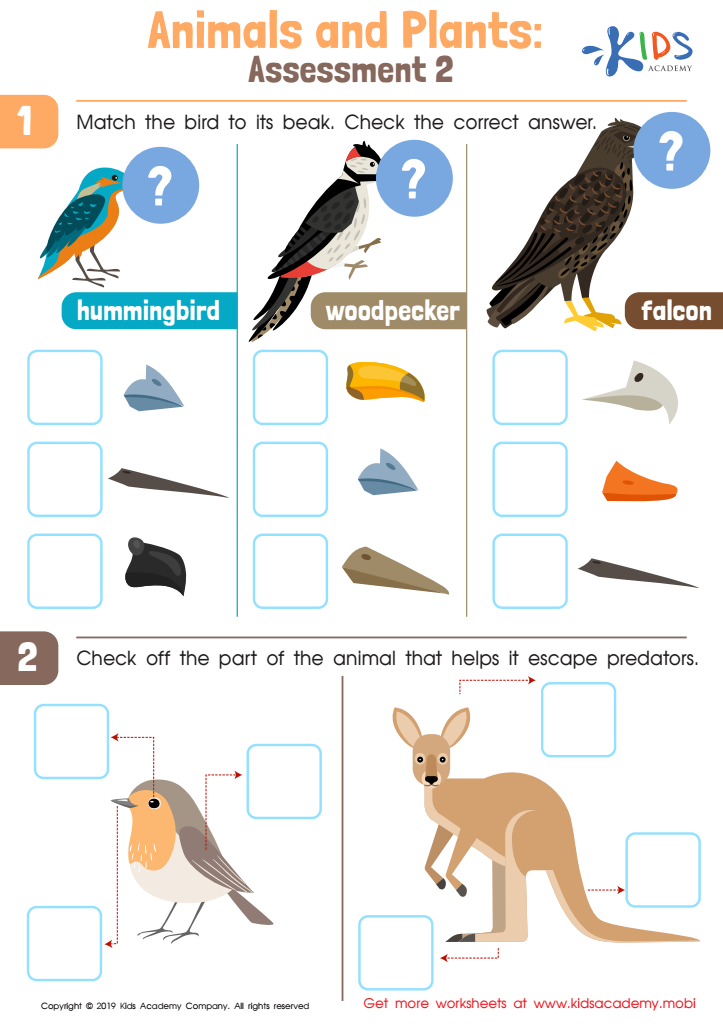
This free PDF is ideal to quickly test your child's knowledge of animal adaptations. They'll select the right beak patterns for hummingbird, woodpecker and falcon, and identify which parts of animals help them escape predators. It's easy to assess your kid's understanding.
Animals and Plants: Assessment 2 Worksheet
Worksheet
Animals and Plants: Assesment 1 Worksheet

Animals and Plants: Assessment 1 Worksheet
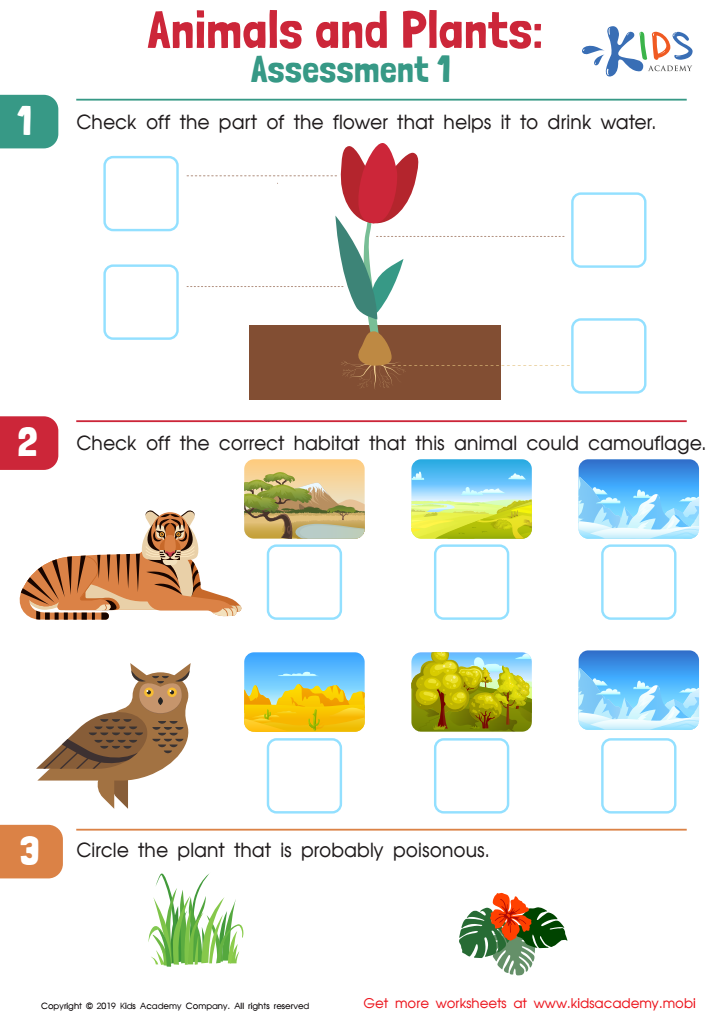
Do you want to easily assess your child's understanding of basic science concepts? This colorful PDF offers a free opportunity for them to test their knowledge about parts of a flower, poisonous plants, animal habitats and more! Bright pictures make it fun and easy for you to see what they know.
Animals and Plants: Assessment 1 Worksheet
Worksheet
Ecosystems: Assessment 2 Worksheet

Ecosystems: Assessment 2 Worksheet

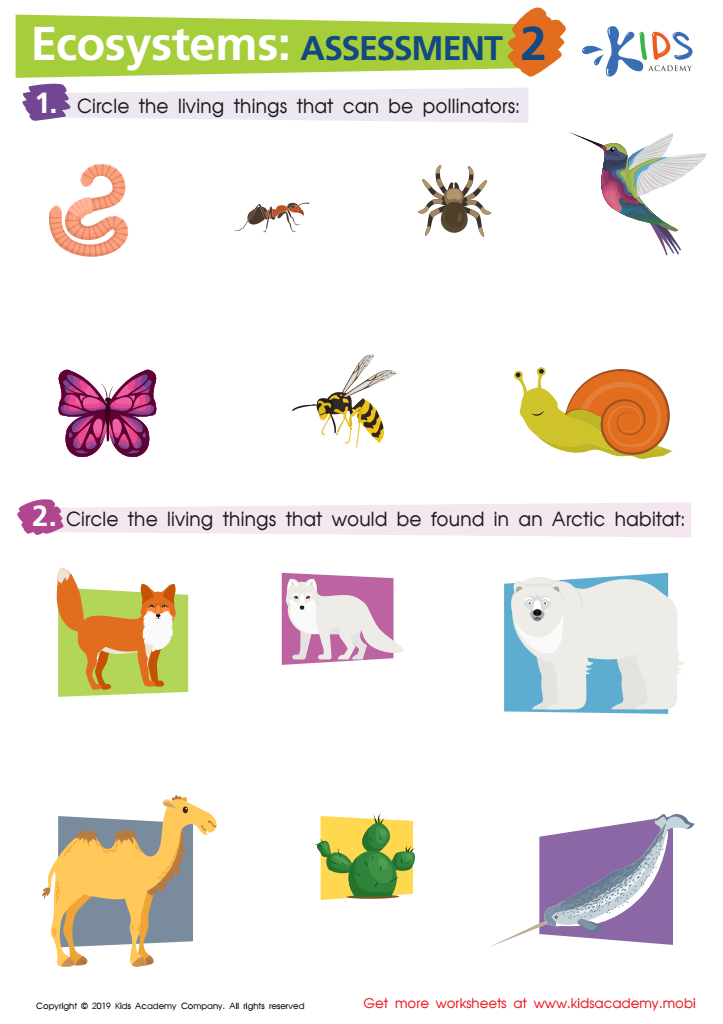
Pollinators are living or non-living things that help pollen spread. Test your child's knowledge of the ecosystem with this worksheet. Point out animals in the picture, then ask the simple questions. Help your child circle the right answers.
Ecosystems: Assessment 2 Worksheet
Worksheet
Ecosystems: Assessment 1 Worksheet

Ecosystems: Assessment 1 Worksheet

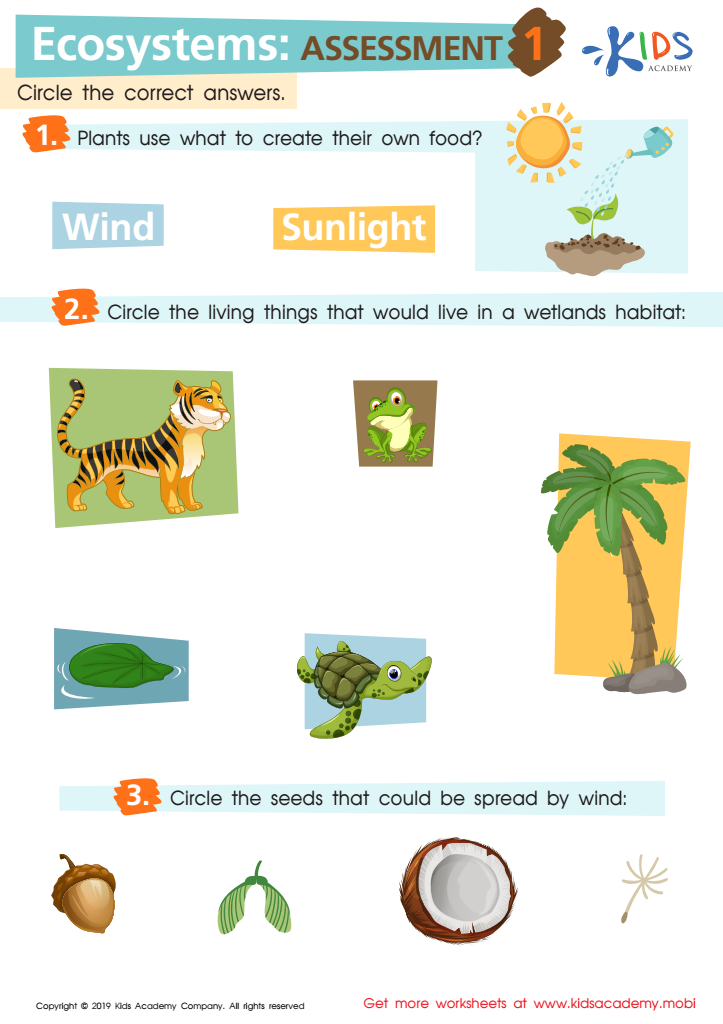
Before starting the worksheet, remind your child of the basics of the ecosystem, e.g. plants need light and winds carry small seeds. Encourage them to identify the images in the colorful printout. Ask them the questions and help them circle the correct answers.
Ecosystems: Assessment 1 Worksheet
Worksheet
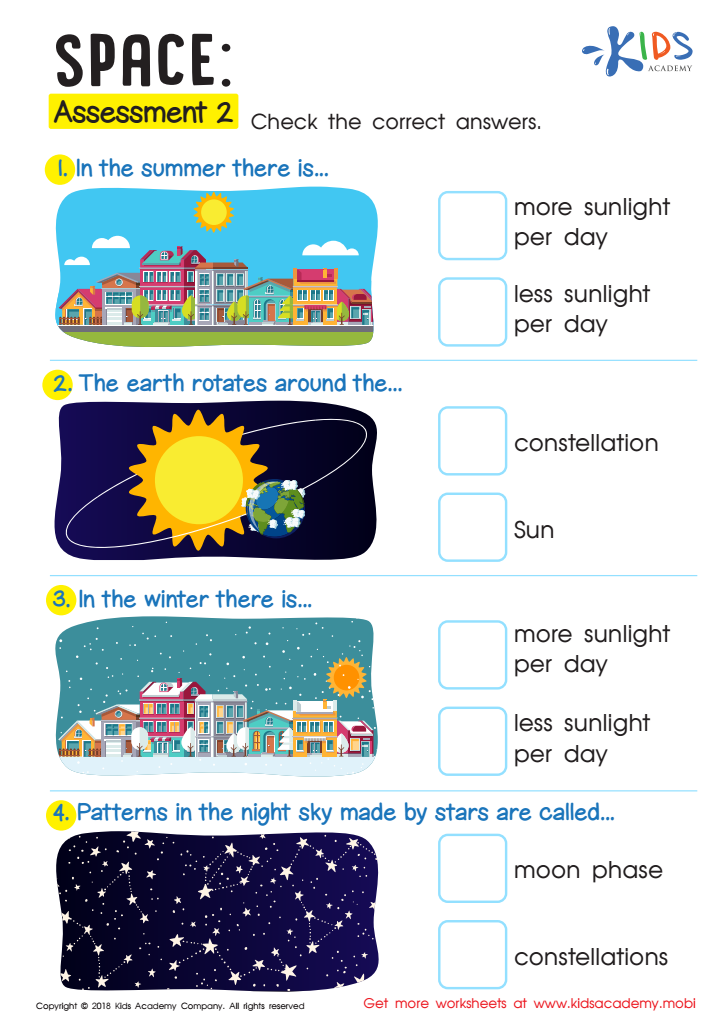
Space: Assessment 2 Worksheet

Space: Assessment 2 Worksheet

Test your kids' knowledge of the weather, constellations and Earth with this worksheet. Show them the 4 images and ask what's happening; then read the questions and options and help them pick the right answers. This printout is a helpful and fun way to learn!
Space: Assessment 2 Worksheet
Worksheet
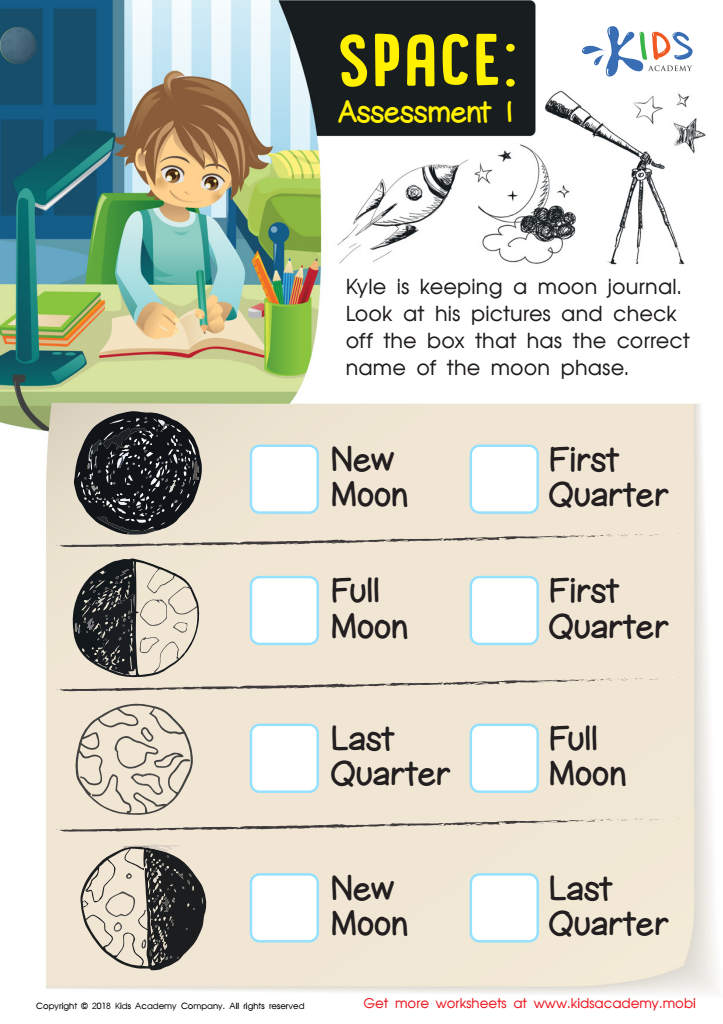
Space: Assessment 1 Worksheet

Space: Assessment 1 Worksheet

Introduce Kyle and his moon journal to your kids! Ask if they know what it is, or if they keep one too. Together, look at Kyle's pics and help them identify the phases of the moon. Have them check off the correct name of each. It's a great way to get kids interested in space!
Space: Assessment 1 Worksheet
Worksheet
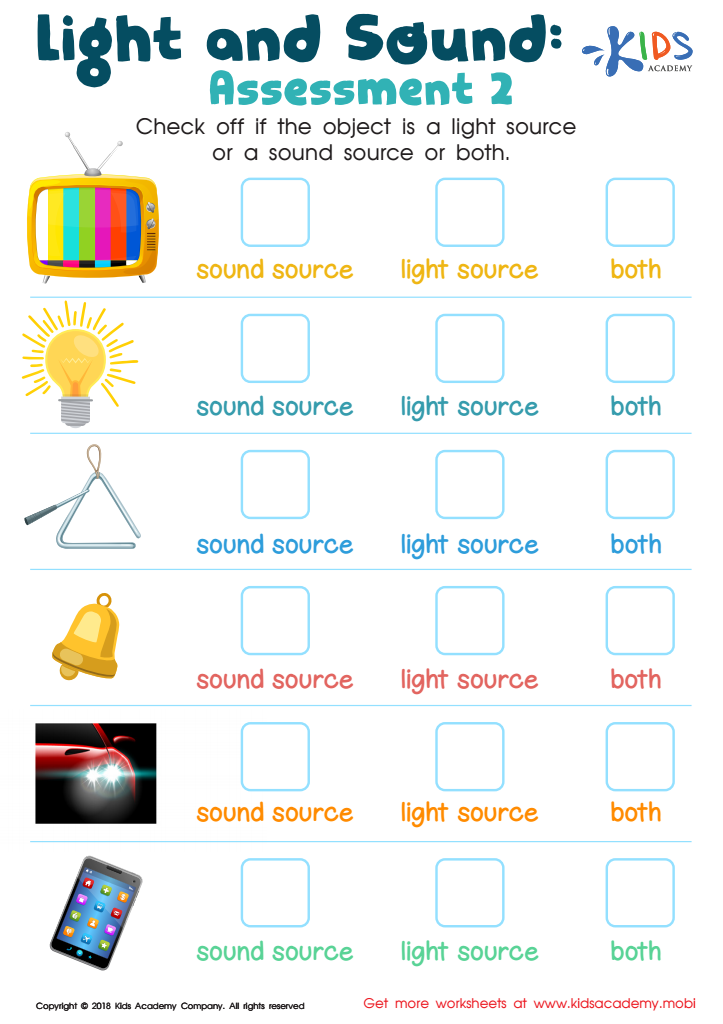
Light and Sound: Assessment 2 Worksheet

Light and Sound: Assessment 2 Worksheet

This worksheet introduces your kids to light and sound, with common sources of each. Identify the objects and help them check if it's a light source, a sound source, or both. Colourful and simple, it's a great way to teach your little ones! (80 words)
Light and Sound: Assessment 2 Worksheet
Worksheet
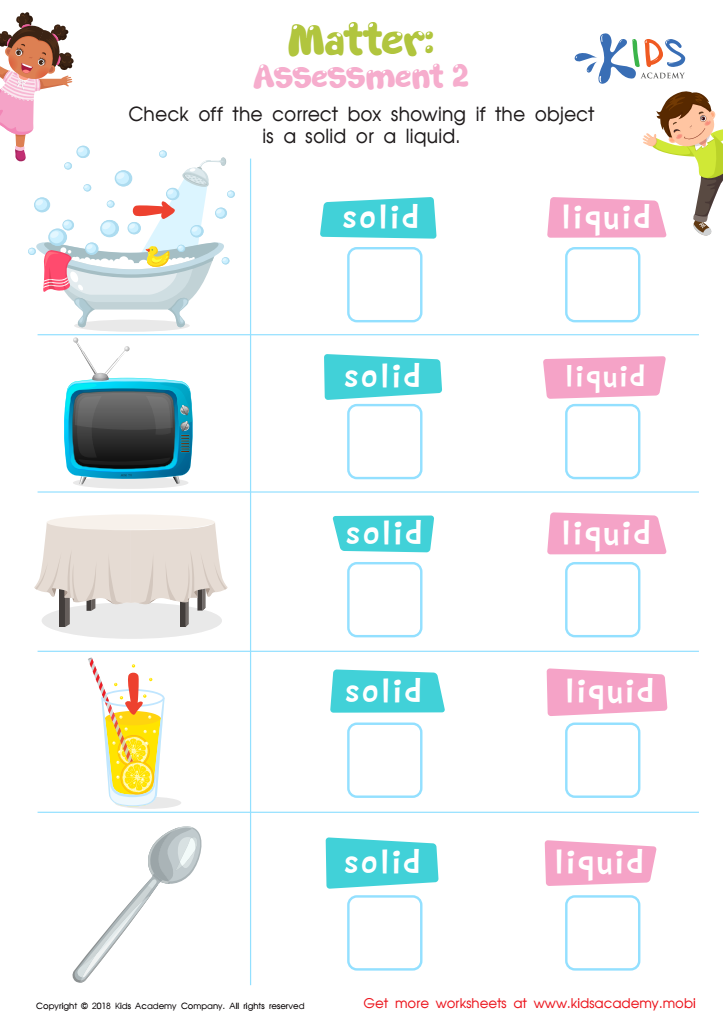
Matter: Assessment 2 Worksheet

Matter: Assessment 2 Worksheet

Identify the five objects in this worksheet as either solid or liquid. Ask your kids to check the correct box. Melting changes solids to liquids while freezing transforms liquids to solids.
Matter: Assessment 2 Worksheet
Worksheet
Matter: Assessment 1 Worksheet

Matter: Assessment 1 Worksheet

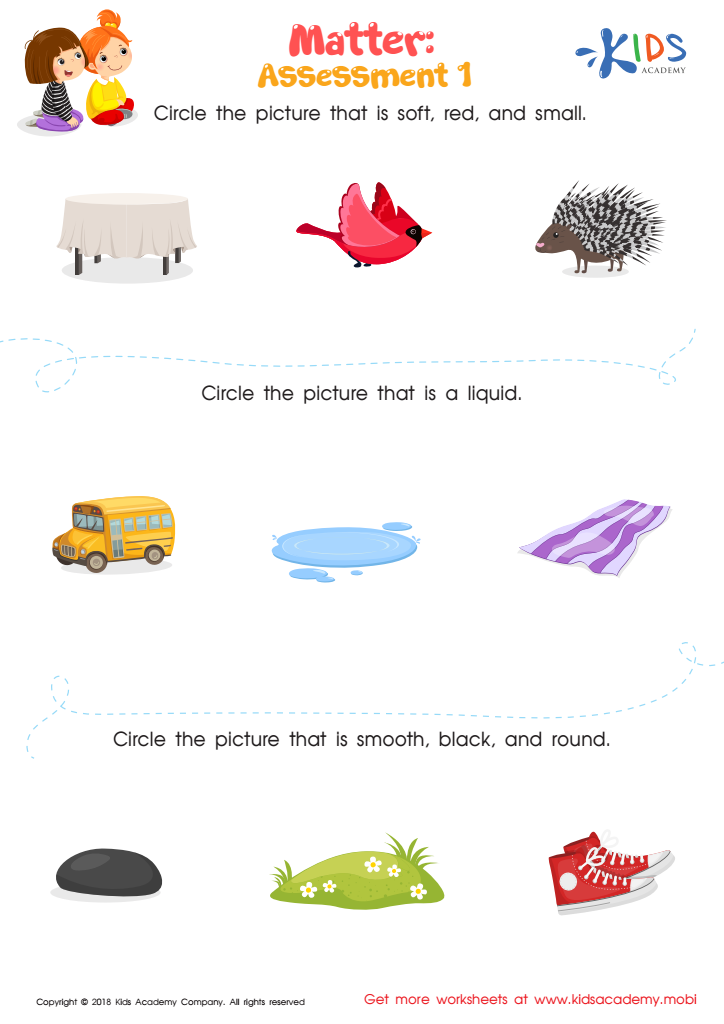
Have your children learn that anything that has weight and takes up space is matter. Examples include buses, tables, people, animals, and more. Use this worksheet to help them identify the objects and circle the soft, red, and small one; the liquid; and the smooth, black, and round one.
Matter: Assessment 1 Worksheet
Worksheet
Force and Interactions: Assessment 1 Worksheet


Force and Interactions: Assessment 1 Worksheet
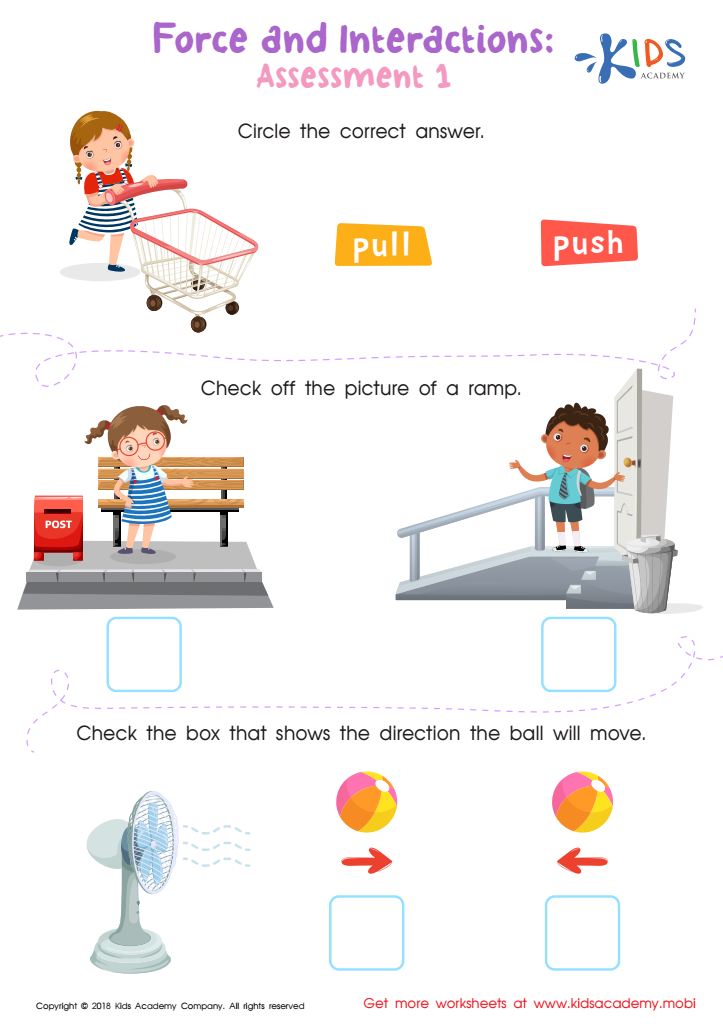
Test your students' knowledge of pushing, pulling, ramps and wind with this worksheet. The first task requires them to identify push or pull pictures. The second asks them to identify a ramp and the third to explain which direction a ball will move when exposed to wind.
Force and Interactions: Assessment 1 Worksheet

Worksheet


Normal Science activities for children aged 3-7 are crucial for fostering a love of learning and developing critical thinking skills early in life. At this formative stage, children's natural curiosity can be harnessed through hands-on exploration and discovery, providing a foundational understanding of scientific concepts. Engaging in such activities helps children to ask questions, make observations, and discover explanations of the world around them.

Parents and teachers should care about Normal Science learning because it not only enhances cognitive abilities but also promotes social skills and emotional growth. Collaborative experiments teach teamwork and communication, while overcoming challenges fosters resilience. Furthermore, these activities are integral in helping children make connections between various disciplines—combining science with art, language, and math.

Moreover, exposure to science at a young age can spark interest in STEM (Science, Technology, Engineering, Mathematics) fields, aligning with workforce developments for the future. Given the fast-paced advancements in technology and science, cultivating a scientifically literate mindset early on equips children with the tools they need to navigate and contribute positively to an increasingly complex world. Investing time and resources into Normal Science activities yields lifelong benefits—empowering the next generation of curious, informed, and innovative thinkers.