Filters

7 filtered results

Clear all filters
Favorites
With answer key
Interactive

7 filtered results

Difficulty Level

Grade


Explore our engaging collection of Normal Poems worksheets designed for children ages 3-7! Tailored to foster creativity and literacy, these activities enhance children's understanding of rhythm, rhyme, and expressive language. Our vibrant worksheets encourage young learners to listen, recite, and share poems, fostering a love for language and helping develop essential pre-reading skills. Each activity is crafted to be fun and interactive, making learning enjoyable while supporting early childhood education. Perfect for teachers and parents alike, these resources will inspire imaginative thinking and linguistic growth in your little ones. Discover the joy of poetry with our delightful worksheets today!

Check out this FREE Poems Trial Lesson for age 3-7!

Recognize Common Types of Texts

Favorites
With answer key
Interactive
  • Poems
  • 3-7
  • Interactive
  • Normal
Rhyming Words in Poems Worksheet

Rhyming Words in Poems Worksheet

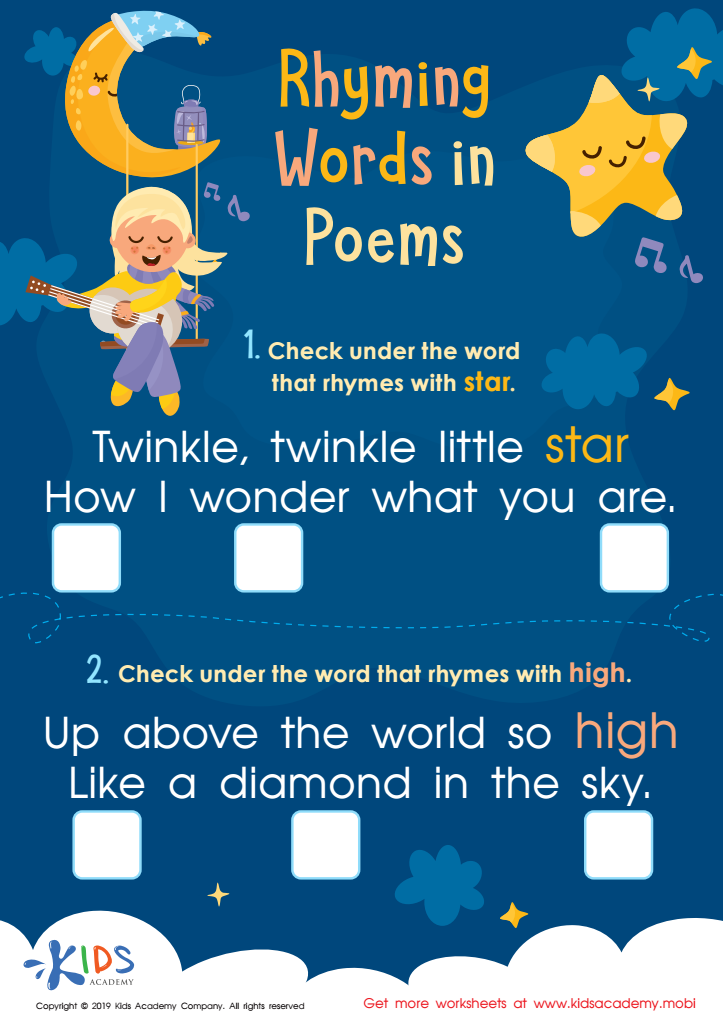
If your kids love poems, get them to recite some to you or have them write their own. Use this worksheet to help them find words that rhyme. Read the short poems and have them check the highlighted words for rhyming.
Rhyming Words in Poems Worksheet
Worksheet
Identifying Poems Worksheet

Identifying Poems Worksheet

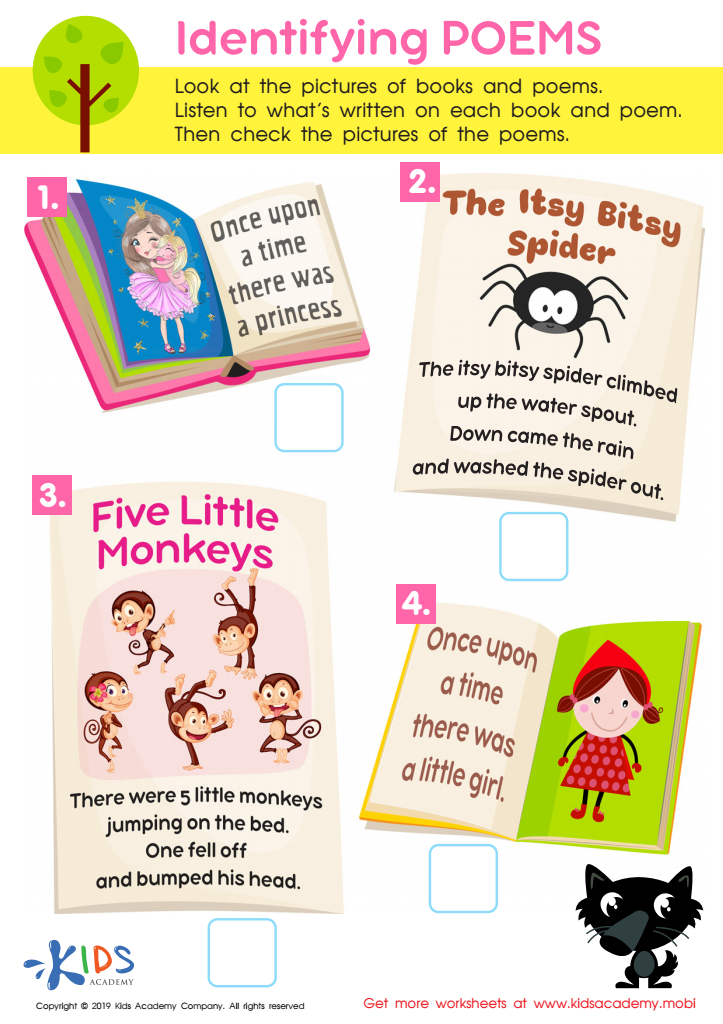
Read to your kids often and look at the pictures of books and poems in this worksheet. Guide them by reading aloud each book and poem. Make sure they are paying attention and help them check the pictures. This is a great way for your kids to learn to read properly.
Identifying Poems Worksheet
Worksheet
Finish Rhyming Poem Worksheet

Finish Rhyming Poem Worksheet

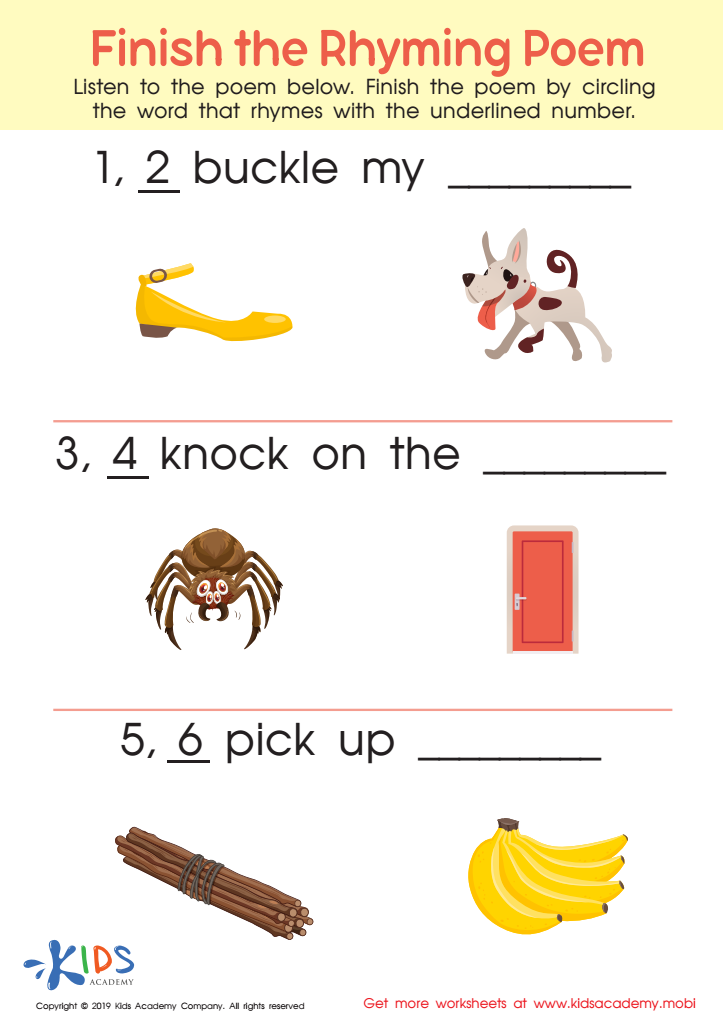
Poems are a great way to express emotions and spark imagination. Does your child enjoy poetry and even have their own creations? If so, they'll love this worksheet. It's a great way to develop their rhyming skills. Challenge them to find and circle the words that rhyme with the ones underlined.
Finish Rhyming Poem Worksheet
Worksheet
Poem or Story Book? Worksheet

Poem or Story Book? Worksheet

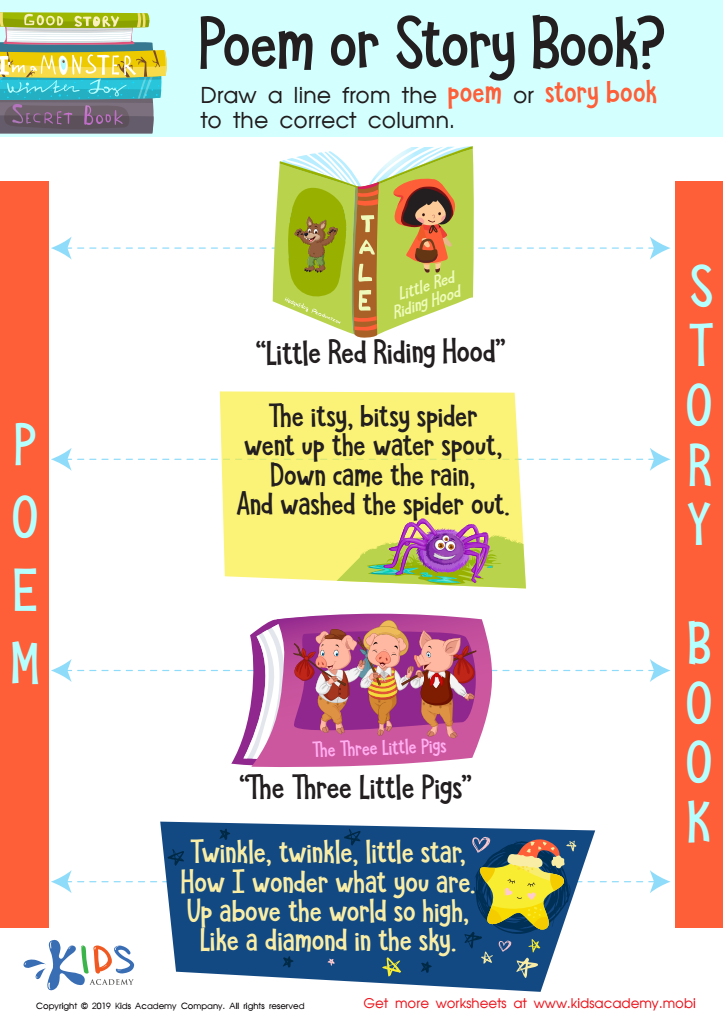
Help your little readers comprehend different genres with this free worksheet! Colorful images and familiar themes help them distinguish between poems and story books. They'll identify which is which, then connect the picture to the right column with traceable lines. A fun way to expand their understanding!
Poem or Story Book? Worksheet
Worksheet
Rhymes in Poems Worksheet

Rhymes in Poems Worksheet

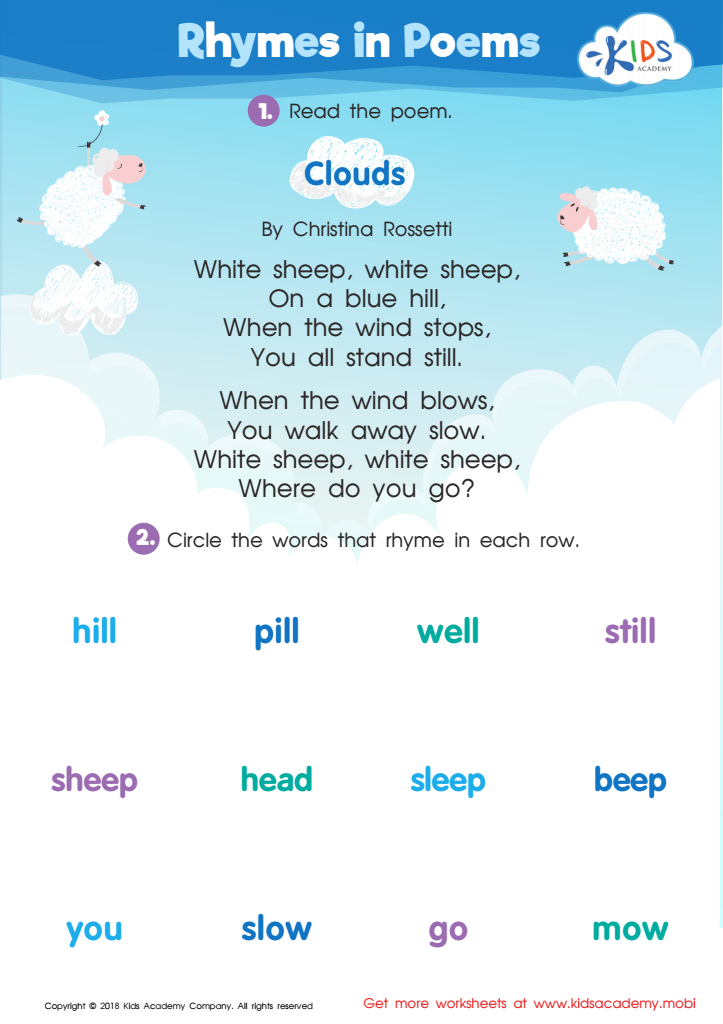
Poems are lovely works of literature; some with rhymes, and some without. This poem for kids is full of rhymes and tells the tale of a sheep. Read it aloud to your kids, then help them circle the rhyming words.
Rhymes in Poems Worksheet
Worksheet
Poem: My New Kite Worksheet

Poem: My New Kite Worksheet

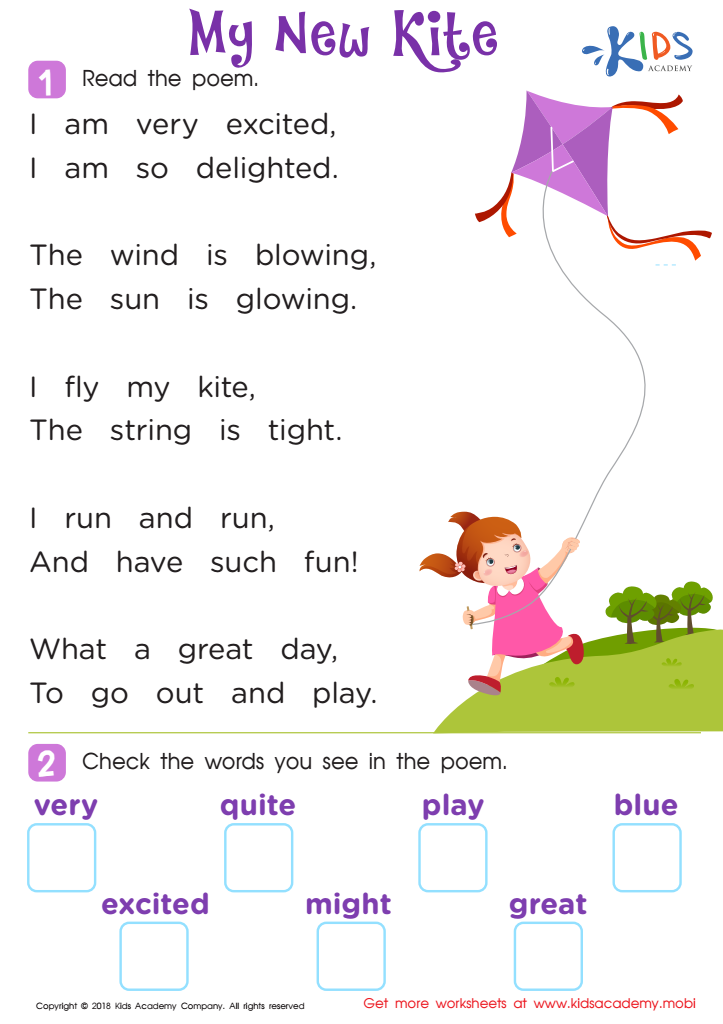
Read a cheerful poem with your child and have them check the boxes next to the words that appear. Then, ask them to identify rhyming words, noting that these won't appear at the bottom of the page. This is a delightful reading activity to help your child remember what they read.
Poem: My New Kite Worksheet
Worksheet
Кhyme in poetry worksheet

Rhyme In Poetry Worksheet

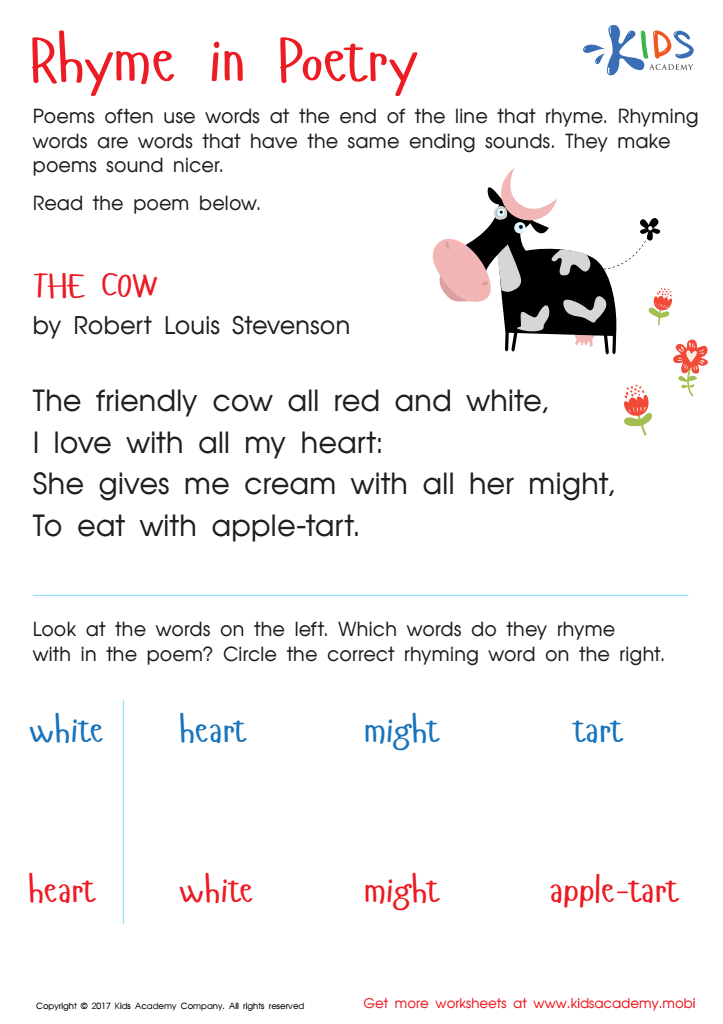
Introduce your child to poetic devices and help build their ear for poetry with Robert Louis Stevenson's adorable poem about a cow! Through this rhyming worksheet, your child will gain an appreciation for poetry and language.
Rhyme In Poetry Worksheet
Worksheet


Parents and teachers should prioritize Normal Poems activities for children aged 3-7 because these activities cultivate essential skills in a joyful and engaging manner. At this developmental stage, children's language acquisition and cognitive growth are rapid. Normal Poems, characterized by their simple, rhythmic structure and relatable themes, provide an excellent foundation for vocabulary development, phonemic awareness, and literacy skills.

Engaging with poetry helps children recognize sounds, patterns, and rhythms, fostering a love for language. Additionally, Normal Poems encourage creativity and imaginative play as children explore themes relevant to their lives, such as nature, family, and emotions. These experiences not only boost linguistic competence but also enhance critical thinking and emotional intelligence by prompting discussions and reflections on feelings and experiences.

Moreover, participating in poetry activities promotes social skills through group recitation or sharing sessions, enabling children to connect with peers and adults. The simplicity and relatability of Normal Poems present an accessible pathway for parents and teachers to introduce storytelling and rhythm, establishing a lifelong appreciation of literature. Overall, incorporating these poetic activities supports holistic development, preparing young learners for future academic success while nurturing their emotional and social growth.