Normal Tracing worksheets activities for Ages 3-7 - Page 5
98 filtered results
-
From - To
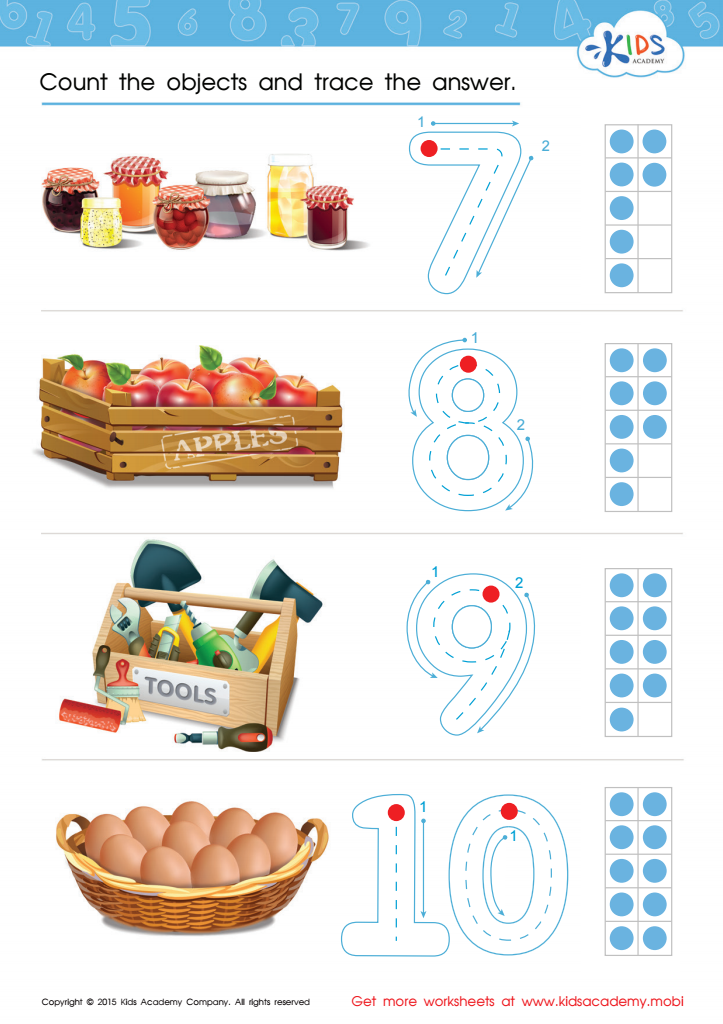
Count and Trace 7 – 10 Worksheet
 Assign to My Students
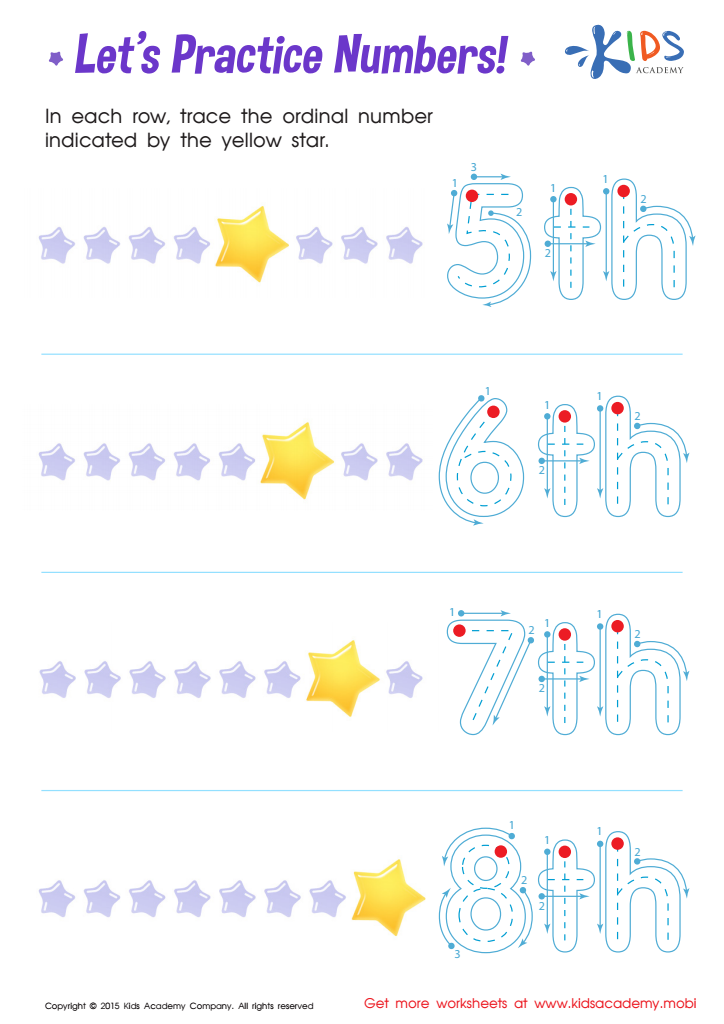








Normal tracing activities are essential for children aged 3-7, as they play a critical role in developing foundational skills that support academic success and fine motor abilities. These activities help enhance hand-eye coordination, as children learn to control and manipulate writing tools. By tracing letters, numbers, shapes, and designs, they internalize the shapes and structures, facilitating early literacy and numeracy skills.
Moreover, tracing activities provide a structured way for children to practice their pencil grip, essential for effective writing later. As children trace, they not only improve their motor skills but also gain confidence in their ability to create and recognize shapes and letters, which contributes to their overall cognitive development.
Engaging in tracing tasks allows children to practice their concentration and patience, skills that are vital for focused learning. Additionally, these activities can be easily integrated into fun game-like scenarios, making learning enjoyable and motivating.
For parents and teachers, incorporating tracing into daily activities fosters a nurturing environment where children feel supported in their learning journey. Thus, normal tracing activities serve as a valuable tool in instilling early learning experiences that prepare children for future academic challenges. Attention to these skills at this crucial age can lead to lasting positive impacts on a child’s education.








