
Normal Phonics worksheets activities for Ages 4-5
4 filtered results
Difficulty Level
Grade
Age
-
From - To
Subject
Activity
Standards
Dive into the world of literacy with our engaging Normal Phonics worksheets activities, meticulously designed to enhance your child's reading and writing skills. Our collection offers a comprehensive approach to phonics, blending interactive learning with fun. Each worksheet is crafted to reinforce letter sounds, blending, segmentation, and decoding strategies, making phonics a joyful journey for early readers. Ideal for both classroom and home settings, our Normal Phonics worksheets activities are your go-to resource for fostering a solid foundation in reading. Embark on this phonetic adventure and unlock the door to confident, proficient reading with our expertly curated activities.
Favorites
With answer key
Interactive
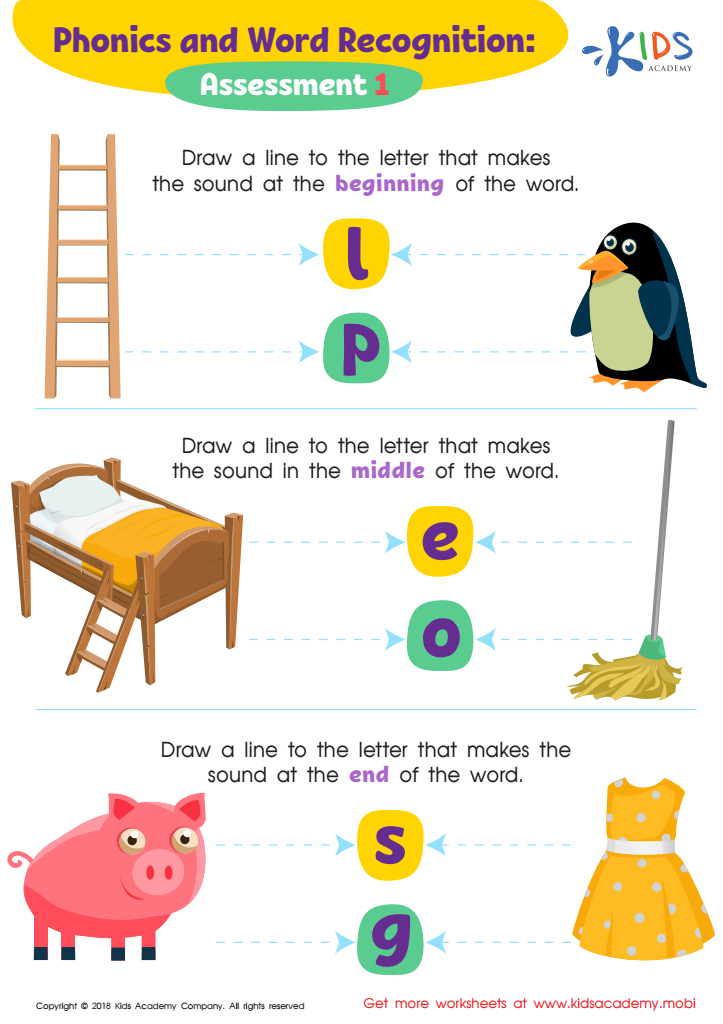
Phonics and Word Recognition: Assessment 1 ELA Worksheet
This fun worksheet tests your child's sound recognition skills for each part of a word. Ask your child to name each image and trace the line to match it with the corresponding letter. Listen for beginning sounds on 1st, middle sounds on 2nd, and ending sounds on 3rd. Encourage learning with this colorful and interactive activity!
 Assign to My Students
Phonics and Word Recognition: Assessment 1 ELA Worksheet
Worksheet
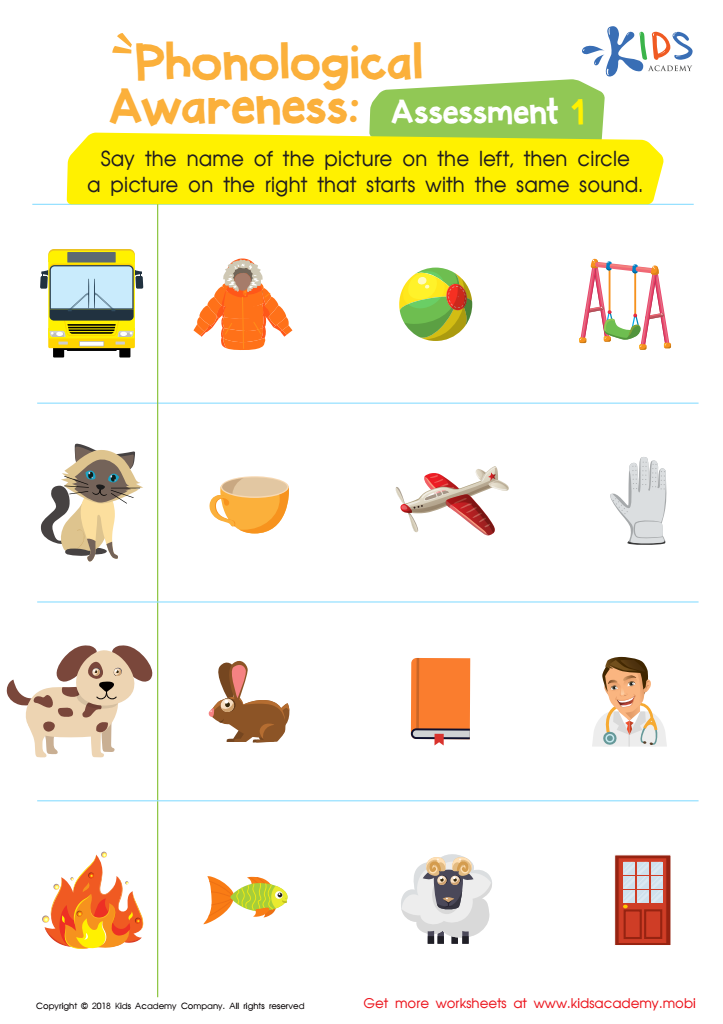
Phonological Awareness: Assessment 1 Worksheet
This worksheet helps kids build key phonics skills for pre-reading. They say each picture name aloud, focusing on the starting sound. Then, they match the sound with an image in the same row. Use as a checkpoint for kindergarten or grade 1 phonics readiness.
Phonological Awareness: Assessment 1 Worksheet
Worksheet
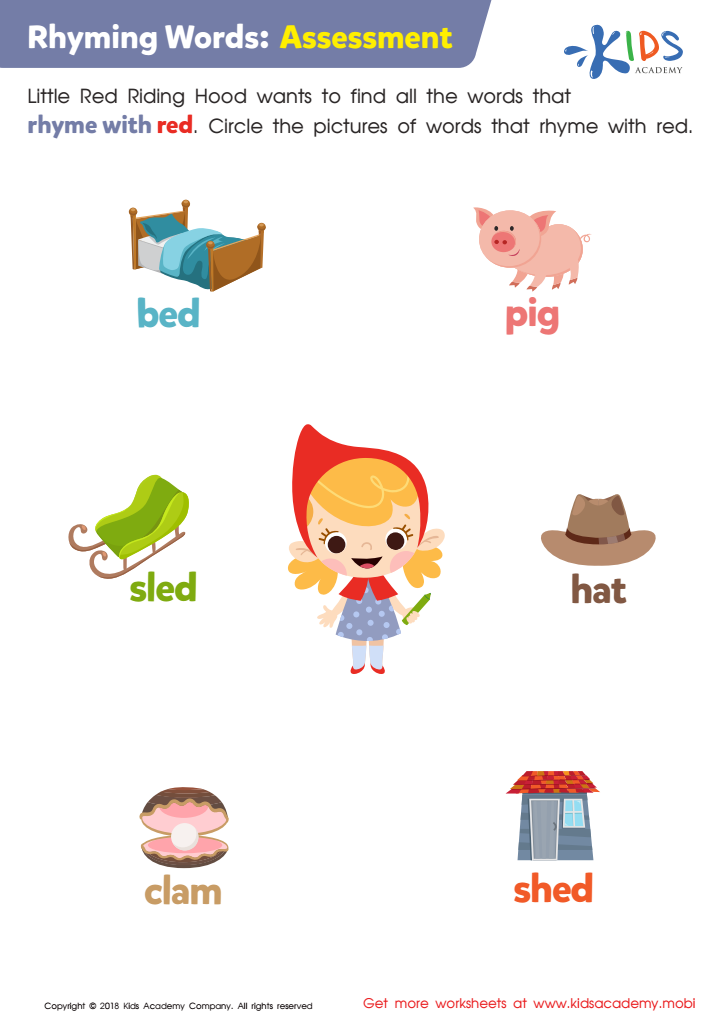
Rhyming Words: Assessment Worksheet
Help Little Red Riding Hood find rhyming words with "red". Download and print this worksheet. Have your child circle the rhyming words and pictures. Get them to say each word out loud and compare it to the word "red". When they're done, review the answers and talk about any words that don't rhyme.
Rhyming Words: Assessment Worksheet
Worksheet
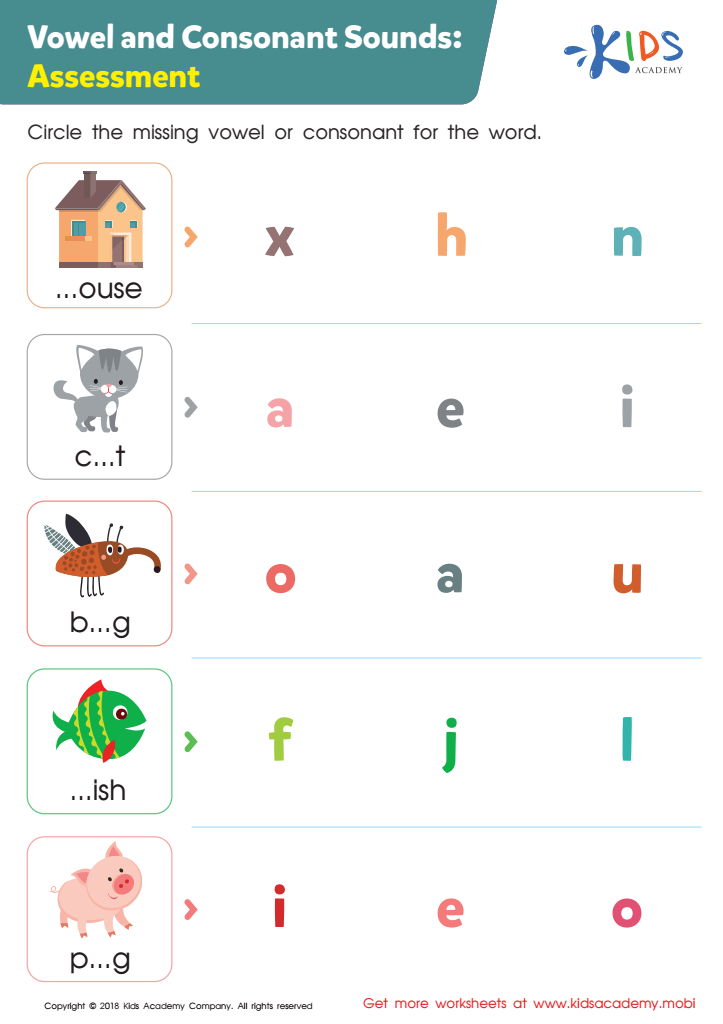
Vowel and Consonant Sounds: Assessment Worksheet
Test young elementary students on vowel and consonant sounds with this friendly phonics assessment worksheet. Get kids to name each image and look at the word underneath. Ask them to sound out the word, then circle the missing letter to complete. This will help assess their knowledge and skills!
Vowel and Consonant Sounds: Assessment Worksheet
Worksheet
Join Kids Academy for Free
Who is primarily going to use this learning content?







Normal Phonics worksheets activities play a pivotal role in enhancing literacy skills among learners, especially in the foundational stages of reading and writing. These structured tasks are designed meticulously to provide thorough practice on the basic blocks of the English language: phonemes, blends, digraphs, and more. By engaging with these worksheets, learners gradually build the crucial skill of decoding words, an essential step toward fluent reading and effective comprehension.
One of the primary reasons Normal Phonics worksheets activities are so useful is their ability to reinforce learning through repetition and variety. Each worksheet is crafted to focus on specific sounds or letter combinations, allowing learners to master each element before moving on to more complex structures. This step-by-step approach ensures a solid understanding and retention of phonetic principles, laying a strong foundation for reading proficiency.
Moreover, Normal Phonics worksheets activities cater to diverse learning styles. Whether a learner is more responsive to visual cues, auditory instructions, or hands-on activities, worksheets can be designed to meet these varying needs. This inclusivity not only enhances engagement but also ensures that every child finds a pathway to success in the realm of literacy.
In addition to building phonetic skills, these activities also promote cognitive development. Solving the puzzles and challenges presented in phonics worksheets demands attention, critical thinking, and problem-solving abilities. Learners must analyze sounds, deduce patterns, and apply their knowledge, all of which contribute to broader intellectual growth.
Furthermore, the structured nature of Normal Phonics worksheets activities allows for easy tracking of progress. Teachers and parents can readily identify areas of strength and those needing improvement, enabling targeted interventions that are crucial for overcoming learning obstacles.
In summary, the significance of Normal Phonics worksheets activities cannot be overstated. They not only facilitate the mastery of phonics, a cornerstone of literacy, but also support cognitive development, cater to diverse learning needs, and provide measurable insights into learners' progress. As such, they remain a fundamental tool in the education of young readers and writers.








