
Normal Phonics worksheets activities for Ages 4-6
6 filtered results
Difficulty Level
Grade
Age
-
From - To
Subject
Activity
Standards
Unleash the power of reading and writing in your children with our engaging Normal Phonics Worksheets Activities. Carefully curated to foster a deep understanding of phonetic patterns, these activities are the key to unlocking the world of words. Our worksheets are crafted with the perfect blend of fun and education, ensuring that learning phonics becomes an adventure for young learners. Ideal for both classroom and at-home education, our Normal Phonics Worksheets Activities are designed to enhance phonemic awareness, decoding skills, and spelling accuracy. Embrace a comprehensive approach to literacy with our meticulously developed resources, and watch your child's confidence in reading and writing soar.
Favorites
With answer key
Interactive
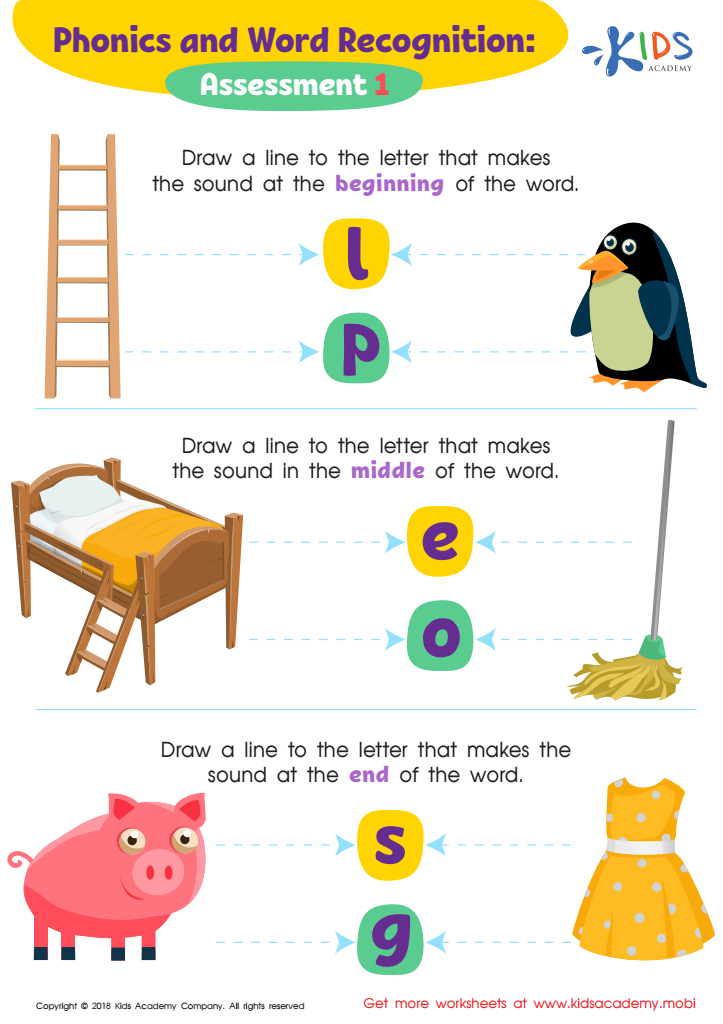
Phonics and Word Recognition: Assessment 1 ELA Worksheet
This fun worksheet tests your child's sound recognition skills for each part of a word. Ask your child to name each image and trace the line to match it with the corresponding letter. Listen for beginning sounds on 1st, middle sounds on 2nd, and ending sounds on 3rd. Encourage learning with this colorful and interactive activity!
 Assign to My Students
Phonics and Word Recognition: Assessment 1 ELA Worksheet
Worksheet
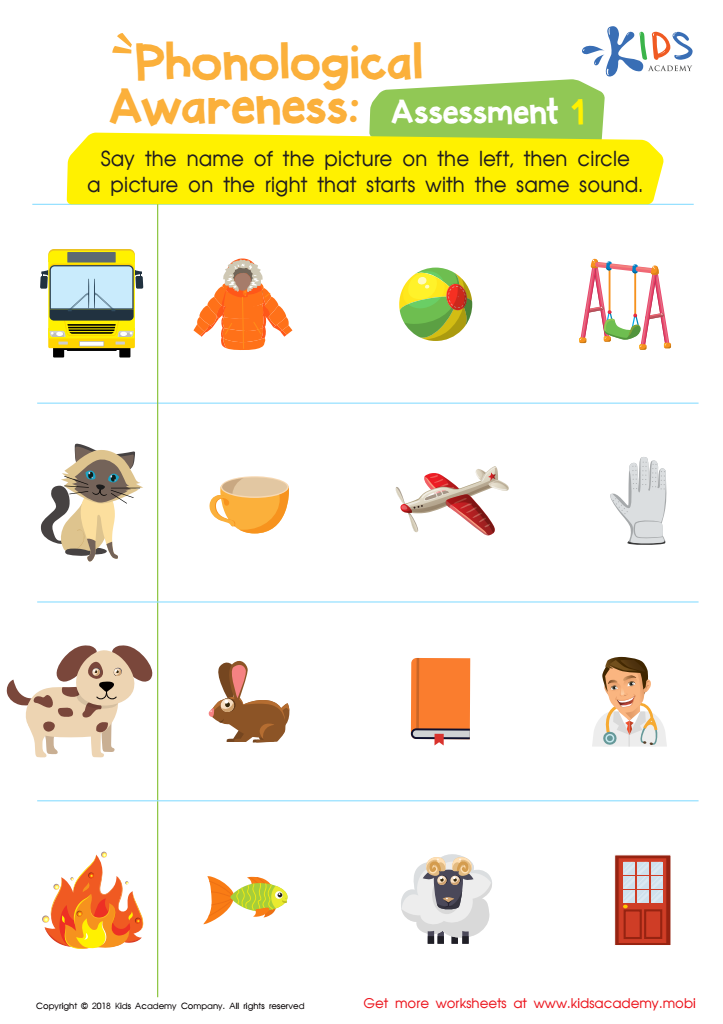
Phonological Awareness: Assessment 1 Worksheet
This worksheet helps kids build key phonics skills for pre-reading. They say each picture name aloud, focusing on the starting sound. Then, they match the sound with an image in the same row. Use as a checkpoint for kindergarten or grade 1 phonics readiness.
Phonological Awareness: Assessment 1 Worksheet
Worksheet
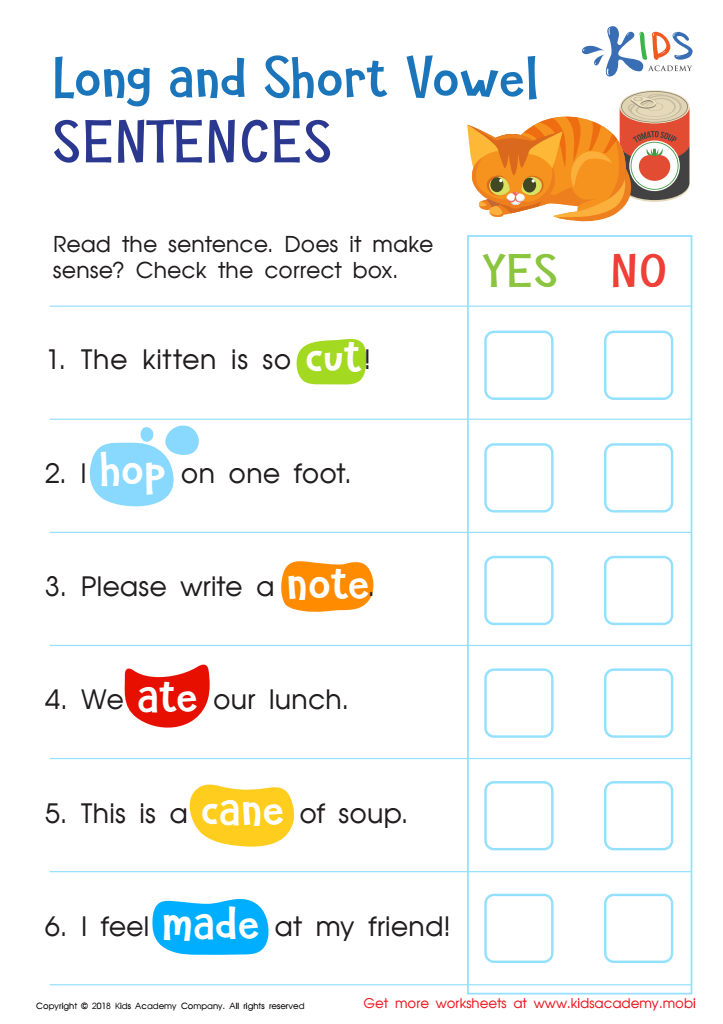
Long and Short Vowel Sentences: Assessment Worksheet
This printable worksheet helps kids practice differentiating between short and long vowel sounds. They'll use context clues to figure out which words make sense in simple sentences. A great way to build reading and writing skills!
Long and Short Vowel Sentences: Assessment Worksheet
Worksheet
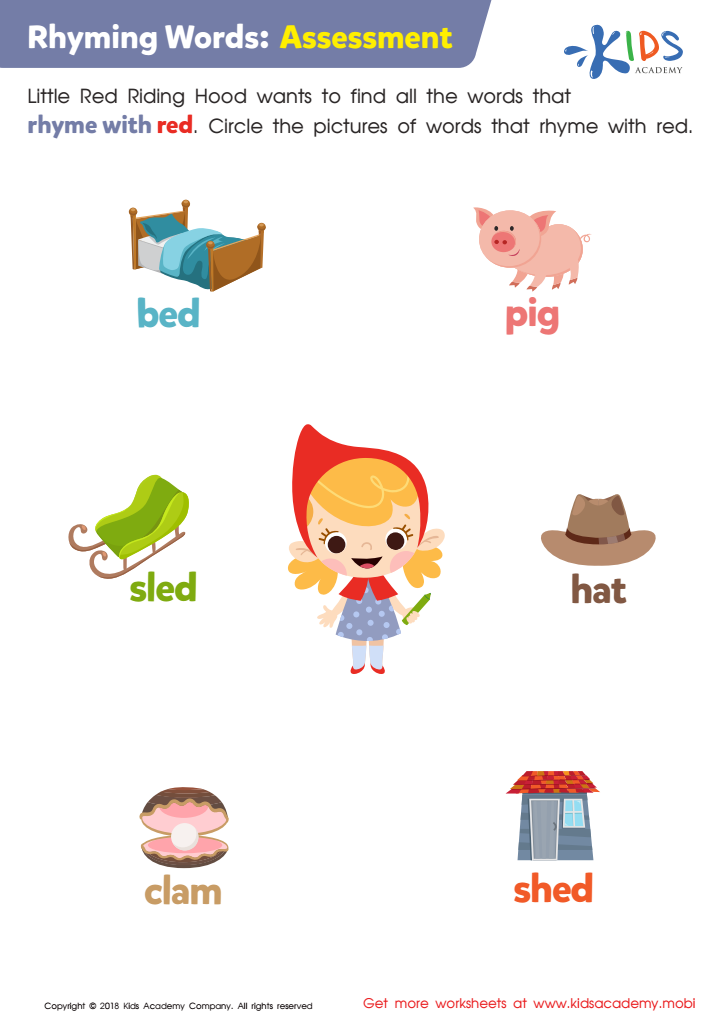
Rhyming Words: Assessment Worksheet
Help Little Red Riding Hood find rhyming words with "red". Download and print this worksheet. Have your child circle the rhyming words and pictures. Get them to say each word out loud and compare it to the word "red". When they're done, review the answers and talk about any words that don't rhyme.
Rhyming Words: Assessment Worksheet
Worksheet
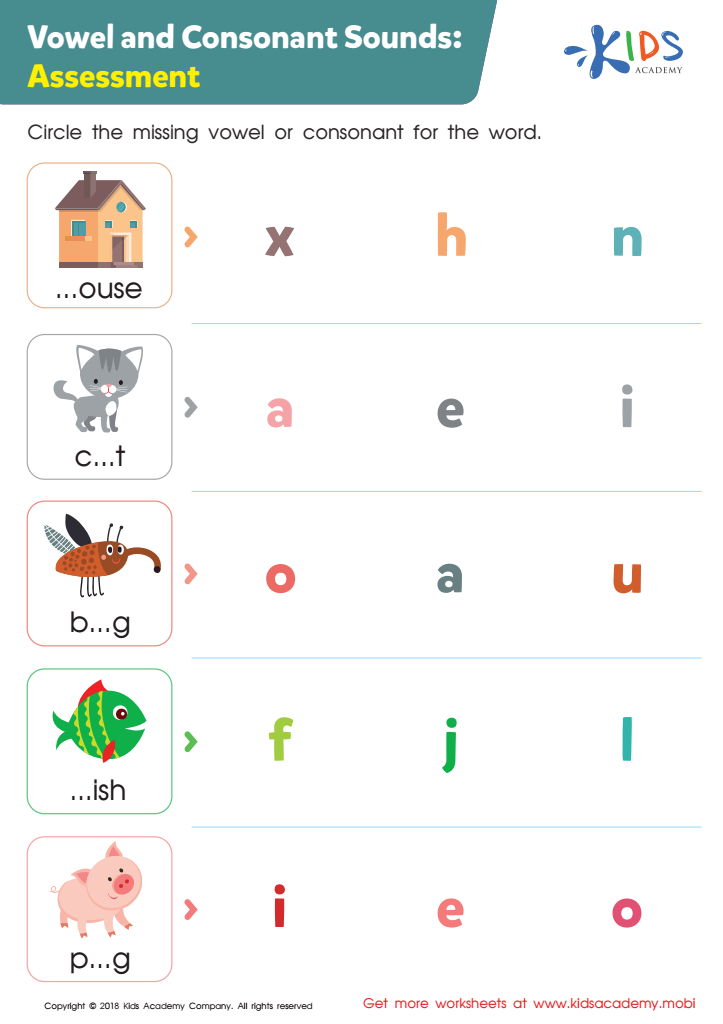
Vowel and Consonant Sounds: Assessment Worksheet
Test young elementary students on vowel and consonant sounds with this friendly phonics assessment worksheet. Get kids to name each image and look at the word underneath. Ask them to sound out the word, then circle the missing letter to complete. This will help assess their knowledge and skills!
Vowel and Consonant Sounds: Assessment Worksheet
Worksheet
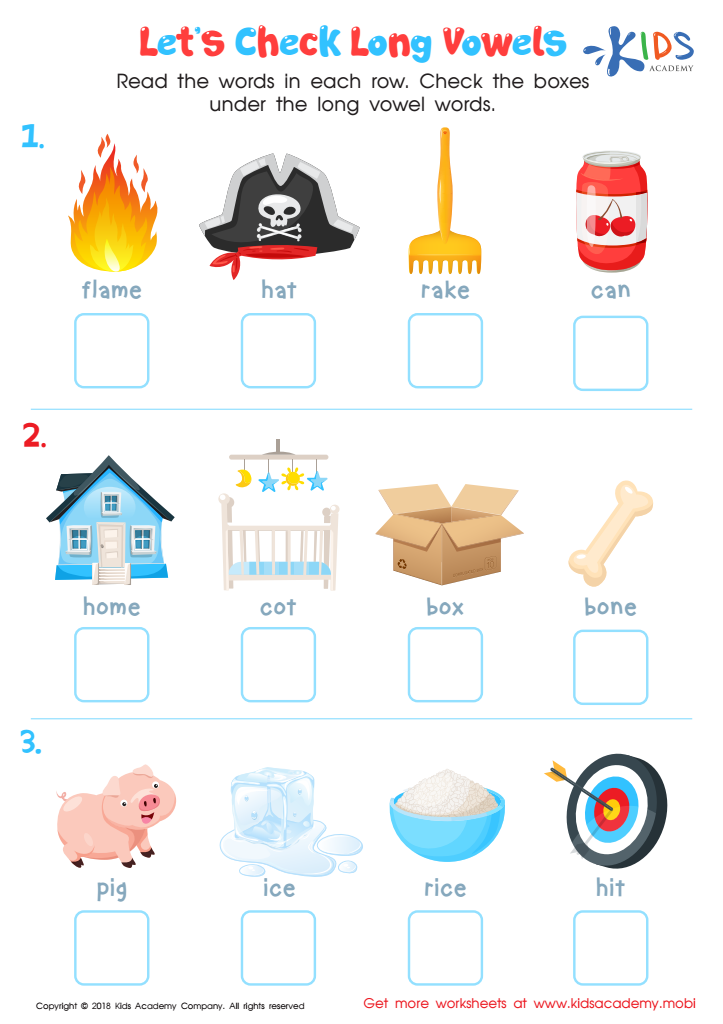
Let's Check Long Vowels: Assessment Worksheet
This worksheet helps your child identify objects and learn long vowel sounds. Ask them to say the names of the four objects in each row. Then, help them check the boxes to confirm they know the long vowel sounds. This will help them develop their reading skills.
Let's Check Long Vowels: Assessment Worksheet
Worksheet
Join Kids Academy for Free
Who is primarily going to use this learning content?







Normal Phonics worksheets activities are a cornerstone in the foundational literacy skills that young learners need to master. These activities are not just beneficial; they are essential for the development of reading and writing abilities in children. Phonics, the method of teaching reading and writing by developing learners' phonemic awareness—the ability to hear, identify, and manipulate phonemes—helps in effectively understanding the alphabetic principle that letters represent the sounds of spoken language.
The advantages of incorporating Normal Phonics worksheets activities are manifold. Firstly, they provide a structured way for children to learn and practice the sounds that correspond with each letter or letter combination. This systematic approach is crucial for building a solid base from which students can progress to more complex reading and writing tasks. Phonics worksheets are designed to reinforce learning in a focused manner, allowing for repetition and practice that is essential for mastery.
Moreover, these activities cater to a variety of learning styles. Visual learners benefit from seeing the letters and words on paper, auditory learners from hearing the sounds as they read aloud, and kinesthetic learners from the physical act of writing the letters and words. This inclusivity ensures that every child has the opportunity to grasp the concepts being taught effectively.
Normal Phonics worksheets activities also promote the development of decoding skills. Decoding is the ability to apply your knowledge of letter-sound relationships, including knowledge of letter patterns, to correctly pronounce written words. This skill is vital for reading fluency and comprehension. By starting with simple sound-letter correlations and gradually moving to more complex structures, these worksheets help learners build confidence and proficiency in reading.
In addition, these worksheets offer a tangible way for parents and teachers to assess progress. By working through a series of phonics activities, educators can identify areas where a child might need more support or intervention, tailoring instruction to meet individual needs.
Overall, Normal Phonics worksheets activities are a fundamental part of teaching literacy. They lay the groundwork for successful reading and writing by focusing on the sounds of language, decoding skills, and offering a multi-sensory learning experience. Such activities not only boost academic achievement but also inspire a lifelong love of reading and learning.








