
Normal Reading Non-Fiction worksheets activities for 4-Year-Olds
2 filtered results
Difficulty Level
Grade
Age
-
From - To
Subject
Activity
Standards
Dive into the world of facts and real-life stories with our Normal Reading Non-Fiction worksheets activities. Ideal for learners of all ages, these carefully designed worksheets aim to enhance comprehension skills, boost critical thinking, and encourage a love for the endless wonders of the non-fiction genre. From captivating biographies to intriguing scientific discoveries, each activity is crafted to engage, educate, and inspire. Whether in the classroom or at home, our Normal Reading Non-Fiction worksheets are the perfect tools to expand knowledge and foster a lifelong curiosity about the world around us. Embrace the joy of learning with each fascinating fact and story today!
Favorites
With answer key
Interactive
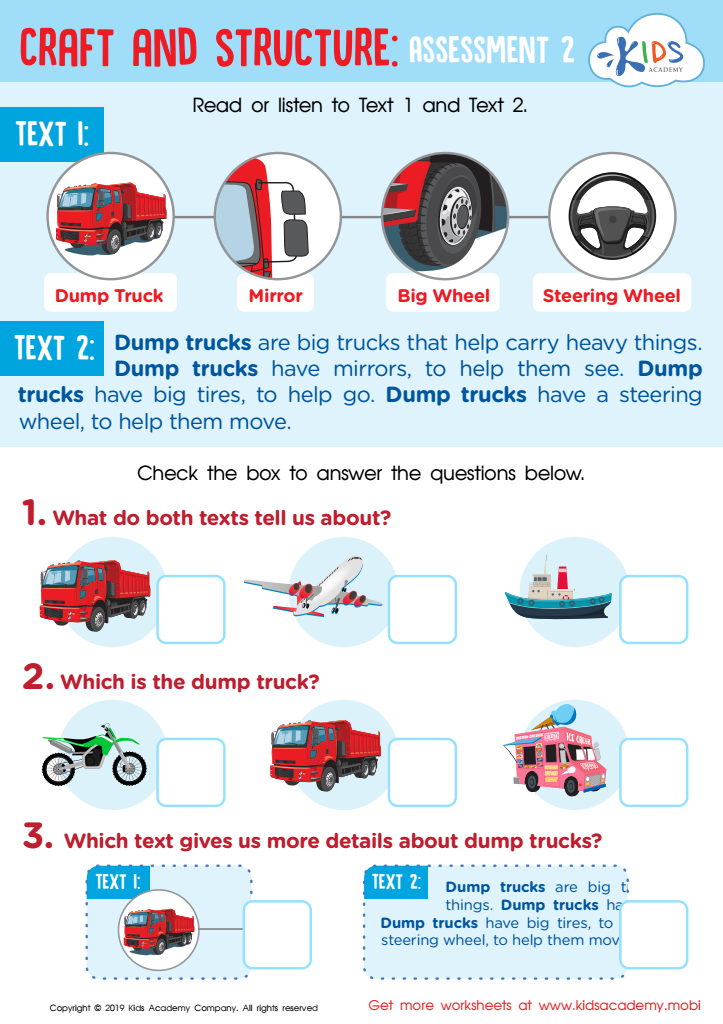
Craft and Structure: Assessment 2 Worksheet
Good readers need to analyze text features and use picture clues to understand. This assessment worksheet gives your child info in different formats and they can show understanding using answer options to check the correct answers. (80 words)
 Assign to My Students
Craft and Structure: Assessment 2 Worksheet
Worksheet
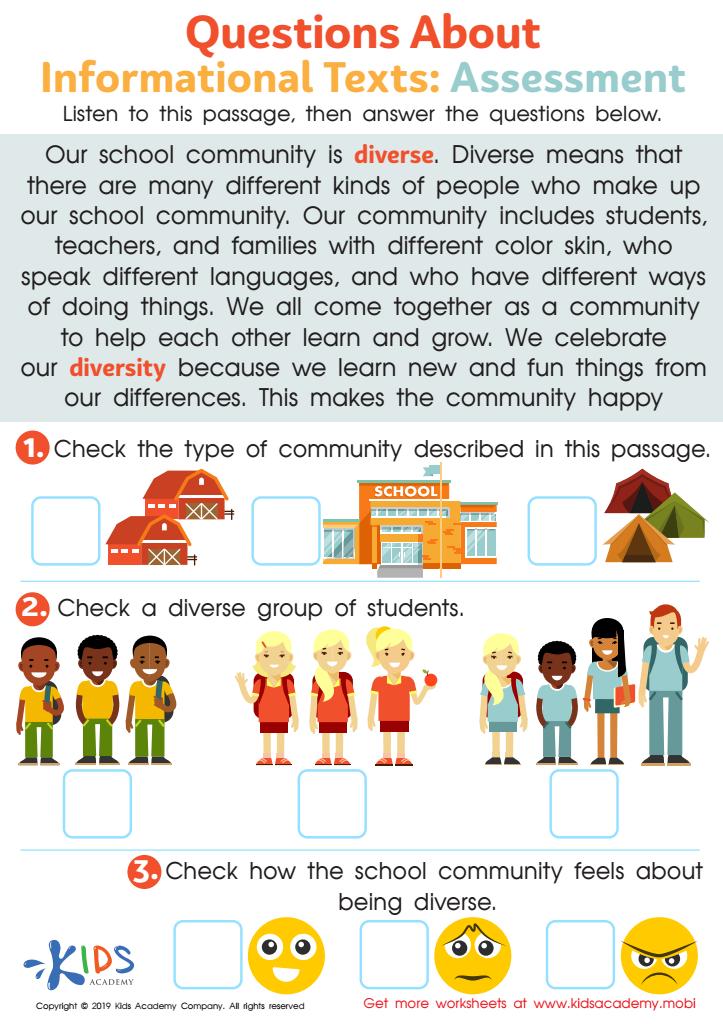
Questions About Informational Texts: Assessment 1 Worksheet
Ask your students: What comes to mind when we talk about a community? What different habits do people practice? What do fellow students do that seems strange? Read this passage aloud to your kindergartners and make sure they understand it. Then, answer the questions at the bottom of the page. (80 words)
Questions About Informational Texts: Assessment 1 Worksheet
Worksheet
Join Kids Academy for Free
Who is primarily going to use this learning content?








Normal Reading Non-Fiction worksheets activities are an invaluable tool in the educational landscape for a multitude of reasons. These activities not only bolster comprehension skills but also equip students with the ability to critically engage with real-world information. The significance of integrating Normal Reading Non-Fiction worksheets into the curriculum cannot be overstated, as it nurtures a well-rounded educational experience that extends beyond the confines of fictional literature.
Firstly, these worksheets are instrumental in enhancing critical thinking skills. They encourage students to not just passively consume information, but to question, analyze, and evaluate the content they are reading. This critical engagement is crucial in an age where information is abundant and not always accurate. By regularly participating in Normal Reading Non-Fiction worksheets activities, students learn to discern reliable information from misinformation, a skill that is invaluable in both academic and real-world contexts.
Furthermore, these activities are designed to broaden students’ knowledge base. Non-fiction encompasses a wide array of genres, including history, science, biography, and journalism, among others. Through Normal Reading Non-Fiction worksheets, students are exposed to diverse subjects and perspectives, cultivating a more comprehensive understanding of the world around them. This exposure not only aids in academic growth but also fosters empathy and global awareness.
Additionally, Normal Reading Non-Fiction worksheets activities are tailored to improve language and vocabulary skills. As students encounter technical terms and complex concepts in non-fiction texts, they naturally expand their linguistic repertoire. This not only benefits their reading comprehension but also enhances their writing and oral communication skills.
In conclusion, Normal Reading Non-Fiction worksheets activities are a cornerstone for developing well-informed, critical, and empathetic students. By consistently integrating these activities into the curriculum, educators can provide a robust educational foundation that prepares students for the complexities of the modern world.








