Fun and Engaging Physical Science Knowledge Check Activities for 8-Year-Olds | Kids Academy Worksheets
2 filtered results
-
From - To
Normal Physical Science Worksheets Activities: Explore, Engage, and Excel
Embark on an exhilarating educational journey with our Normal Physical Science worksheets activities, specifically designed to captivate and challenge young minds. With a diverse range of meticulously crafted exercises, students will delve into the fascinating world of Physical Science, covering fundamental concepts and intriguing phenomena. Our activities encourage critical thinking, problem-solving, and a deep understanding of scientific principles, making learning both engaging and effective. Perfect for classroom use or at-home exploration, these worksheets are your gateway to inspiring a lifelong love of science. Equip your students with the skills they need to excel in the vast universe of Physical Science.
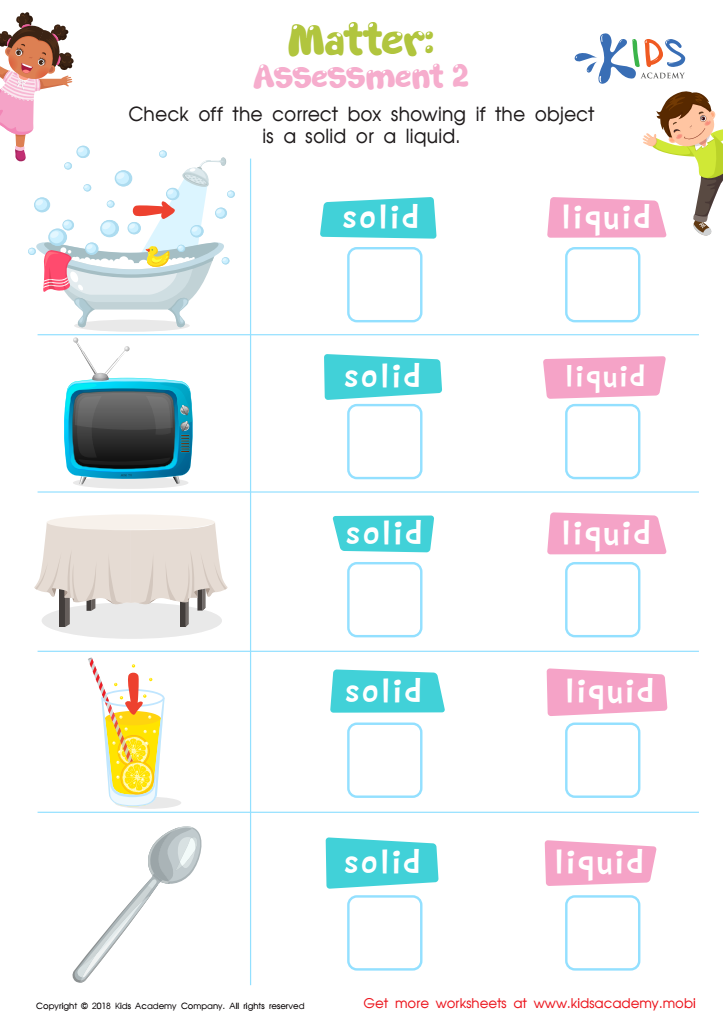
Matter: Assessment 2 Worksheet
 Assign to My Students
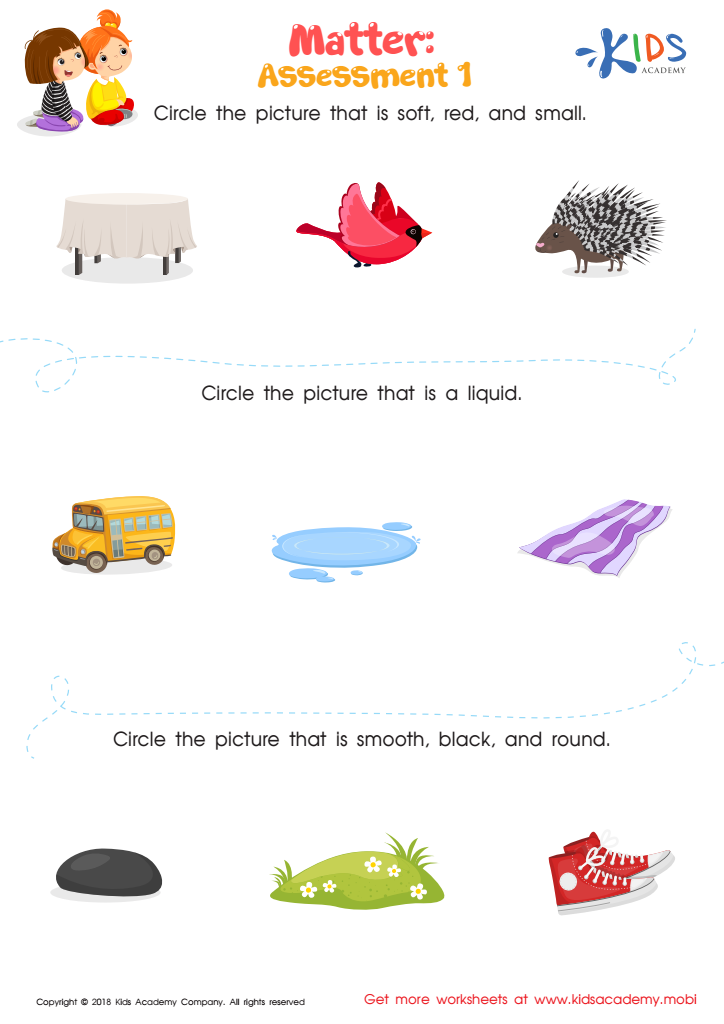
Matter: Assessment 1 Worksheet








Normal Physical Science worksheets activities play a pivotal role in the educational journey of students, offering a multitude of benefits that extend far beyond the classroom. These activities are not only instrumental in reinforcing key concepts and theories encountered in the study of Physical Science, but they also cultivate a range of skills essential for academic and personal growth.
Firstly, Normal Physical Science worksheets activities are incredibly useful for reinforcing learning in an engaging and structured manner. By breaking down complex topics into manageable exercises, these worksheets allow students to tackle challenging concepts at their own pace, facilitating a deeper understanding of subjects such as physics and chemistry. This method of learning encourages students to actively engage with the material, which is a proven way to enhance memory retention and comprehension.
Moreover, these worksheets serve as an invaluable tool for practice and revision. Regularly working through these activities enables students to consolidate their knowledge, identify areas of weakness, and seek clarification or further study as required. This iterative process is crucial for mastering the intricate details and broad themes within Physical Science, ultimately preparing students for examinations and future studies.
Additionally, Normal Physical Science worksheets activities foster critical thinking and problem-solving skills. Many of these worksheets are designed to challenge students to apply theoretical knowledge to practical scenarios, encouraging them to think critically about how physical principles operate in the real world. This not only deepens their understanding of the subject matter but also equips them with skills that are highly valued in the workforce and everyday life.
Furthermore, these activities promote independent learning, a skill that is essential for lifelong learning. By working through worksheets, students learn to take initiative in their education, develop research skills, and cultivate a sense of curiosity and inquiry.
In summary, Normal Physical Science worksheets activities are a fundamental component of the educational toolkit, offering benefits that extend well beyond the acquisition of subject-specific knowledge. They support the development of a broad range of skills, from critical thinking and problem-solving to independent learning and discipline, all of which are vital for success in academic pursuits and beyond.








