Long And Short Vowel Worksheets for Ages 3-4
6 filtered results
Difficulty Level
Grade
Age
-
From - To
Subject
Activity
Standards
Welcome to our Long and Short Vowel Worksheets for Ages 3-4! Designed to engage young learners, these worksheets help children distinguish between long and short vowel sounds through fun activities and exercises. With colorful illustrations and age-appropriate tasks, kids will enjoy learning while building essential phonics skills. Our interactive approach supports early reading development, making phonics learning enjoyable and effective. Whether at home or in the classroom, these worksheets cater to various learning styles and encourage creativity. Explore our resources today and give your preschoolers a solid foundation in language and literacy with our playful, educational materials!
Favorites
With answer key
Interactive
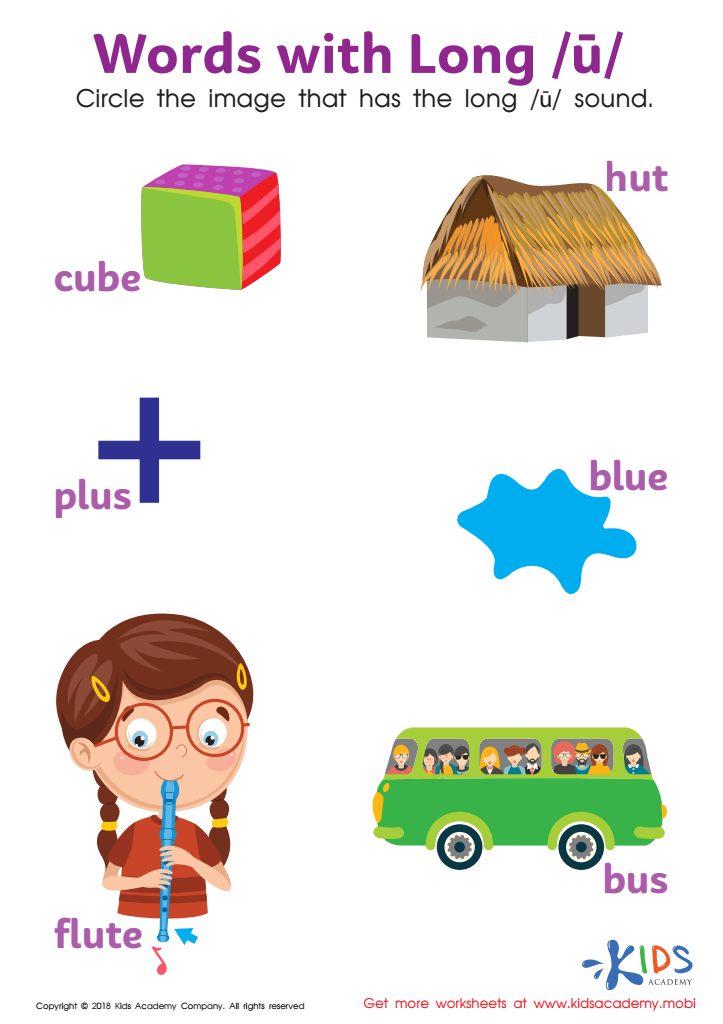
Words with Long U Reading Worksheet
Help your new reader master vowel recognition with this fun worksheet. By using picture clues and practicing fine motor skills, they'll learn to differentiate between words with the long and short «u» sound. Your learner will also get to practice vowel discrimination in high-frequency words. It's a great way to learn the importance of vowels in reading!
 Assign to My Students
Words with Long U Reading Worksheet
Worksheet
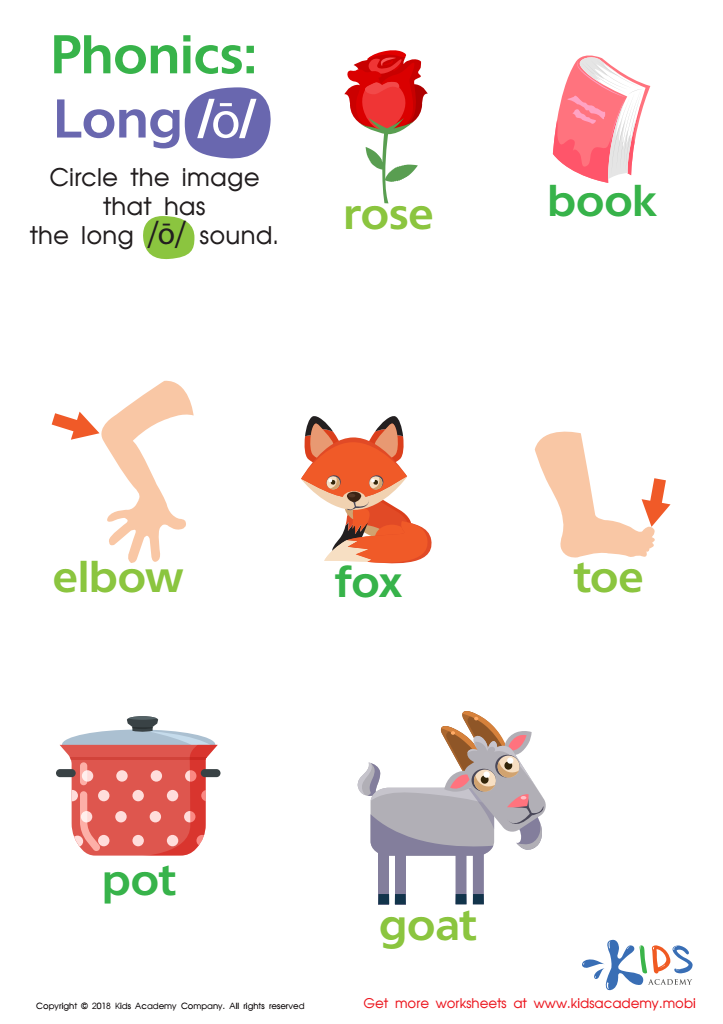
Phonics Long O Reading Worksheet
Are you ready to help your child learn the phonics long «o» sound? This worksheet is designed to aid them in getting familiar with the sound. After completing the exercise, your child should be able to differentiate letters, and recognize words with the long «o» sound. Encourage them to circle the images that have the sound.
Phonics Long O Reading Worksheet
Worksheet
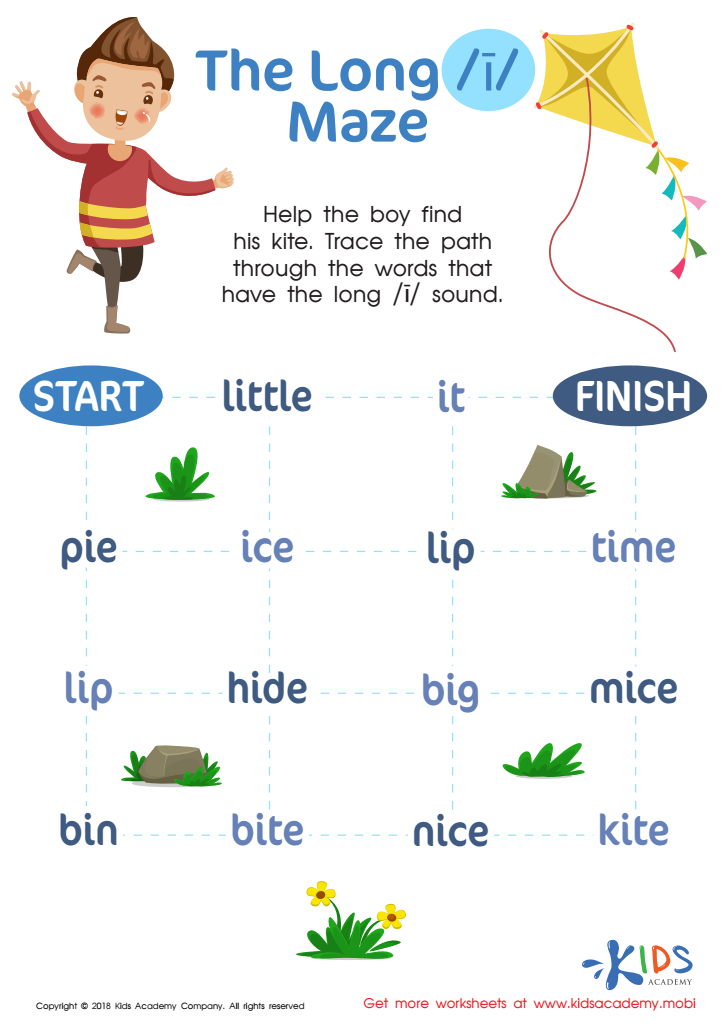
The Long I Maze Reading Worksheet
Help your child learn phonics to help them read. Show them the difference between long and short "i" sounds. Guide them as they use a pencil to trace words with the long "i:" sound in the "Help the Boy in the Picture" worksheet exercise. This will help them find the kite in the picture.
The Long I Maze Reading Worksheet
Worksheet
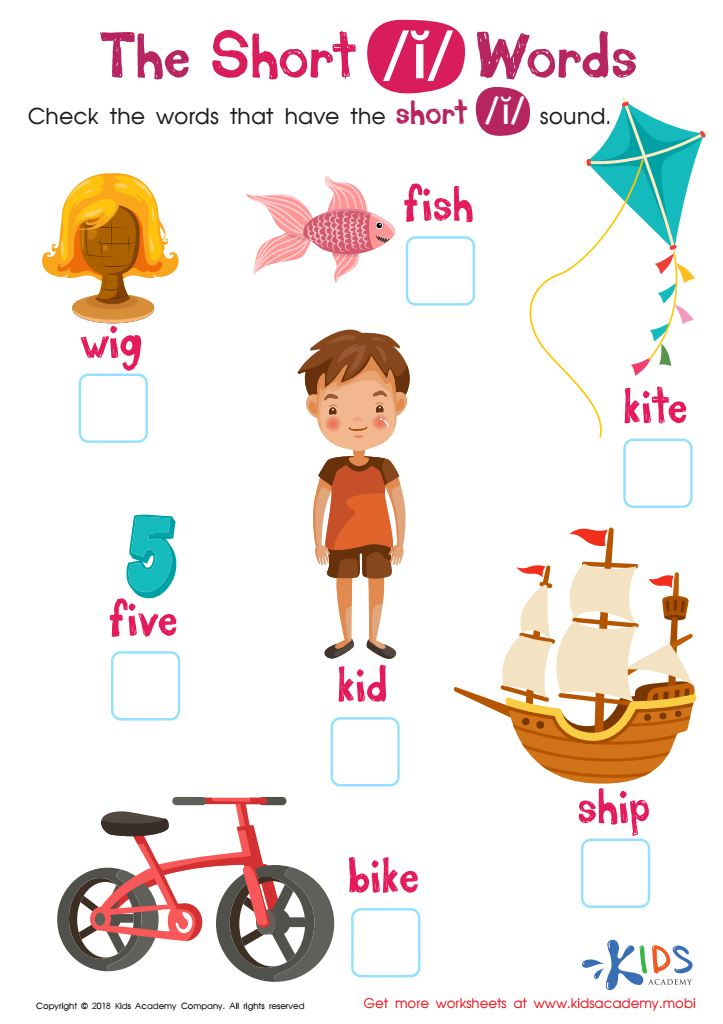
The Short I Words Reading Worksheet
Teach your kindergartner phonics with this printout worksheet! It introduces the short «i» sound and helps them differentiate and articulate sounds and letters of the alphabet. With practice, your child will soon find it easy to classify sounds into long and short vowels.
The Short I Words Reading Worksheet
Worksheet
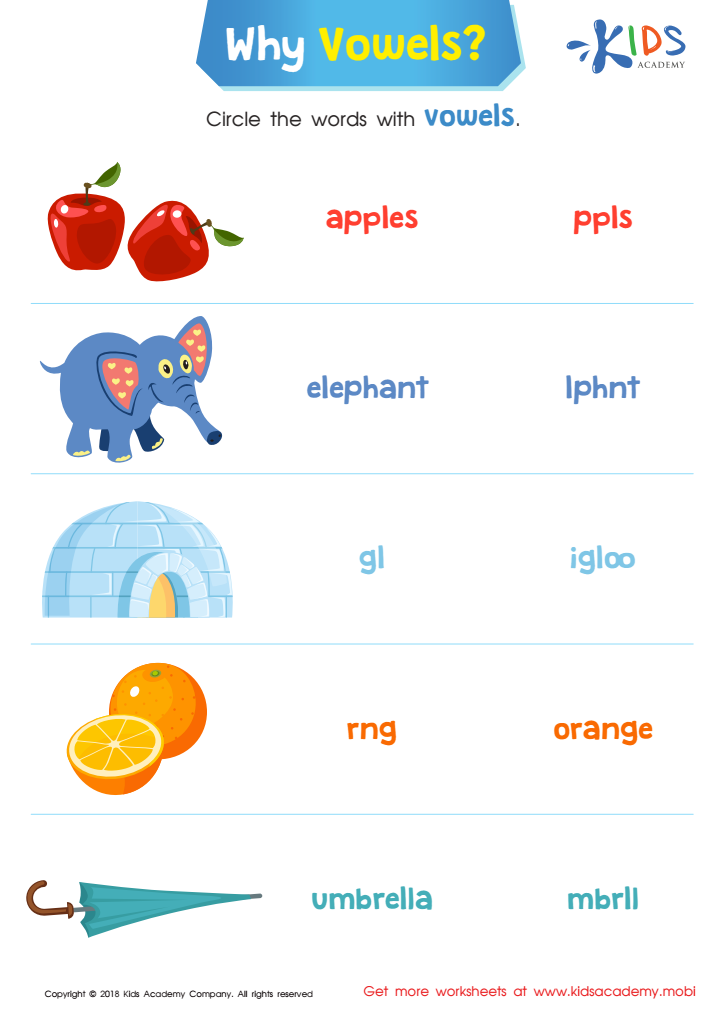
Why Vowels? Reading Worksheet
This worksheet teaches kids to spell words with vowels. It features familiar pics for them to recognize, and they practice fine motor skills by circling the correct spelling. It's an enjoyable way for kids to learn how to spell and promote reading skills.
Why Vowels? Reading Worksheet
Worksheet
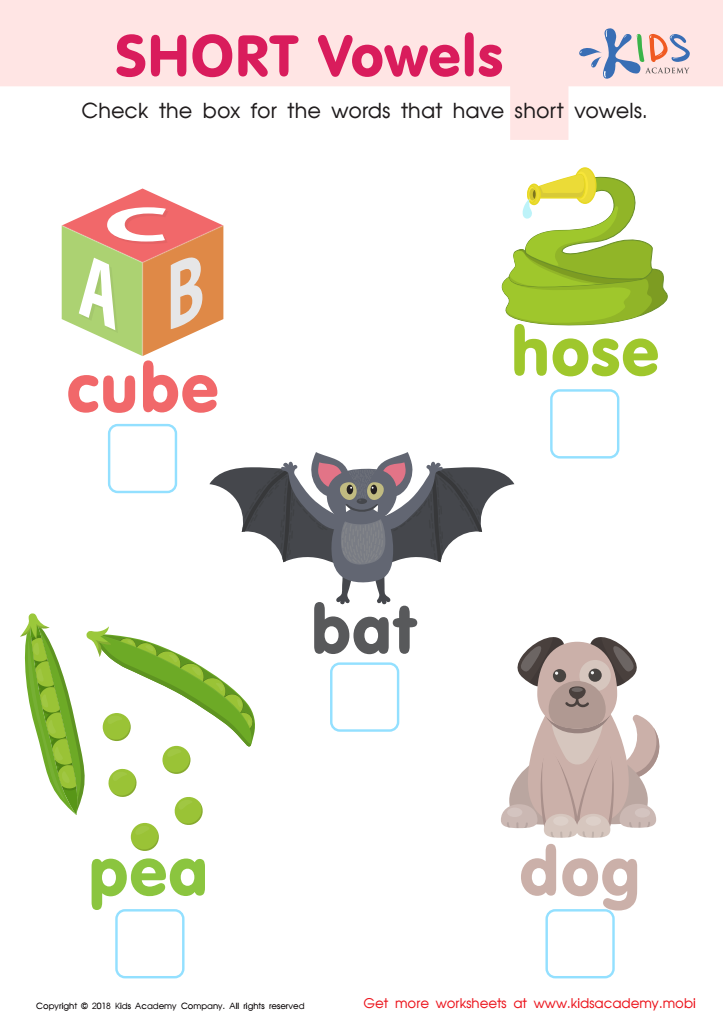
short vowels Worksheet
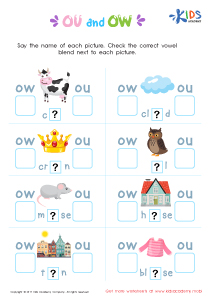
Say "dog" and notice how long it takes to pronounce the vowel. Is it short or long? Compare it to "pea" and use this worksheet to quickly assess your child's mastery. Have them name each picture and listen for the vowel sounds. Only check the boxes for words with short vowel sounds.
short vowels Worksheet
Worksheet
Join Kids Academy for Free
Who is primarily going to use this learning content?




Understanding long and short vowels is crucial for children ages 3-4 as it forms the foundation for their reading and language development. At this age, children are beginning to develop phonemic awareness, which is the ability to hear, identify, and manipulate the individual sounds in spoken words. Long and short vowels represent different sounds that can change the meaning of words, significantly impacting a child's ability to read and spell accurately.
Parents and teachers should engage young learners with activities that highlight vowel sounds through fun songs, interactive games, and storytelling. Recognizing these vowel sounds helps children decode words, which is essential as they transition from pre-reading to actual reading. Mastery of vowel sounds also supports their overall linguistic skills, boosting confidence as they begin to express themselves verbally and through writing.
Moreover, by understanding and differentiating long and short vowels early on, children will find it easier to grasp more complex phonics concepts later in their education. Cultivating this knowledge through playful and engaging learning strategies paves the way to a successful literacy journey, fostering a love for reading that can last a lifetime. Therefore, prioritizing vowel sound education in early childhood is vital for developmental growth.