Filters

18 filtered results

Clear all filters
Favorites
With answer key
Interactive

18 filtered results

Difficulty Level

Grade


Discover the joy of exploring the real world with our "Reading Non-Fiction for Ages 3-4" worksheets! Specially designed for little learners, this collection offers a unique opportunity to dive into the wonders of non-fictional content, tailored for young minds. Filled with engaging activities, these worksheets not only introduce children to the fascinating facts of their surroundings but also develop critical thinking and comprehension skills at an early age. Each sheet is crafted to stimulate curiosity, enhance vocabulary, and foster a love for learning about the world. Unleash your child's potential with our "Reading Non-Fiction for Ages 3-4" worksheets today!


Check out this FREE Trial Lesson on Reading Non-Fiction for age 3-4!

Describe the Relationship Between Illustrations and the Text in Which They Appear (i.e. What Person, Place, Thing, or Idea in Th

Favorites
With answer key
Interactive
  • 3-4
  • Interactive
  • Reading Non-Fiction
Towns Worksheet
Towns Worksheet

Towns Worksheet

Towns are generally quiet and safe, making them attractive for young families. Cities have more people, businesses and tall buildings. Roads are busy, and there is often plenty to do and see. Help your kids check which pictures in this worksheet show towns.
Towns Worksheet
Worksheet
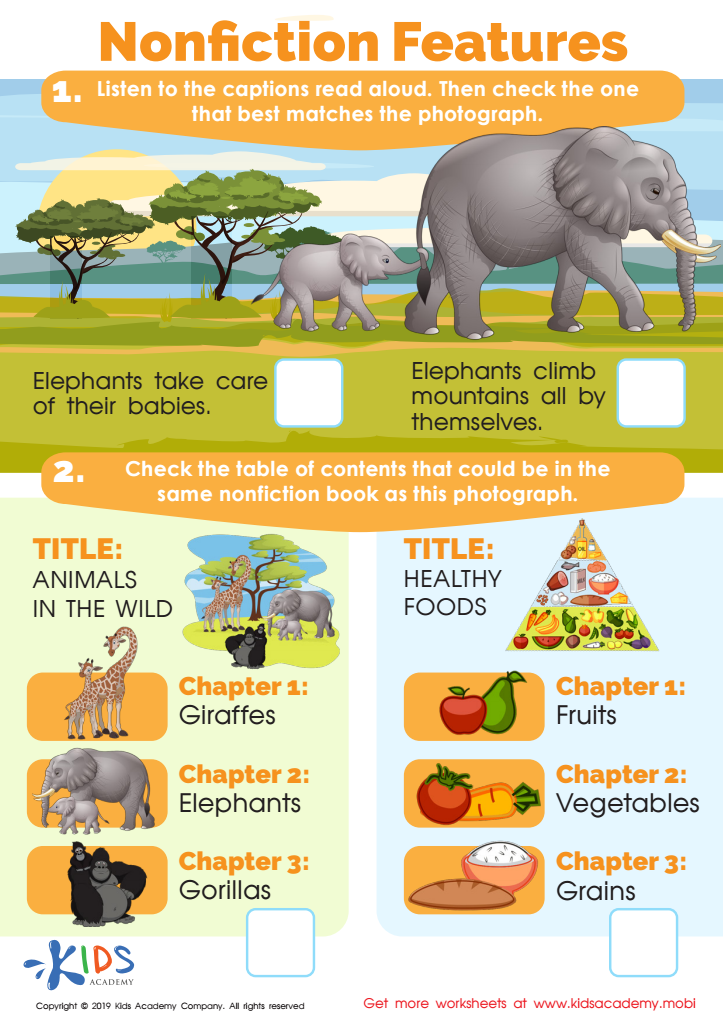
Nonfiction Features Worksheet

Nonfiction Features Worksheet

Fiction writing is made up of characters and events created by the author. Ask your students to match the captions to the picture. Help your preschoolers explore the contents of a non-fiction book that may have the same photo.
Nonfiction Features Worksheet
Worksheet
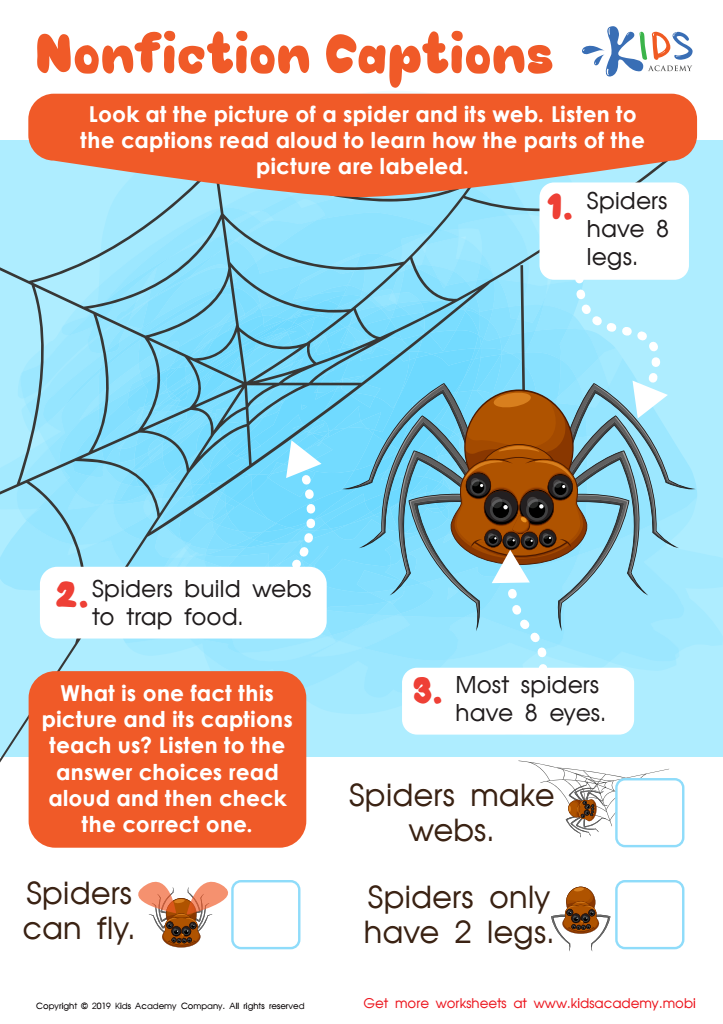
Nonfiction Captions Worksheet

Nonfiction Captions Worksheet

Help your students learn to read better with books that have captions. Read the captions and labels aloud to help children understand the picture. Ask them to answer questions at the bottom of the page. Captions are an effective tool for teaching literacy skills.
Nonfiction Captions Worksheet
Worksheet
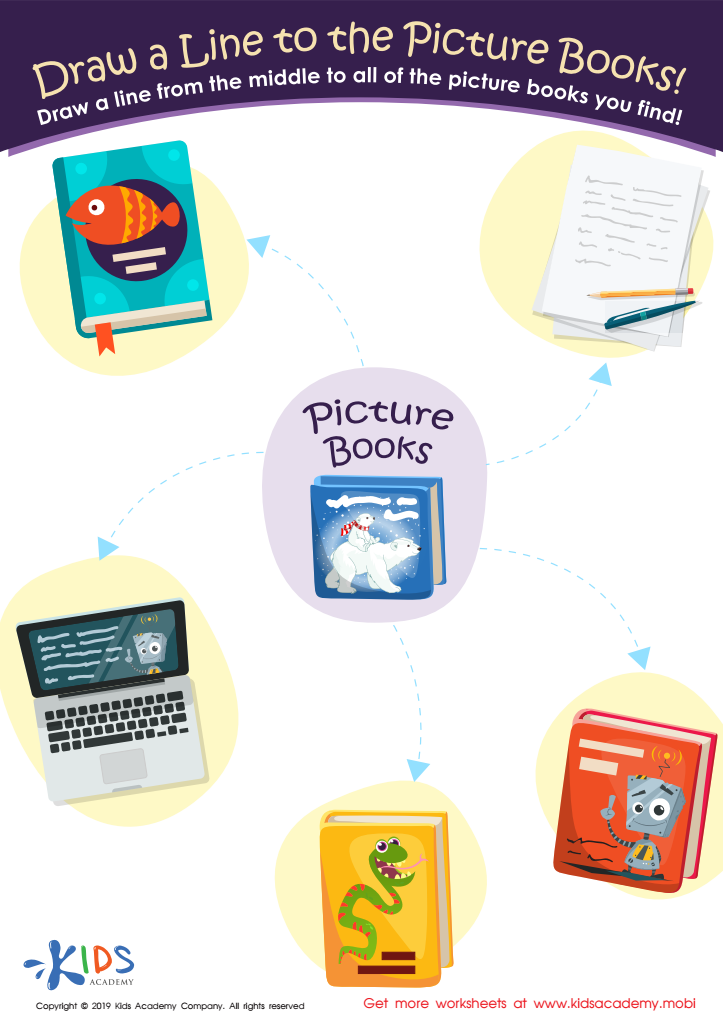
Draw a Line to the Picture Books Worksheet

Draw a Line to the Picture Books Worksheet

Encourage your students to read and explore with this fun exercise! They'll draw a line from the word 'picture books' to the five objects. Picture books are exciting, with stories and colorful images. Make story time even more enjoyable with this worksheet!
Draw a Line to the Picture Books Worksheet
Worksheet
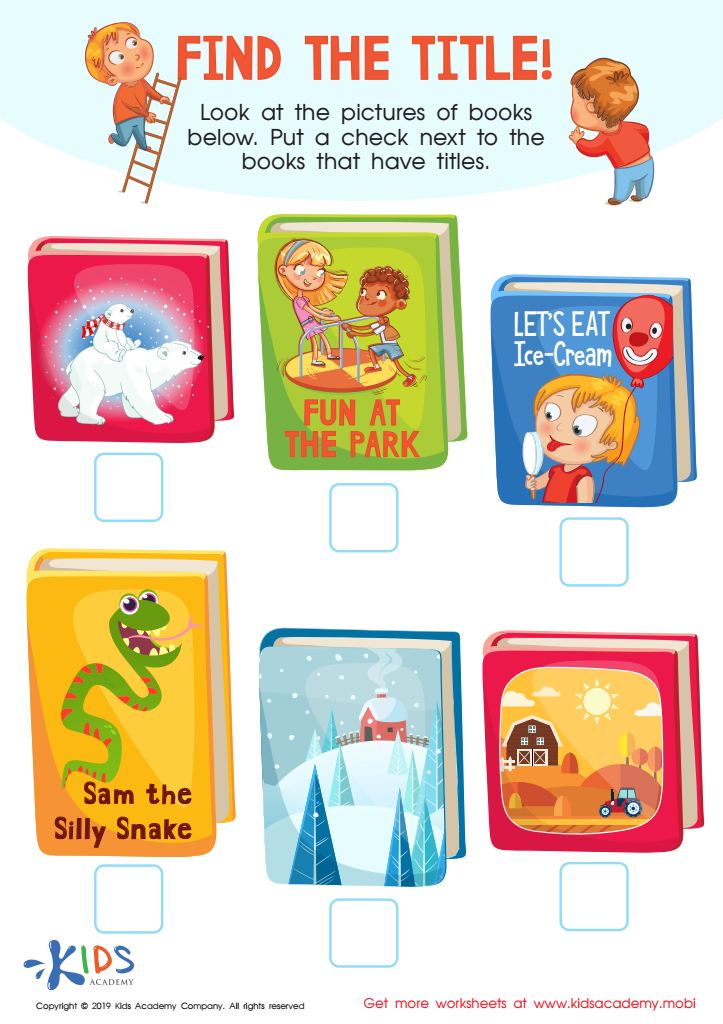
Find the Title Worksheet

Find the Title Worksheet

Help your kids to identify the colors of the books on this worksheet. Ask them to spot the differences between the six books, such as which ones have titles printed on their covers. Ask them to put a check next to the books with titles. This activity will promote your kids' thinking skills.
Find the Title Worksheet
Worksheet
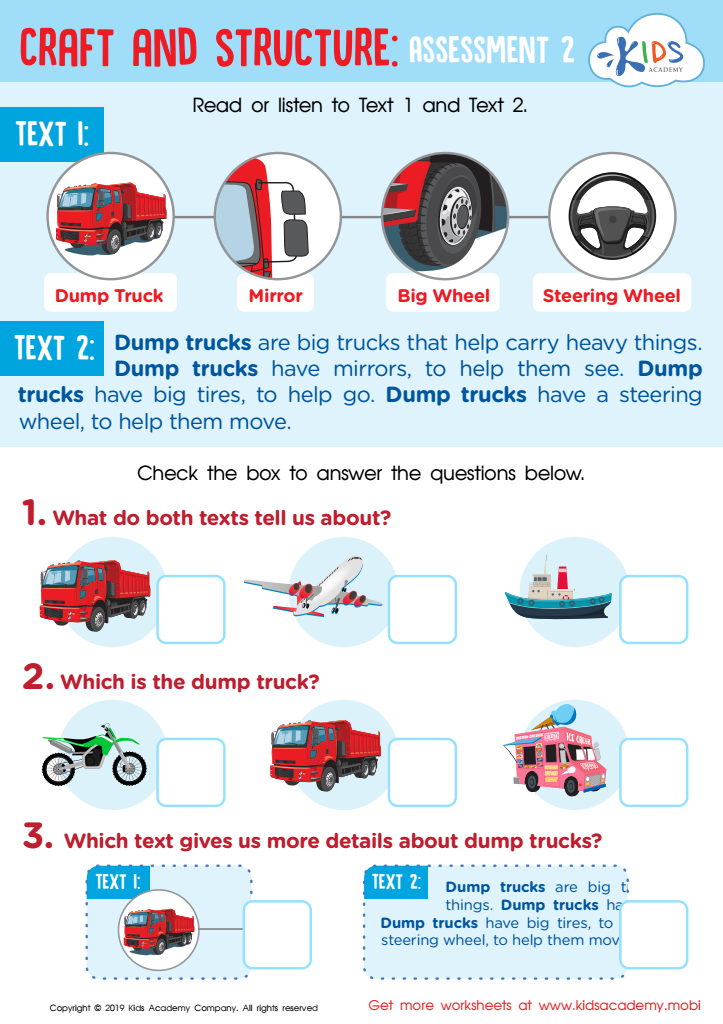
Craft and Structure: Assessment 2 Worksheet

Craft and Structure: Assessment 2 Worksheet

Good readers need to analyze text features and use picture clues to understand. This assessment worksheet gives your child info in different formats and they can show understanding using answer options to check the correct answers. (80 words)
Craft and Structure: Assessment 2 Worksheet
Worksheet
Cities: Finding Differences Worksheet

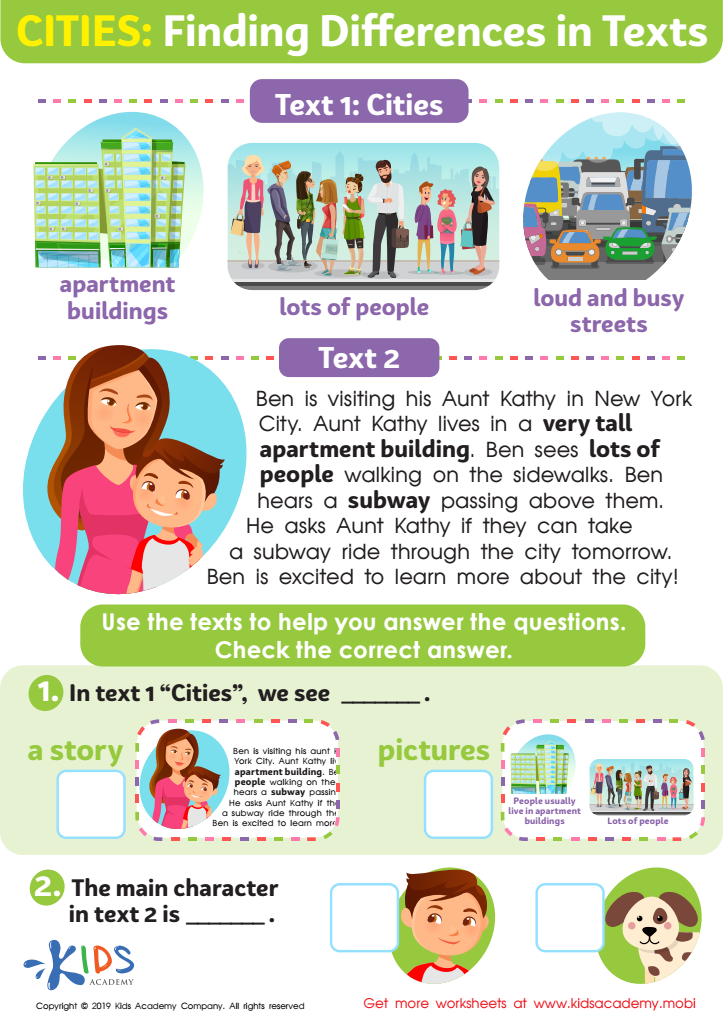
Cities: Finding Differences Worksheet

Critical thinking is essential for reading comprehension. New readers must be able to identify the key information in different text formats. This worksheet helps children learn what they might find in cities and how to differentiate between stories and pictures.
Cities: Finding Differences Worksheet
Worksheet
Cities: Finding Similarities Worksheet

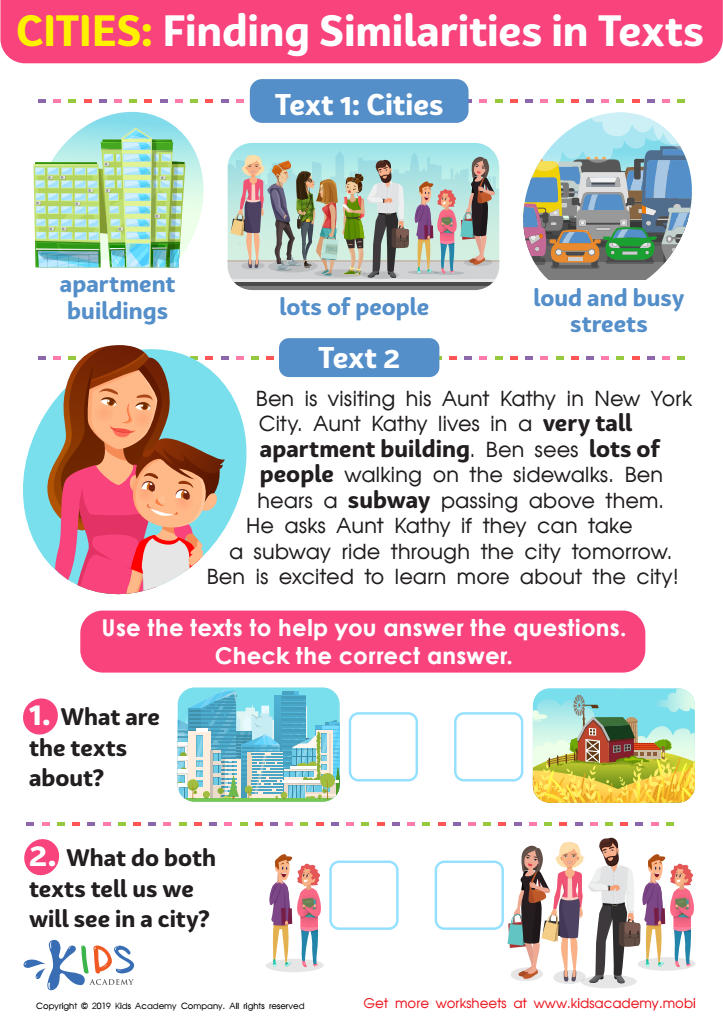
Cities: Finding Similarities Worksheet

This worksheet offers kids a chance to explore how information can be presented differently but still contain similar facts. They'll compare two texts and look for similarities, honing their reading comprehension and critical thinking skills.
Cities: Finding Similarities Worksheet
Worksheet
Growing Plants Worksheet

Growing Plants Worksheet

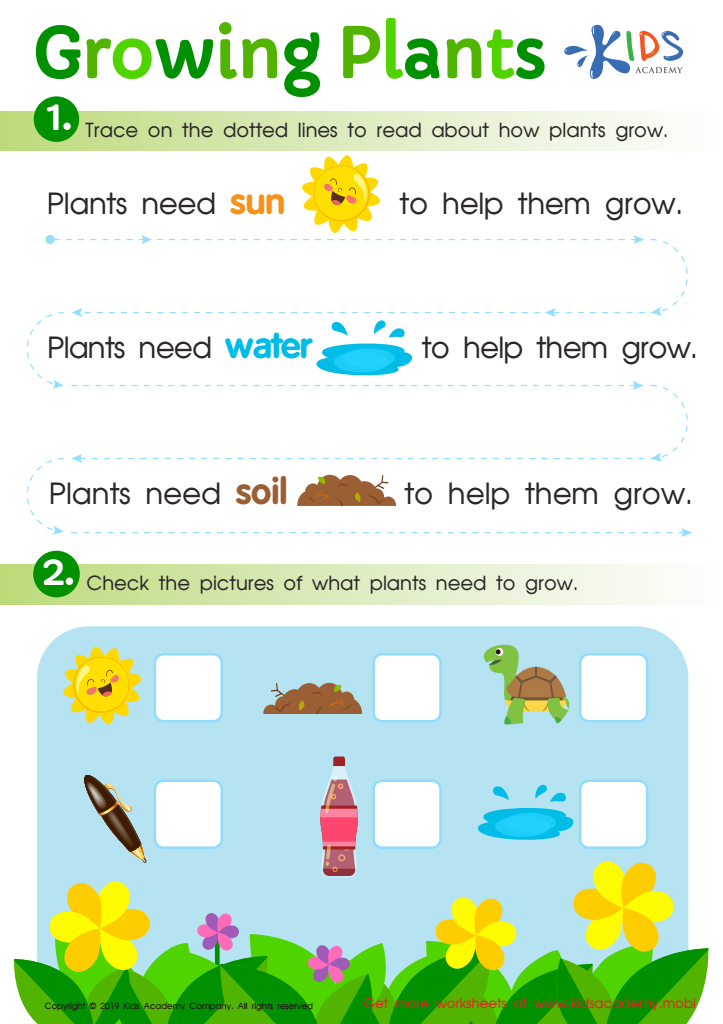
Young gardeners and scientists can learn about what helps plants grow with this fun PDF worksheet. Kids will trace lines to practice left-to-right patterning and use pictures from the rebus story to guide them. Learn that plants need sunshine, water and soil, then check off pictures of what each plant needs. It's an engaging and educational way to help their plants become big and strong.
Growing Plants Worksheet
Worksheet
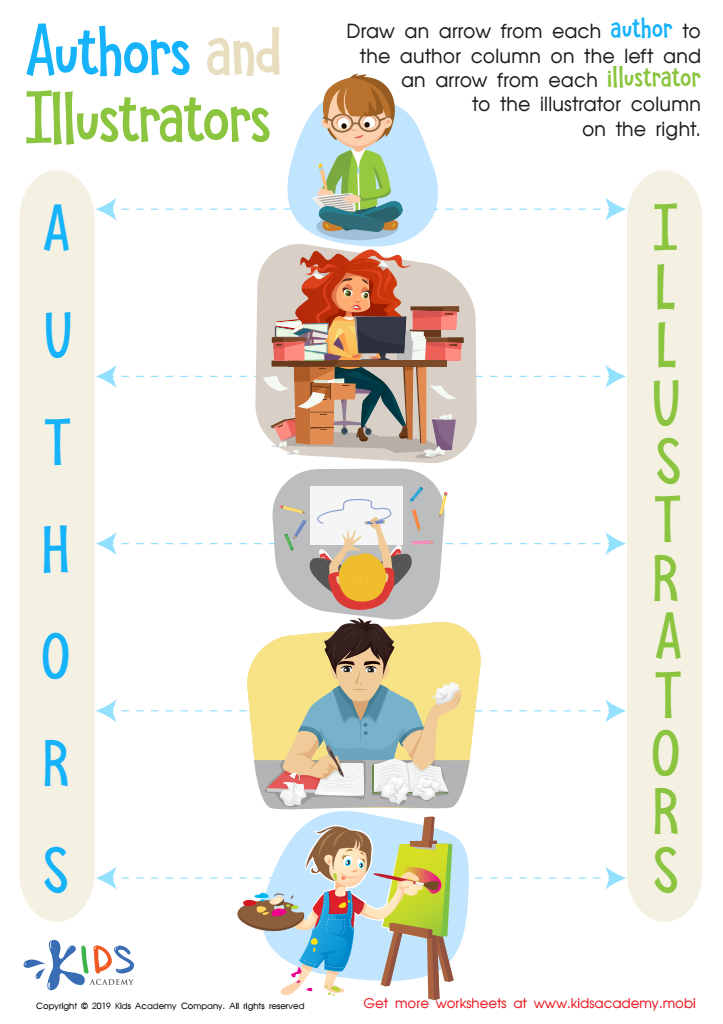
Authors and Illustrators Worksheet

Authors and Illustrators Worksheet

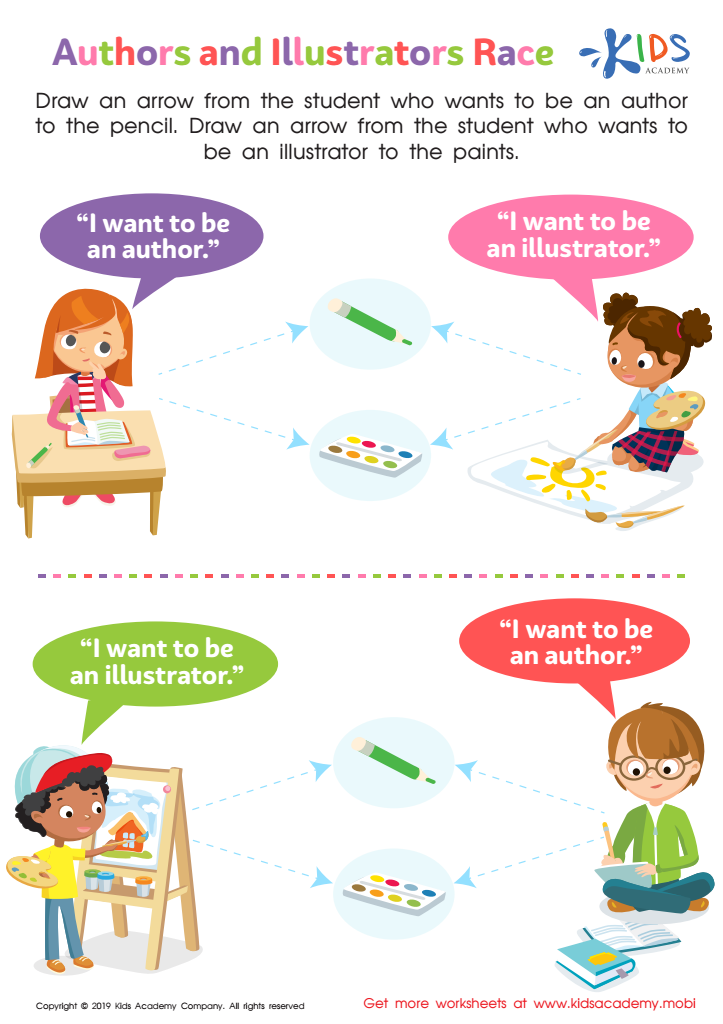
This free PDF provides a simple and fun way to understand the roles of authors and illustrators for beginning readers. It offers concrete pictures of what each one does and traceable lines for children to decide whether they are an author or an illustrator. It will help build their critical thinking skills and foster a better understanding of the book-making process.
Authors and Illustrators Worksheet
Worksheet
Authors and Illustrators Race Worksheet

Authors and Illustrators Race Worksheet

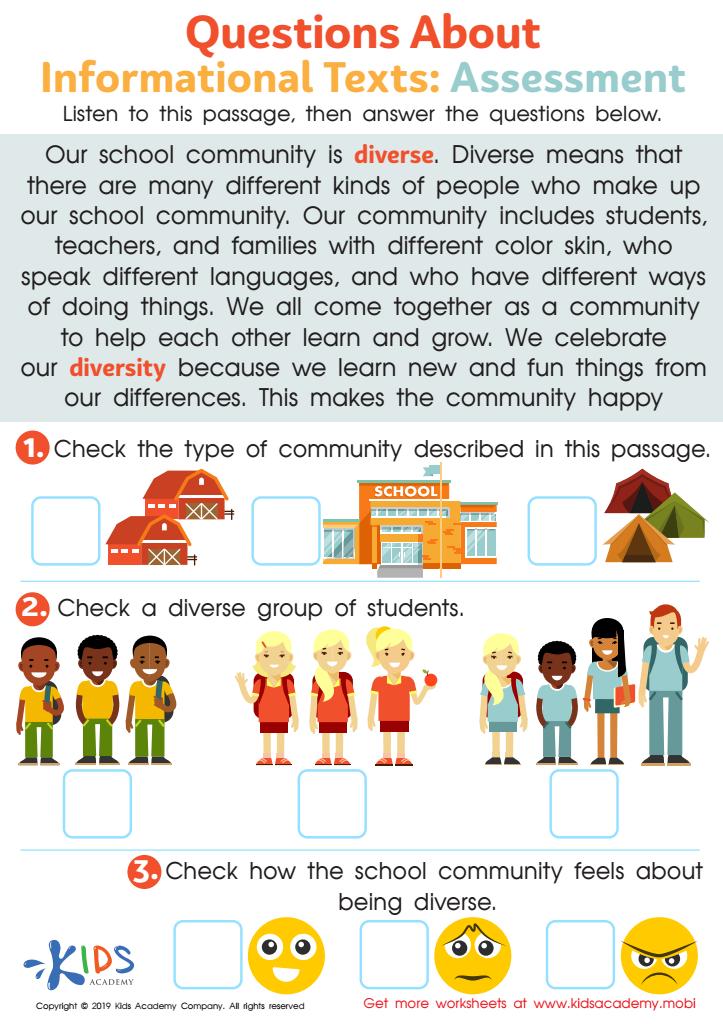
Help your child learn about the author and illustrator of a book with this free and colorful worksheet. They'll trace lines to pick the tools used by each and understand the difference between them. It's a great way to introduce fundamental concepts of reading.
Authors and Illustrators Race Worksheet
Worksheet
Questions About Informational Texts: Assessment 1 Worksheet

Questions About Informational Texts: Assessment 1 Worksheet

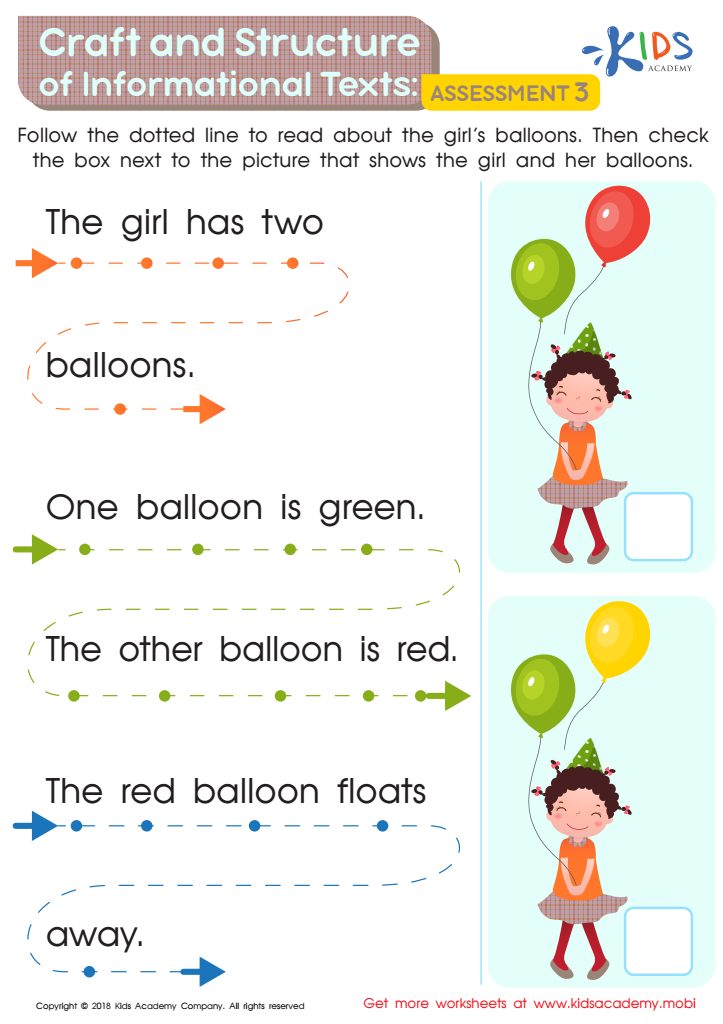
Ask your students: What comes to mind when we talk about a community? What different habits do people practice? What do fellow students do that seems strange? Read this passage aloud to your kindergartners and make sure they understand it. Then, answer the questions at the bottom of the page. (80 words)
Questions About Informational Texts: Assessment 1 Worksheet
Worksheet
Craft and Structure of Informational Texts: Assessment 3 Worksheet

Craft and Structure of Informational Texts: Assessment 3 Worksheet

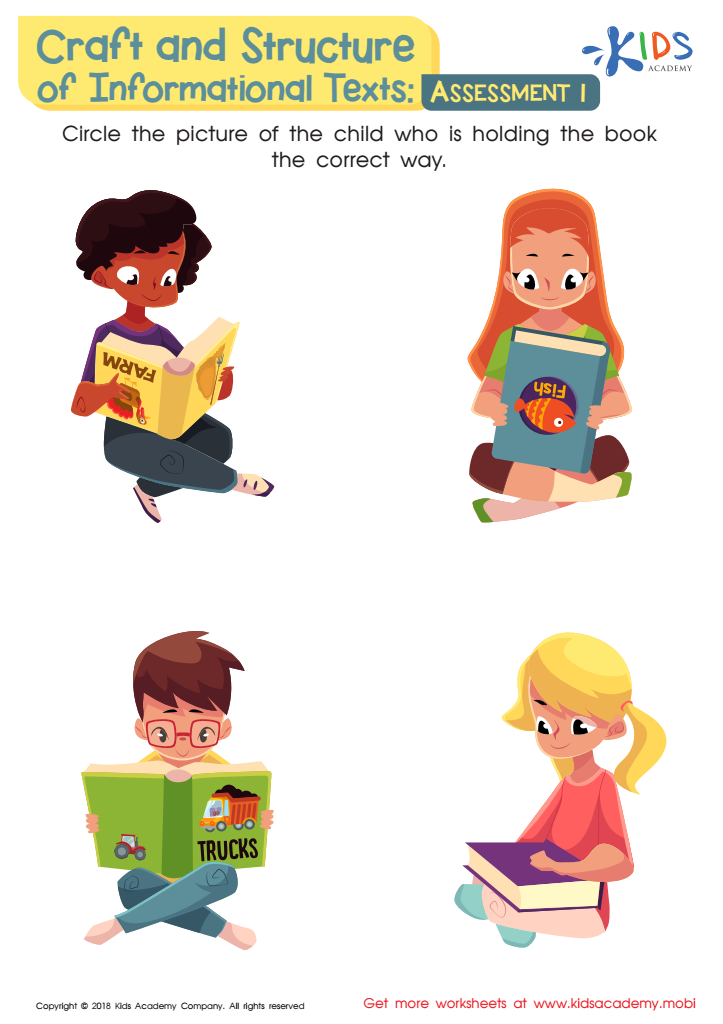
Test your beginning reader's understanding of left-to-right directionality and use of details from informational texts with this fun worksheet. Follow the traceable paths to find the right picture for each sentence. This will help your child gain confidence and be successful as a reader.
Craft and Structure of Informational Texts: Assessment 3 Worksheet
Worksheet
Craft and Structure of Informational Texts: Assessment 1 Worksheet

Craft and Structure of Informational Texts: Assessment 1 Worksheet

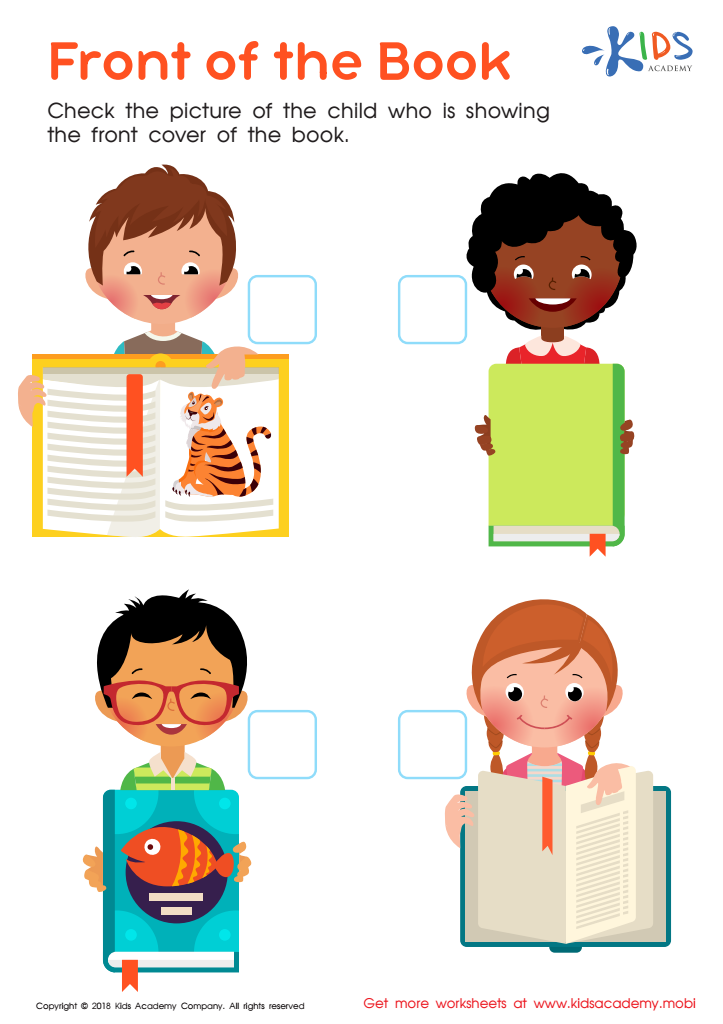
Young children need to know how to hold books correctly when they start reading. This assessment worksheet helps them show they know what to do. They'll look at the pictures and circle the child who is holding the book correctly. It's a great way to tell they are well on their way to becoming lifetime readers!
Craft and Structure of Informational Texts: Assessment 1 Worksheet
Worksheet
Front of the Book Worksheet

Front of the Book Worksheet

Help your child become a reader with this free worksheet! It's full of fun new friends and is designed to help kids understand concepts about the front of a book. They'll look at each picture and decide which friend is holding the book with the front cover, and check off the correct answer in the given boxes. Get your little one ready to be a reader!
Front of the Book Worksheet
Worksheet
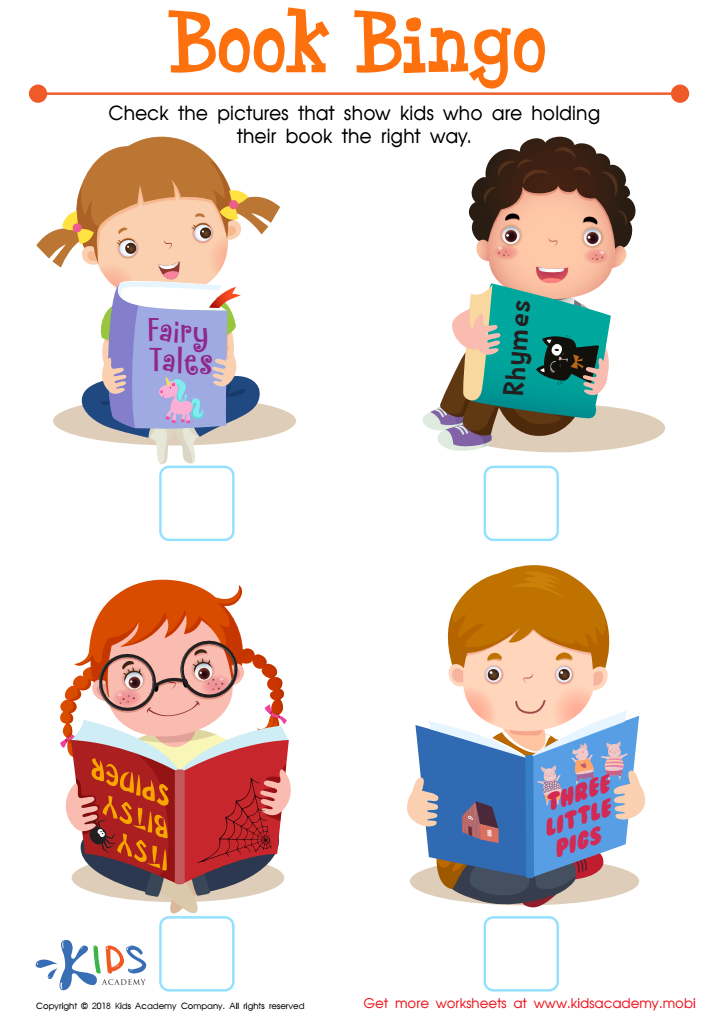
Book Bingo Worksheet

Book Bingo Worksheet

Help your kids spot which of the kids in the worksheet are reading correctly. Early instruction in reading helps ensure kids won't face problems later on, plus any impairments can be identified and corrected quickly. Can your child read? Have them check the pictures of kids holding books the right way.
Book Bingo Worksheet
Worksheet
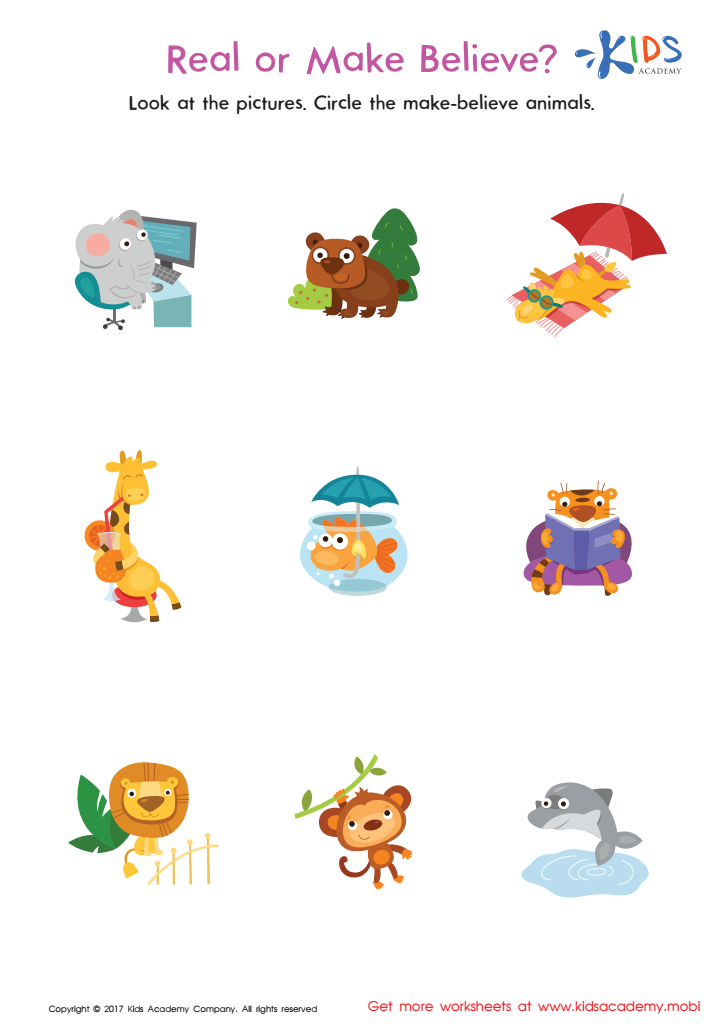
Fact or make believe worksheet pdf

Fact or Make Believe Worksheet

This fun and funny worksheet challenges your child to decide if each animal can do the activity listed. Can a camel go sunbathing? Separating fact from fiction can be entertaining! Motivate your child while they complete this PDF worksheet.
Fact or Make Believe Worksheet
Worksheet
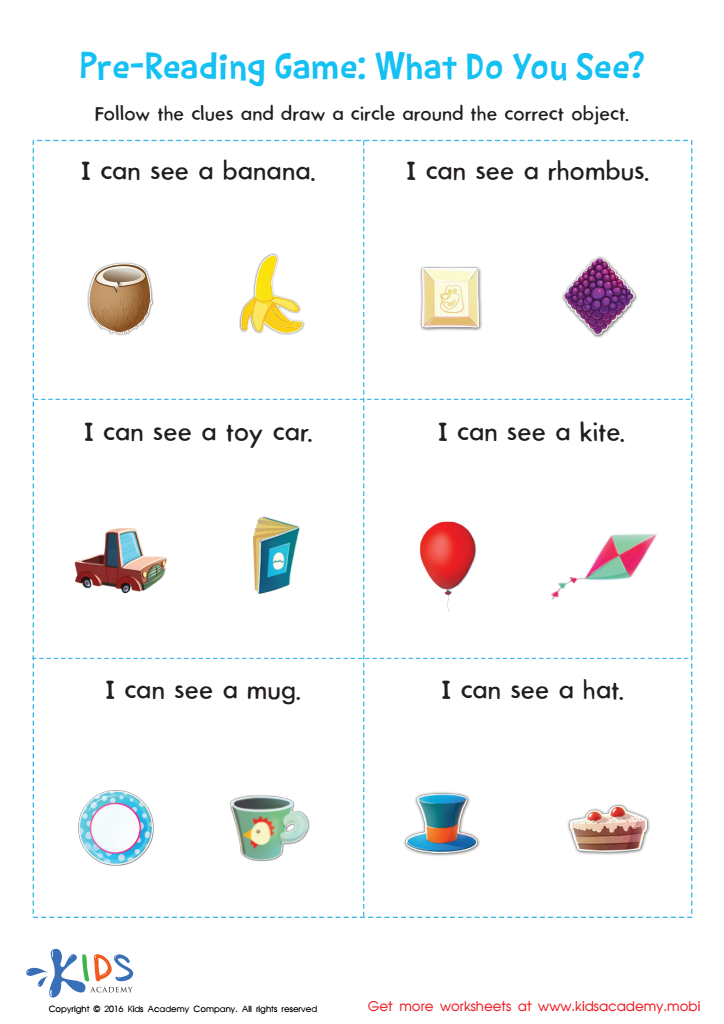
Pre-reading Worksheet for Kindergarten

Pre–reading Worksheet: What Do You See?

Get started with this pre-reading worksheet to build your child's early literacy skills. Model, read aloud, and provide consistent repetition for successful learning.
Pre–reading Worksheet: What Do You See?

Worksheet


Worksheets on Reading Non-Fiction for Ages 3-4 are an invaluable educational tool for young learners' development. At this critical stage, children are just beginning to explore the world around them, making it the perfect time to introduce them to the joys of reading non-fiction. These worksheets are specifically designed to cater to the curiosity of 3 to 4-year-olds, encouraging them to engage with real-world subjects in a way that's both enjoyable and educational.

Using Reading Non-Fiction worksheets for ages 3-4 helps in laying the foundation for critical thinking and comprehension skills early on. Through interactive activities, children learn to identify basic facts, understand simple concepts, and follow narratives related to animals, plants, space, and more. This not only broadens their knowledge but also enhances vocabulary, boosts memory, and fosters an inquiry-based approach to learning.

Moreover, these worksheets are crafted to be age-appropriate, using colorful illustrations and simple, engaging texts that grasp the attention of young minds. By incorporating real-life content through reading non-fiction, children are not only learning but are also being prepared for academic success in the future. Introducing non-fiction at an early age instills a love for learning and a curiosity about the world, making Reading Non-Fiction worksheets for Ages 3-4 an essential part of early childhood education.