Upper & Lowercase Letters Worksheets for Ages 3-6 - Page 3
50 filtered results
-
From - To
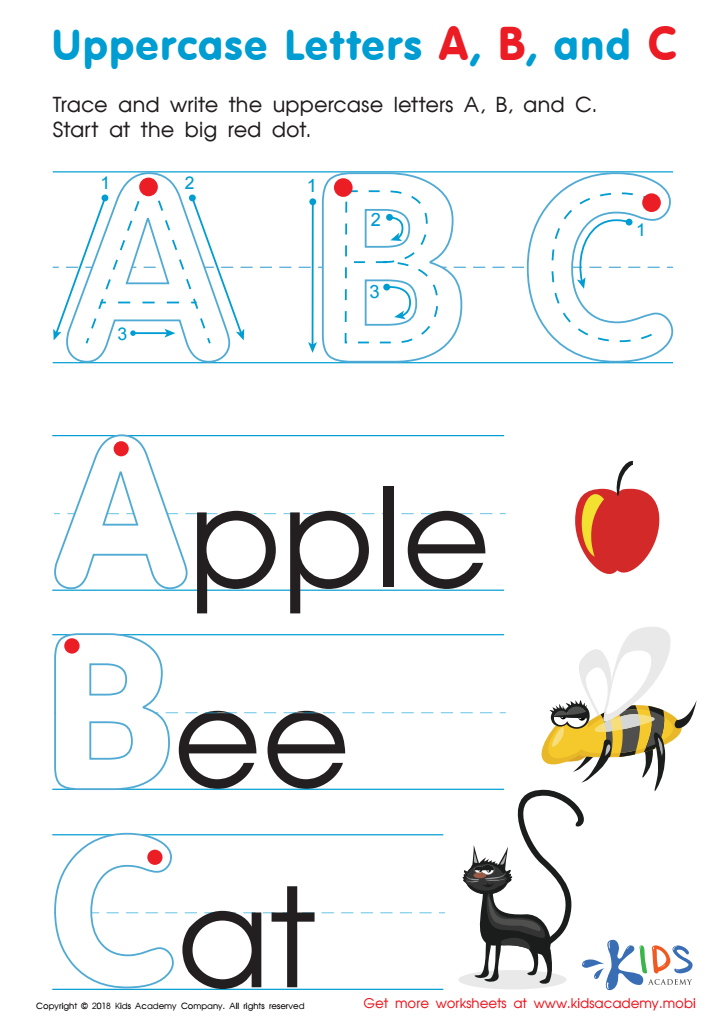
Uppercase Letters A, B, and C Worksheet
 Assign to My Students





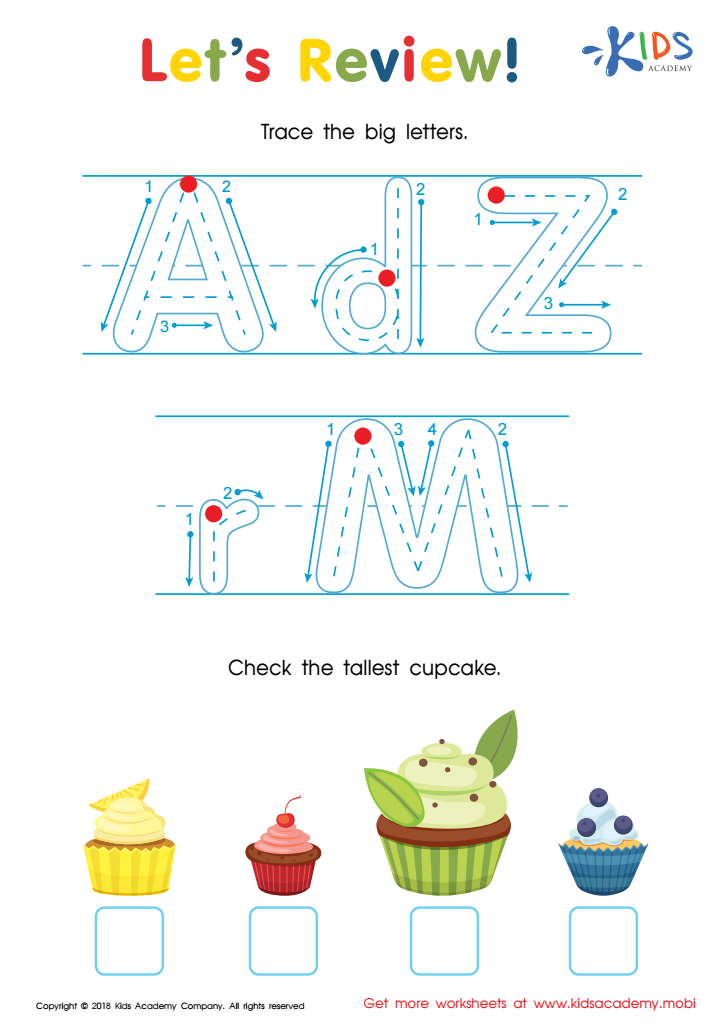
Let's Review! Big Letters Worksheet






Understanding uppercase and lowercase letters is crucial for children aged 3-6, as this early literacy foundation supports future reading and writing skills. At this age, children begin to recognize letters and their shapes, which serves as an essential step toward deciphering words. Distinguishing between uppercase and lowercase letters helps them grasp the concept of alphabetic principles, which is vital for effective communication.
Uppercase letters typically signal the beginning of sentences and proper nouns, serving as visual cues that enhance comprehension. If children learn to recognize and differentiate these letters early, they will be better equipped to understand the structure of language and the rules that govern writing.
Moreover, mastering letter recognition fosters self-confidence in young learners. Utilizing engaging activities, such as alphabet puzzles or tracing letters, reinforces their learning in a fun and interactive manner. This engagement enhances phonemic awareness, which is critical in developing reading fluency and writing skills down the line.
Educators and parents play an integral role in nurturing this growth. By prioritizing uppercase and lowercase letter recognition in their teaching methods and home activities, they lay a solid groundwork for literacy that will benefit children throughout their educational journeys.







