Numbers up to 100 Worksheets for Ages 3-6 - Page 3
50 filtered results
-
From - To
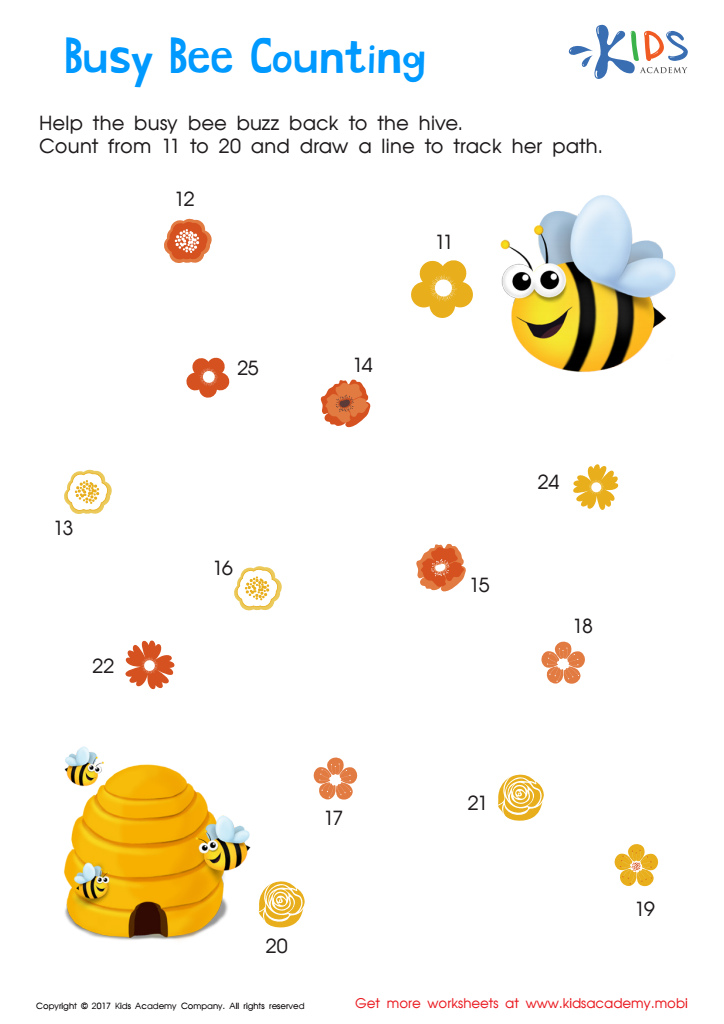
Ordering 11–20: Busy Bee Counting Worksheet
 Assign to My Students
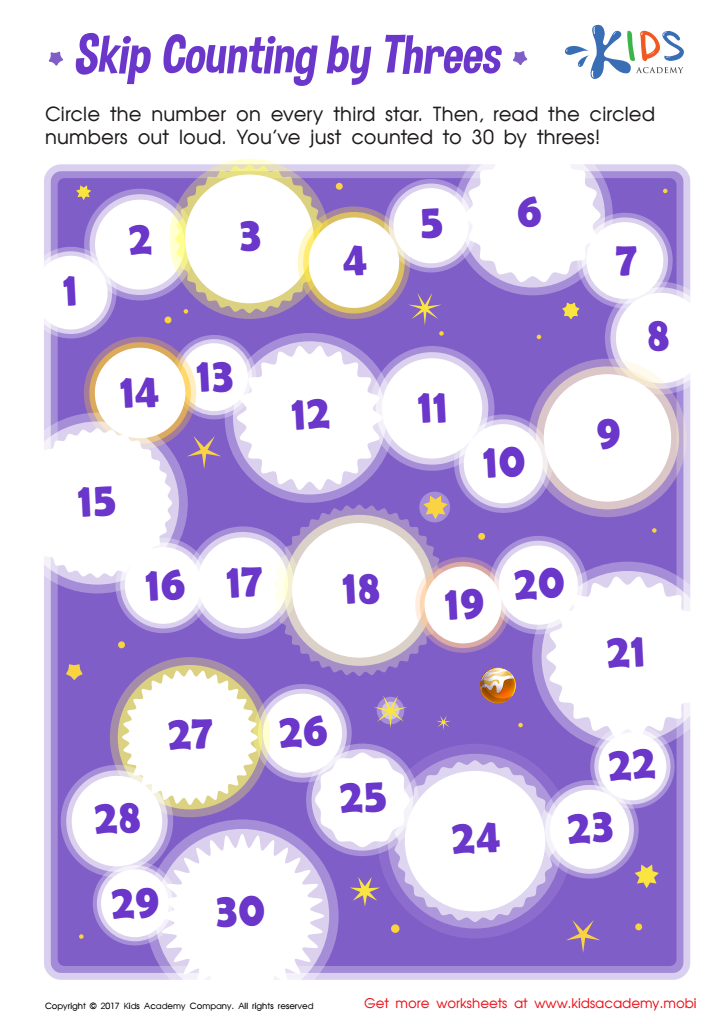
Skip Counting By Three Printable








Understanding numbers up to 100 is crucial for children aged 3-6, as it forms the foundation for their mathematical skills and overall cognitive development. During these early years, children's brains are highly receptive to new information, making this the perfect time to introduce numeracy concepts. Mastery of numbers builds confidence and promotes problem-solving abilities, which are essential for success in later school years and real-world situations.
Additionally, learning numbers helps develop important skills such as counting, recognizing patterns, and understanding basic arithmetic operations. At this age, children also begin to cultivate their critical thinking skills, and engaging with numbers encourages logical reasoning and analytical thinking.
Moreover, familiarity with numbers supports literacy development. Numbers often appear in everyday contexts, enhancing communication skills as children learn to express quantity and make comparisons. Involving parents in this process—through games, songs, and daily activities—creates a collaborative learning environment, fostering stronger relationships.
Ultimately, helping children understand numbers prepares them not just academically, but also socially and emotionally, equipping them with skills that will last a lifetime. Parents and teachers play a vital role in making this learning experience engaging and fun, ensuring children are enthusiastic about math as they grow.