Filters

30 filtered results

Clear all filters
Favorites
With answer key
Interactive

30 filtered results

Difficulty Level

Grade


Subject

    Check out this FREE Trial Lesson on Elementary Phonics for age 3-7!

    One-to-one Letter-sound Correspondence

    Favorites
    With answer key
    Interactive
    • 3-7
    • Interactive
    • Elementary Phonics
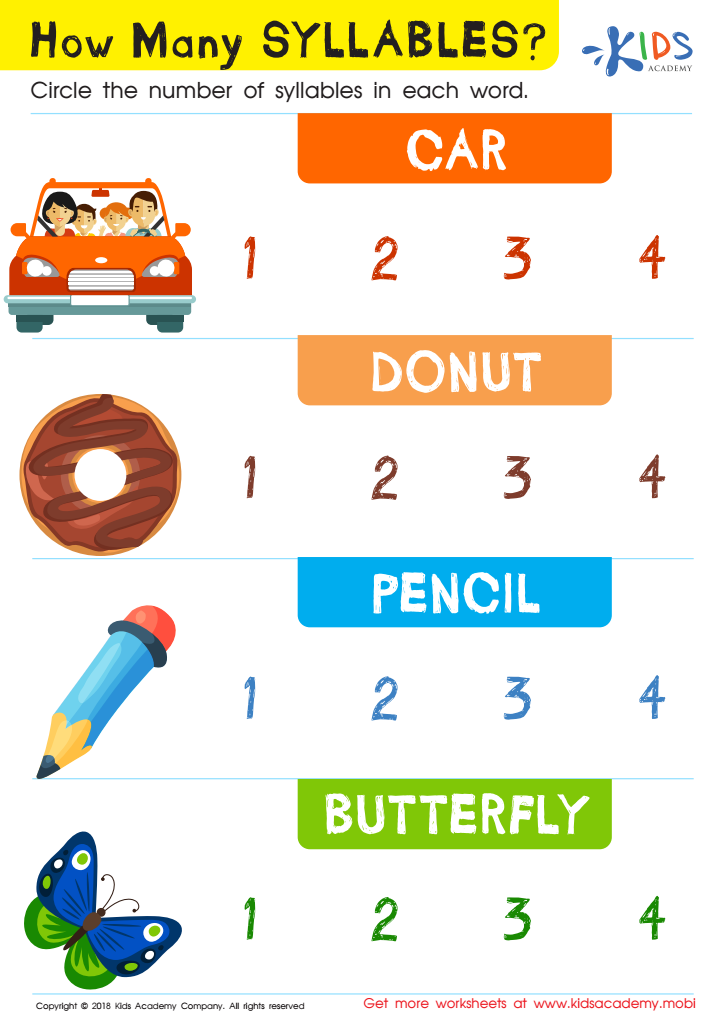
    How Many Syllables? Worksheet
    How Many Syllables? Worksheet

    How Many Syllables? Worksheet

    Syllabication or 'chunking' helps students decode words more quickly and increase fluency. This traceable worksheet is great for emerging readers, combining fun and fine motor practice with chunking words and counting syllables.
    How Many Syllables? Worksheet
    Worksheet
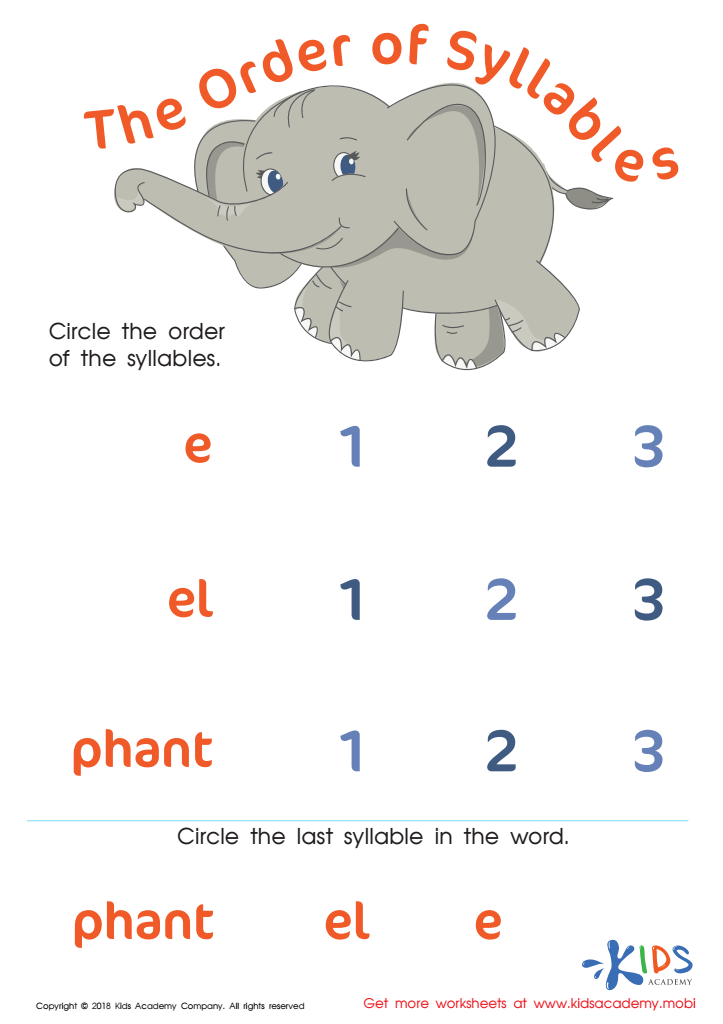
    The Order of Syllables Worksheet
    The Order of Syllables Worksheet

    The Order of Syllables Worksheet

    Syllabication is vital for prereading and decoding words. Download this fun, free worksheet to help your reader practice breaking words into syllables and arranging them for reading. It also strengthens fine motor skills as they trace the numbers for each syllable, guided by a cheerful elephant!
    The Order of Syllables Worksheet
    Worksheet
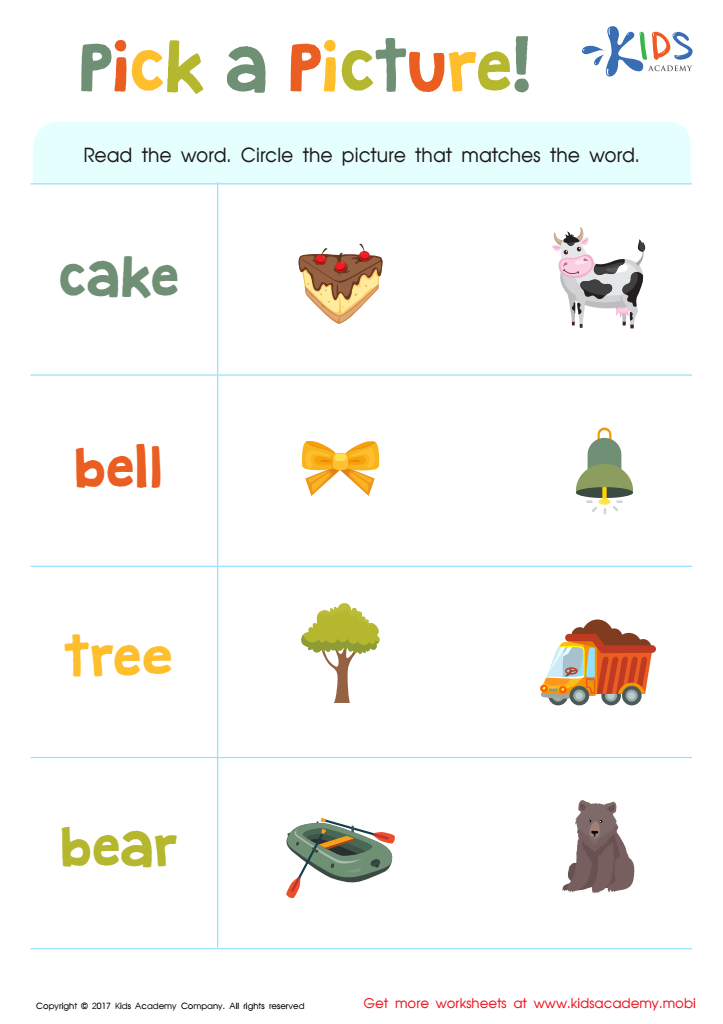
    Pick a Picture Word Recognition Worksheet
    Pick a Picture Word Recognition Worksheet

    Pick a Picture Word Recognition Worksheet

    With our Pick a Picture worksheet, your child's success is within reach. Vivid pictures and words help them learn to read and distinguish initial sounds. Plus, it's a great way to strengthen sight word banks and fine motor skills. Circling practice also helps them form letters properly for writing.
    Pick a Picture Word Recognition Worksheet
    Worksheet
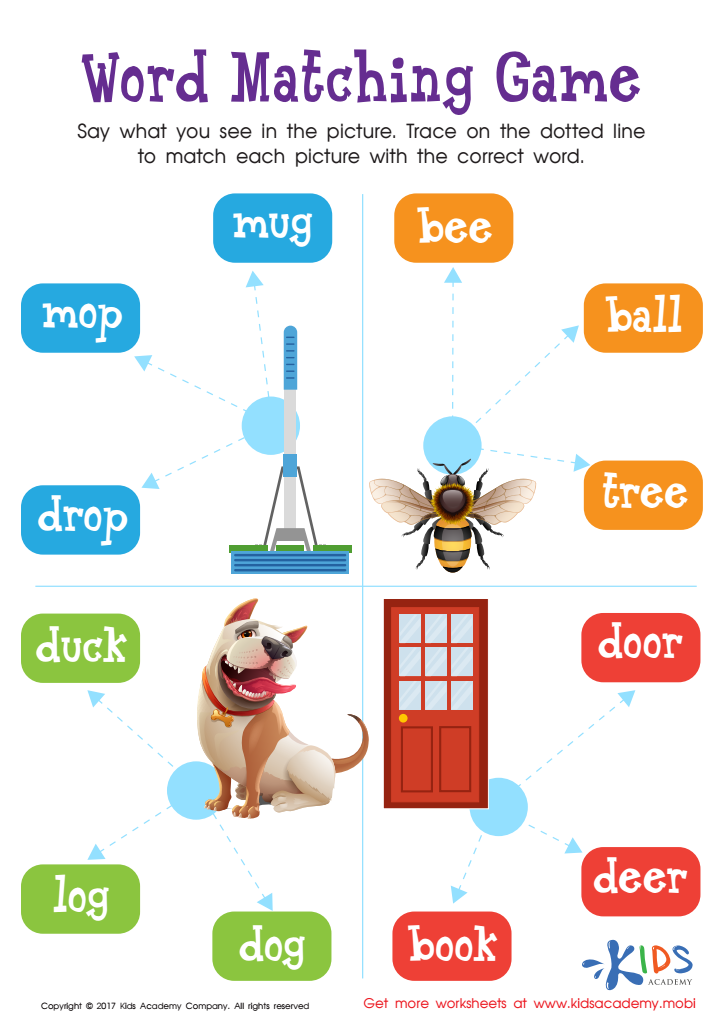
    Word Matching Game Worksheet
    Word Matching Game Worksheet

    Word Matching Game Worksheet

    Help your early reader develop prereading skills with this fun matching worksheet! Visual cues help them learn sight words, decode words in word families, and identify phonetic patterns. They'll practice discerning sounds past initial consonants while saying the name of the picture and finding the matching word - and reading at the same time!
    Word Matching Game Worksheet
    Worksheet
    Count Syllables: Odd Word Game Worksheet
    Count Syllables: Odd Word Game Worksheet

    Count Syllables: Odd Word Game Worksheet

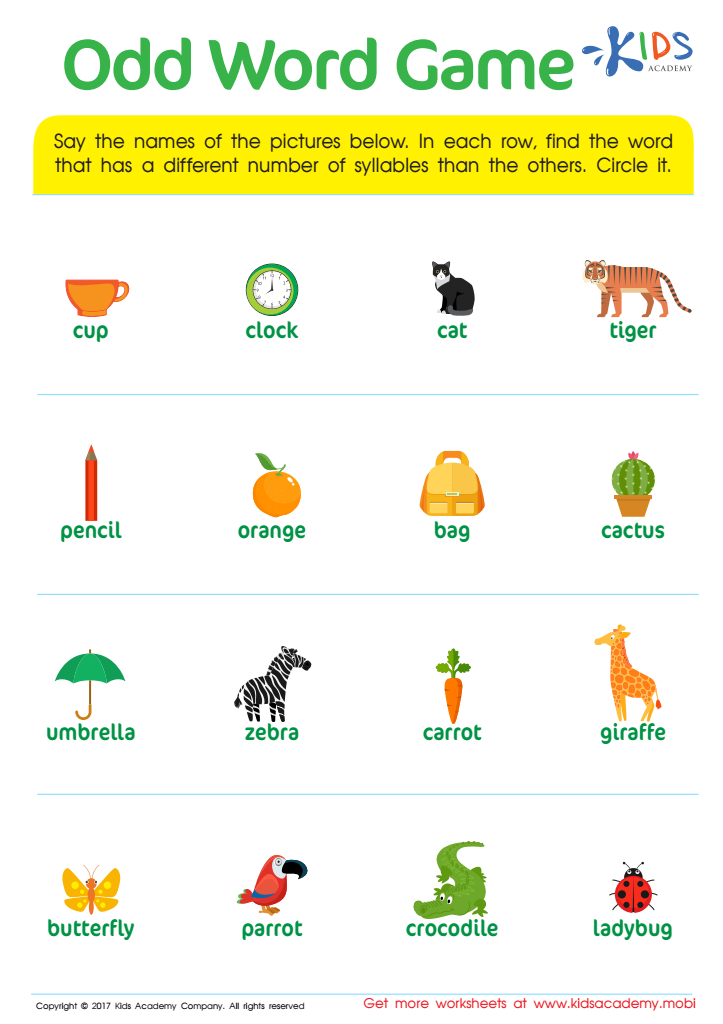
    Counting syllables strengthens kids' decoding skills. This printable helps them say common item names and chunk words for fluency and accuracy. They don't even realize they're working on their reading! Bright colors make it fun, so it's a fast and easy way to practice.
    Count Syllables: Odd Word Game Worksheet
    Worksheet
    Lets Count Syllables Worksheet

    Lets Count Syllables Worksheet

    Lets Count Syllables Worksheet

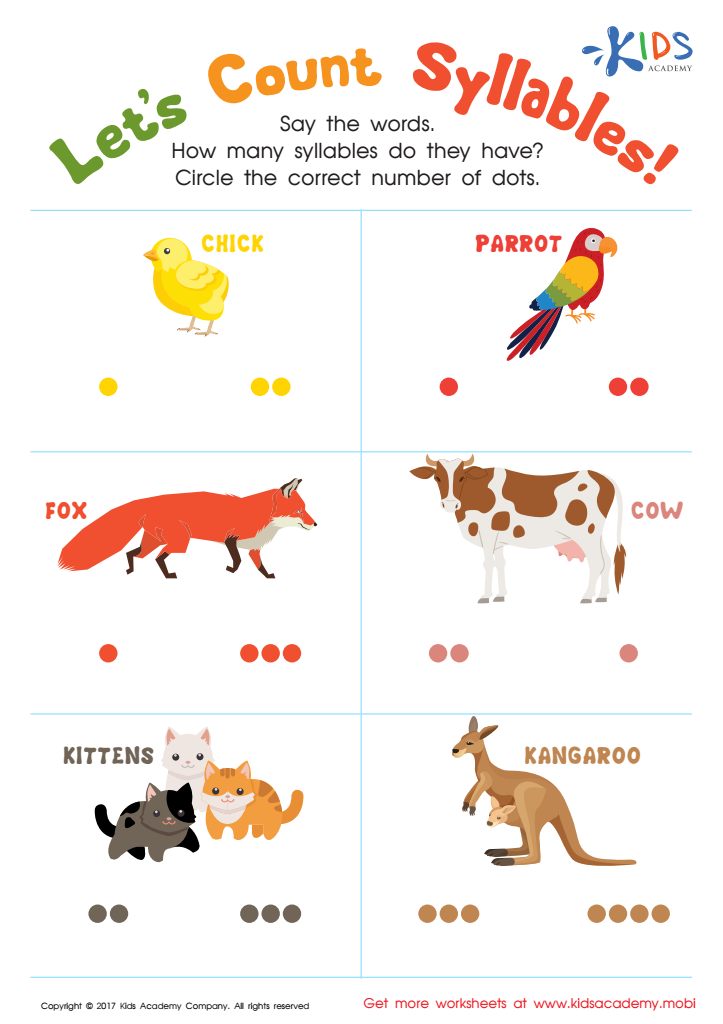
    This fun animal worksheet makes learning to read easier by breaking words into syllables. Bright, cheery pictures give context and help kids choose the right syllable count. Count together and enjoy as your child learns and gains success!
    Lets Count Syllables Worksheet
    Worksheet


    Phonics is a fundamental part of early childhood education that helps children understand the relationship between letters and sounds, a critical foundation for reading and writing. For ages 3-7, this becomes particularly crucial as these formative years are when children's brains are most pliable and primed for acquiring language skills.

    By introducing children to phonics at an early age, parents and teachers equip them with the tools to decode words independently, setting up a successful pathway to fluent reading. This skill enhances their vocabulary, comprehension, and overall confidence in their ability to learn. Recognizing letters and their corresponding sounds allows children to explore new words, fostering a love for reading and lifelong learning.

    Moreover, fluency in phonics reduces the risk of future reading difficulties. Early mastery helps avert potential struggles in more advanced grades, where reading is essential for understanding other subjects like science and math.

    Phonics instruction also benefits cognitive development, improving memory, attention, and the ability to think critically. Parents and teachers who prioritize phonics invest not just in a child's immediate literacy but also in their long-term academic success and intellectual growth. This early intervention is a crucial building block that serves as the underpinning of a child's entire educational trajectory.