Filters

6 filtered results

Clear all filters
Favorites
With answer key
Interactive

6 filtered results

Difficulty Level

Grade


Subject

    Welcome to our comprehensive collection of Missing Letters Worksheets designed for children aged 3-7! These engaging worksheets focus on helping young learners recognize and understand the alphabet by encouraging them to identify and fill in missing letters. Perfect for preschool through early elementary students, our worksheets feature fun, age-appropriate activities that promote letter recognition, phonemic awareness, and fine motor skills. Parents and educators will appreciate the print-friendly format and the variety of themes that will keep children entertained while learning. Download our Missing Letters Worksheets today and make learning the alphabet an exciting adventure for your little ones!

    Check out this FREE Trial Lesson on Missing Letters for age 3-7!

    Use Capital Letters at the Beginning of a Sentence

    Favorites
    With answer key
    Interactive
    • 3-7
    • Interactive
    • Missing Letters
    Missing Digraph: Part 2 Worksheet
    Missing Digraph: Part 2 Worksheet

    Missing Digraph: Part 2 Worksheet

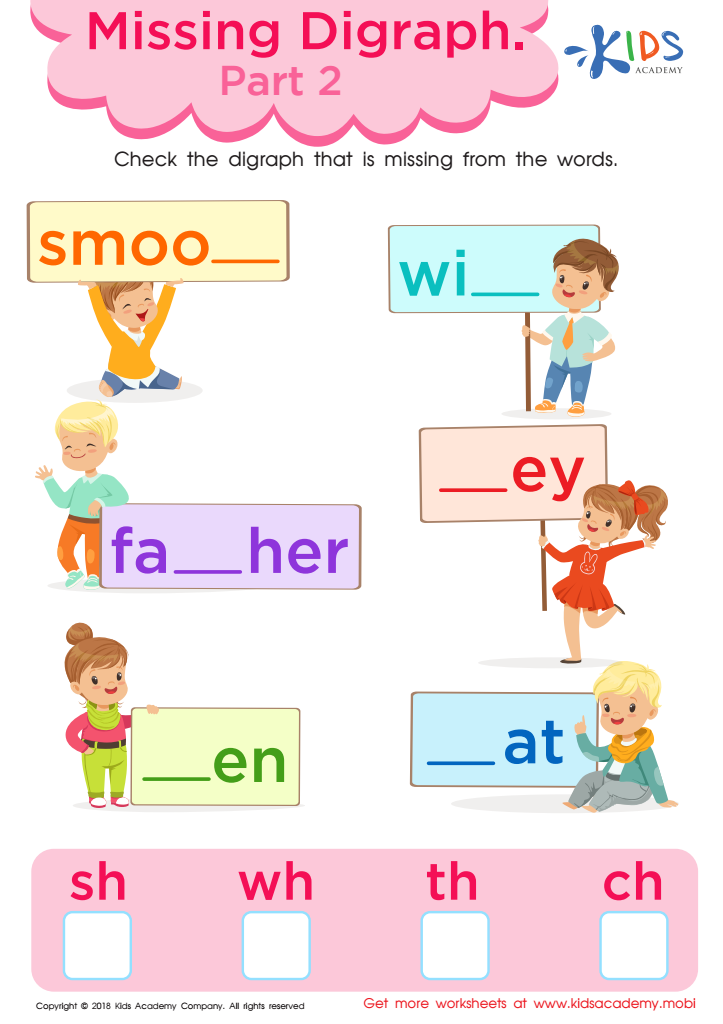
    Practice the "th" digraph with this fun worksheet from Kids Academy! See how it appears at the beginning, middle, or end of words and help learners fill in the blanks. Check if they got it right by finding the th digraph at the bottom!
    Missing Digraph: Part 2 Worksheet
    Worksheet
    Missing Digraph: Part 1 Worksheet
    Missing Digraph: Part 1 Worksheet

    Missing Digraph: Part 1 Worksheet

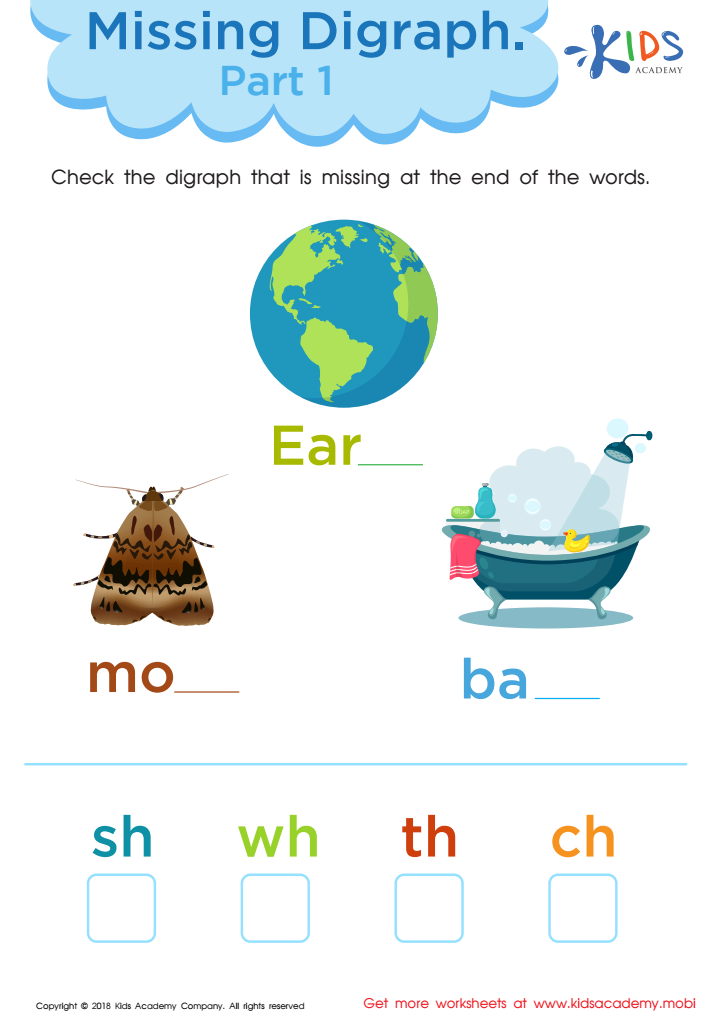
    Practice the 'th' digraph with this worksheet! Ask kids to say the words shown and sound out the letters below each image. Check the box with the correct digraph to complete. Examples include 'earth', 'bath' and 'moth', all ending with the same two letters. Phonics teaches that digraphs are two letters that make one sound.
    Missing Digraph: Part 1 Worksheet
    Worksheet
    Pick the Letter Worksheet
    Pick the Letter Worksheet

    Pick the Letter Worksheet

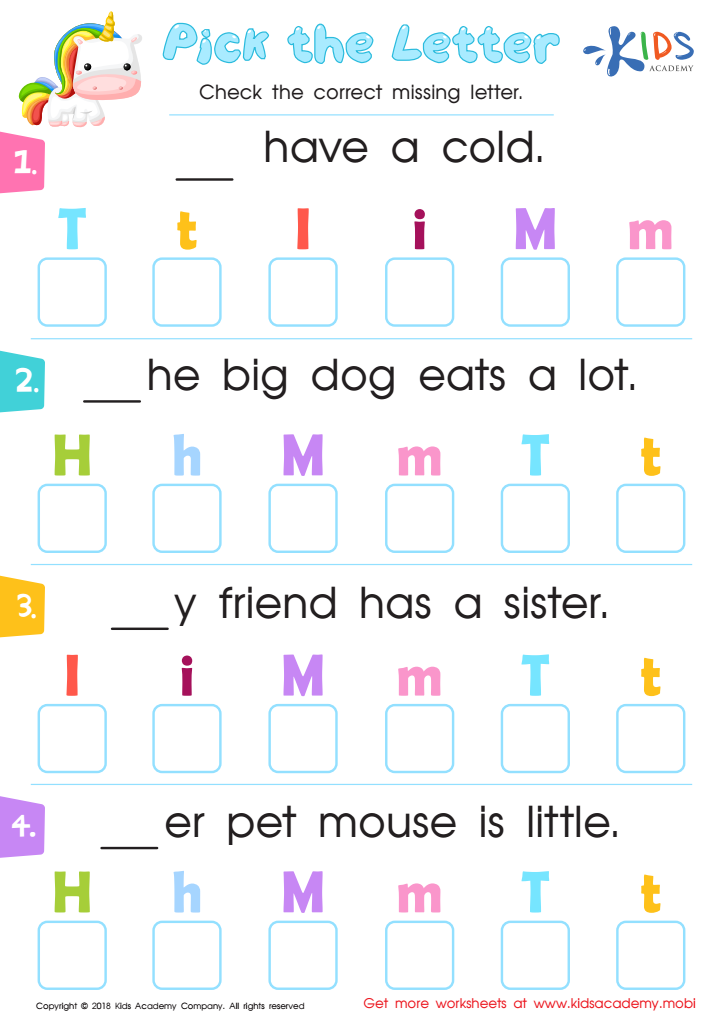
    Put your child's capitalization and reading skills to the test with this missing letter worksheet! Have them look at each sentence, note the blank and review the letters below. Find the uppercase letter that should start each sentence and check the boxes to complete. Fun and colorful, this worksheet is sure to keep your child engaged!
    Pick the Letter Worksheet
    Worksheet
    Missing Letter Worksheet
    Missing Letter Worksheet
    Missing Letter Worksheet

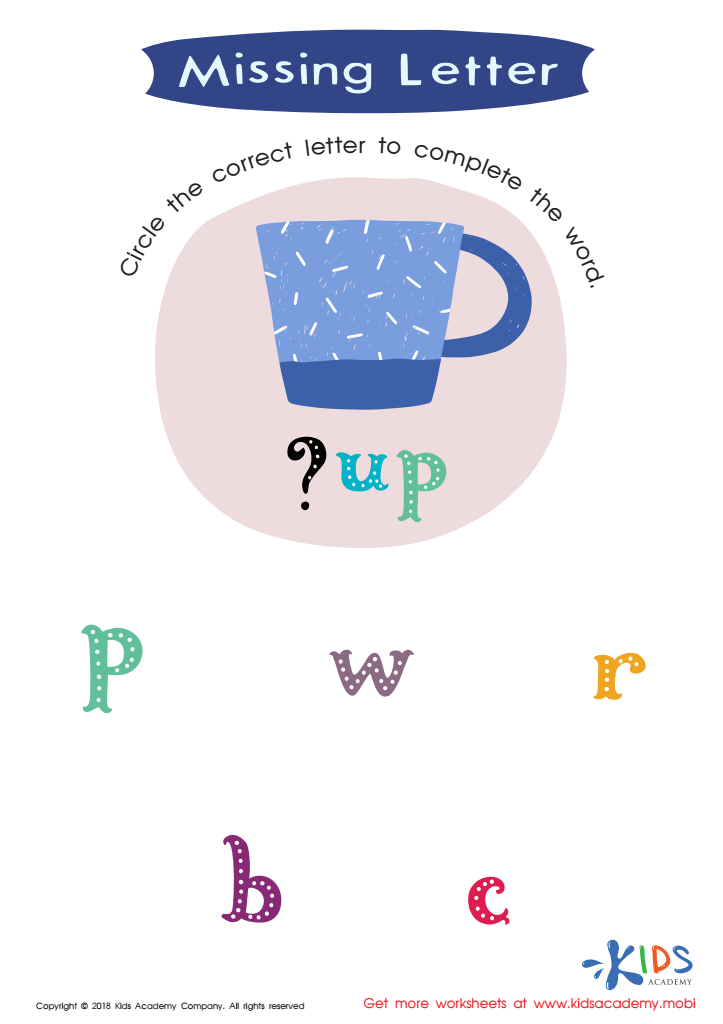
    Congrats! If your kids can spell some small words, pat yourself on the back. Struggling with the alphabet? Help them learn with this simple worksheet. They'll have to find the missing letter to complete the word. Print this worksheet and help your little one find and circle the right letter.
    Missing Letter Worksheet
    Worksheet
    Which Letter Should you Choose? Worksheet
    Which Letter Should you Choose? Worksheet

    Which Letter Should you Choose? Worksheet

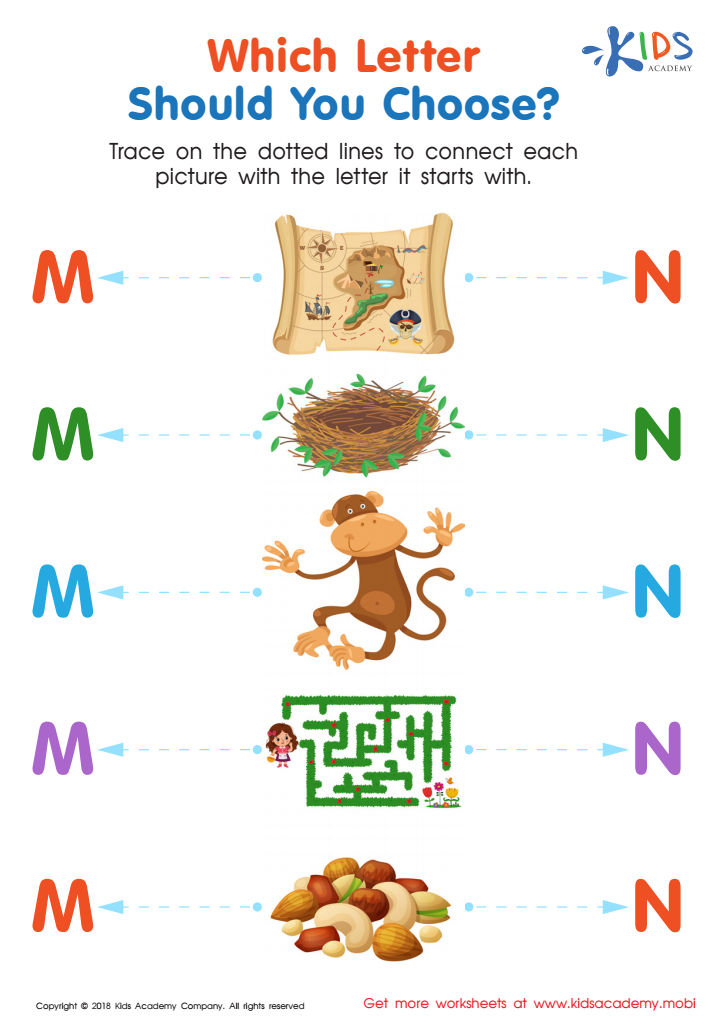
    Trace the dotted lines to connect images with their first letter: "n" or "m." Challenge your child to name each picture, then identify the first letter and trace to the right letter! Five images in total.
    Which Letter Should you Choose? Worksheet
    Worksheet
    Missing Letters Worksheet

    Missing Letters Worksheet

    Missing Letters Worksheet

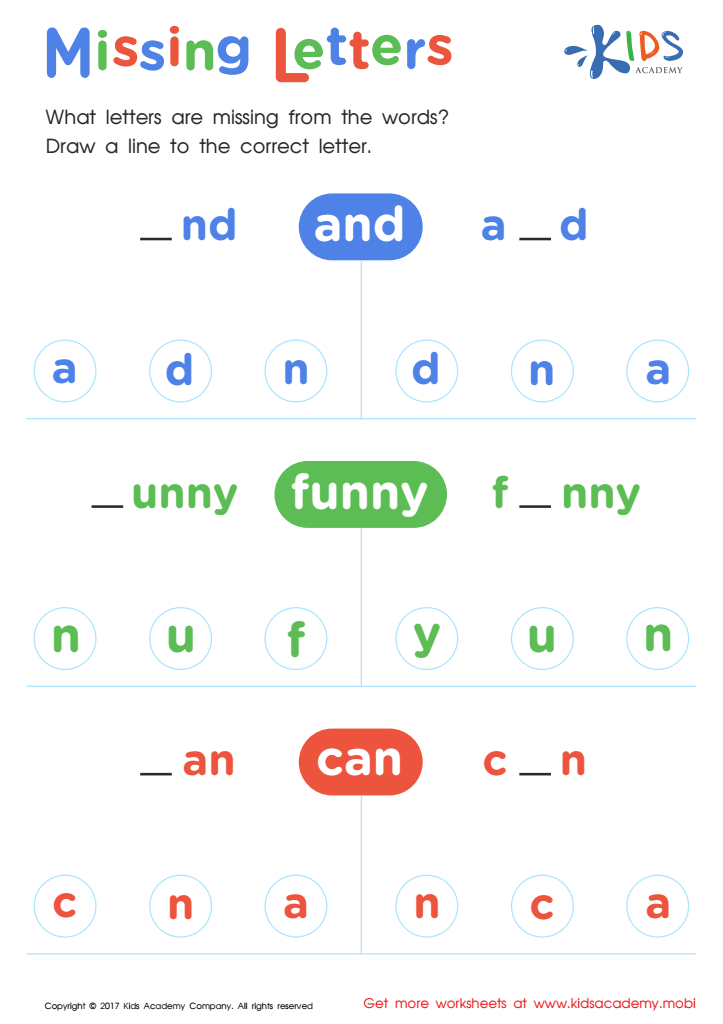
    Review sight words with this fun matching worksheet from Kids Academy! Look at the sight words in the middle, read them aloud and find the missing letter on each side for each word. Draw a line to the correct letter to complete the sheet!
    Missing Letters Worksheet
    Worksheet


    Missing Letters is an essential resource for parents and teachers of children aged 3-7 because it fosters early literacy skills in a fun and engaging way. At this developmental stage, children are naturally curious about language and the world around them. Missing Letters taps into this curiosity, helping children recognize that letters form the foundation of words and, ultimately, communication.

    This activity can improve children's ability to identify letters and sounds, leading to enhanced phonemic awareness, which is crucial for reading success. By filling in the blanks and solving letter puzzles, kids develop critical thinking and problem-solving skills, as they learn to predict and apply their existing knowledge.

    Additionally, Missing Letters promotes engagement and social interaction when done in group settings, allowing children to cooperate and learn from one another. For educators, implementing this into their curriculum can offer varied and adaptable exercises that cater to diverse learning styles. For parents, it provides a low-pressure yet effective way to support literacy development at home.

    By caring about Missing Letters, parents and teachers play a vital role in equipping children with foundational skills that will benefit their lifelong learning journey, helping to ensure a brighter academic future.