Filters

159 filtered results

Clear all filters
Favorites
With answer key
Interactive

159 filtered results

Difficulty Level

Grade


Check out this FREE Trial Lesson on Grammar for age 3-7!

Combine Nouns and Verbs to Form Sentences

Favorites
With answer key
Interactive
  • 3-7
  • Interactive
  • Grammar
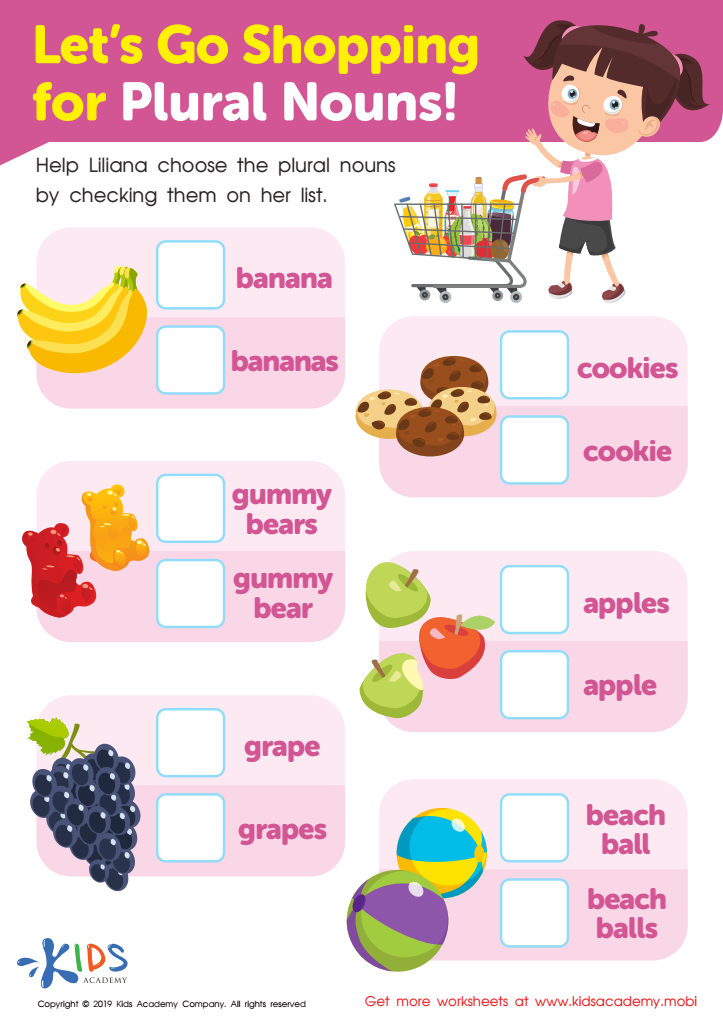
Let's Go Shopping for Plural Nouns! Worksheet

Let's Go Shopping for Plural Nouns! Worksheet

Help your students figure out the plural nouns in Lilliana's checklist. Look at the six objects in this PDF and add 's' to the nouns to make them plural. Show students how words can be tricky and explain how adding an 's' often changes the noun to its plural form.
Let's Go Shopping for Plural Nouns! Worksheet
Worksheet
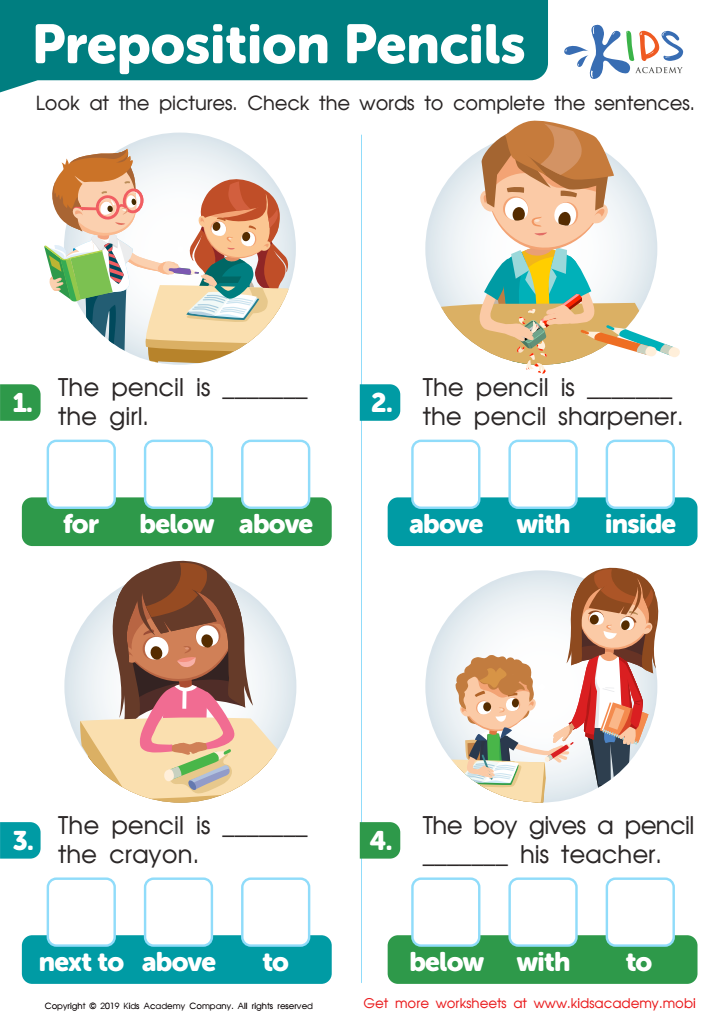
Preposition Pencils Worksheet

Preposition Pencils Worksheet

Constructing sentences follows rules. Parts of speech like nouns, verbs, adverbs, pronouns, and prepositions help. This worksheet focuses on prepositions. Explain prepositions to your child, then examine the pictures together and help them complete the sentences.
Preposition Pencils Worksheet
Worksheet
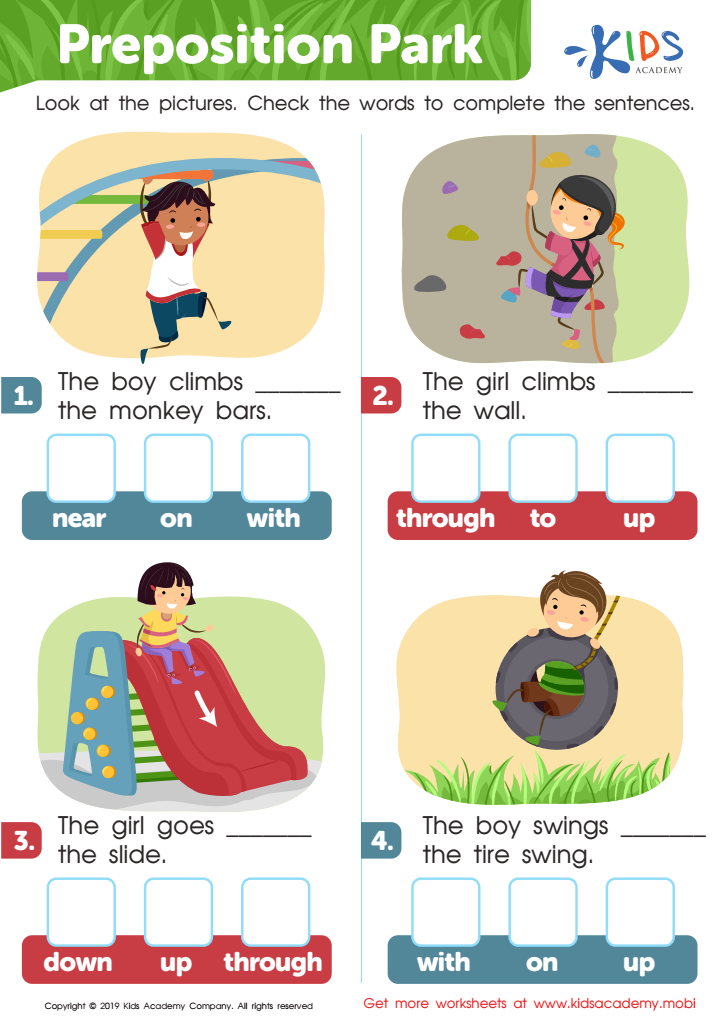
Preposition Park Worksheet

Preposition Park Worksheet

. Check kids' understanding of prepositions by reminding them it's a word used to show location, direction or time. Look at the four pictures and ask what the kids are doing. Read the sentences below and help them check the words to complete them.
Preposition Park Worksheet
Worksheet
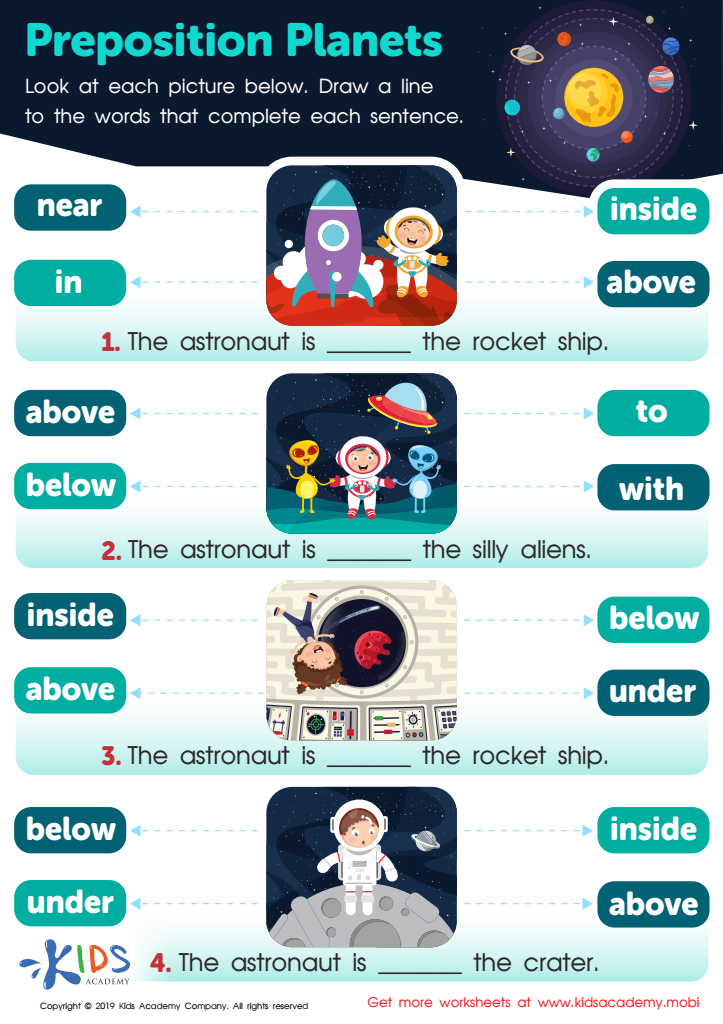
Preposition Planets Worksheet

Preposition Planets Worksheet

Remind your child about outer space: which planet do we live on, and who travels there for research? Explain that prepositions show location, direction, and time. Look at the worksheet with colorful pictures of astronauts. Help your kids draw lines to the words that complete each sentence.
Preposition Planets Worksheet
Worksheet
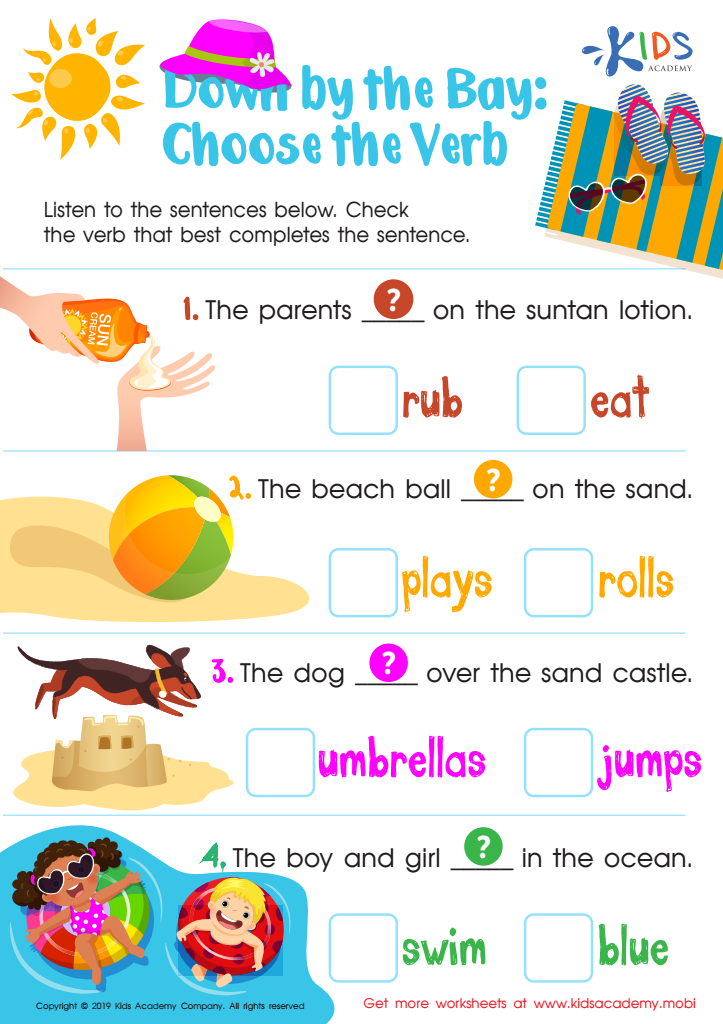
Down by the Bay: Choose the Verb Worksheet

Down by the Bay: Choose the Verb Worksheet

Teach your kids about verbs: words that describe actions, like 'playing', 'eating', 'talking'. Ask your child to give their own verbs, then read the sentences in a worksheet and help them pick the best one for each question.
Down by the Bay: Choose the Verb Worksheet
Worksheet
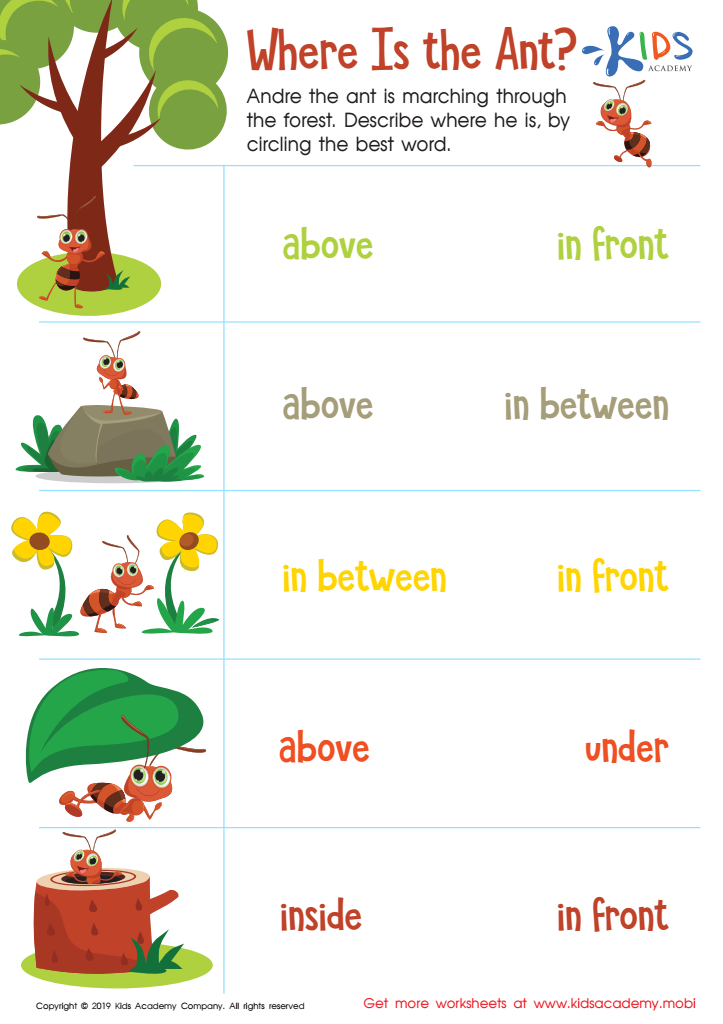
Where Is the Ant? Worksheet

Where Is the Ant? Worksheet

Kids are captivated by ants. Andre is a busy ant, marching through the forest. Help your child circle the best word that best describes what he's doing in each picture. This colorful printout will show them the way.
Where Is the Ant? Worksheet
Worksheet
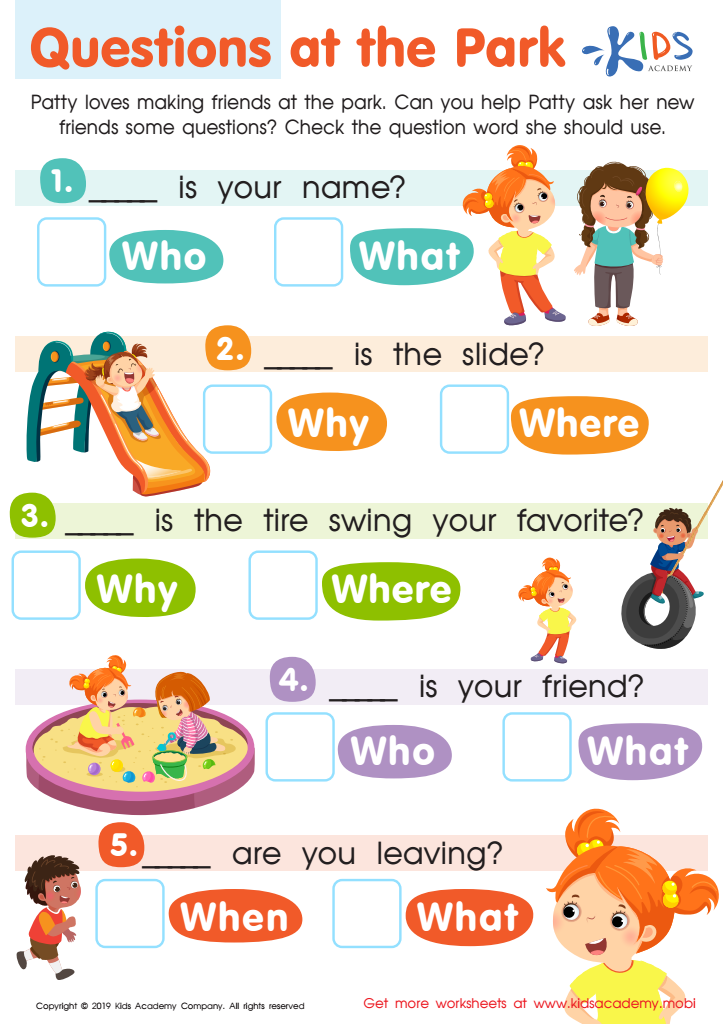
Questions at the Park Worksheet

Questions at the Park Worksheet

Parks are great for fun! Kids can play, run and be as loud as they want! Ask them what their favorite activities are. If they love making friends, like Patty in this worksheet, help them practice their question words to get to know their new pals better.
Questions at the Park Worksheet
Worksheet
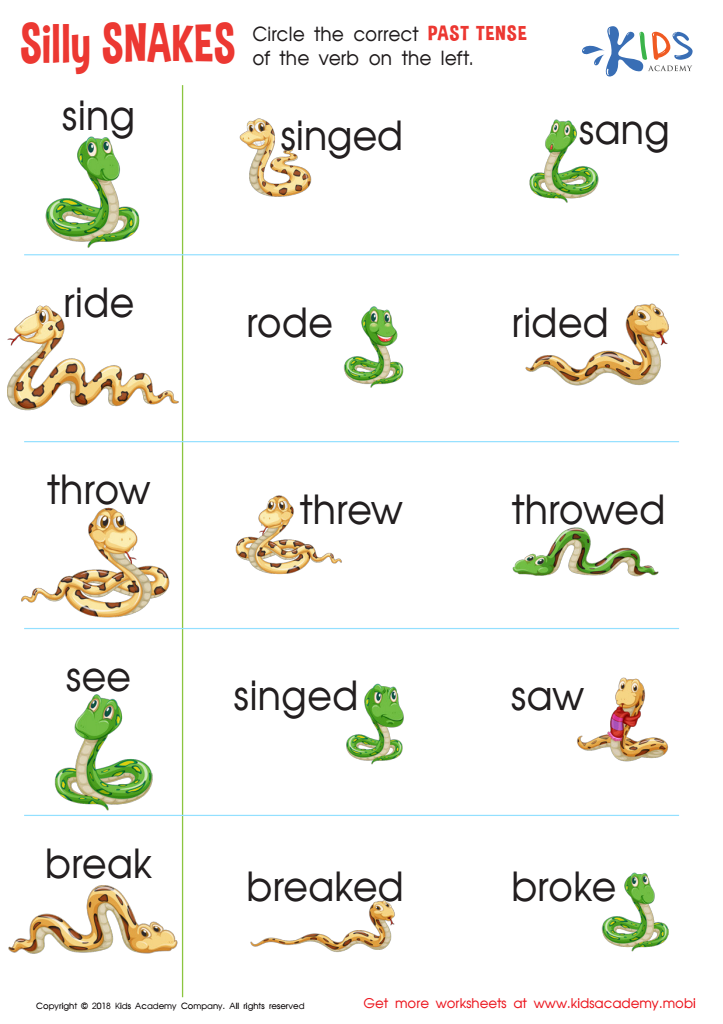
Silly Snakes Worksheet

Silly Snakes Worksheet

Kids will get a giggle out of these silly snakes! They're helping to find past tense verbs in this fun worksheet. Have your child look at each snake in the left column and read the word. Then, choose the correct past tense verb from the two options in each row.
Silly Snakes Worksheet
Worksheet
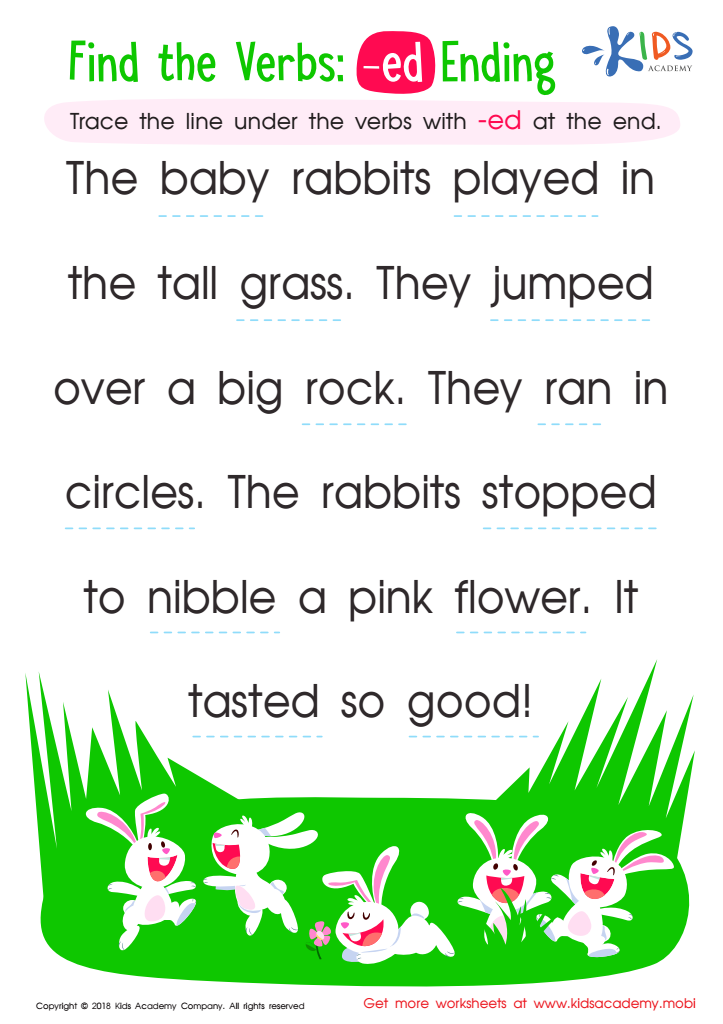
Find The Verbs: -ed Ending Worksheet

Find The Verbs: -ed Ending Worksheet

Help your kid boost grammar skills using this spring-themed worksheet! Read the paragraph aloud and have them underline verbs with -ed endings. They'll have fun with the cute bunnies and learn about the importance of verbs in a sentence!
Find The Verbs: -ed Ending Worksheet
Worksheet
Scrambled Sentences Part 2 Worksheet

Scrambled Sentences Part 2 Worksheet

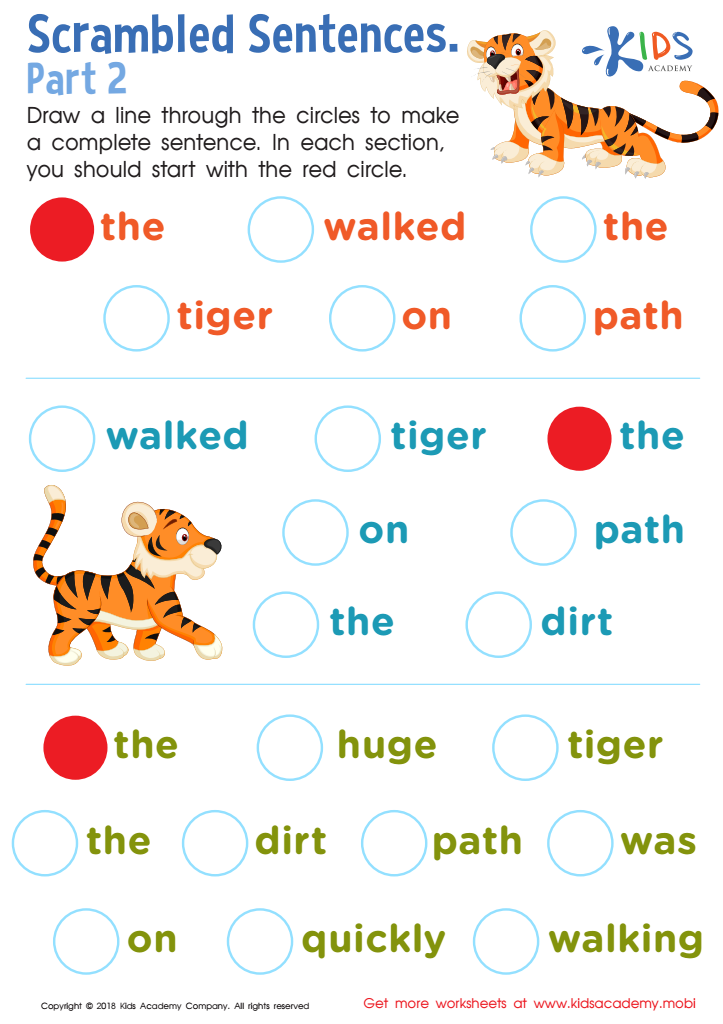
This printable worksheet helps kids construct simple, correct sentences. Introduce them to making sentences if they're new to it. Have them draw a line through the circles to form a sentence, starting with the red circle. After completing this exercise, they'll be able to craft short sentences with confidence.
Scrambled Sentences Part 2 Worksheet
Worksheet
Noun Search Worksheet

Noun Search Worksheet

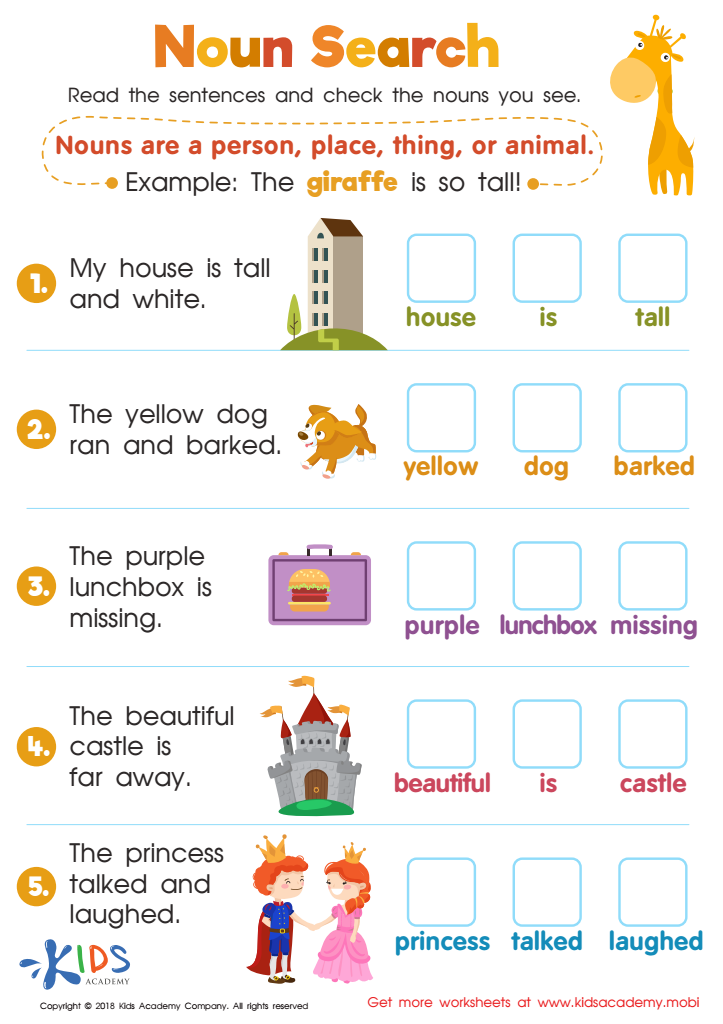
Ask your kids what a noun is. If needed, remind them a noun is a name for a person, animal, place or thing. Give examples like 'dog', 'Sara', 'USA' and 'book'. Ask for more examples, then read the sentences in this worksheet and ask kids to check for nouns.
Noun Search Worksheet
Worksheet
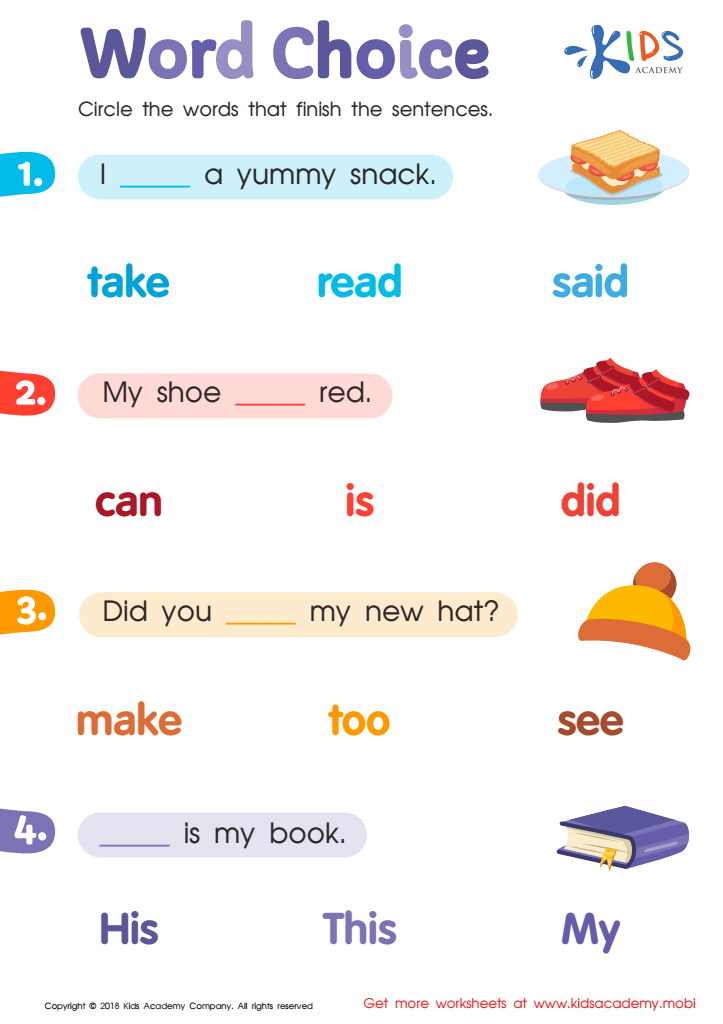
Word Choice Worksheet

Word Choice Worksheet

This worksheet can help your children become better readers. By now, you should have an idea of their reading level. Read the incomplete sentences aloud and point to the missing piece. Have your students pick the correct word they think best fits the sentence out of the options given.
Word Choice Worksheet
Worksheet
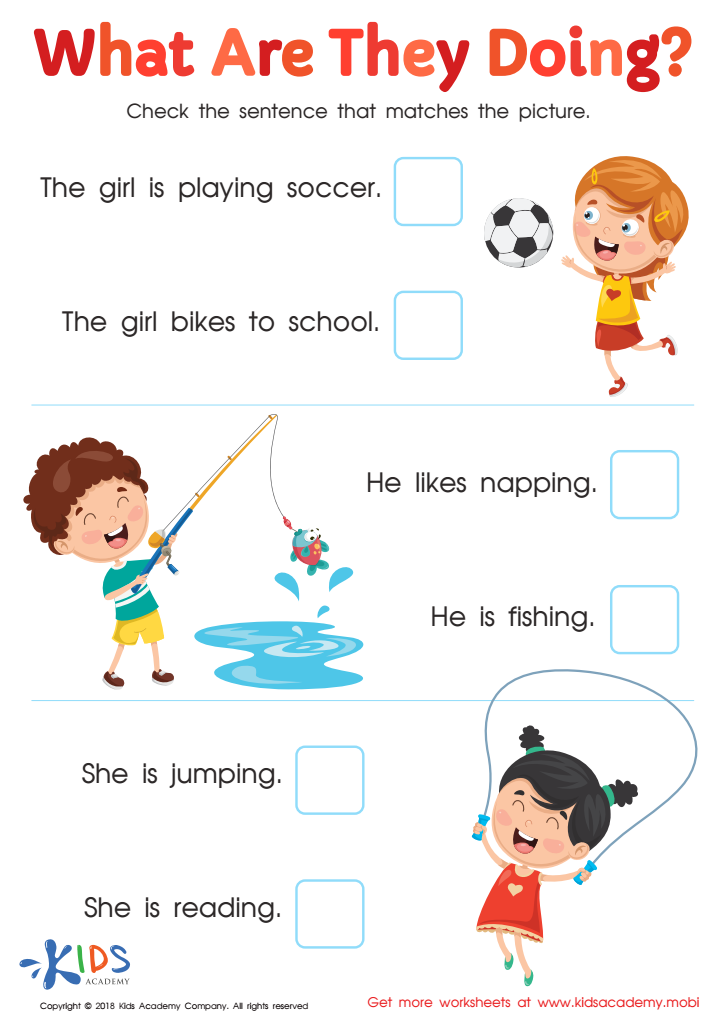
What Are They Doing? Worksheet

What Are They Doing? Worksheet

Look at the pdf with your child and ask which activities they like. Ask them to match the pictures with the sentences. Read the sentences aloud and help them check the right answers. Encourage them to talk about what they see in the pictures. It's a great way to help them learn.
What Are They Doing? Worksheet
Worksheet
Learn to Spell Worksheet

Learn to Spell Worksheet

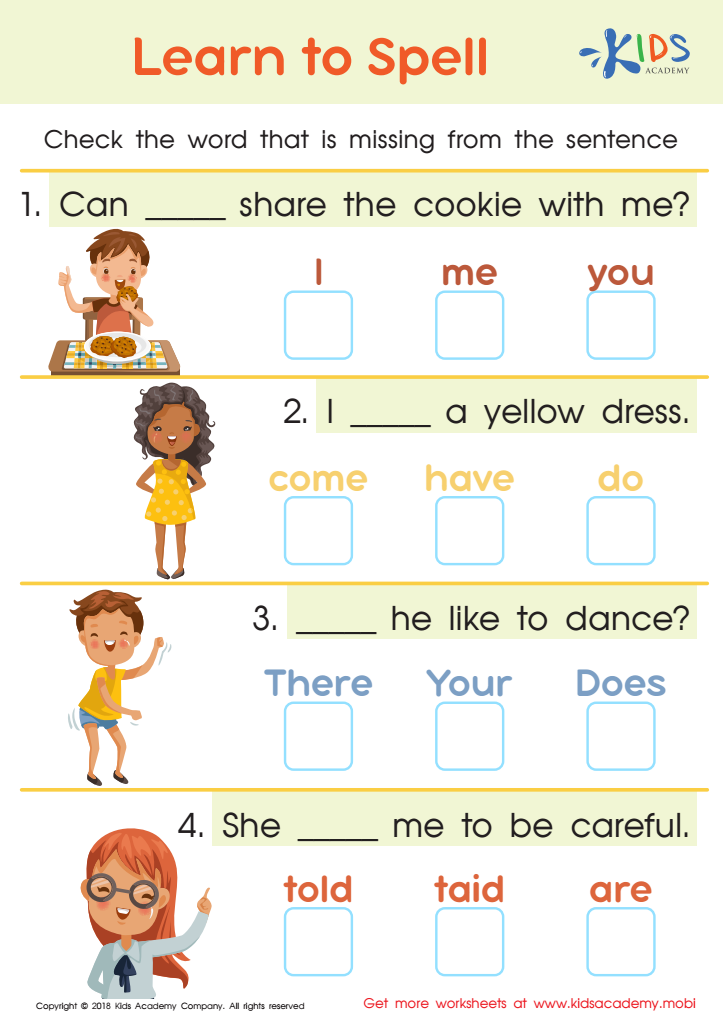
Help sharpen spelling skills with a simple worksheet. Read sentences aloud and show which word is missing. Ask students to pick the correct word from the options. Ensure they check the missing word for accuracy.
Learn to Spell Worksheet
Worksheet
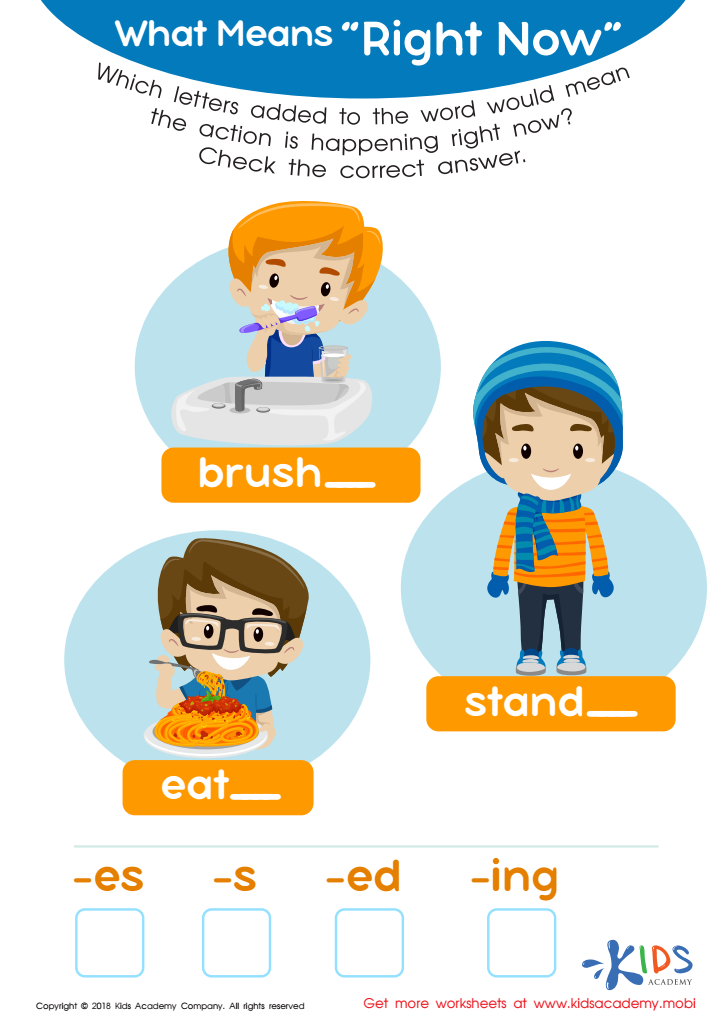
What Means "Right Now" Worksheet

What Means "Right Now" Worksheet

Explain present/past tense verbs to your kids, giving them simple examples. Ask which letters make a verb present tense; read the words aloud and help them check the correct answers.
What Means "Right Now" Worksheet
Worksheet
What Is Happen-Ing? Worksheet

What Is Happen-Ing? Worksheet

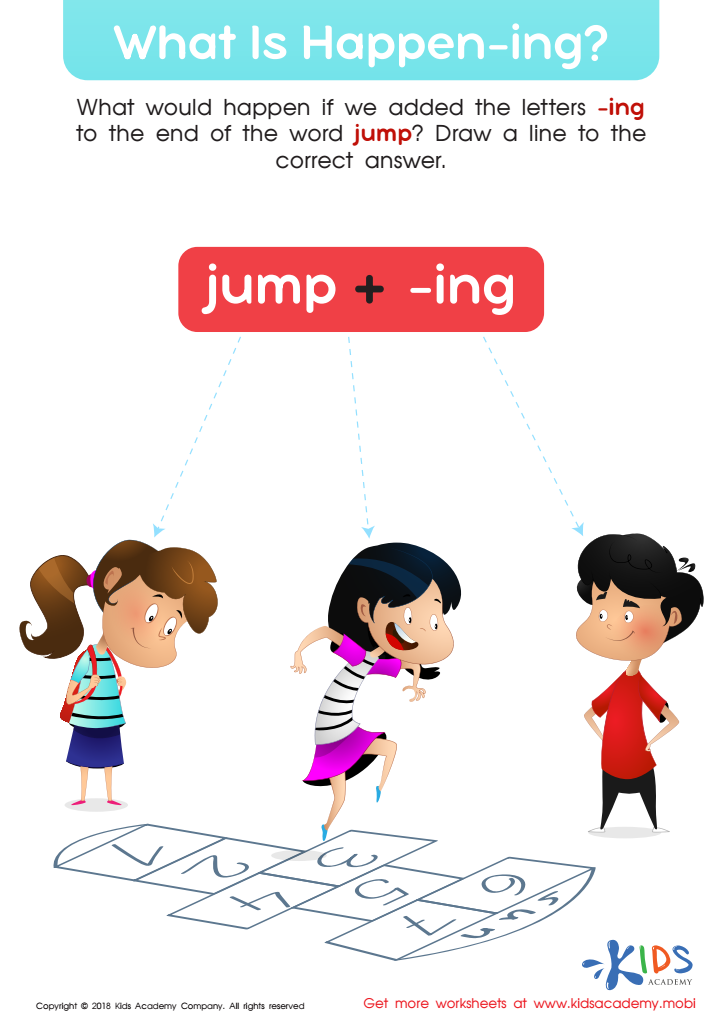
Explain to your kids the difference between present and past tense verbs. Give examples and explain how adding '-ing' to the end of a verb changes it to past tense. Ask them to draw a line on the worksheet to the correct answer for the example 'jump'.
What Is Happen-Ing? Worksheet
Worksheet
Finish the Word Worksheet

Finish the Word Worksheet

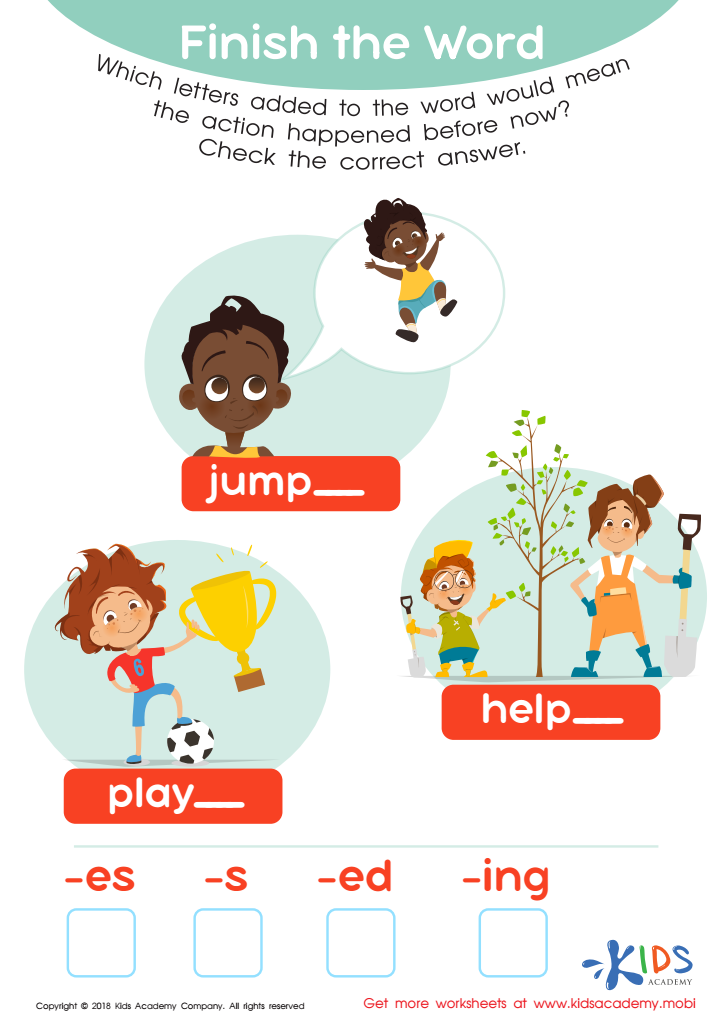
Does your kid know tenses? Listen to see if they are using words correctly. With this worksheet, your kids will learn to use the appropriate past tense forms. Ask them which letters added to words make the action past. Help them check the answers.
Finish the Word Worksheet
Worksheet
What Would Happen? Worksheet

What Would Happen? Worksheet

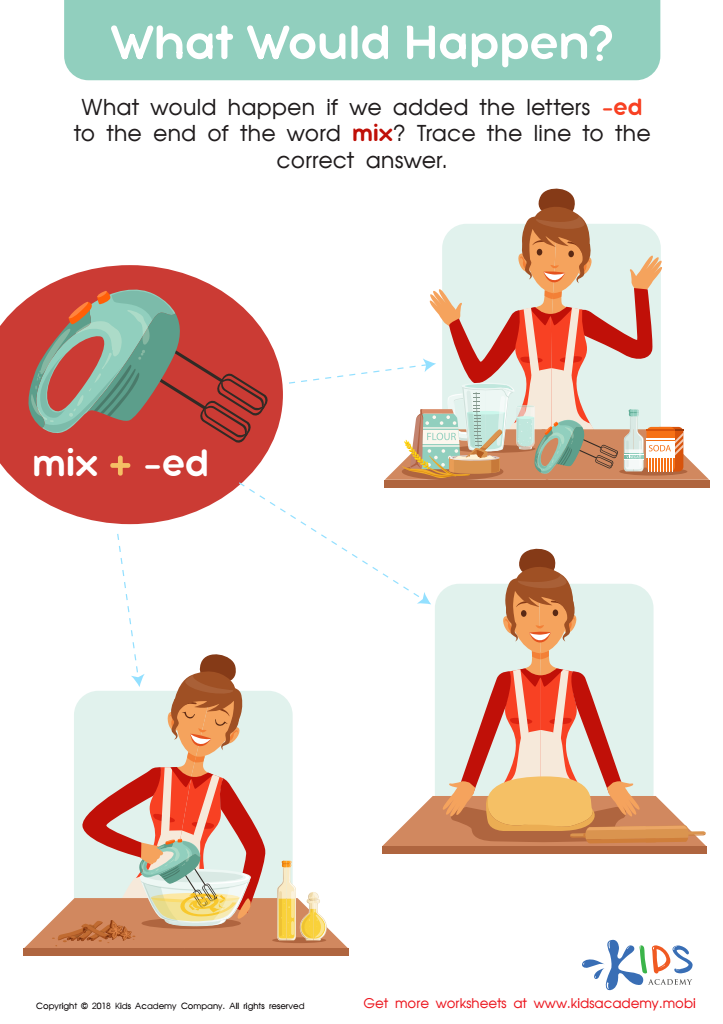
Are your kids struggling with tenses? Use this worksheet to help them. See what they know by asking them to add '-ed' to the end of 'mix'. Guide them through the tracing sheet as they look for the correct answer.
What Would Happen? Worksheet
Worksheet
Phonics and Word Recognition: Assessment 2

Phonics and Word Recognition: Assessment 2

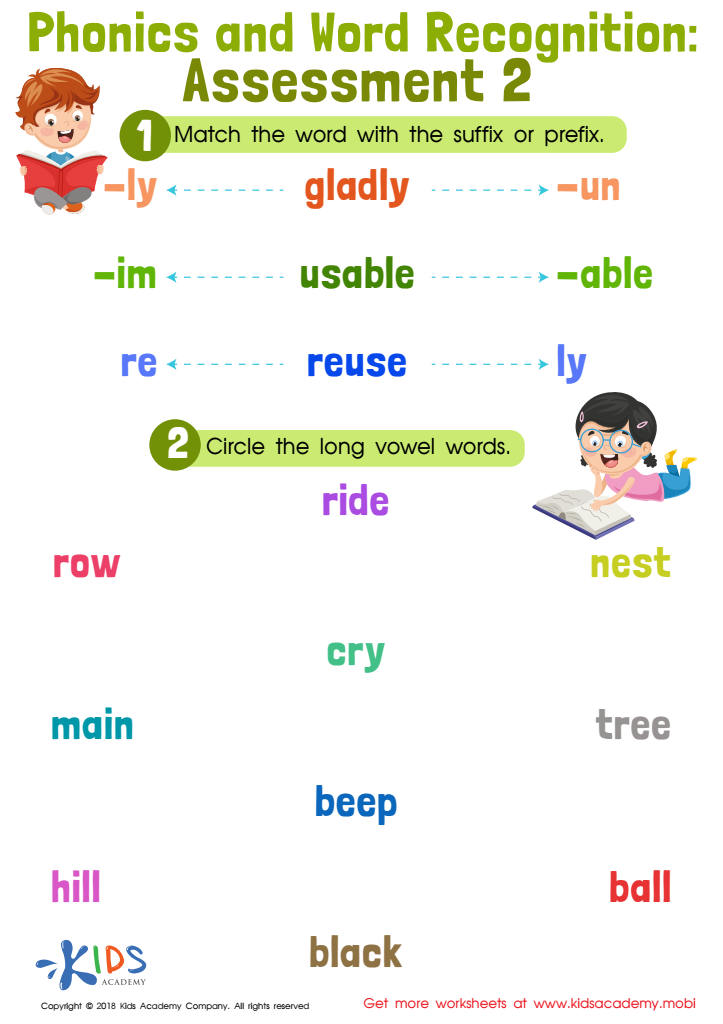
Give kids common examples of suffixes and prefixes, such as "un-," "unhappy," "ness," "happyness." Ask them to match each word in the word recognition exercise to the correct suffix or prefix. Test phonetic understanding by having them circle the long vowel sounds.
Phonics and Word Recognition: Assessment 2
Worksheet
Phonics and Word Recognition: Assessment 1 Worksheet

Phonics and Word Recognition: Assessment 1 Worksheet

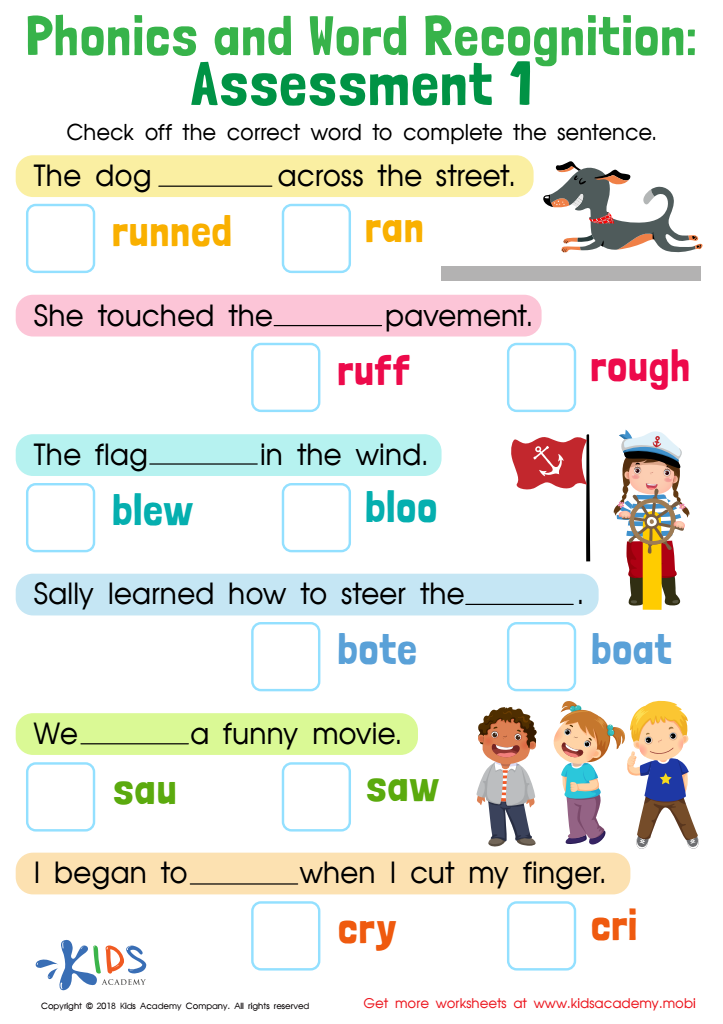
This worksheet tests phonetics and word recognition. Students should be familiar with past tense verbs. Read incomplete sentences, then read multiple options and help students select the correct one.
Phonics and Word Recognition: Assessment 1 Worksheet
Worksheet
Past Tense Verbs Word Search Worksheet

Past Tense Verbs Word Search Worksheet

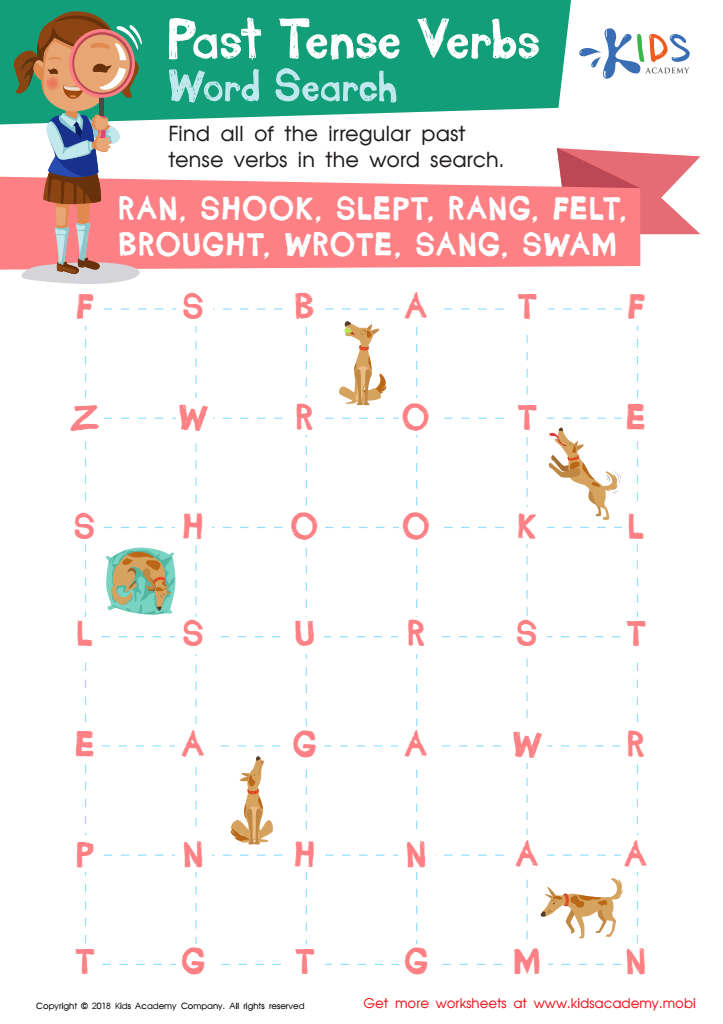
Kids must learn the rules of past tenses to speak English correctly. This worksheet helps them understand irregular past tense verbs. As they search for them, ask them to read the words aloud; this reinforces the learning.
Past Tense Verbs Word Search Worksheet
Worksheet
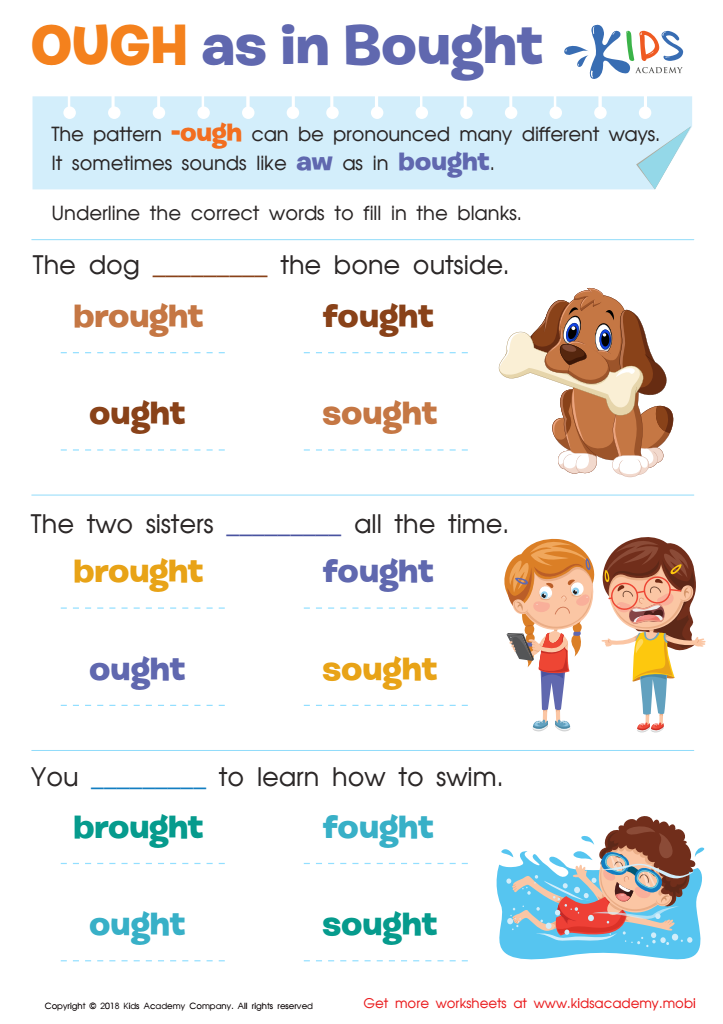
OUGH as in Bought Worksheet

OUGH as in Bought Worksheet

Use this worksheet to teach your child the different pronunciations of -ough. For example, -ough can sound like ‘aw’ in ‘bought’. Ask your child to give more examples and help them underline the correct answers to fill in the blanks.
OUGH as in Bought Worksheet
Worksheet
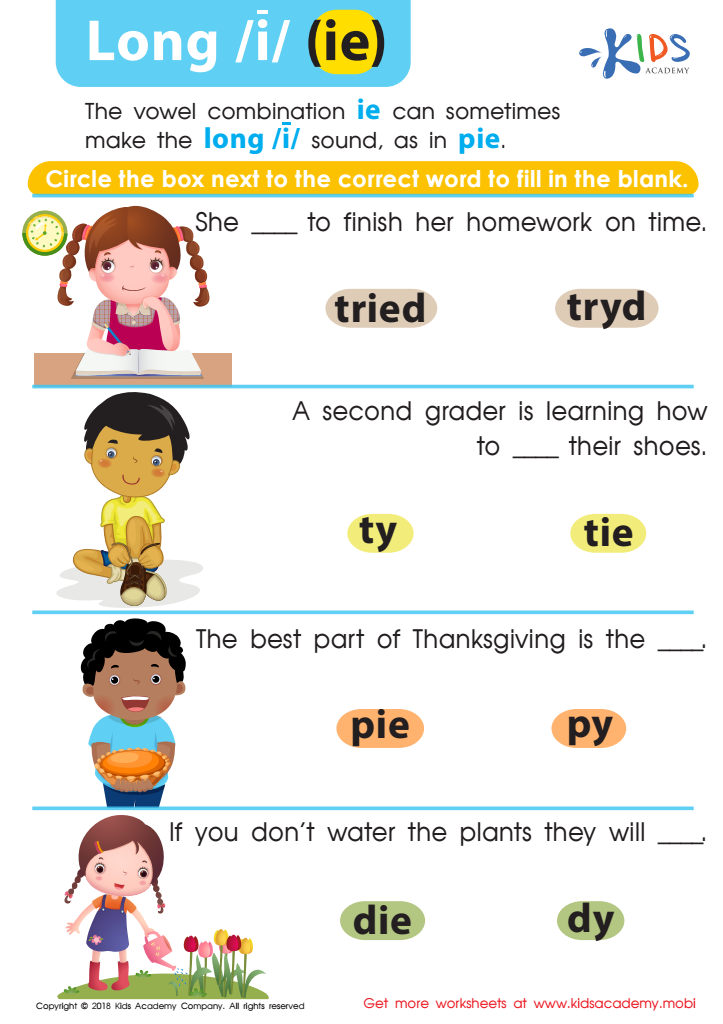
Reading: Long I and IE Worksheet

Reading: Long I and IE Worksheet

Have your child list words with the long /i/ sound (eg. 'pie'), and if needed, help them out with some examples. Read each word in the worksheet together and check their answer by having them circle the correct word.
Reading: Long I and IE Worksheet
Worksheet
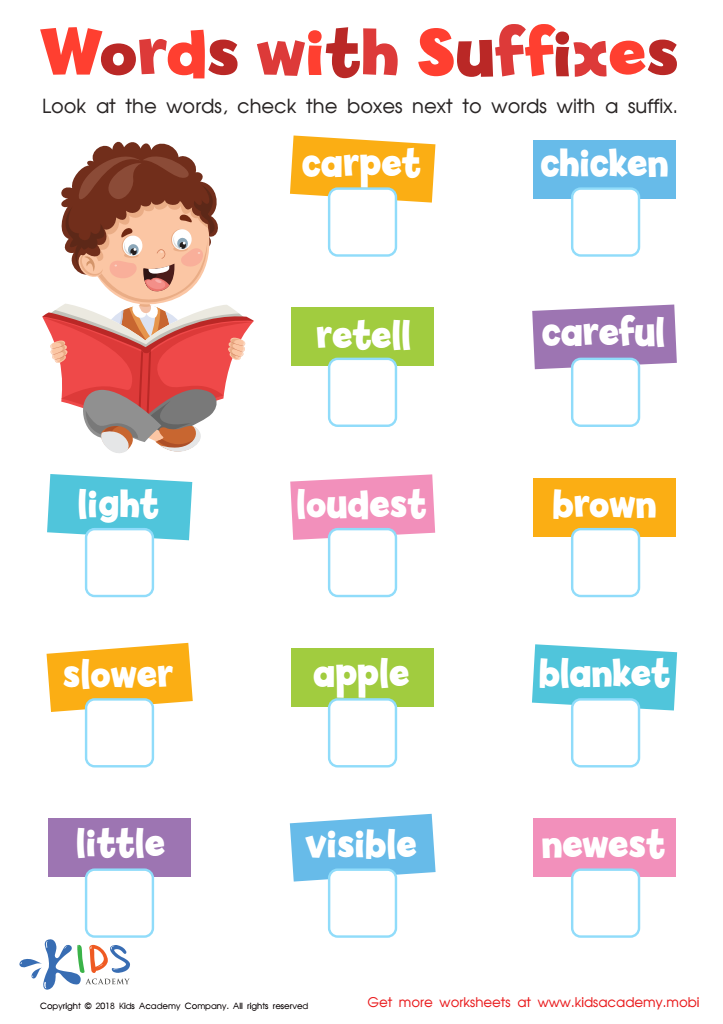
Reading: Words With Suffixes Worksheet


Reading: Words With Suffixes Worksheet

Help your students understand suffixes and build reading fluency with this worksheet. Have them read each word, then choose the ones with a suffix. Practicing this will lead to better comprehension and more confident reading. Save it for future use in language and reading classes.
Reading: Words With Suffixes Worksheet
Worksheet


Understanding grammar is crucial for young children because it forms the bedrock of effective communication. For children aged 3-7, grammar helps them structure their thoughts and express themselves clearly and comprehensively. During these formative years, the brain is particularly receptive to language acquisition, making it an ideal period for foundational grammar learning.

When parents and teachers emphasize grammar from an early age, they're equipping children with tools to succeed in both academic and social settings. Good grammar enhances reading skills, as children will better comprehend the syntax and structure of the text. This early mastery also promotes confidence in verbal exchanges, allowing children to convey their needs and ideas with clarity. Moreover, a solid understanding of grammar aids in learning additional languages later in life, as it instills a structured approach to language rules.

Beyond academic benefits, grammar learning fosters critical thinking by encouraging children to organize their thoughts logically. This skill translates into improved problem-solving abilities and decision-making processes. Ultimately, investing in grammar education at a young age sets children on a path towards effective communication, academic success, and robust cognitive development. By caring about grammar, parents and teachers nurture a child's overall growth, paving the way for future achievements.