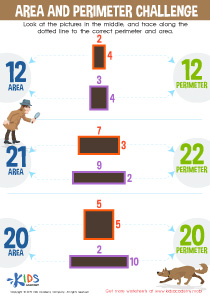
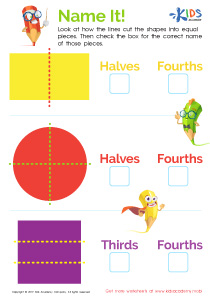
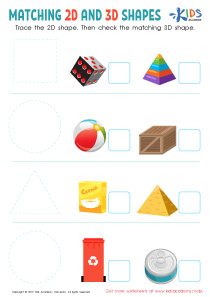
Logical Reasoning 2D Shapes Worksheets for Ages 3-9
4 filtered results
-
From - To
Enhance your child’s critical thinking with the "Logical Reasoning 2D Shapes Worksheets" designed for ages 3-9! These engaging worksheets from Kids Academy improve logical reasoning skills by challenging young minds to identify, sort, and analyze a variety of 2D shapes. Through fun and interactive tasks, children develop essential mathematical foundations while boosting their problem-solving abilities. Perfect for home or classroom use, these printable sheets cater to various learning styles and levels, ensuring every child remains motivated and confident in their learning journey. Make learning shapes enjoyable and educational with Kids Academy today!
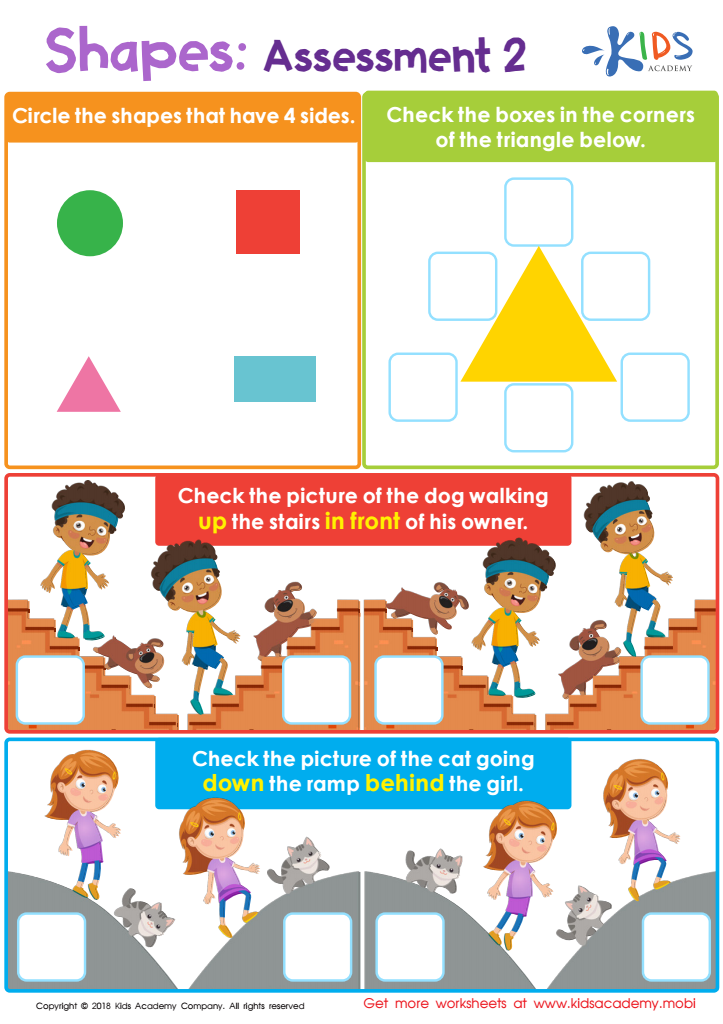
Shapes: Assessment 2 Worksheet
 Assign to My Students



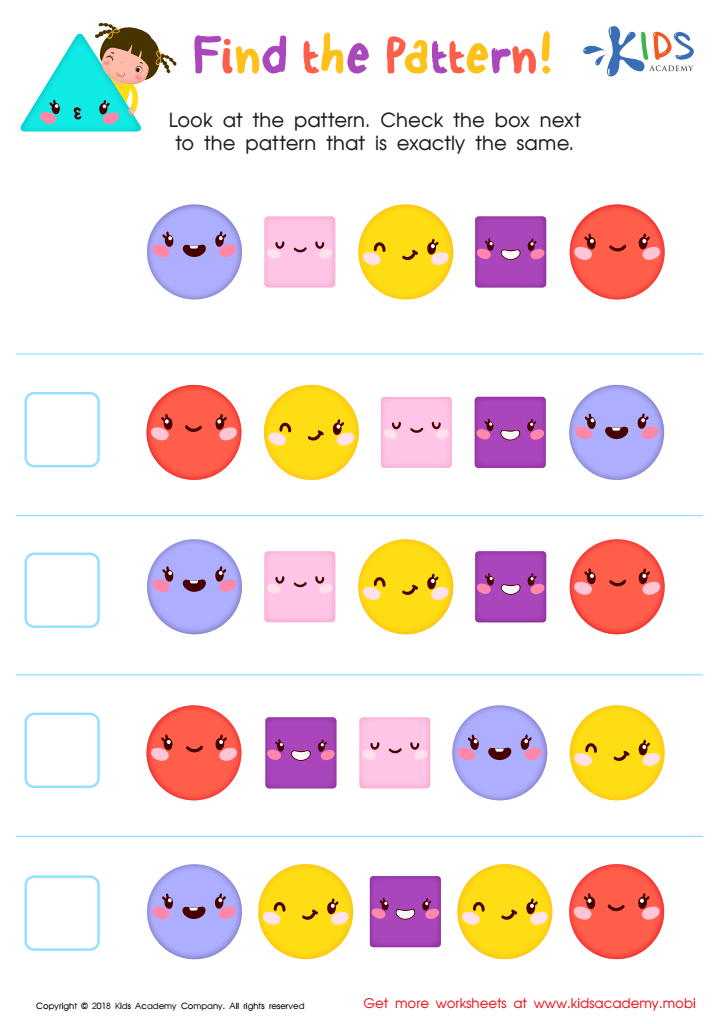
Find the Pattern Worksheet
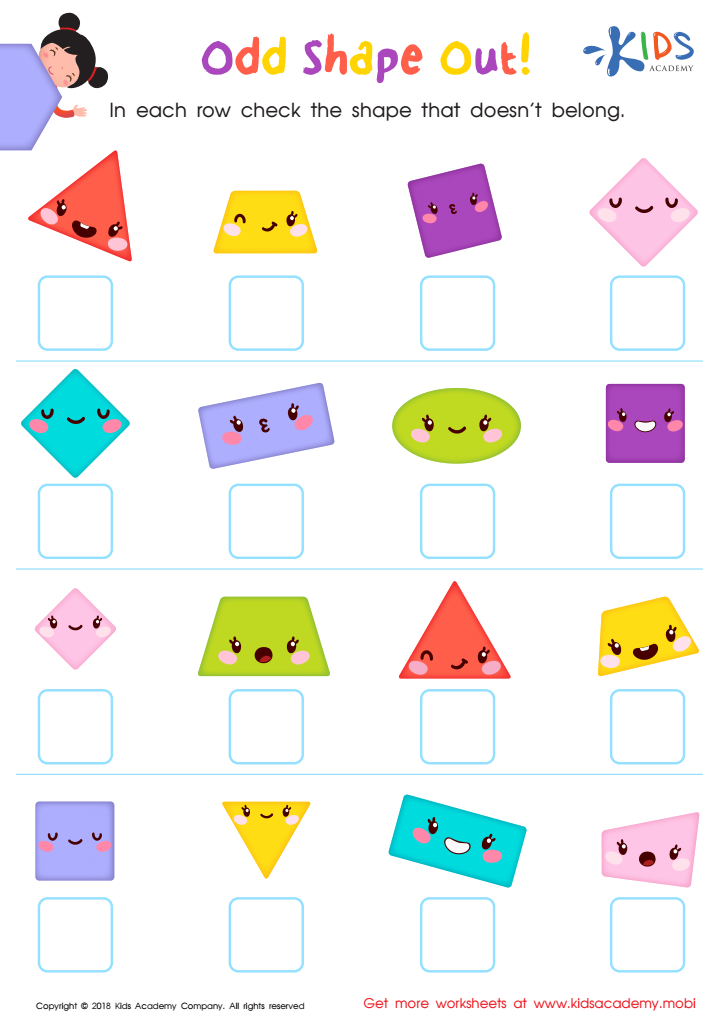
Odd Shape Out Worksheet for Grade 3
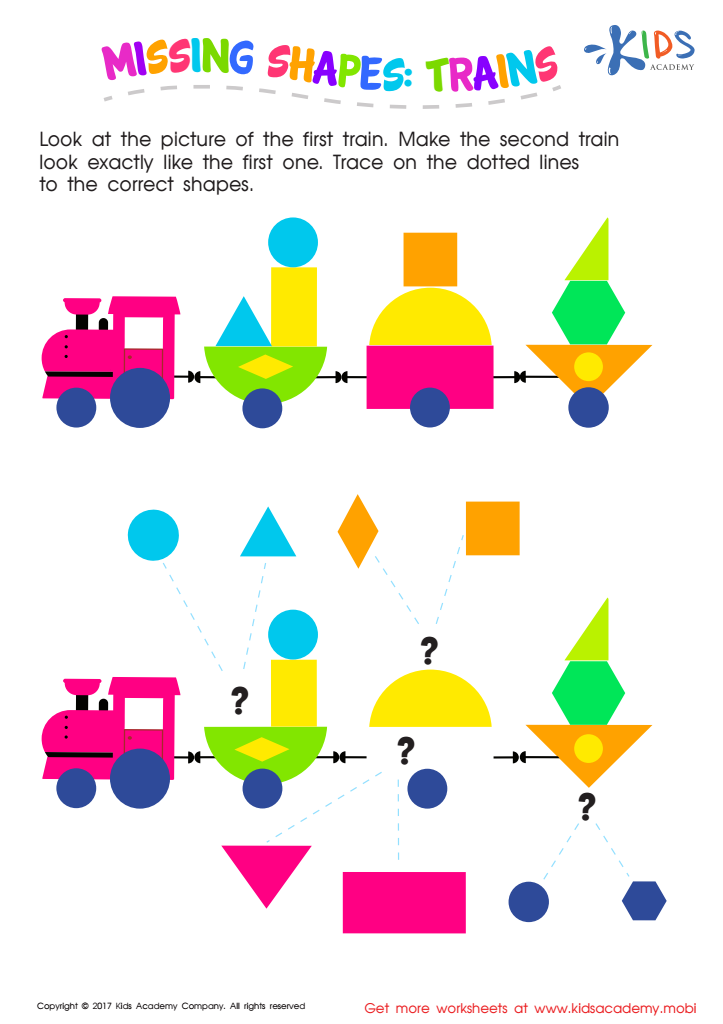
Missing Shapes: Trains Worksheet








Parents and teachers should emphasize logical reasoning and 2D shapes for children ages 3-9 because these skills lay the foundational groundwork for future mathematical and cognitive growth. At this developmental stage, young minds are primed to absorb new information and patterns, making it the perfect time to introduce them to the basic building blocks of more complex concepts.
Understanding 2D shapes—such as circles, squares, and triangles—enhances spatial awareness, which is crucial for solving problems, understanding space, and navigating the world. Identifying and differentiating these shapes helps children to build categorization skills, an essential aspect of logical reasoning. Recognizing shapes also plays a vital role in improving fine motor skills as children often use physical and artistic activities to depict them.
Logical reasoning enabled through exercises like sequencing, pattern recognition, and sorting shapes fosters critical thinking. These activities develop a child's ability to make informed decisions, approach tasks systematically, and apply rules to solve problems—even problems that lay beyond the spatial world and into numeracy and literacy.
By integrating logical reasoning and shape recognition into early education, parents and teachers provide children with essential tools to enhance their intellectual development, setting a solid stage for lifelong learning and problem-solving abilities. Introducing them early enriches their cognitive toolkit, preparing them for more advanced academic challenges.