Categorization skills Plants and Animals Worksheets for Ages 4-5
5 filtered results
-
From - To
Discover our "Categorization Skills: Plants and Animals Worksheets" designed for ages 4-5. These fun, educational worksheets help young learners differentiate between various plants and animals, enhancing their categorization and observation skills. Packed with engaging activities, kids will enjoy identifying and sorting pictures, boosting their understanding of the natural world. Perfect for preschool and kindergarten levels, our printable sheets foster critical thinking and build foundational science knowledge. Let your child explore the wonders of nature with these expertly crafted, age-appropriate worksheets that make learning an exciting adventure!
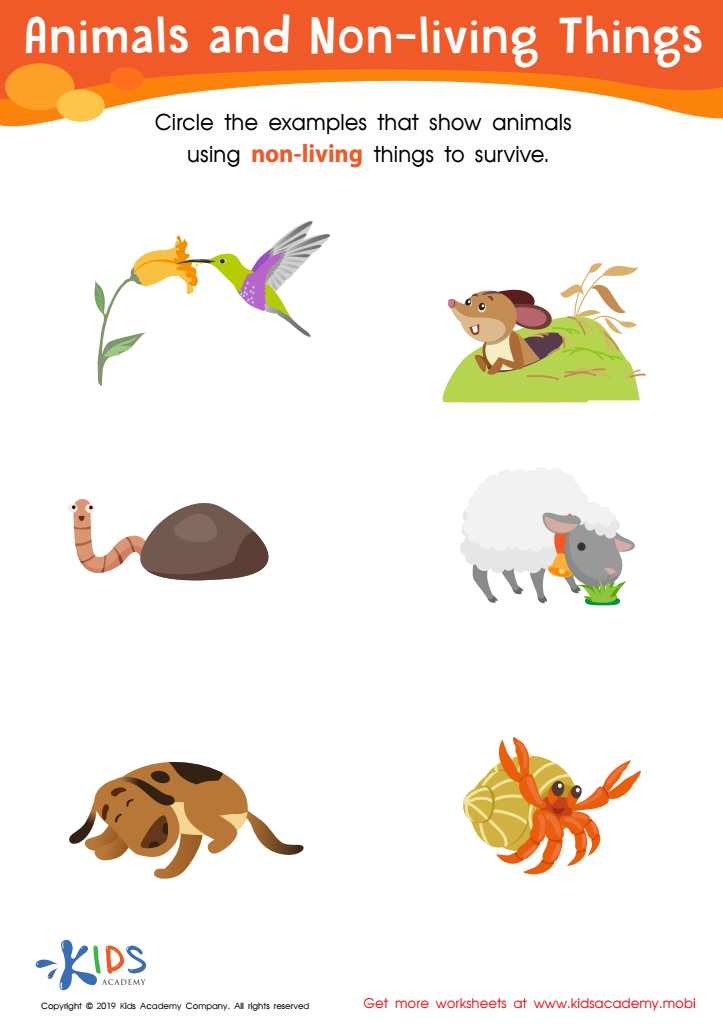
Animals and Non-Living Things Worksheet
 Assign to My Students

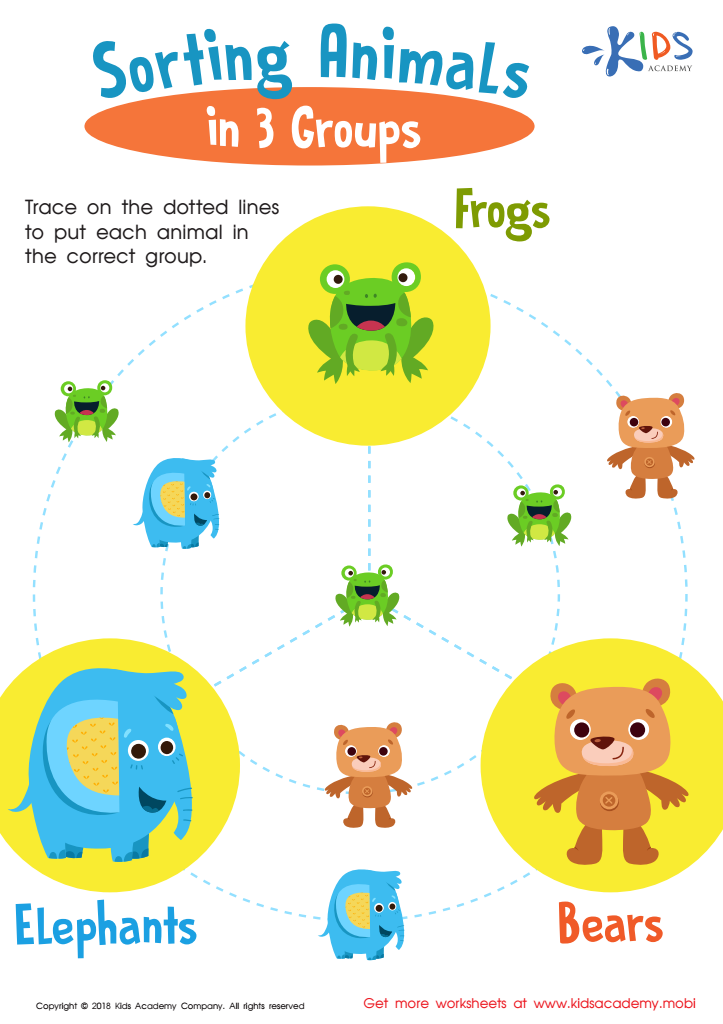
Sorting Animals in 3 Groups Worksheet
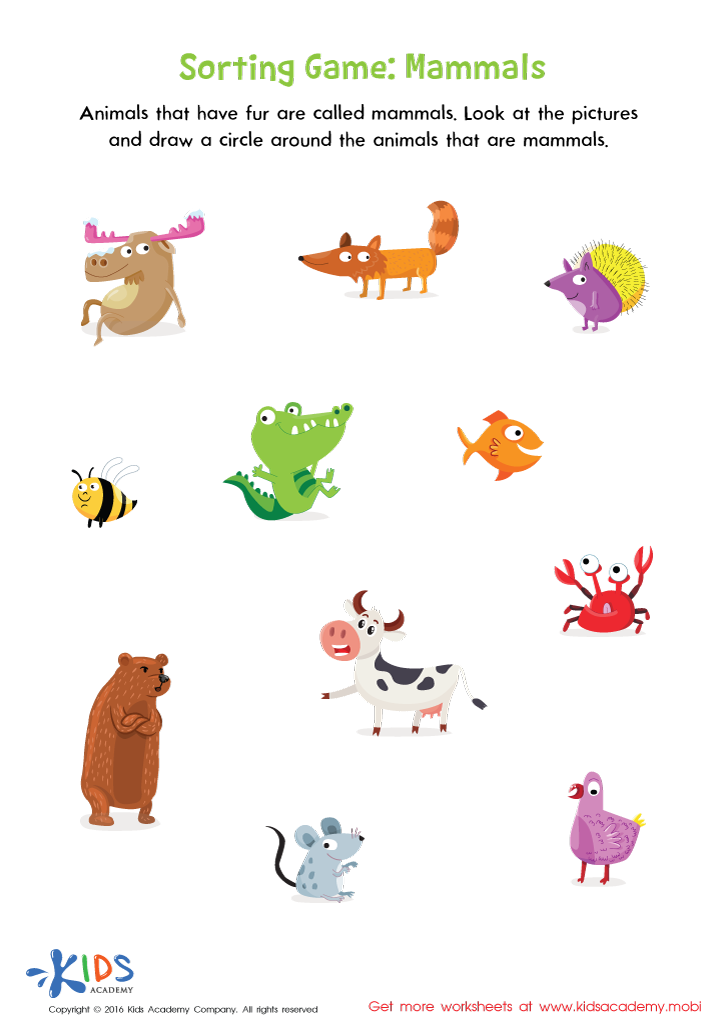
Mammals Sorting Worksheet
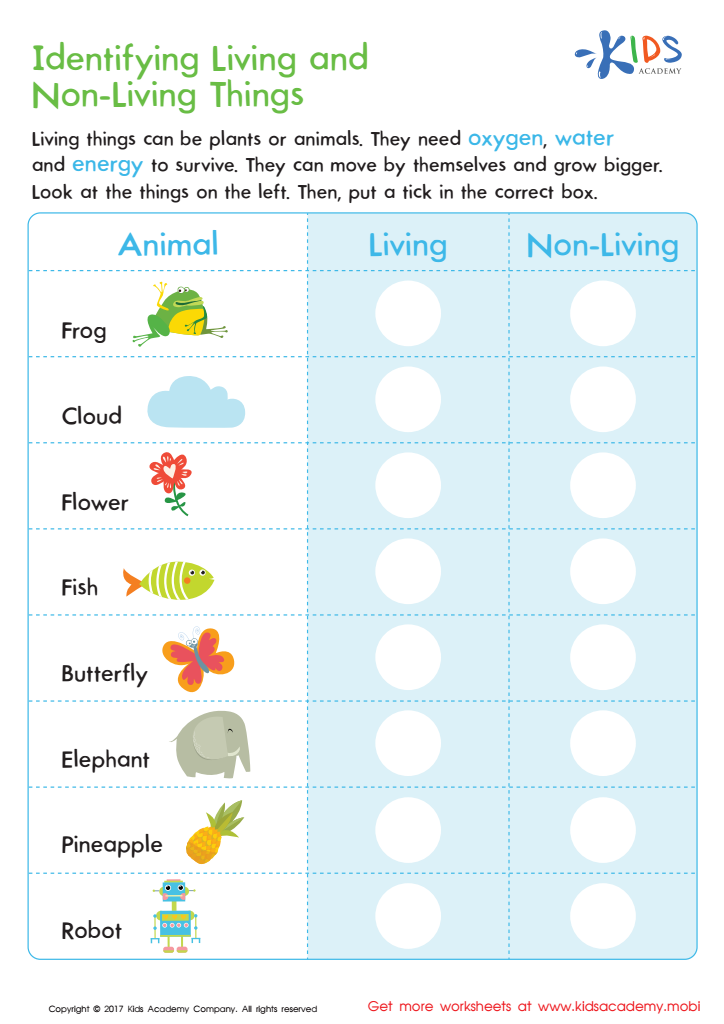
Identifying Living or Non–living Worksheet
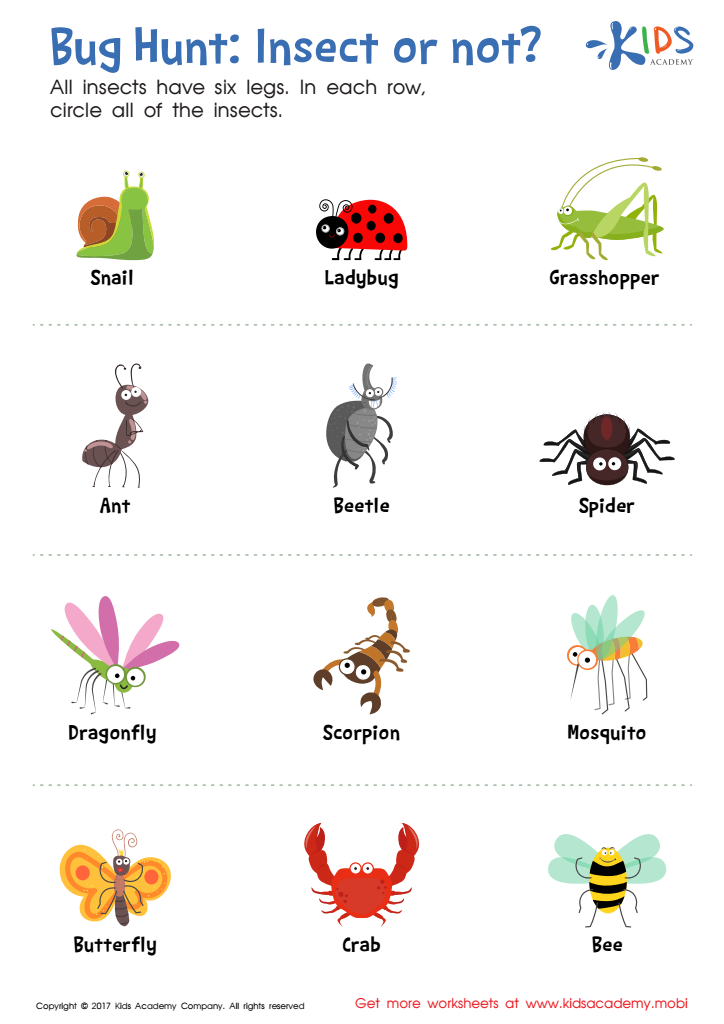







Categorization skills involve the ability to group objects, ideas, or information based on common characteristics, and developing these skills in early childhood is crucial for several reasons. At ages 4-5, children are at a developmental stage where they start to understand the world around them in a more structured way. Teaching them to categorize plants and animals can significantly bolster their cognitive development and pave the way for more complex learning.
First, categorization skills enhance memory and recall. When children learn to categorize plants and animals, they create mental frameworks that make it easier for them to access and retrieve information. For instance, recognizing that dogs and cats fall under the "animals" category improves their ability to remember specific facts about them.
Second, these skills foster critical thinking and problem-solving. By grouping organisms based on traits, children learn to observe, compare, and contrast, helping them understand similarities and differences. This boosts their analytical abilities, which are essential for scientific thinking.
Lastly, categorization promotes language development by expanding vocabulary. Learning terms like "mammal," "reptile," "flower," and "tree" helps children articulate their thoughts more precisely.
Ultimately, nurturing categorization skills related to plants and animals prepares children for future academic success and helps them develop a keen interest in nature and science from an early age.








