Filters

31 filtered results

Clear all filters
Favorites
With answer key
Interactive

31 filtered results

Difficulty Level

Grade


Subject

    Check out this FREE Trial Lesson on Consonants for age 4-7!

    Review Blends

    Favorites
    With answer key
    Interactive
    • 4-7
    • Interactive
    • Consonants
    Matching Consonant Sounds - Part 2 Worksheet Preview
    Matching Consonant Sounds - Part 2 Worksheet Preview

    Matching Consonant Sounds: Part 2 Worksheet

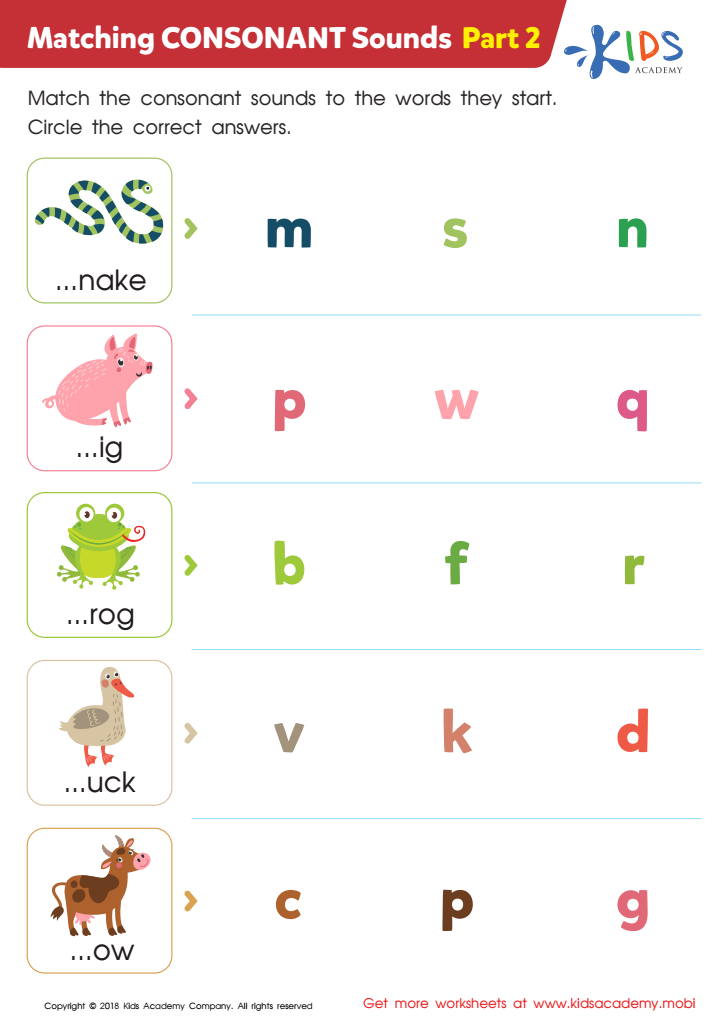
    Look at the picture, say the word and match the consonant sound with the letter. Coach your child to name the animal and complete the word. For extra challenge, write the missing letter in the box! This PDF worksheet helps kids learn to read words with familiar animal pictures.
    Matching Consonant Sounds: Part 2 Worksheet
    Worksheet
    Matching Consonant Sounds - Part 1 Worksheet Preview
    Matching Consonant Sounds - Part 1 Worksheet Preview

    Matching Consonant Sounds: Part 1 Worksheet
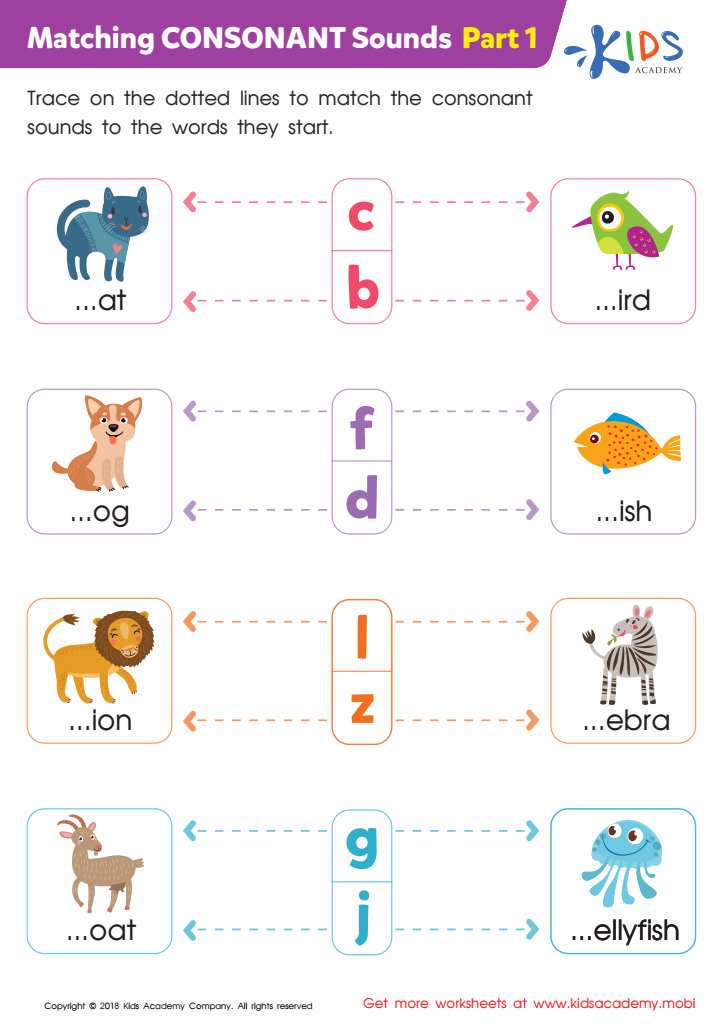
    Decide which letter matches each word and picture in this fun phonics worksheet. Slide your finger over each word, trying out each letter to check for matches. Once each pair is solved, trace the dotted lines with pencil to complete the printable. Who knew learning could be so enjoyable?
    Matching Consonant Sounds: Part 1 Worksheet
    Worksheet
    Let's Look for Blends Worksheet
    Let's Look for Blends Worksheet

    Let's Look for Blends Worksheet

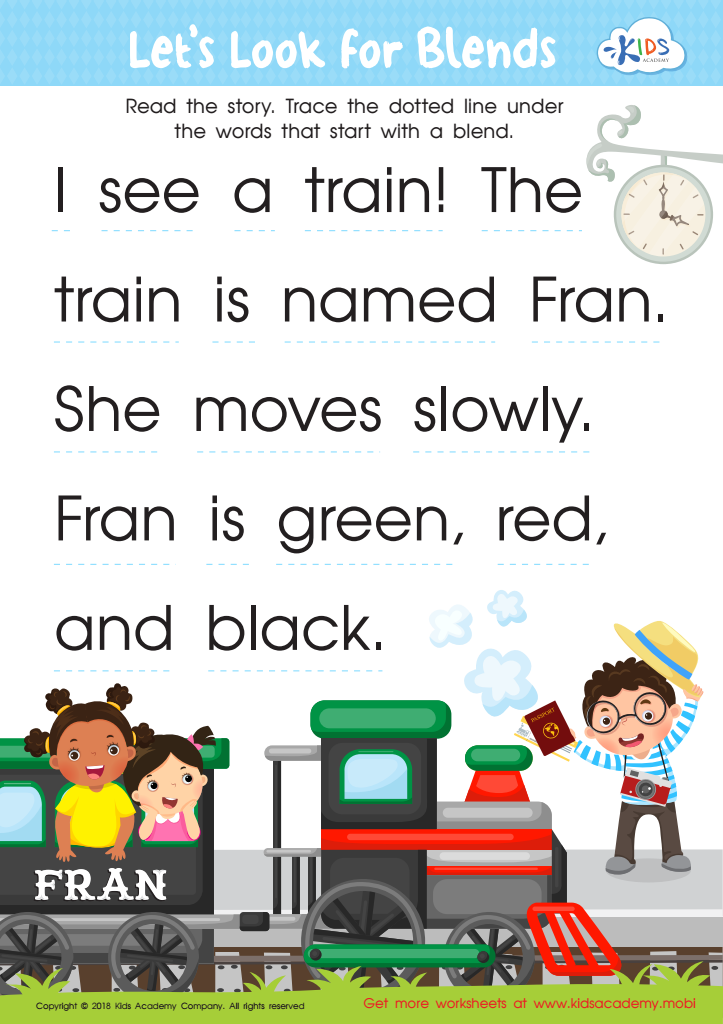
    Does your child love trains? Get them to read the story or help them read it aloud. Ask them to trace the words that start with blends on the dotted lines. This exercise will help them improve their blend-identifying skills!
    Let's Look for Blends Worksheet
    Worksheet
    Digraph Th Printable Worksheet
    Digraph Th Printable Worksheet

    Digraphs: Think About "th" Worksheet
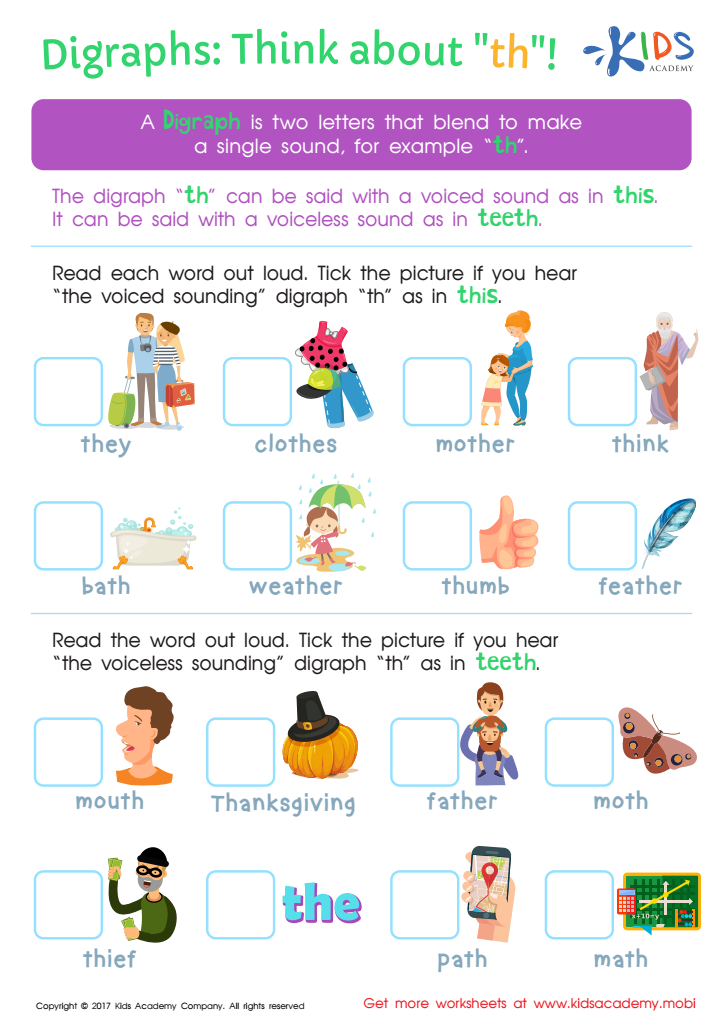
    Help your child master phonics with this illustrated digraph Th printable worksheet. It will help recognize "Th" words, differentiate voiced and voiceless sounds and understand key concepts. Use similar words while they work to reap its full benefits!
    Digraphs: Think About "th" Worksheet
    Worksheet
    Consonant Blend Dr and Tr Printable Worksheet
    Consonant Blend Dr and Tr Printable Worksheet

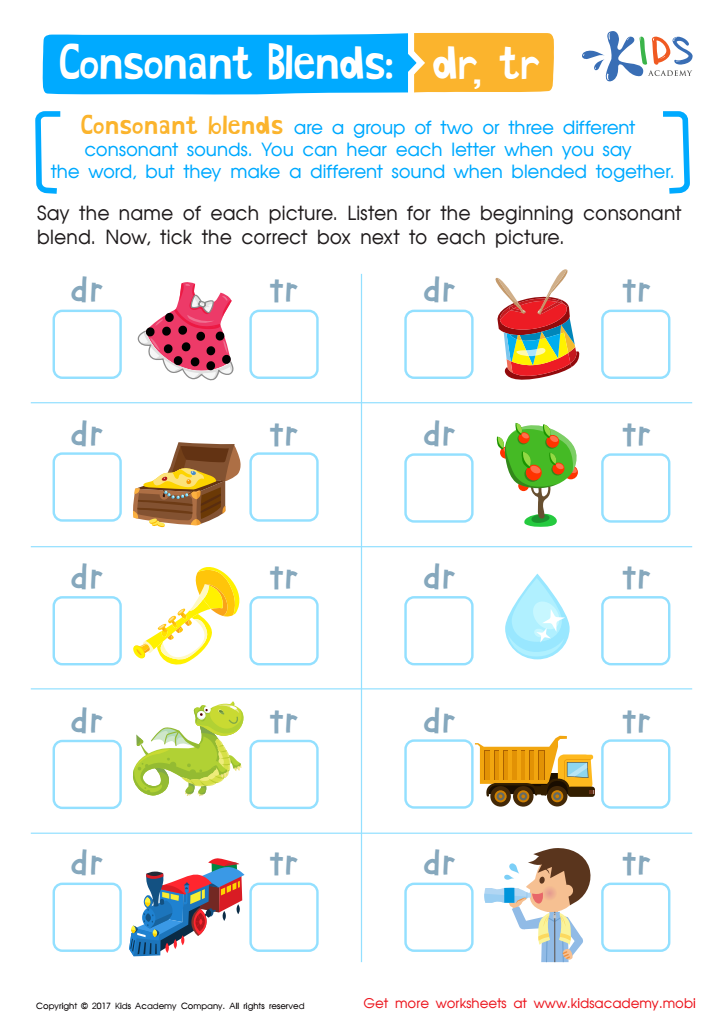
    Consonant Blends: "Dr" and "Tr" Printable
    Pictures of the words provide a visual cue, and sound-outs help with auditory cues.
    Consonant Blends: "Dr" and "Tr" Printable
    Worksheet
    Consonant Blends Pl, Cl, and Sl Printable Worksheet
    Consonant Blends Pl, Cl, and Sl Printable Worksheet

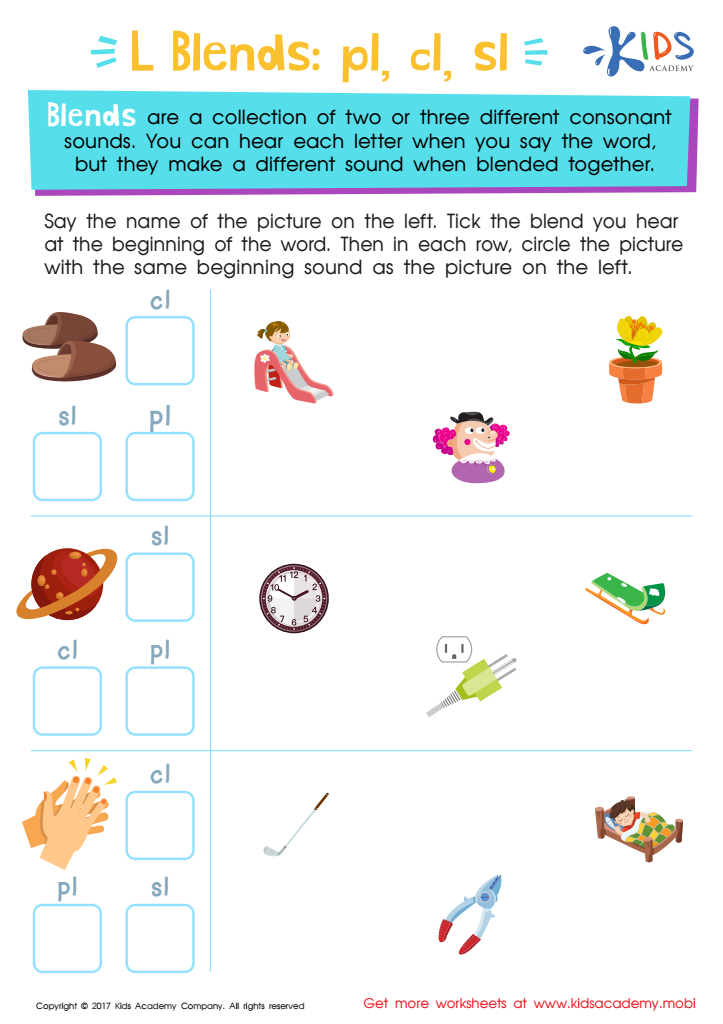
    L Blends: "Pl", "Cl" and "Sl" Printable
    This printable worksheet will help your child recognize and identify the Pl, Cl, and Sl consonant blends, sound them out, and identify them in print. Improve your child's reading and writing skills with fun and colorful phonics practice!
    L Blends: "Pl", "Cl" and "Sl" Printable
    Worksheet
    Consonant Blend Fl, Bl, and Gl Printable Worksheet
    Consonant Blend Fl, Bl, and Gl Printable Worksheet

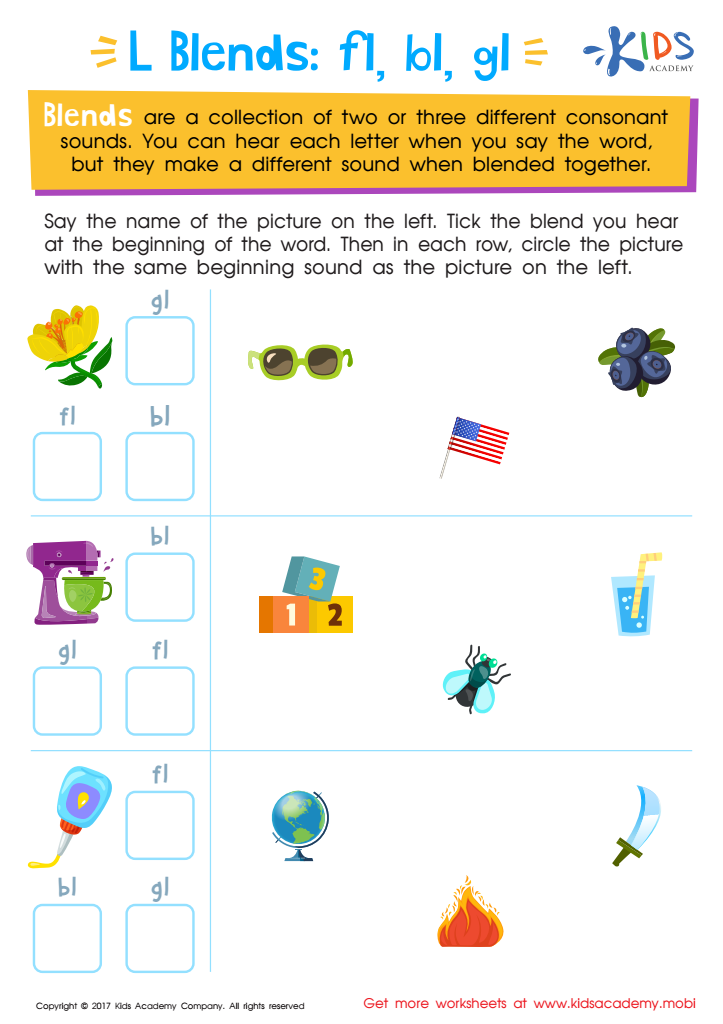
    Blending Consonants: "Fl", "Bl" and "Gl" Printable

    Help your child master consonant blends Fl, Bl, and Gl with this printable worksheet. Find words associated with the pictures and learn to better understand the difference between consonant blends. Vibrant images motivate and aid in learning. Download now for improved phonics success!
    Blending Consonants: "Fl", "Bl" and "Gl" Printable

    Worksheet


    Understanding consonants is essential for children ages 4-7, as it significantly impacts their literacy development. At this age, children begin to make connections between letters and sounds, forming the foundation for reading and writing. Consonants are the backbone of most words; by mastering these sounds, children enhance their phonemic awareness, which is crucial for decoding words.

    Parents and teachers should prioritize consonant instruction because it helps children recognize and use language more effectively. Engaging with consonants in fun, interactive ways—like through games, songs, and storytelling—can stimulate a child's interest and motivation to learn.

    Additionally, knowledge of consonants aids in vocabulary building. Children who are proficient with consonants can better grasp new words and improve their spelling and pronunciation. As they progress through early education, this understanding fosters confidence and independence in reading tasks.

    Teachers and parents also play a pivotal role in reinforcing consonant sounds in everyday interactions, making literacy a shared, enjoyable experience. Thus, nurturing consonant awareness is crucial for establishing a child's foundational literacy skills, setting the stage for their academic future and lifelong love of reading.