Fractions of Shapes Worksheets for Ages 4-7 - Page 2
38 filtered results
-
From - To
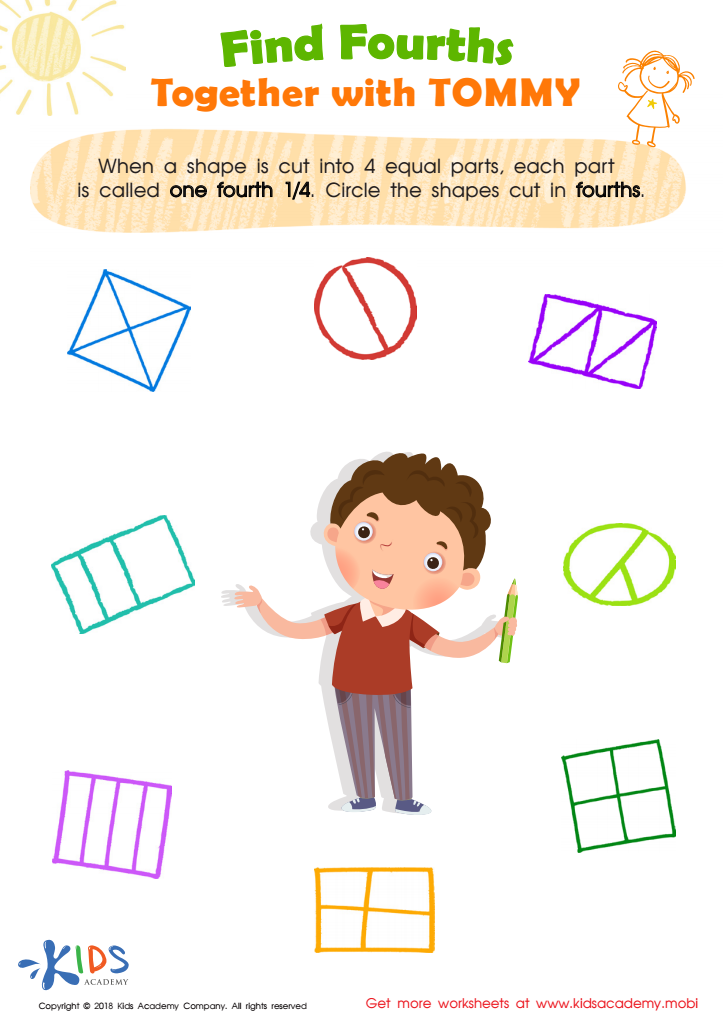
Find Fourths Together with Tommy Worksheet
 Assign to My Students
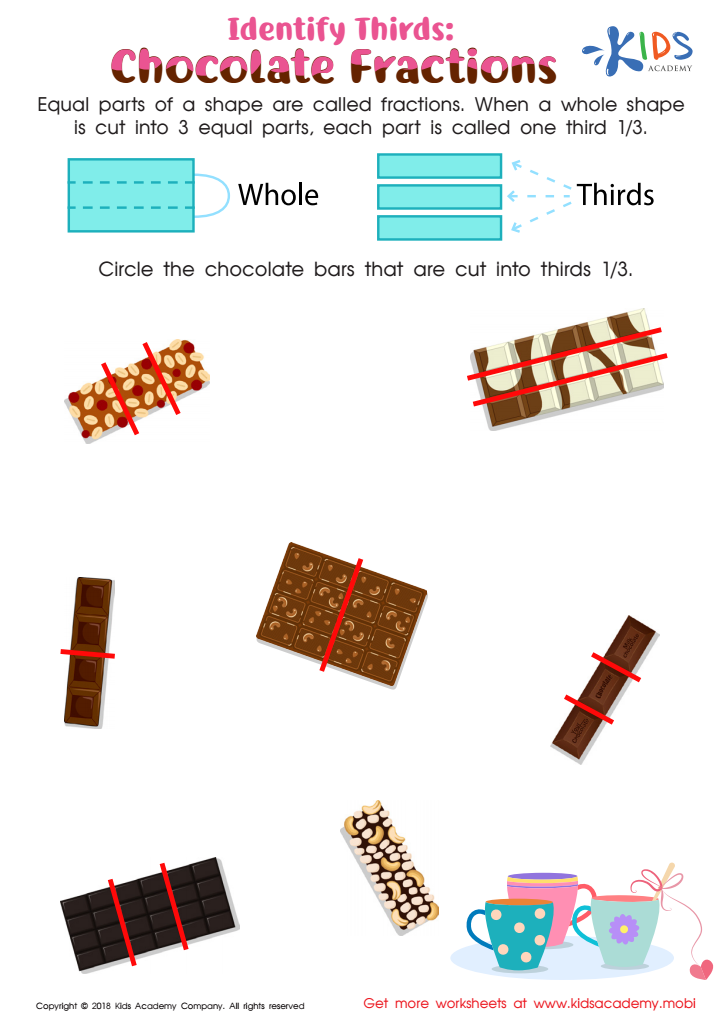
Identify Thirds: Chocolate Fractions Worksheet
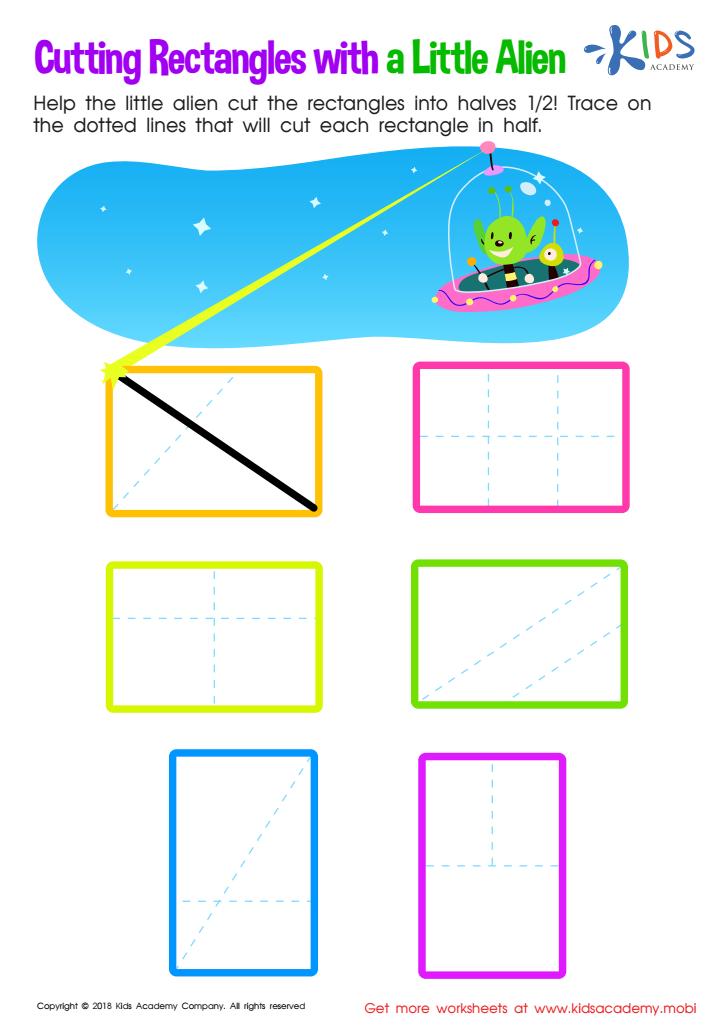
Cutting Rectangles with Alien Worksheet
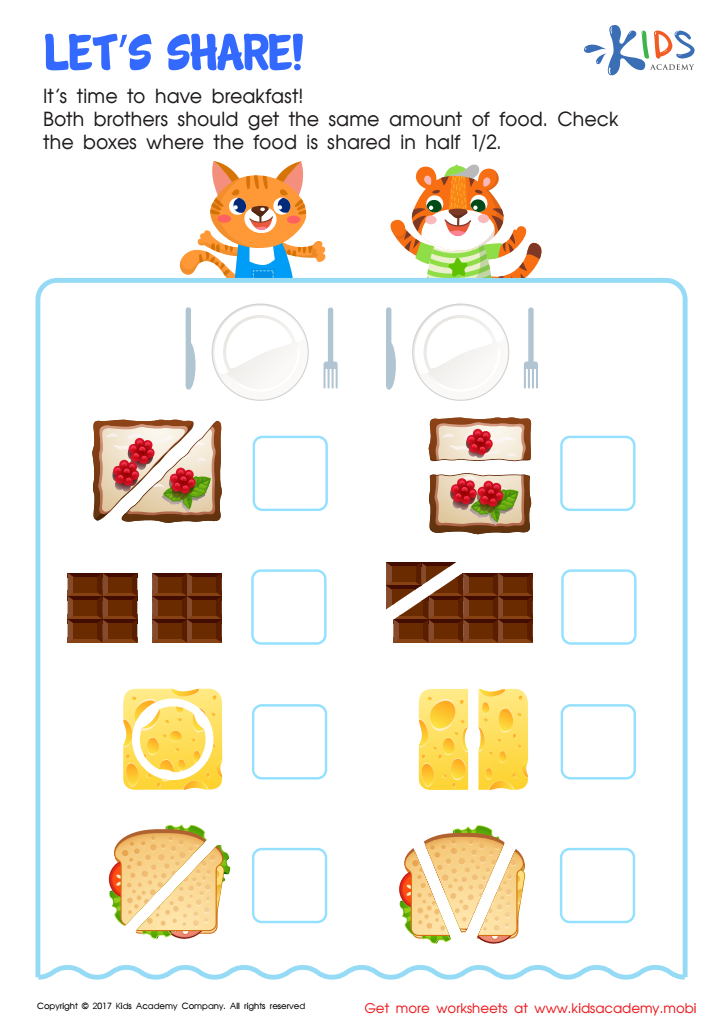
Let's Share Worksheet
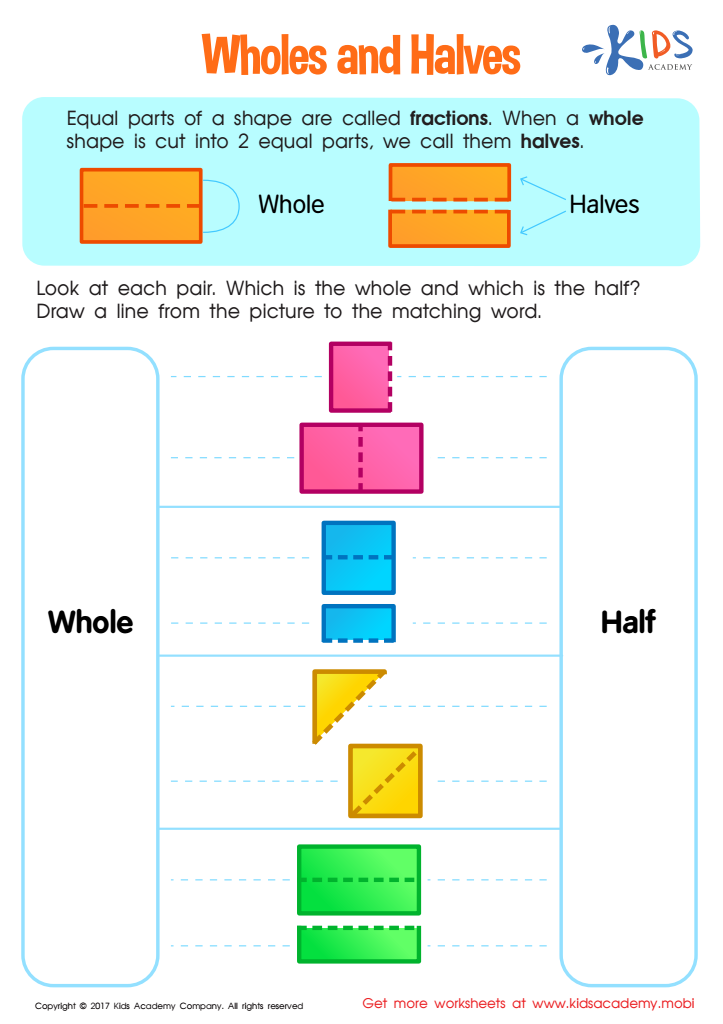
Wholes and Halves Worksheet
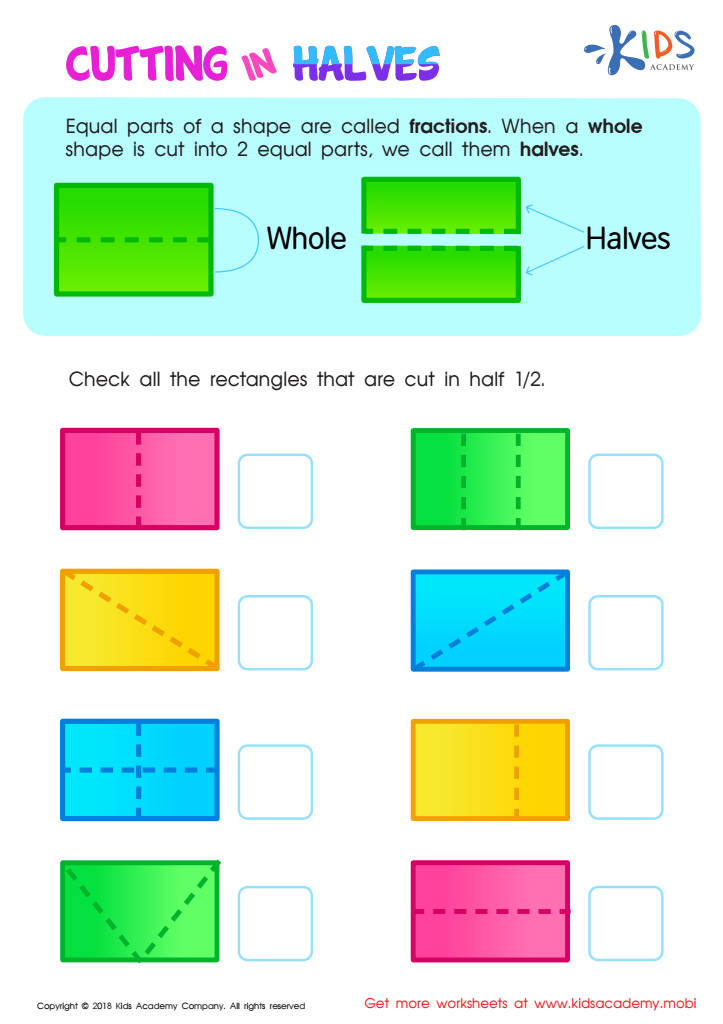
Cutting in Halves Worksheet
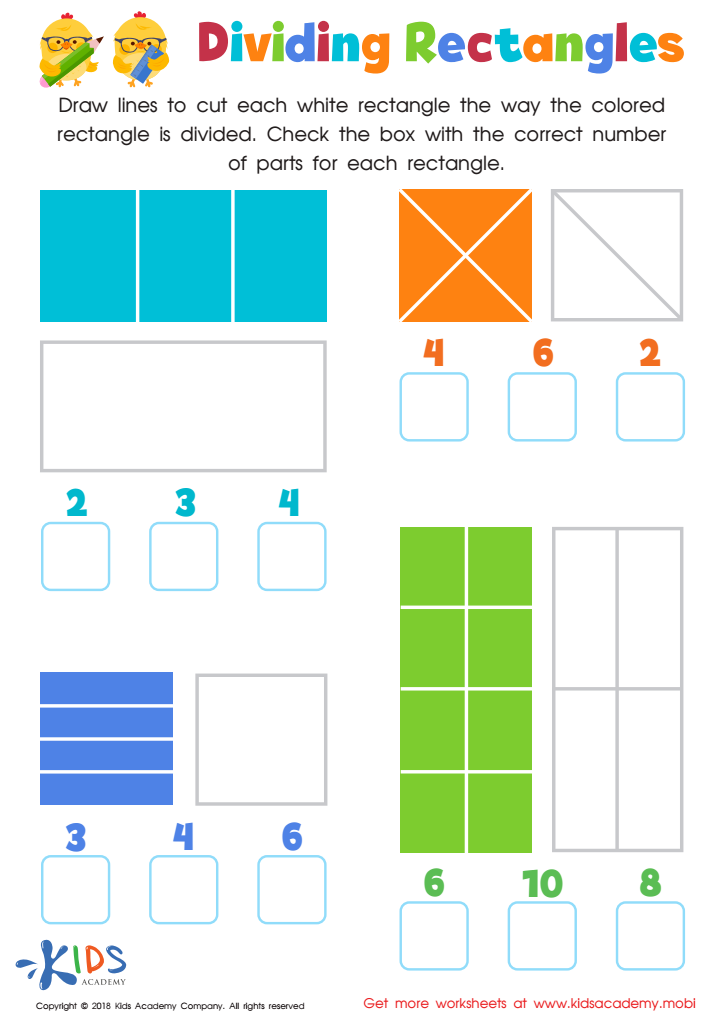
Dividing Rectangles Worksheet
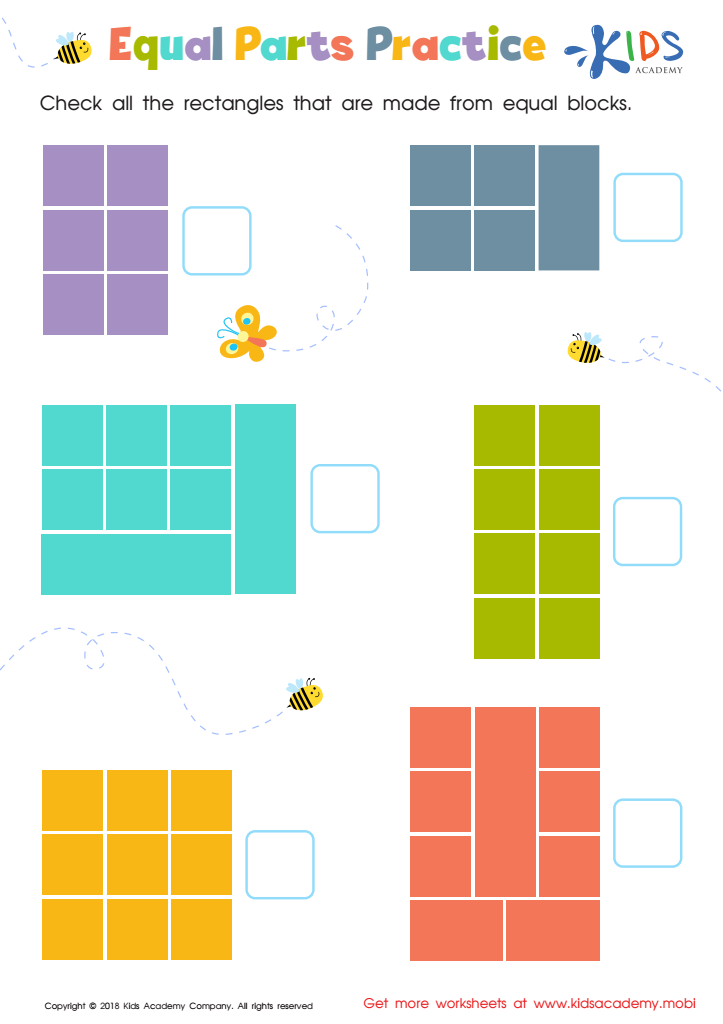
Equal Parts Practice Worksheet
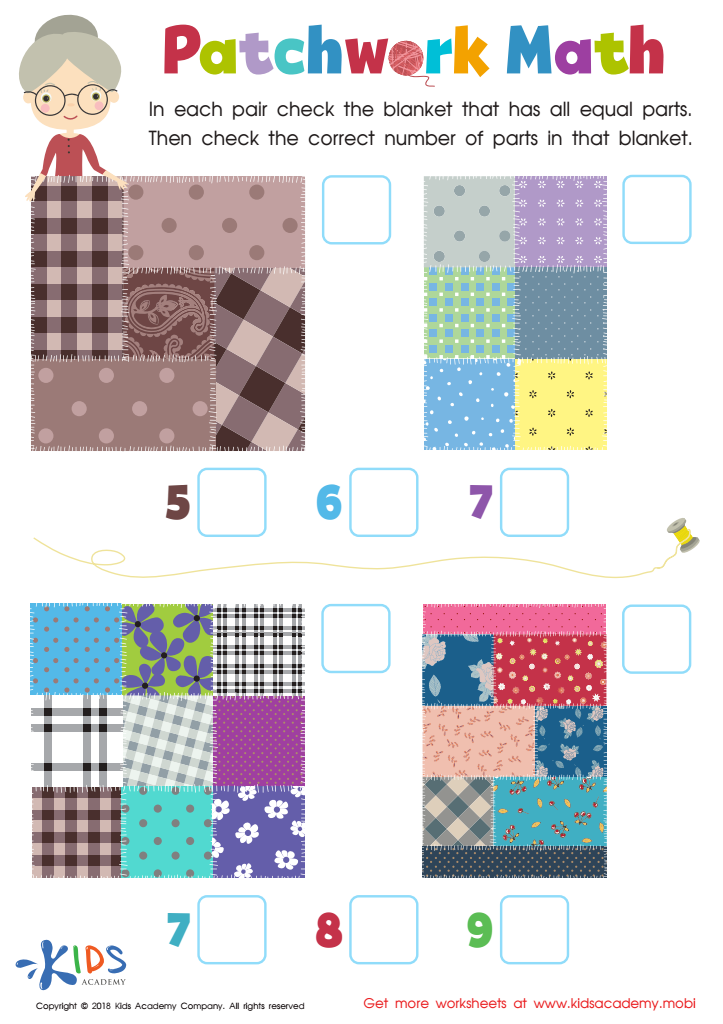
Patchwork Math Worksheet
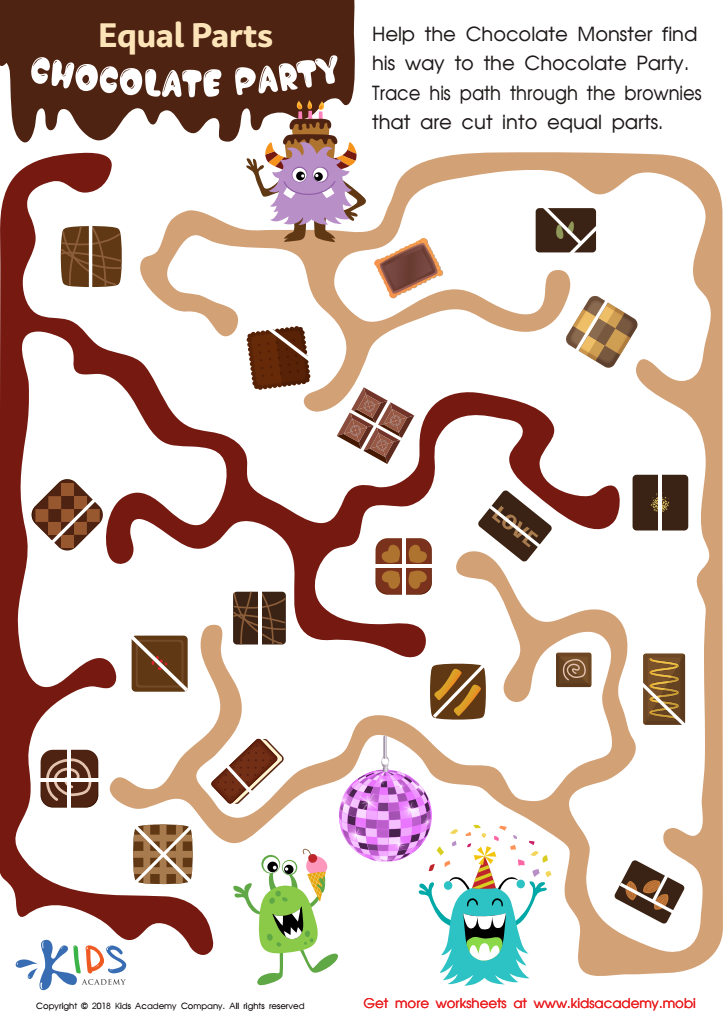
Equal Parts: Chocolate Party Worksheet
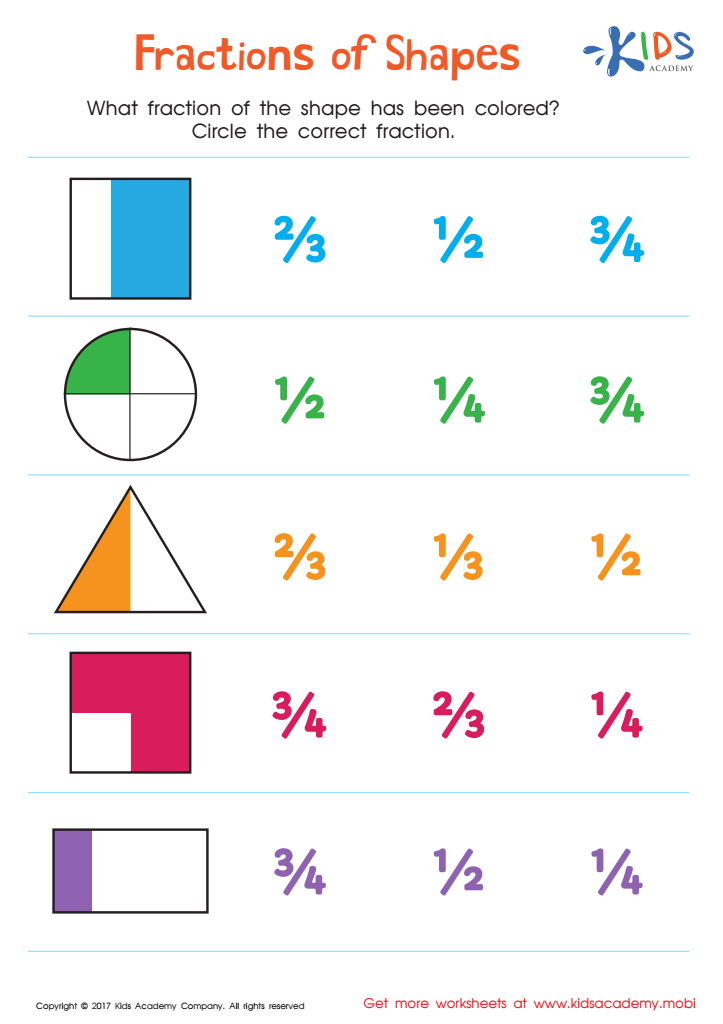
Fractions of Shapes: Math Concept Worksheet
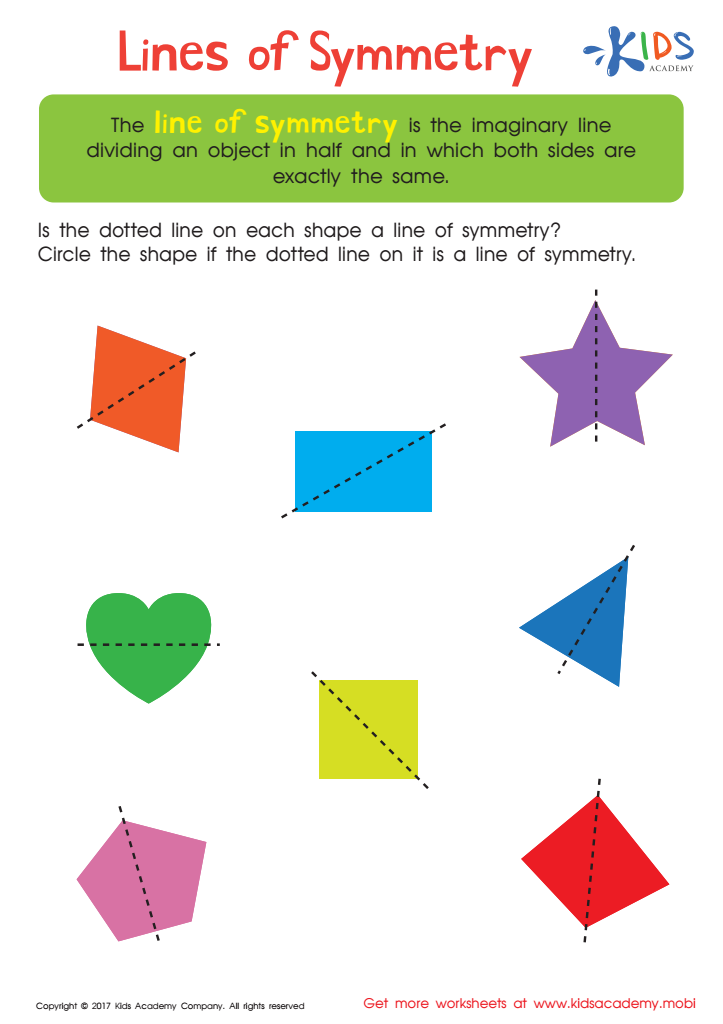
Lines of Symmetry Printable
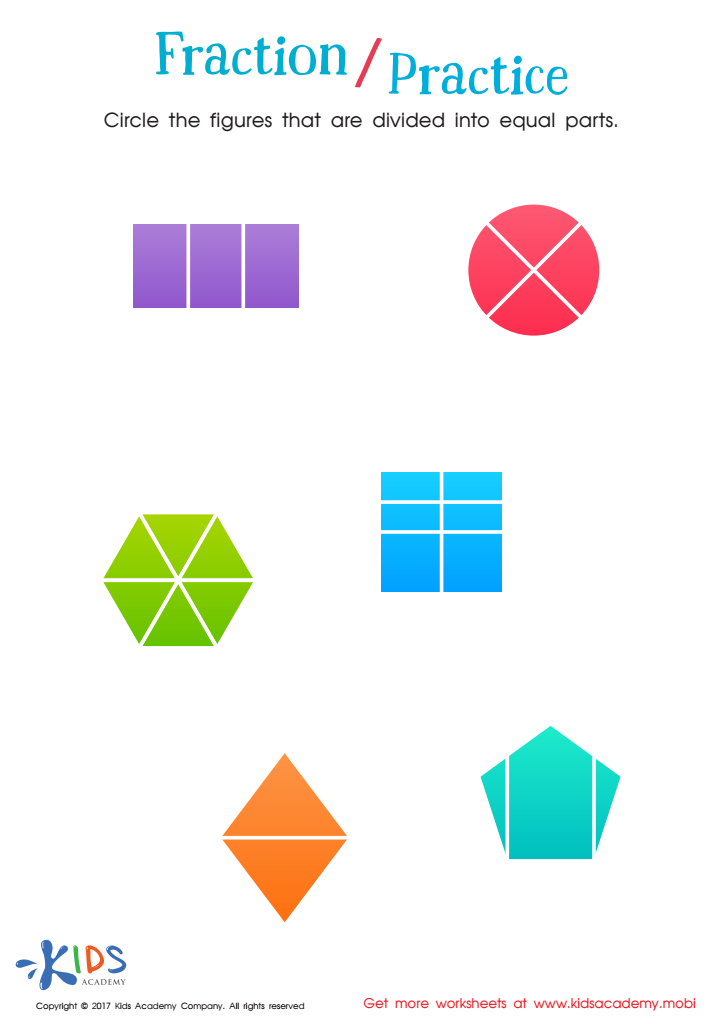
Fractions: Shapes Worksheet
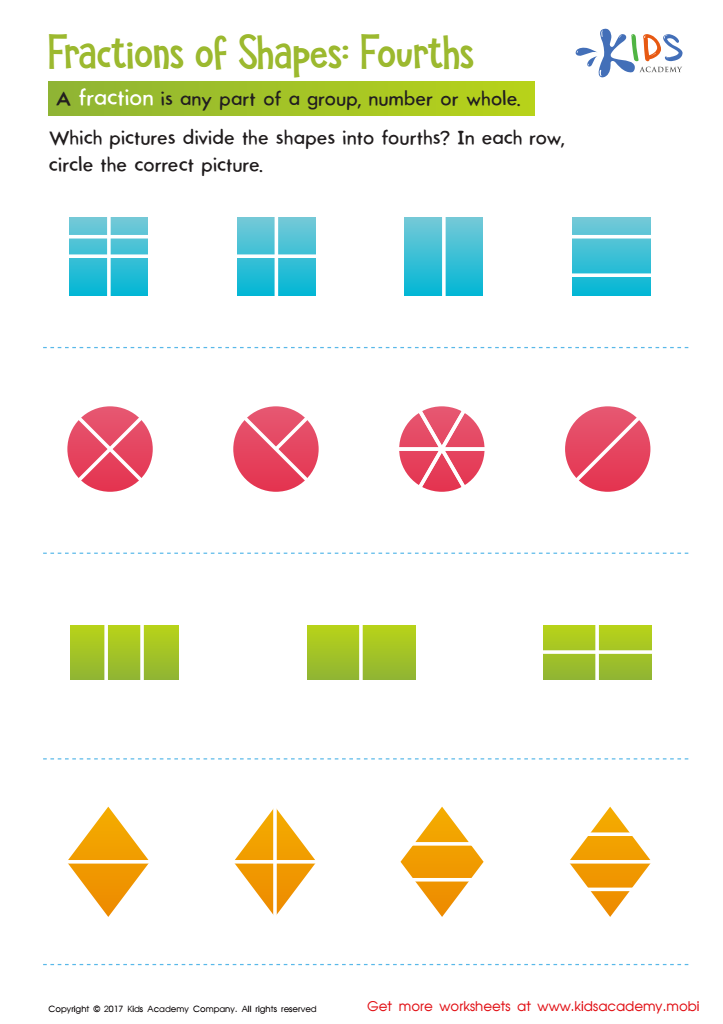
Fractions of Shapes Worksheet








Understanding fractions of shapes is foundational for young learners as it prepares them for more complex mathematical concepts. At ages 4-7, children are naturally curious and capable of grasping basic concepts such as halves, thirds, and quarters, especially when introduced through visual and hands-on activities. Learning fractions of shapes helps develop their problem-solving and critical-thinking skills. For example, dividing a shape into equal parts enhances their spatial awareness and helps them understand the concept of fairness and sharing, which are crucial social skills, as they learn that cutting a cake into equal slices ensures everyone gets a fair share.
Moreover, early exposure to fractions through shapes taps into multiple learning styles. Visual learners benefit from seeing the shapes divided, while kinesthetic learners gain from cutting or coloring shapes. This multi-sensory approach fosters deeper understanding and retention.
Mastering fractions of shapes aids future learning in more complex areas of mathematics such as geometry, algebra, and data analysis. It also builds confidence in their ability to tackle math problems, instilling a positive attitude towards learning. By caring about and supporting young learners in understanding fractions, parents and teachers lay the groundwork for academic success in mathematics and beyond, fostering a well-rounded educational foundation.