Upper & Lowercase Letters Worksheets for Ages 4-8 - Page 3
50 filtered results
-
From - To
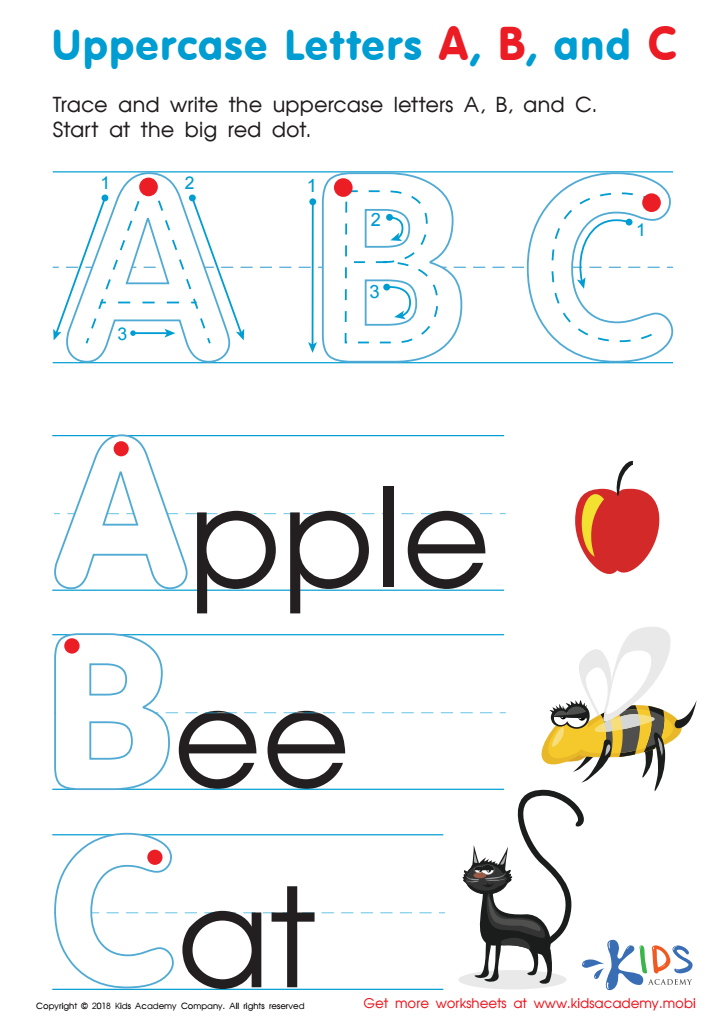
Uppercase Letters A, B, and C Worksheet
 Assign to My Students


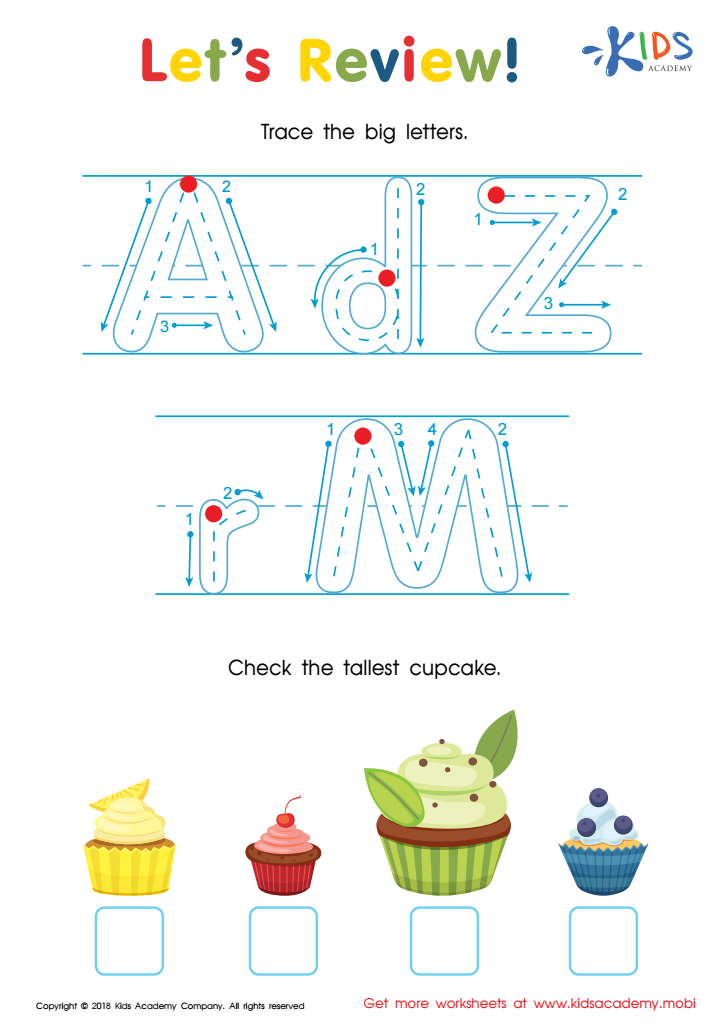
Let's Review! Big Letters Worksheet






Understanding and differentiating between uppercase and lowercase letters is crucial for children aged 4-8, as it forms the foundation of their literacy development. At this formative stage, children are beginning to recognize the shapes and sounds of letters, which are essential skills for reading and writing. Teaching both uppercase and lowercase letters helps children learn that letters can look different yet represent the same sound.
Using a mix of uppercase and lowercase letters when labeling items, reading stories, and writing activities helps children understand the differences and similarities between the two. It also supports their ability to decode text more easily, given that most written language is in lowercase with occasional uppercase letters for names and the beginnings of sentences.
Parents and teachers should focus on this early learning because mastering letter recognition builds confidence and helps prevent future confusion. By familiarizing children with both cases, they're better prepared for more complex literacy tasks, including writing neatly and understanding proper nouns and sentence structure. This knowledge is fundamental to successful communication, academic achievement, and lifelong learning skills.
Moreover, early intervention in these foundational literacy skills can identify and address potential learning difficulties timely. Thus, caring about uppercase and lowercase distinctions significantly contributes to a child's overall educational development.







