Physical Science Worksheets for Ages 4-8
3 filtered results
-
From - To
Discover engaging Physical Science Worksheets for children aged 4-8, designed to spark curiosity and foster a love for learning. Our worksheets cover fundamental concepts such as matter, energy, and the properties of materials, making science accessible and fun for young learners. With vibrant illustrations and age-appropriate activities, children will explore their surrounding world through hands-on exercises that promote critical thinking and problem-solving skills. Ideal for classroom use or at-home learning, these printable resources encourage exploration and discovery, ensuring that every lesson is delightful and educational. Start your child's journey in understanding the physical world today with our expertly crafted worksheets!
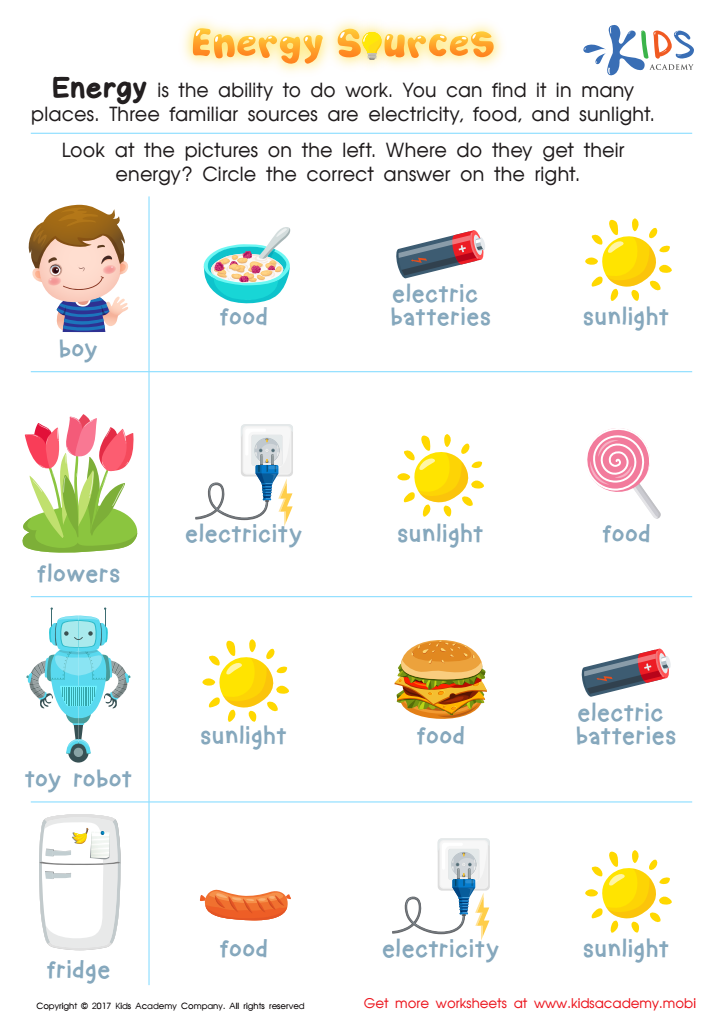
Energy Sources Printable
 Assign to My Students
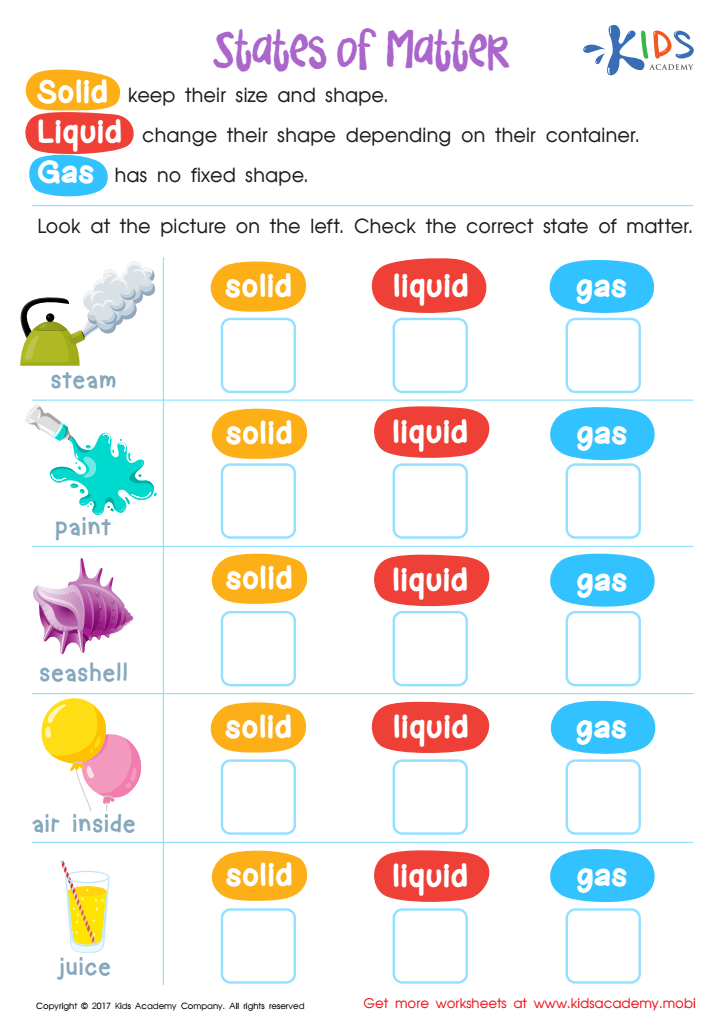
Physical Science: States of Matter Worksheet
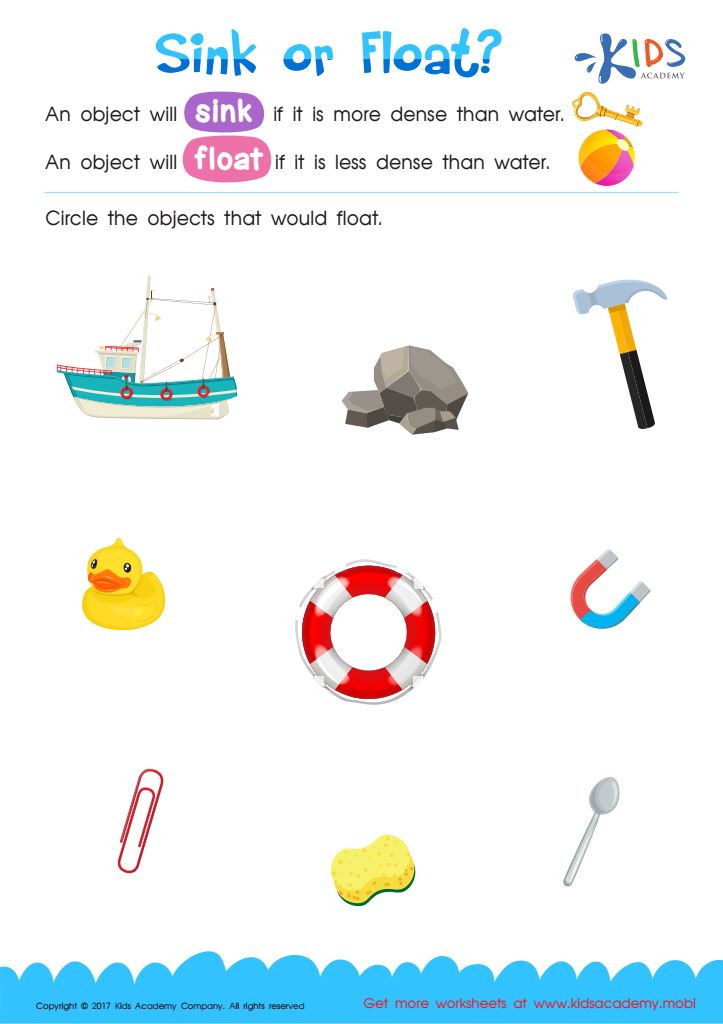
Sink or Float Printable







Parents and teachers should care about physical science for ages 4-8 because it lays the foundation for understanding the world around us. At this stage, children are naturally curious and exploring their environment, making it the perfect opportunity to introduce scientific concepts in an engaging and age-appropriate manner. Physical science concepts, such as the properties of materials, forces, motion, and simple energy forms, foster critical thinking and problem-solving skills crucial for their development.
Introducing physical science encourages hands-on learning through experimentation and exploration, which enhances children's cognitive abilities. By promoting inquiry-based learning, children learn to ask questions, make observations, and draw conclusions—a process that builds their analytical skills. Moreover, understanding basic physical science principles nurtures creativity, enabling kids to envision solutions and innovate.
Direct exposure to physical science also enhances children's communication skills as they share discoveries and cooperate in group activities. Additionally, it helps in developing persistence and resilience, as young learners engage in trial-and-error approaches.
Overall, integrating physical science into early education not only enriches children's academic experiences but also instills a lasting appreciation for science, setting a path for future learning and fostering a sense of wonder about the natural world.