Vowel Team Worksheets for Ages 4-9
14 filtered results
Difficulty Level
Grade
Age
-
From - To
Subject
Activity
Standards
Explore our engaging Vowel Team Worksheets specifically designed for children ages 4-9! These interactive resources aim to enhance phonics skills through fun activities centered around vowel combinations such as ‘ai,’ ‘ea,’ and ‘ou.’ Our worksheets offer a variety of exercises including coloring, matching, and fill-in-the-blank practices, making learning enjoyable and effective. Perfect for parents and educators, these printable resources support early literacy development, helping kids recognize and understand vowel teams in words. Foster a love for reading and writing with our vibrant, age-appropriate worksheets that stimulate critical thinking and reinforce vocabulary skills. Unlock your child's potential with fun, educational activities!
Favorites
With answer key
Interactive
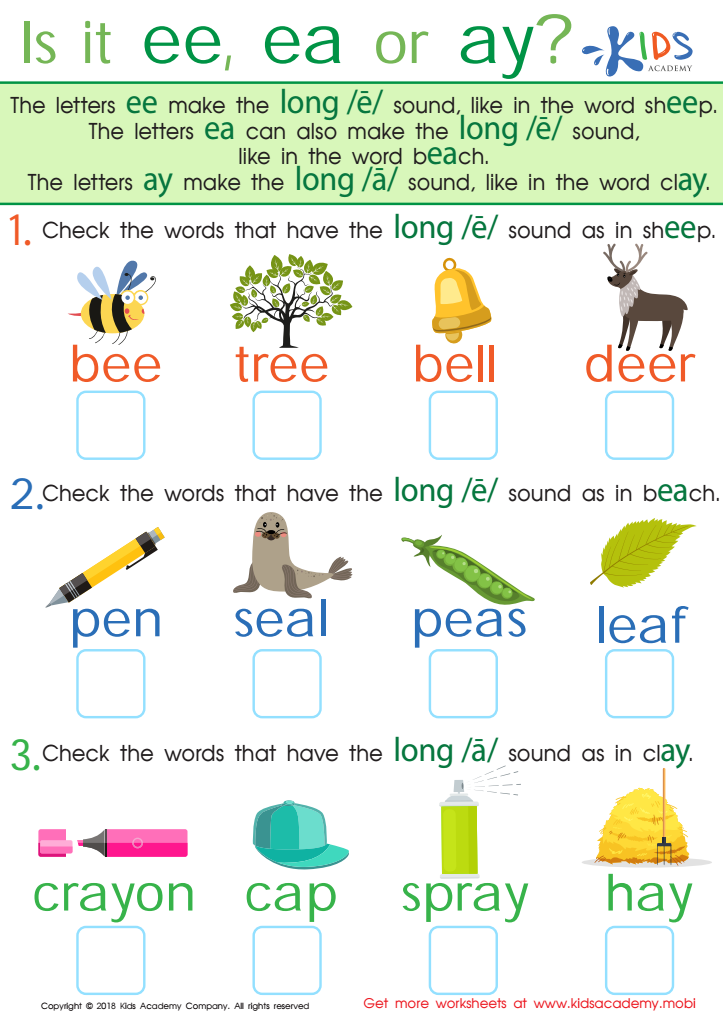
Is It EE, EA, or AY? Worksheet
When 'ee', 'ea' and 'ay' are in words, they usually make the long /e/ and /a/ sounds. Examples of words with 'ee' are "sheep", 'beach' and 'seat' with 'ea', and 'clay' and 'play' with 'ay'. Check this colourful worksheet with your kids; help them find the words that make the long /e/ sound like 'sheep'.
 Assign to My Students
Is It EE, EA, or AY? Worksheet
Worksheet
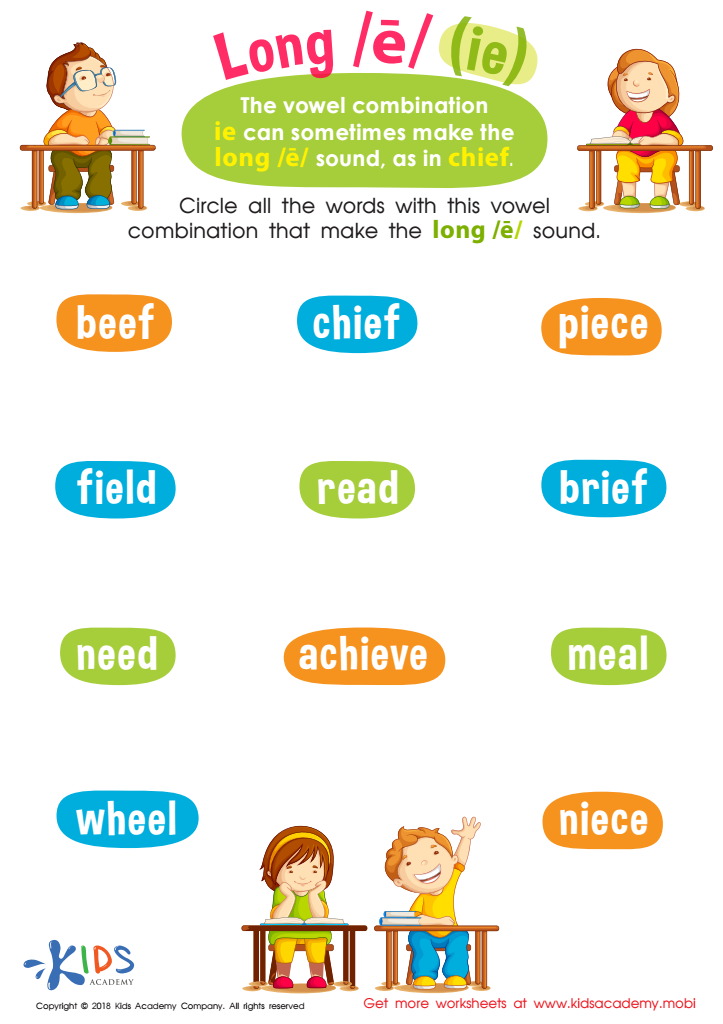
Reading: Long E and IE Worksheet
Ask your child to name some words with the long /e/ sound they hear every day. Then, read aloud all the words in the worksheet with them. Ask them to circle the words containing ie that make this sound.
Reading: Long E and IE Worksheet
Worksheet
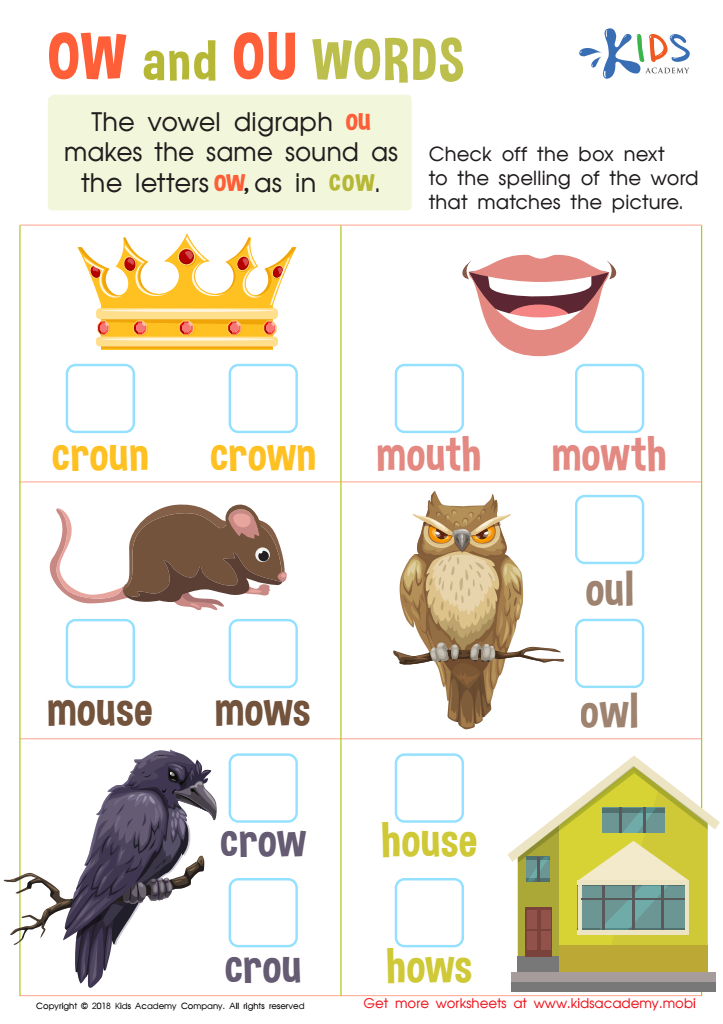
Reading: OW and OU Words Worksheet
Help your kids learn phonetics! Explain the different sounds and long/short variations. Emphasize that some vowel sounds are the same, e.g. ou = ow in cow. For practice, have them read aloud the words in the worksheet and check the box next to the spelling that matches the picture.
Reading: OW and OU Words Worksheet
Worksheet
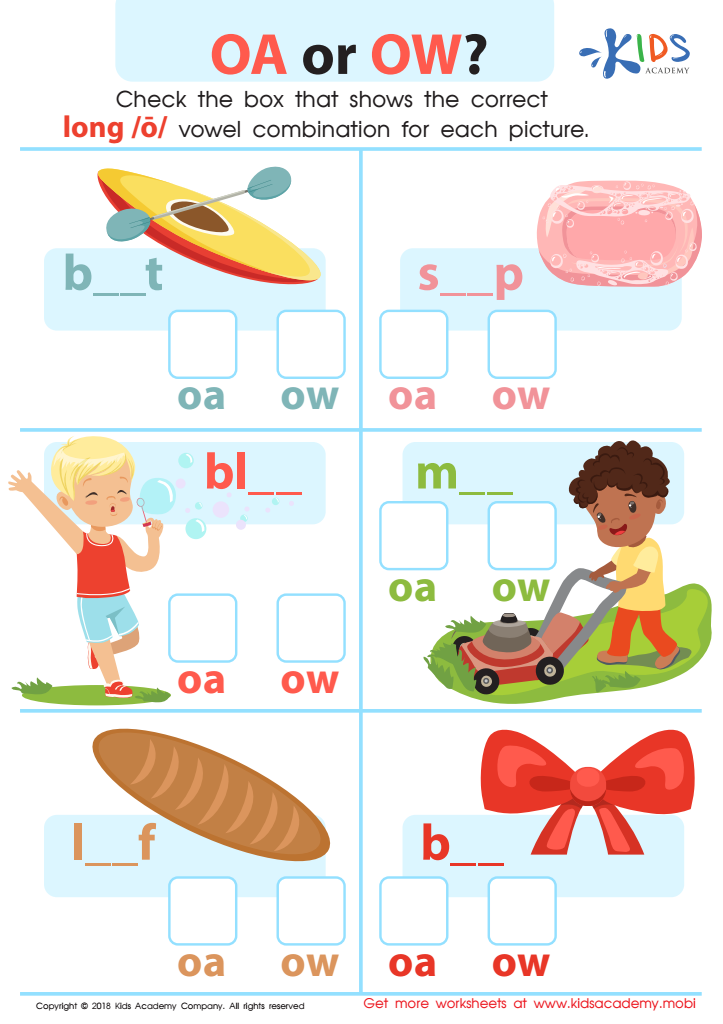
Reading: OA or OW Worksheet
This printable worksheet helps young and emergent readers with decoding words and understanding digraphs (two letters with one sound). It requires students to complete the spelling for each word based on the picture, focusing on /oa/ and /ow/ spellings. It's ideal for a reading classroom and for spelling practice.
Reading: OA or OW Worksheet
Worksheet
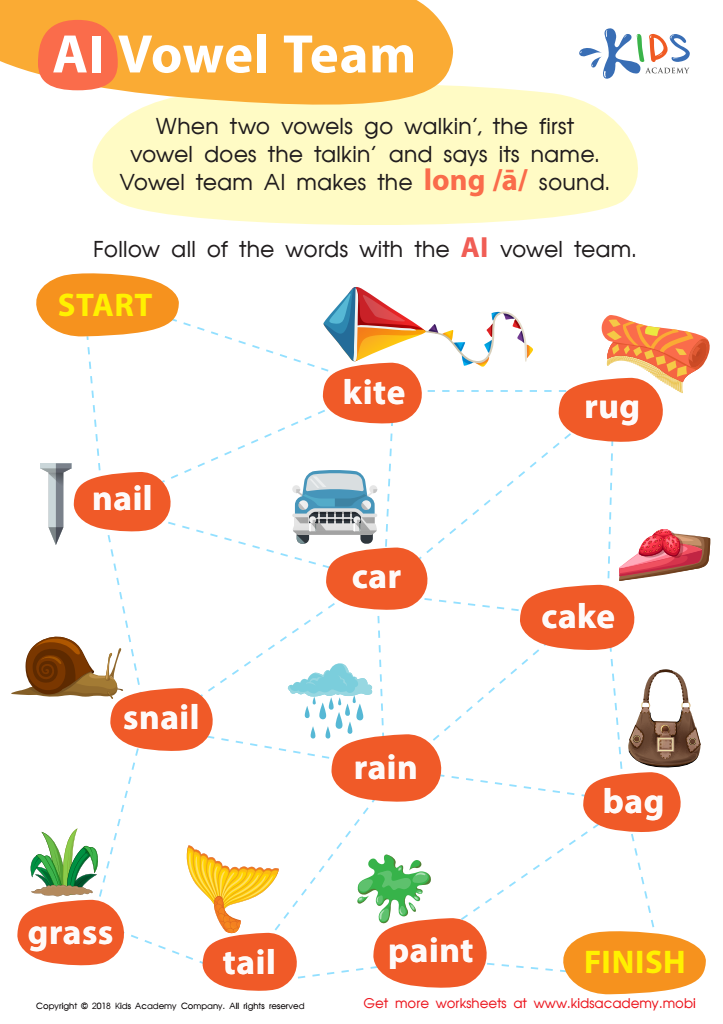
Reading: AI Vowel Team Worksheet
This worksheet focuses on the vowel team /ai/ which makes the long A sound. Students are challenged to find the correct path through the puzzle following only words with the /ai/ sound. Bright illustrations help kids understand unknown words.
Reading: AI Vowel Team Worksheet
Worksheet
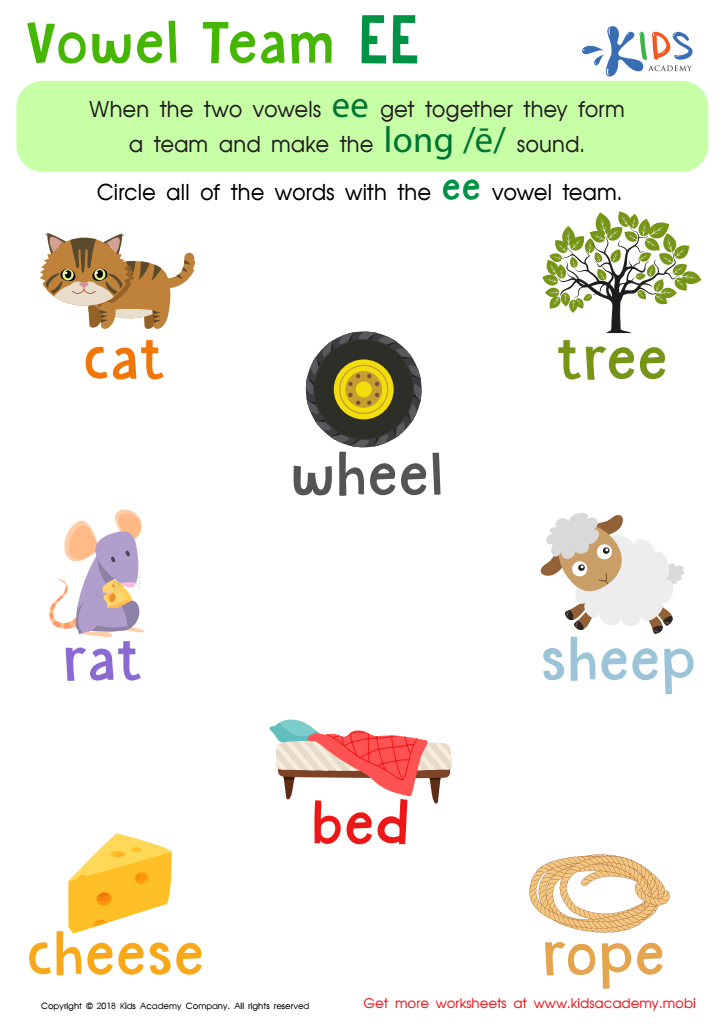
Reading: Vowel Team EE Worksheet
This worksheet is perfect for helping young learners master the /ee/ vowel team. It shows the first vowel with a long sound and the second vowel silent. It also provides pictures for unfamiliar words for readers of all levels. It's an ideal resource for teaching phonics skills.
Reading: Vowel Team EE Worksheet
Worksheet
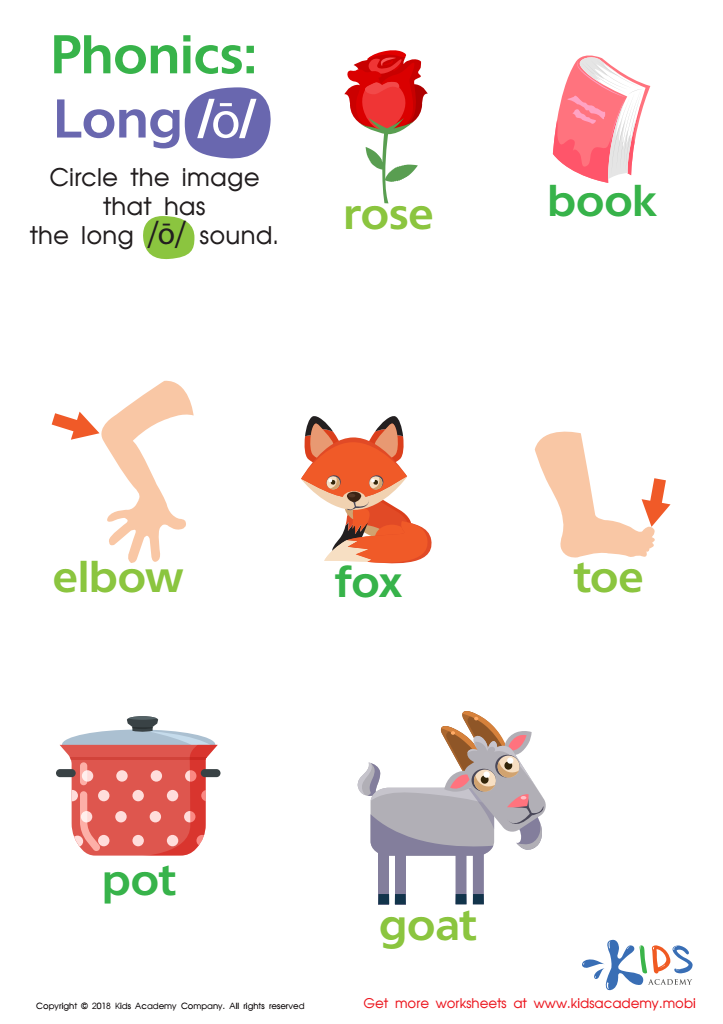
Phonics Long O Reading Worksheet
Are you ready to help your child learn the phonics long «o» sound? This worksheet is designed to aid them in getting familiar with the sound. After completing the exercise, your child should be able to differentiate letters, and recognize words with the long «o» sound. Encourage them to circle the images that have the sound.
Phonics Long O Reading Worksheet
Worksheet
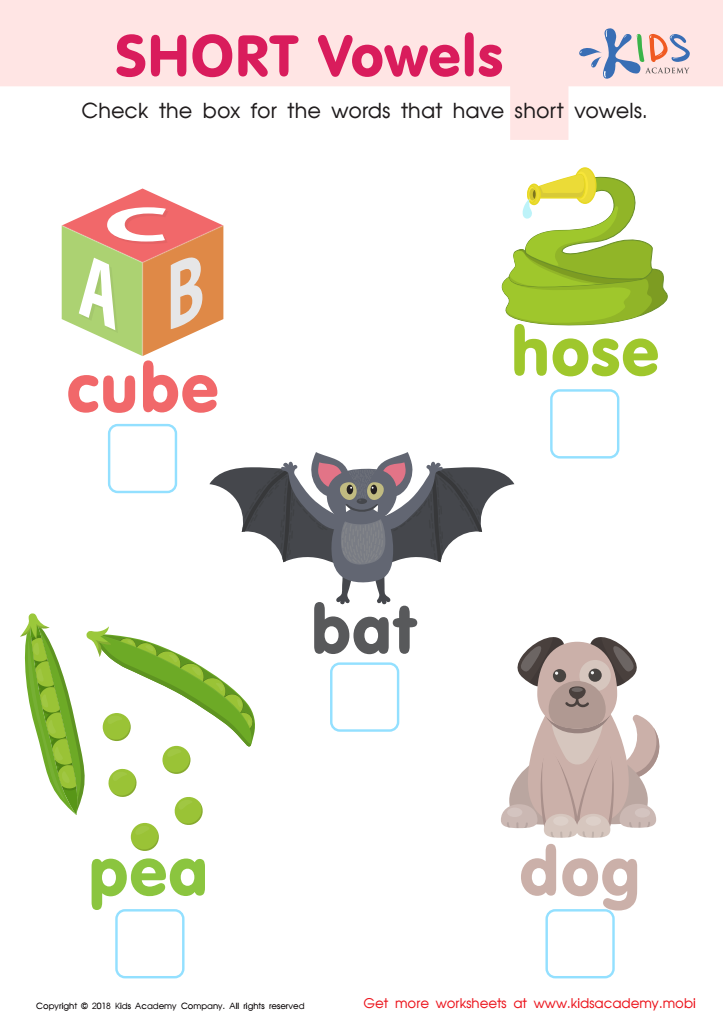
short vowels Worksheet
Say "dog" and notice how long it takes to pronounce the vowel. Is it short or long? Compare it to "pea" and use this worksheet to quickly assess your child's mastery. Have them name each picture and listen for the vowel sounds. Only check the boxes for words with short vowel sounds.
short vowels Worksheet
Worksheet
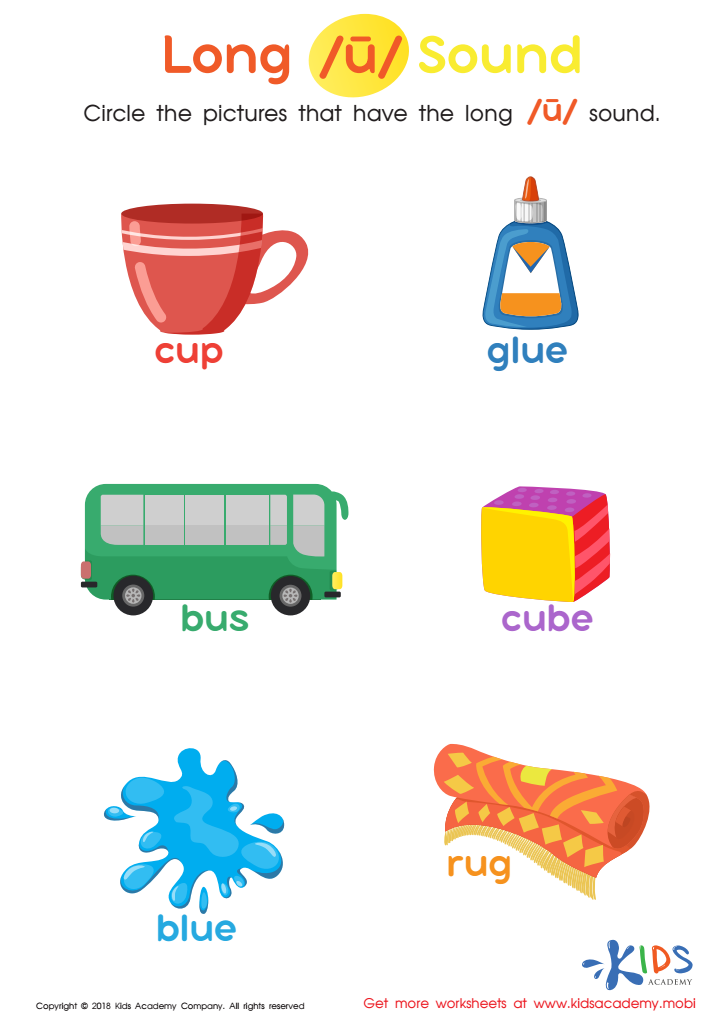
Long «u» Sound Worksheet
This fun and engaging free PDF worksheet teaches kids to differentiate between long and short «u» sounds. Through tracing circles around the correct words, they'll practice their fine motor skills while also recognizing patterns (silent-e for «ū» sound) in closed-syllable words. Bright and cheery pictures make it a great confidence booster for new readers!
Long «u» Sound Worksheet
Worksheet
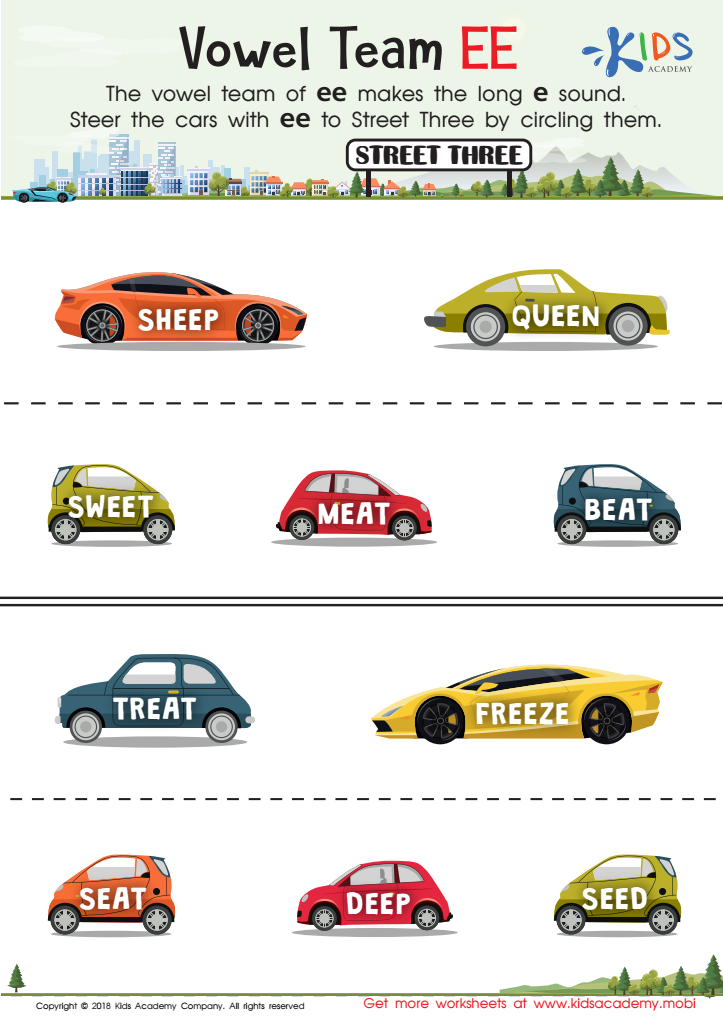
Vowel team ee Worksheet
Revised:
Kids will have a blast steering cars with the -ee digraph towards Street Three! This fast-paced worksheet reinforces that -ee makes the long -e sound while boosting fine motor skills. Kids will love the bright colors and stay engaged with this fun printable. Get ready for hours of off-road excitement!
Vowel team ee Worksheet
Worksheet
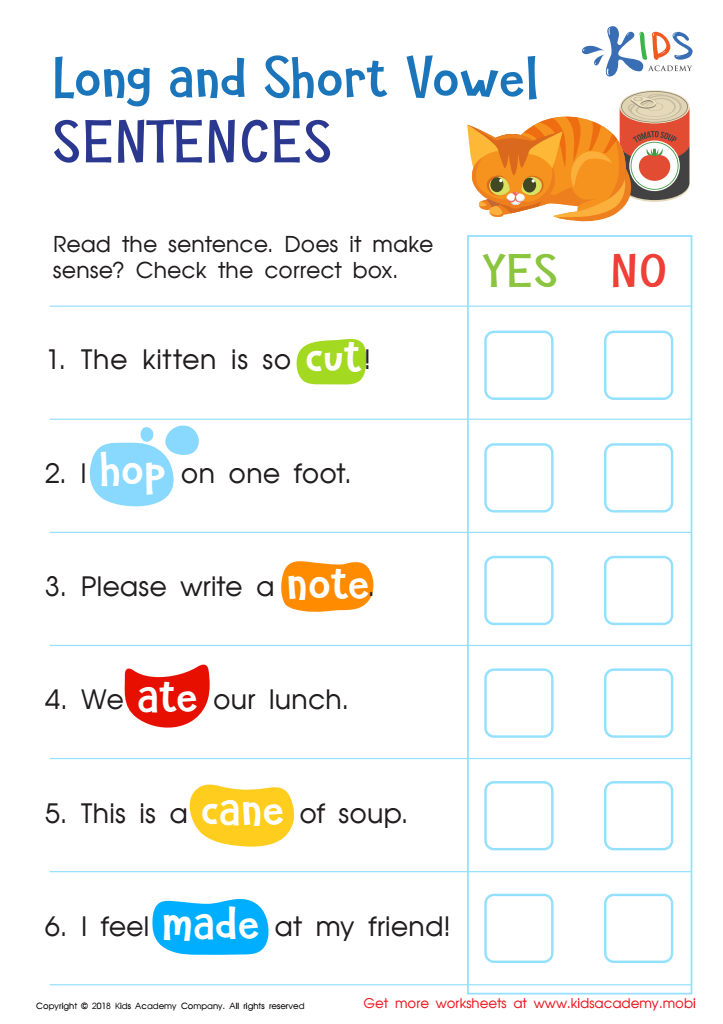
Long and Short Vowel Sentences: Assessment Worksheet
This printable worksheet helps kids practice differentiating between short and long vowel sounds. They'll use context clues to figure out which words make sense in simple sentences. A great way to build reading and writing skills!
Long and Short Vowel Sentences: Assessment Worksheet
Worksheet
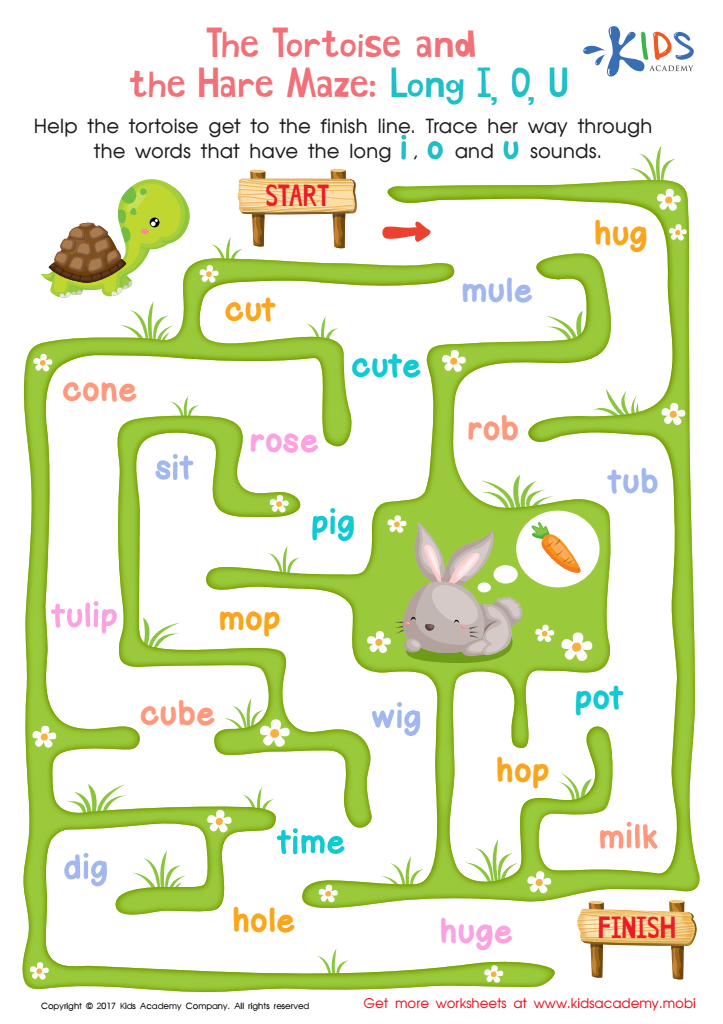
Long I, O, U Words Worksheet
This fun phonics worksheet has your child race the tortoise and hare to the finish line. Find all the long vowel sounds to win! It'll help your child's recognition of long I, O, and U words without him realizing it!
Long I, O, U Words Worksheet
Worksheet
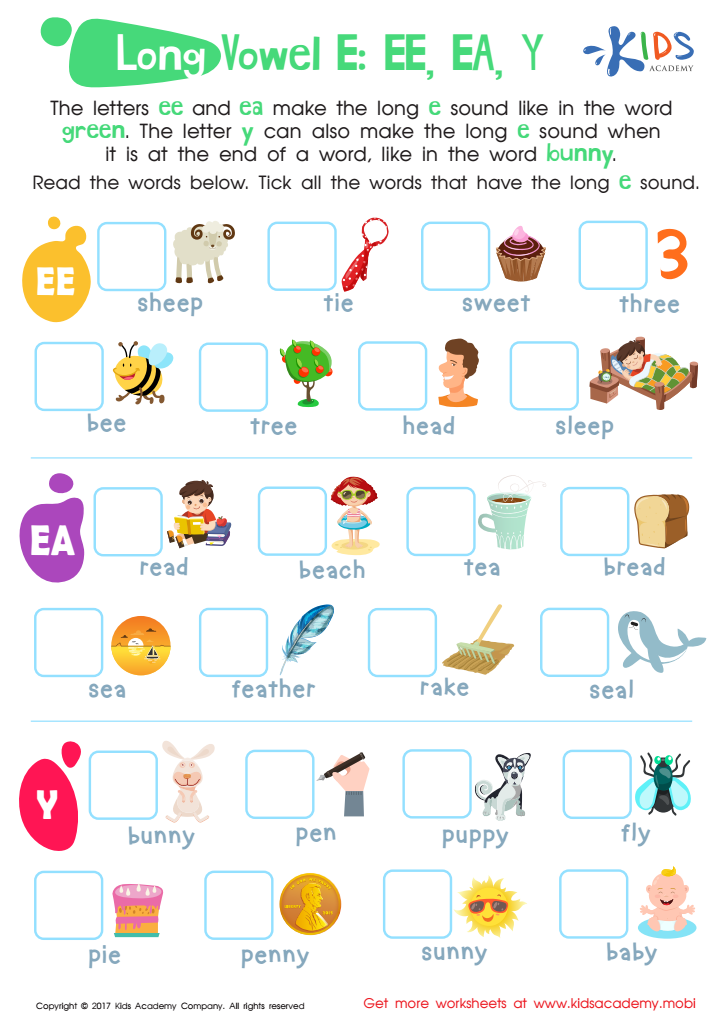
Long Vowel E Printable
Help your child learn to read and spell with long vowel E with this printable worksheet. It'll teach them different spellings of E and how to recognize words with similar spellings that might not sound the same. They'll become a pro in no time!
Long Vowel E Printable
Worksheet
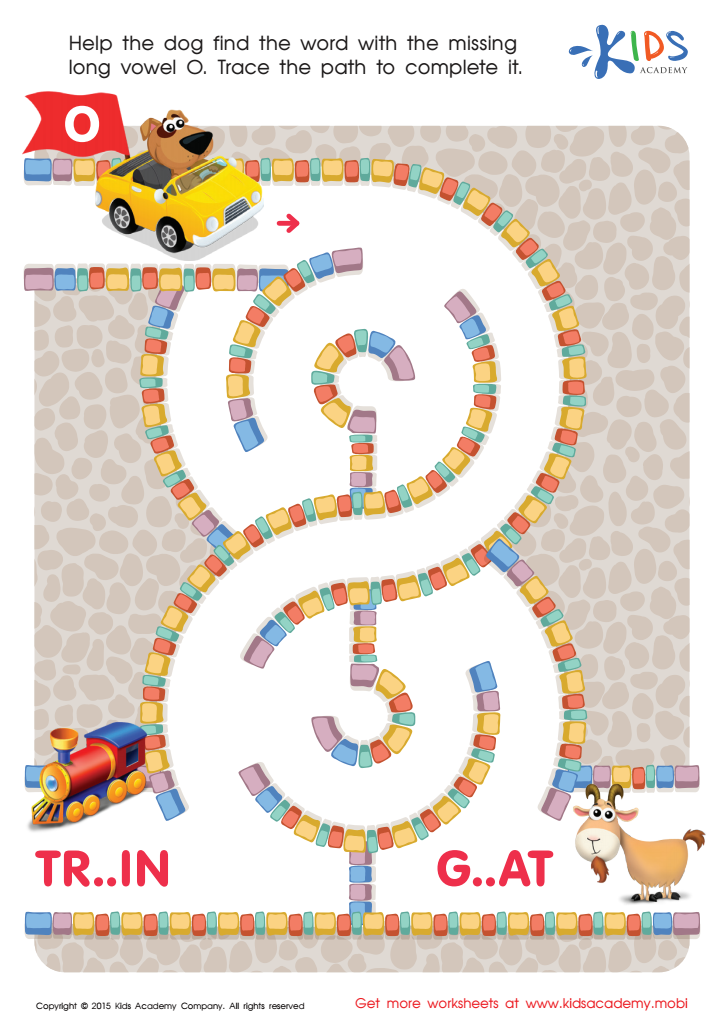
Long Vowel Sound O Worksheet
Help the goat find her missing O! Guide your little learner through this fun maze to help the goat get its vowel sound back. Make phonics learning engaging and enjoyable with this free printable worksheet.
Long Vowel Sound O Worksheet
Worksheet
Join Kids Academy for Free
Who is primarily going to use this learning content?



Vowel teams are crucial in early literacy development for children aged 4-9. Teaching these concepts lays a solid foundation for reading and spelling by helping students understand how vowel combinations work together to produce specific sounds. Recognizing patterns in vowel teams enhances phonemic awareness and decoding skills, which are essential for developing fluency in reading.
When children grasp how vowel teams operate, they are better equipped to tackle unfamiliar words, leading to increased confidence and a love for reading. This also encourages more effective communication, as they acquire a richer vocabulary.
Furthermore, vowel teams often appear in high-frequency words, which children encounter regularly. A firm grasp of these concepts helps foster a smoother reading experience, allowing students to focus on comprehension rather than getting bogged down by individual word decoding.
For parents and teachers, prioritizing vowel team instruction can significantly impact a child's academic success. Engaging them through fun activities and games makes learning vowel teams enjoyable, reinforcing positive attitudes toward literacy. Ultimately, understanding vowel teams not only builds essential reading skills but also nurtures a lifetime love of learning. So, parents and teachers alike should recognize their importance in early education.