Reading comprehension Reading Comprehension Worksheets for Ages 4-9 - Page 5
155 filtered results
Difficulty Level
Grade
Age
-
From - To
Subject
Activity
Standards
Favorites
With answer key
Interactive
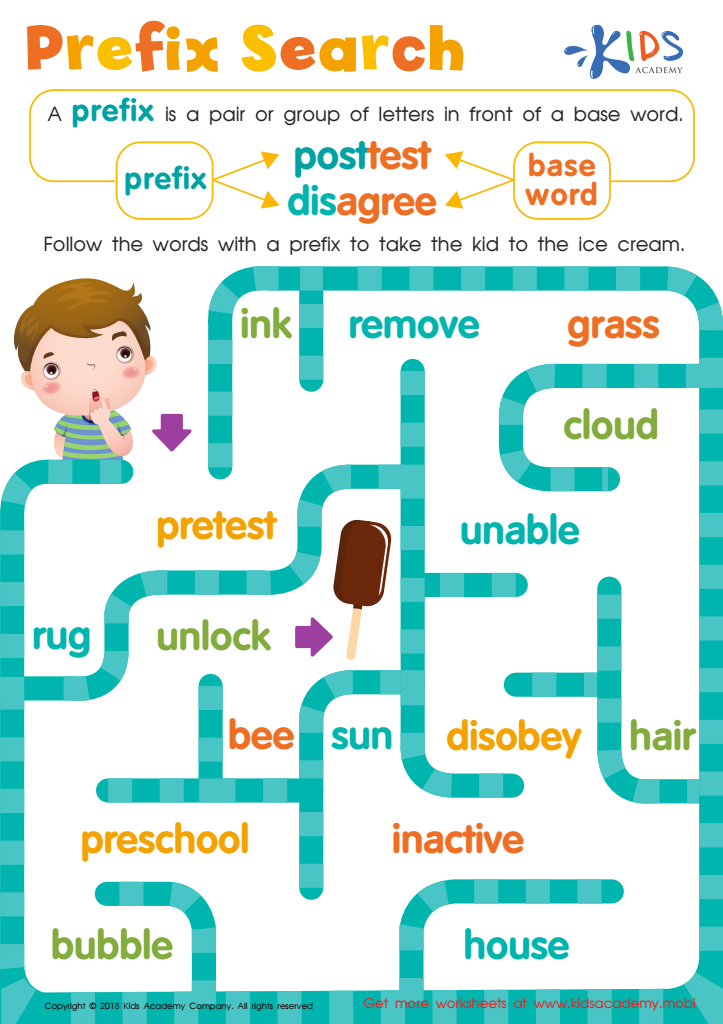
Reading: Prefix Search Worksheet
Maze your way through prefixes! This worksheet helps students practice reading new words with a prefix and figuring out the base word. An understanding of prefixes gives students the skills to comprehend new words. A fun and useful activity for the reading classroom!
 Assign to My Students
Reading: Prefix Search Worksheet
Worksheet
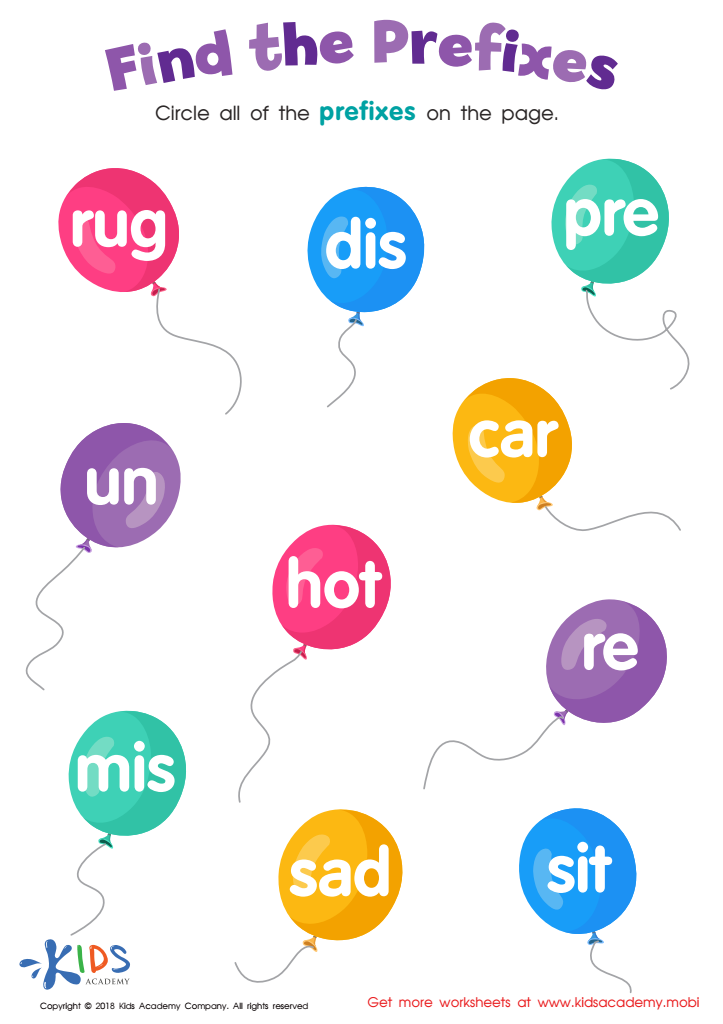
Reading: Find the Prefixes Worksheet
Students are asked to circle all prefixes on this worksheet and brainstorm a list of words that have them. It's a great tool for teaching vocabulary and helps students understand new and unfamiliar words by recognizing how prefixes change meaning.
Reading: Find the Prefixes Worksheet
Worksheet
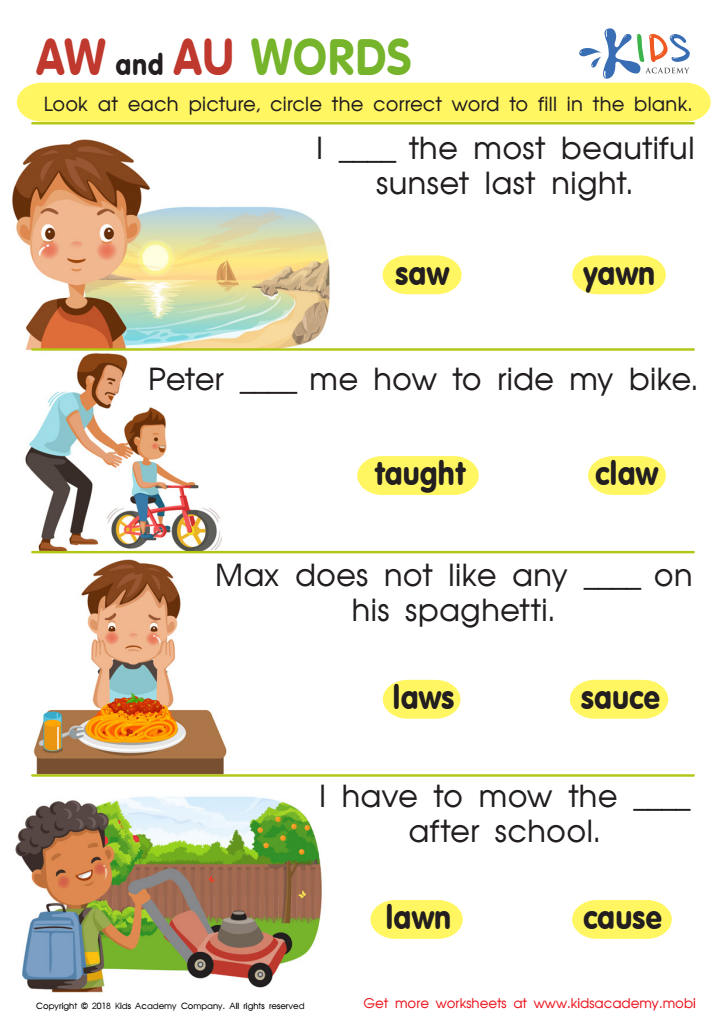
Reading: AW and AU Words Worksheet
This worksheet helps kids recognize that /au/ and /aw/ can make the same sound. Students read sentences and pick the correct word with one of the digraphs. Understanding digraphs improves decoding and reading fluency. Perfect for reading and phonics classes.
Reading: AW and AU Words Worksheet
Worksheet
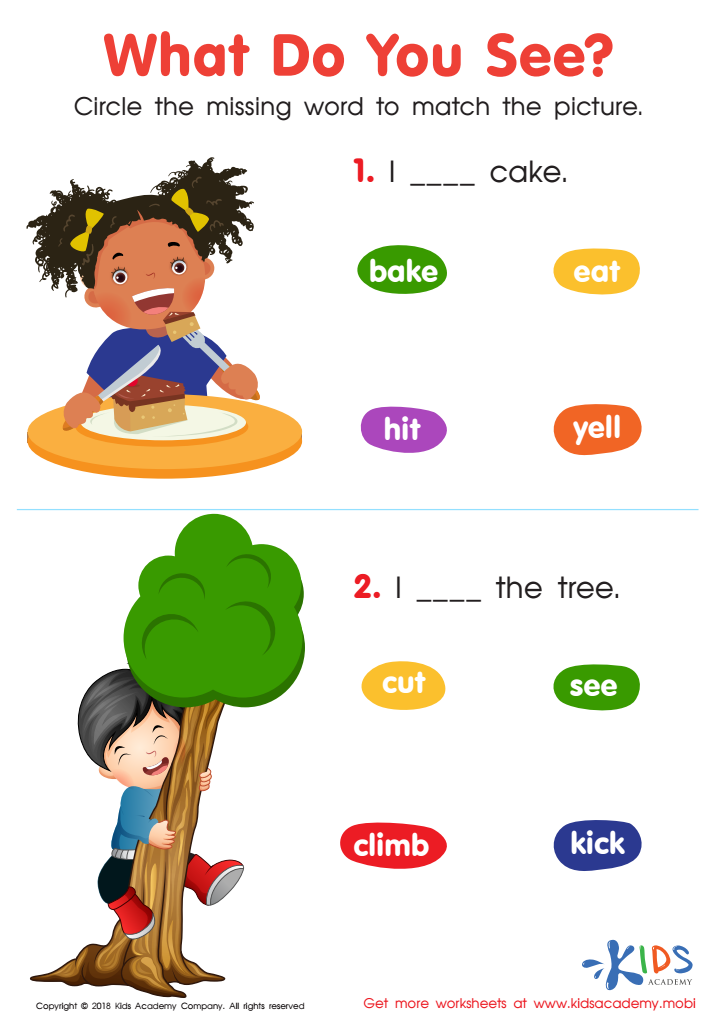
What Do You See? Reading Worksheet
New readers can use the attractive pictures and high-frequency words on this worksheet to practice expressive language skills and decode as they fill in the blanks. As they circle the correct words, they'll feel like reading superstars!
What Do You See? Reading Worksheet
Worksheet
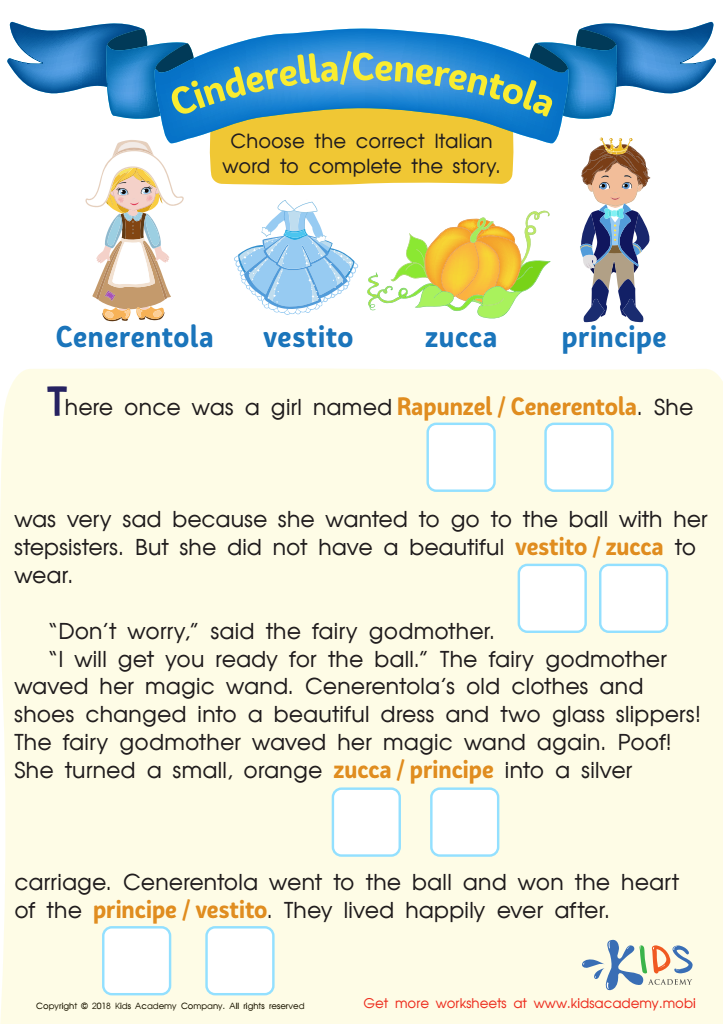
Cinderella / Cenerentola Worksheet
Children will love this fairytale about a princess trying to get to the royal ball. With colorful images and context clues, they'll learn Italian words without even realizing it. They'll fill in the correct boxes and help Cenerentola get to her happily-ever after. This free worksheet will delight and teach at once!
Cinderella / Cenerentola Worksheet
Worksheet
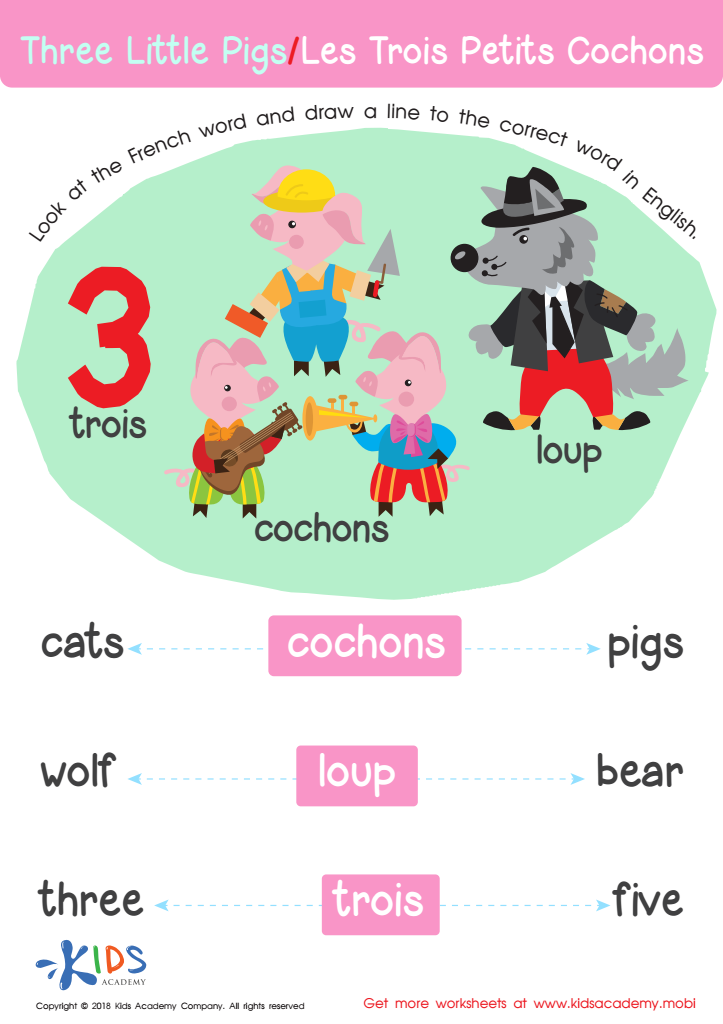
Three Little Pigs / Les Trois Petits Cochons Worksheet
Teaching kids words in foreign tongues? Use picture clues to help them build connections for deeper learning! This PDF worksheet uses the three little pigs story to teach French words for three, pigs and wolf. Kids can make picture-word associations and follow traceable lines to match the French and English words.
Three Little Pigs / Les Trois Petits Cochons Worksheet
Worksheet
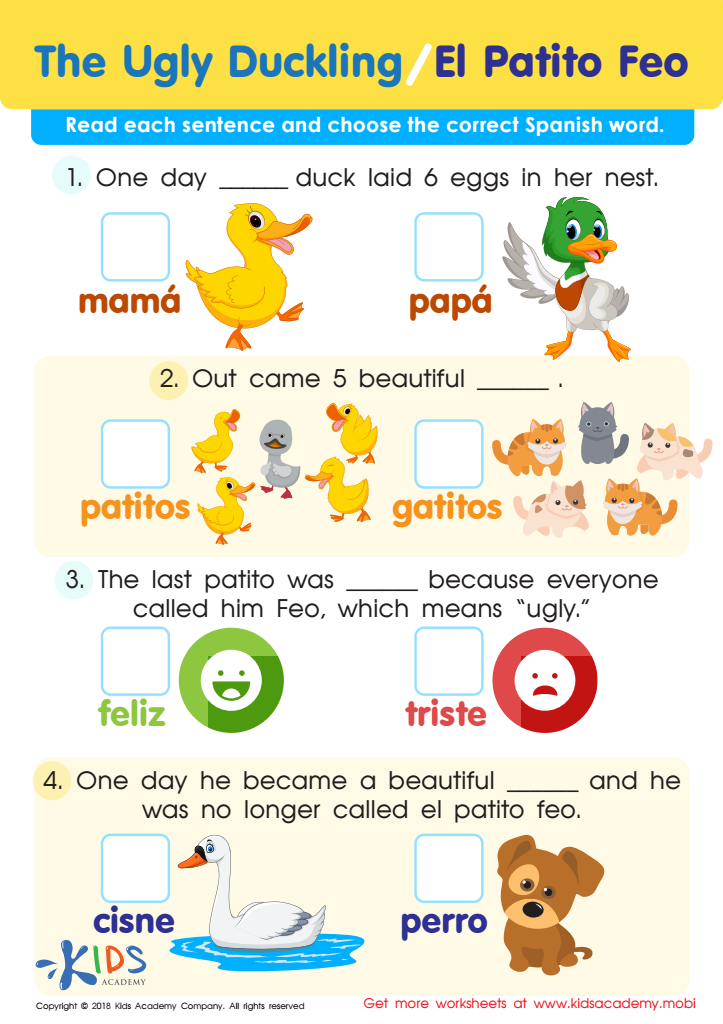
The Ugly Duckling / El Patito Feo Worksheet
This cute worksheet uses the story of The Ugly Duckling to help students learn Spanish. Fun pictures help make picture-word associations, while they check off the correct words to create the swan. Students won't realize they're learning - they'll just think the ducks are cute!
The Ugly Duckling / El Patito Feo Worksheet
Worksheet
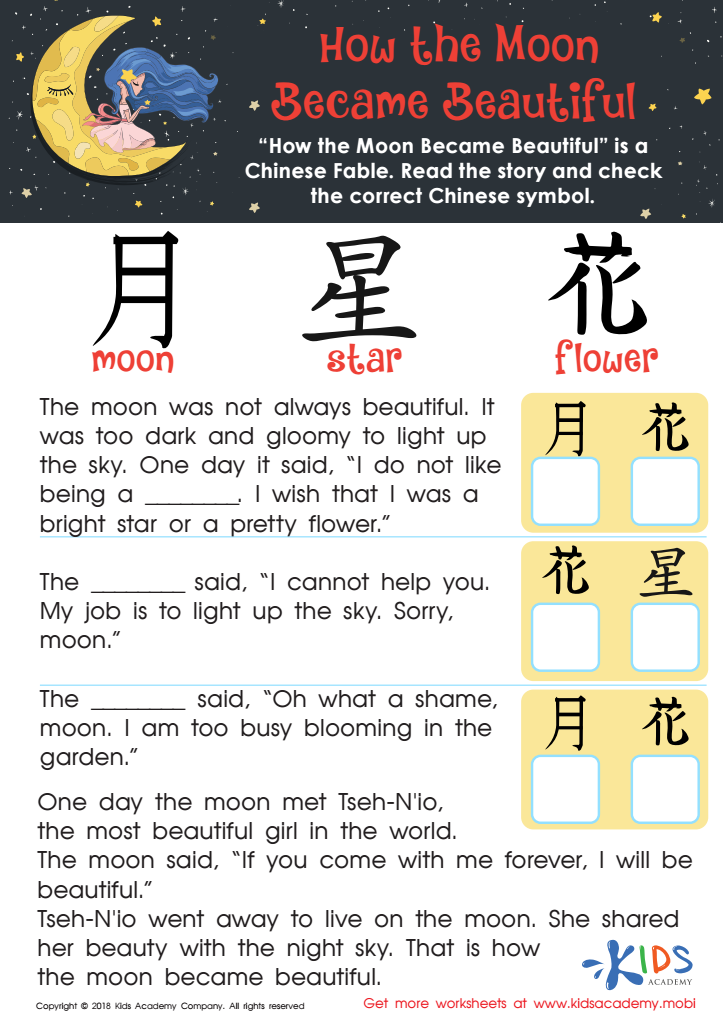
How the Moon Became Beautiful Worksheet
Fables are a great way for kids to learn! This Chinese fable about the moon's beauty is educational and entertaining. The PDF worksheet provides the English translations and symbols associated with the story. Kids can fill in the blanks with the correct symbols and have fun learning a new language!
How the Moon Became Beautiful Worksheet
Worksheet
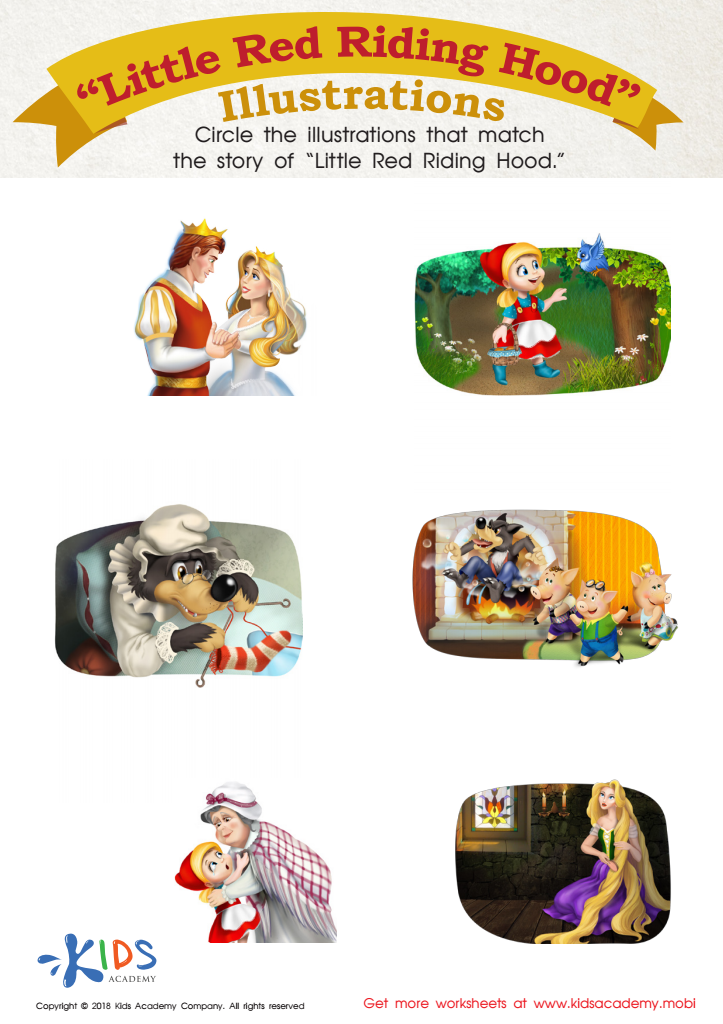
Little Red Riding Hood: Illustrations Worksheet
This worksheet encourages children to analyze illustrations from familiar fairy tales, such as Little Red Riding Hood, and decide which ones match the story and which don't. It's a great way to help them recall and retell stories they've heard or read. Illustrations are important elements that help children comprehend advanced readings.
Little Red Riding Hood: Illustrations Worksheet
Worksheet
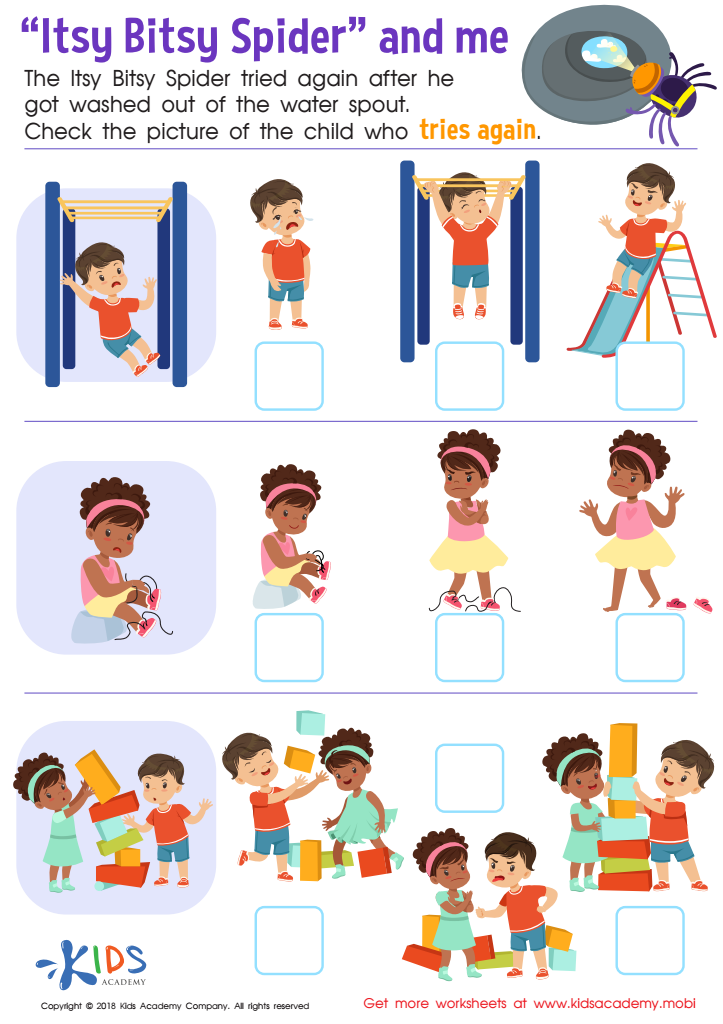
Itsy Bitsy Spider and Me Worksheet
Ensure your child's success - teach them determination and perseverance! Introduce them to the Itsy-Bitsy spider and this fun worksheet. It shows kids working hard and teaches them to 'try again.' Have them identify scenes and check the box for those who succeeded.
Itsy Bitsy Spider and Me Worksheet
Worksheet
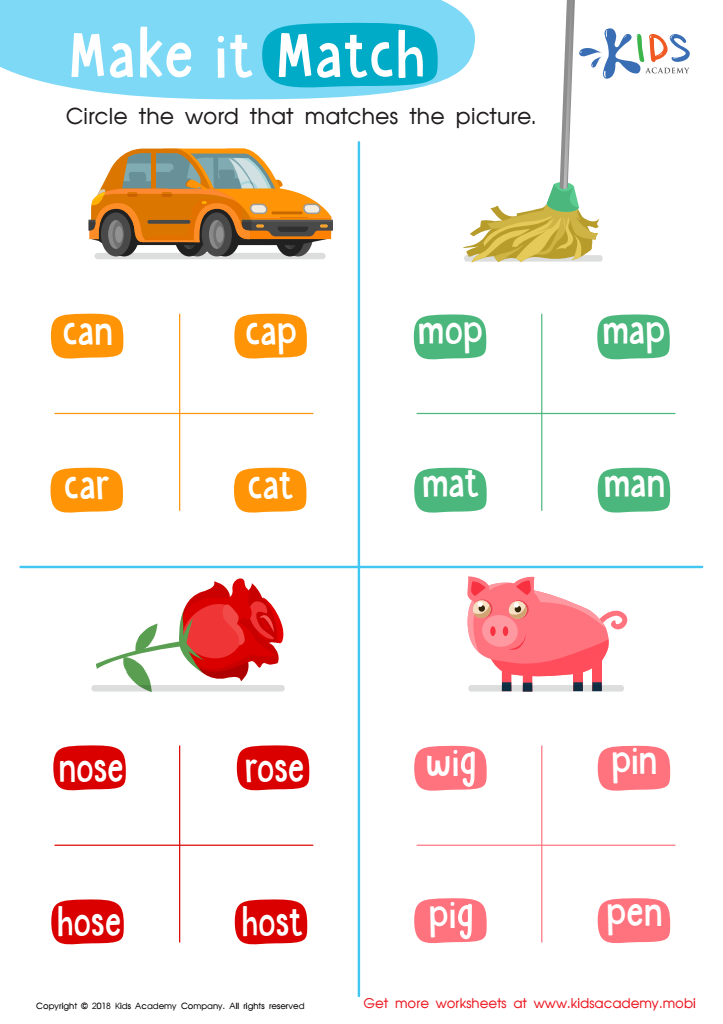
Make It Match Worksheet
This bright, cheery worksheet helps students practice discerning between mono-syllabic words with similar short vowel sounds. With familiar pictures and bold colors, they'll circle the word that matches each given picture, honing both reading and visual discrimination skills. A great tool for emerging readers!
Make It Match Worksheet
Worksheet
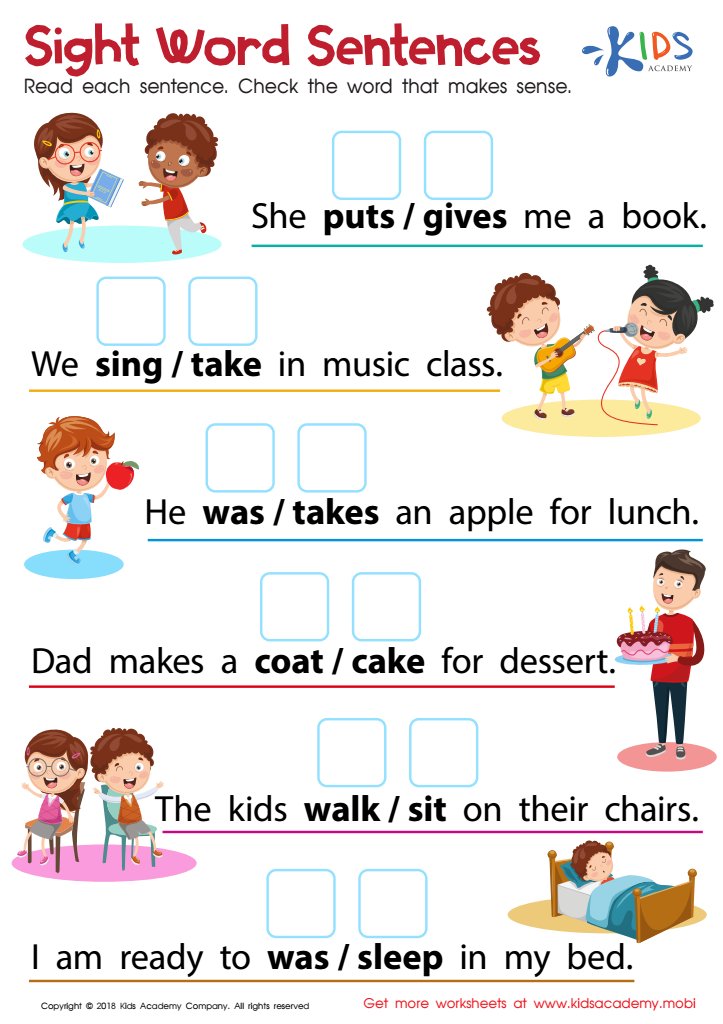
Sight Words Sentences Worksheet
It's important for kids to practice recognizing sight words in print. This PDF provides fun practice with sentences and engaging picture clues. As they work with sight words, they'll become more familiar and automatic. Help your kids build literacy skills!
Sight Words Sentences Worksheet
Worksheet
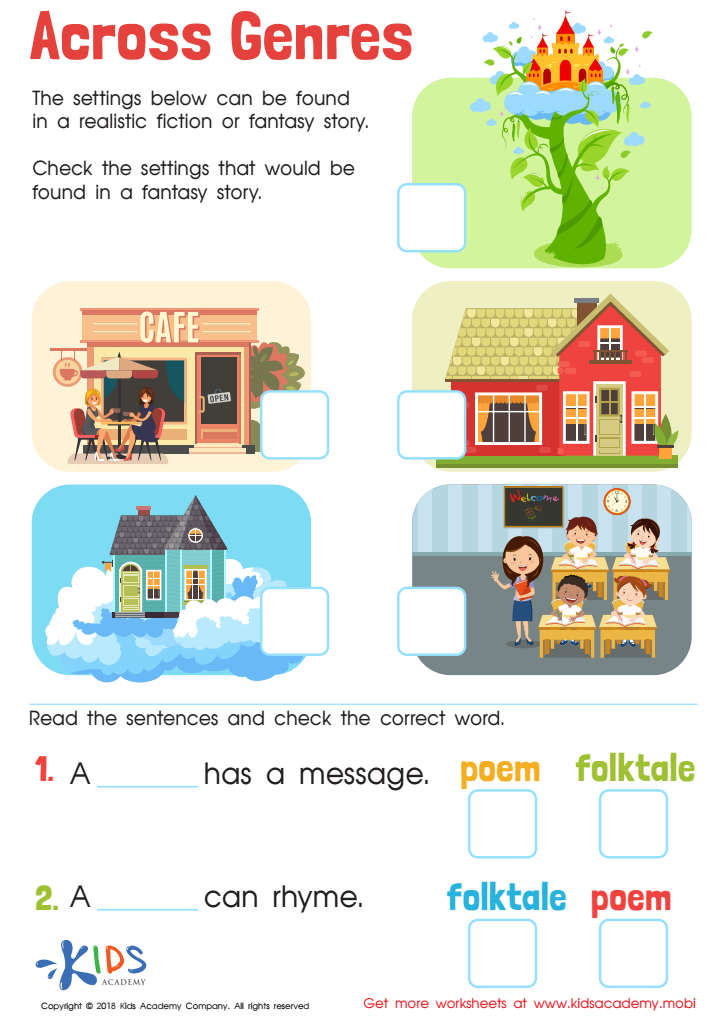
Across Genres Worksheet
Young readers can sharpen their reading skills by identifying elements of various literature genres. This PDF offers practice with realist stories, fantasies, poems and folktales. It will help them answer comprehension questions confidently, by recognizing settings and spotting which rhymes and which offers a traditional message.
Across Genres Worksheet
Worksheet
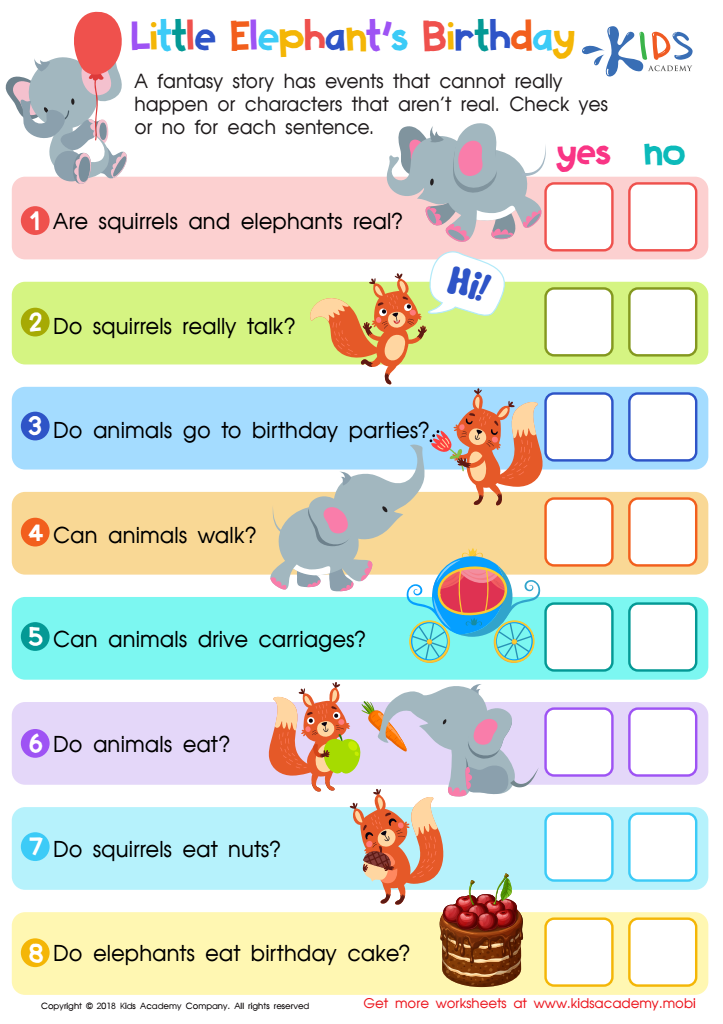
Little Elephant's Birthday Worksheet
It's Little Elephant's birthday! Help your students celebrate with this fun worksheet full of colors and pictures. Deciding which questions are facts and which are fiction will help them differentiate between fantasy stories and reality. Let them have fun learning why certain elements of fantasy can't be true!
Little Elephant's Birthday Worksheet
Worksheet
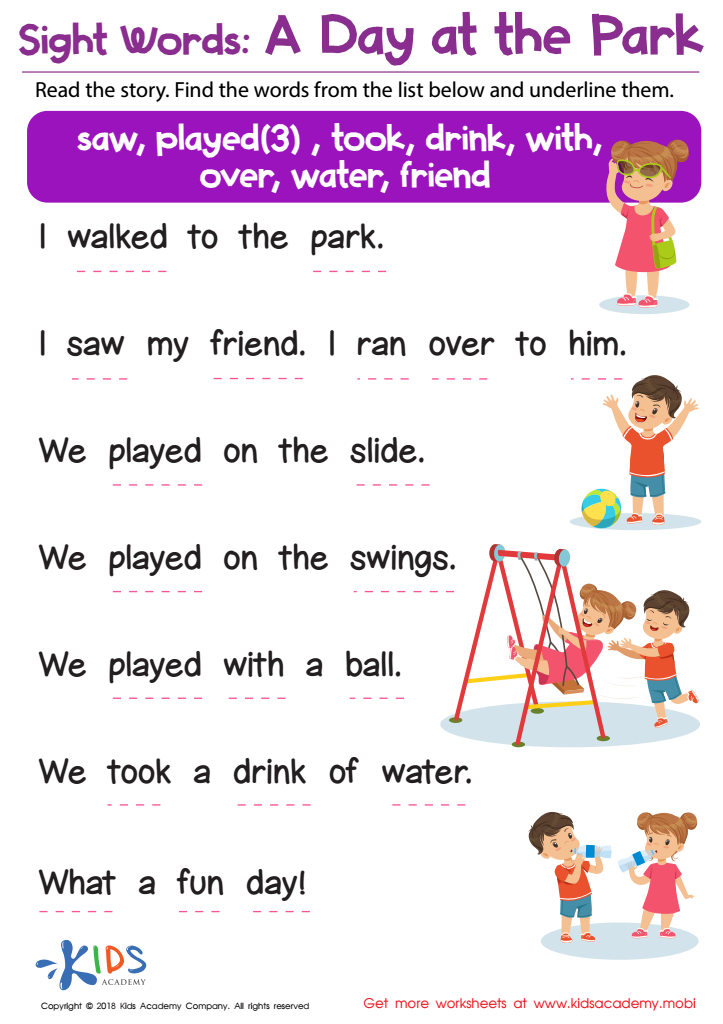
Sight Words: A Day at the Park Worksheet
This worksheet offers kids practice reading sight words in a story. With picture clues and repetitive wording, they'll work with words that can't be sounded out to reinforce their learning. This is an important step in the reading process that helps kids become more confident readers.
Sight Words: A Day at the Park Worksheet
Worksheet
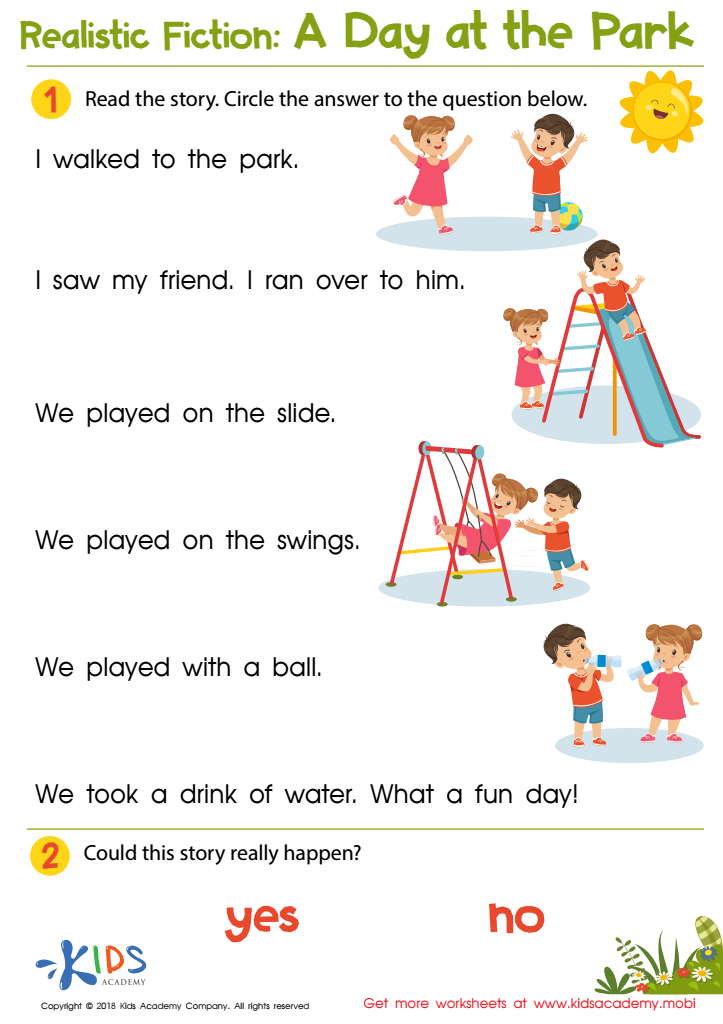
A Day at the Park Worksheet
Kids as young as preschool-age can be taught to evaluate stories! Use this fun worksheet about a day at the park. Read each sentence aloud, looking at the pictures. Ask your child if the events in the story could happen in real life - if yes, circle yes, otherwise circle no. When finished, discuss with them the genre, realistic fiction.
A Day at the Park Worksheet
Worksheet
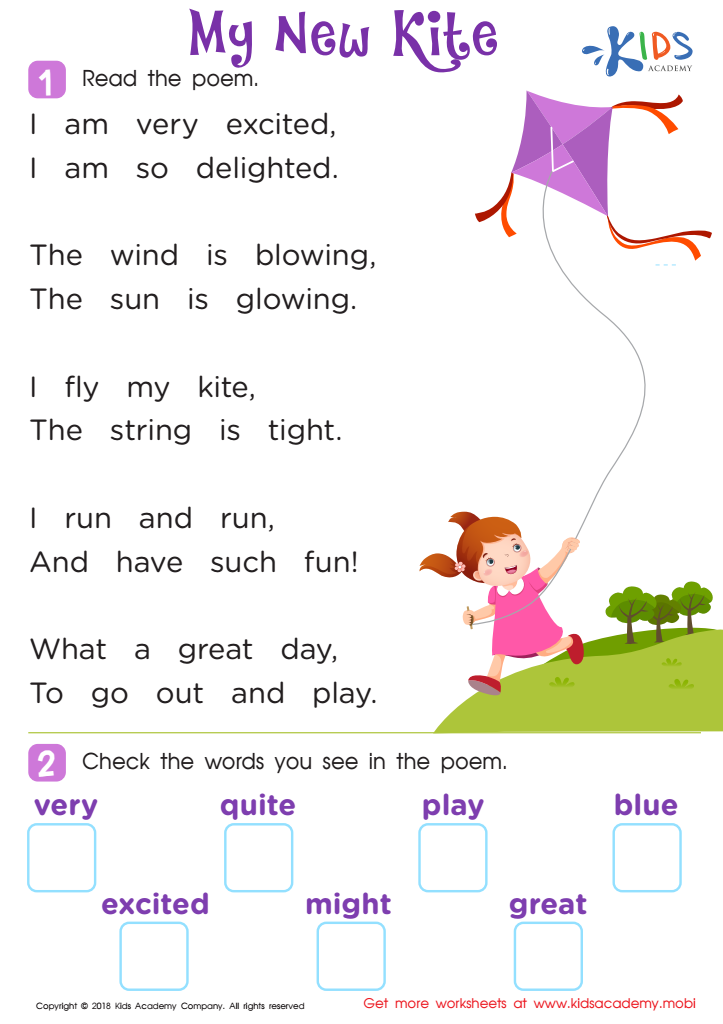
Poem: My New Kite Worksheet
Read a cheerful poem with your child and have them check the boxes next to the words that appear. Then, ask them to identify rhyming words, noting that these won't appear at the bottom of the page. This is a delightful reading activity to help your child remember what they read.
Poem: My New Kite Worksheet
Worksheet
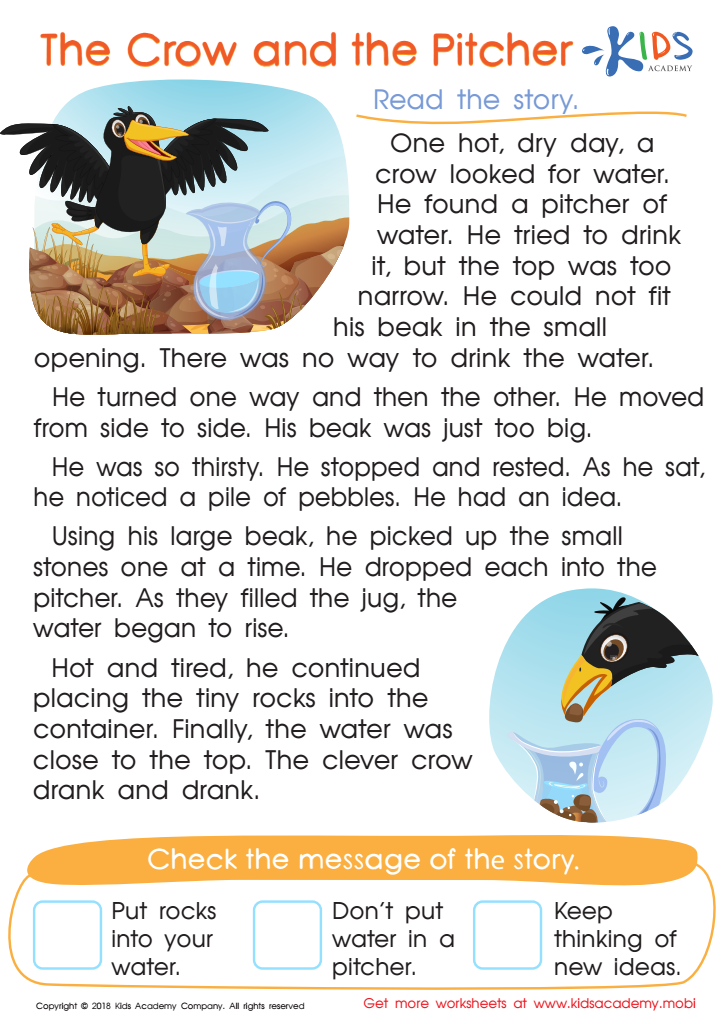
The Crow and the Pitcher Worksheet
Introduce your child to reading comprehension with this fascinating worksheet from Kids Academy! Featuring Aesop's fable of a thirsty crow, your child will enjoy reading and determining the central theme of the passage. This worksheet is a great way to give your child a purpose for reading while helping to build their comprehension skills.
The Crow and the Pitcher Worksheet
Worksheet
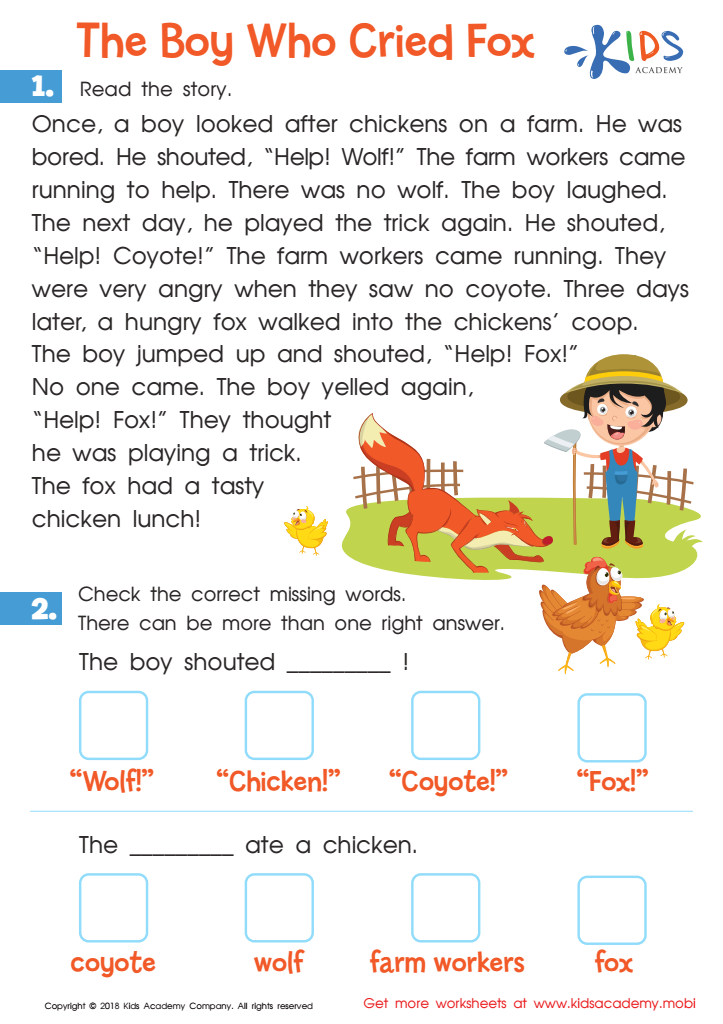
The Boy Who Cried Fox Worksheet
This worksheet encourages students to recall details from a story and answer questions to test their comprehension. Perfect for reading lessons, enrichment, or extra help.
The Boy Who Cried Fox Worksheet
Worksheet
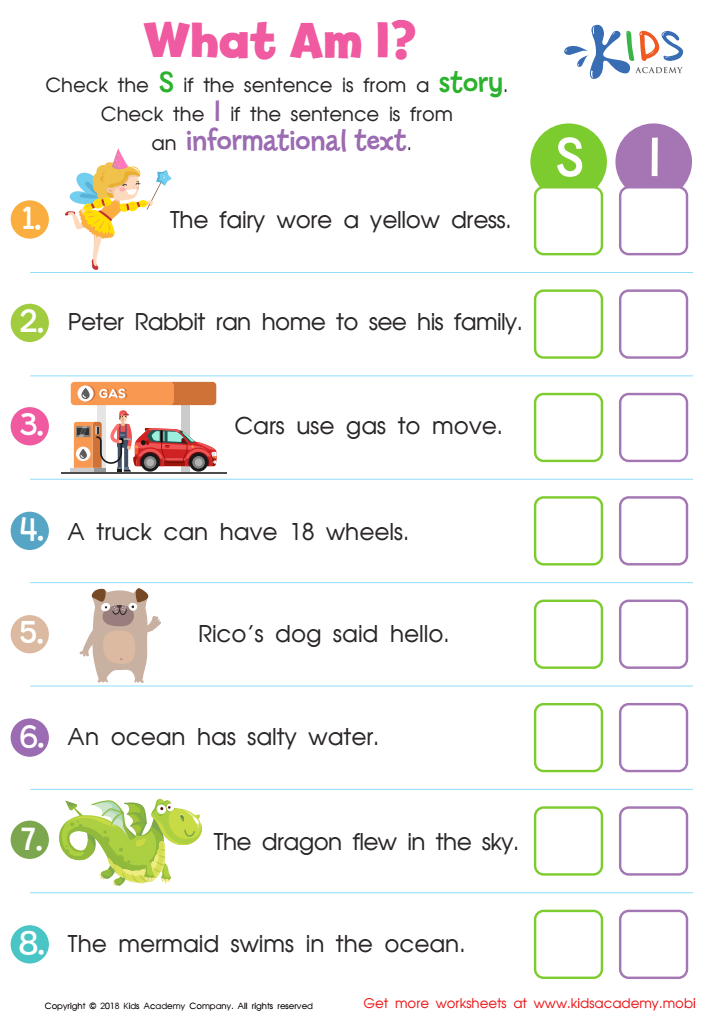
What Am I? Worksheet
This worksheet assesses students' ability to differentiate between stories and texts they read for facts. Students learn to distinguish between reading for pleasure and reading for information. It includes statements from both a story and an informational text, and students must decide what type of text it is.
What Am I? Worksheet
Worksheet
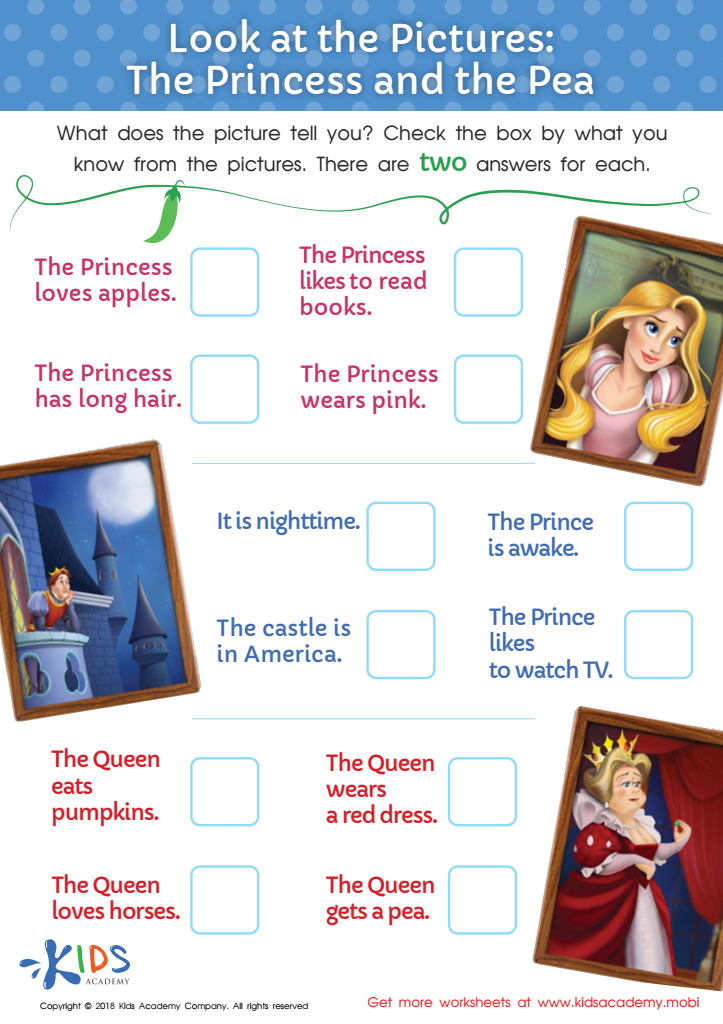
Look at the Pictures: The Princess and the Pea Worksheet
Early readers can benefit from picture clues to understand stories and text. Looking at images helps them learn the meaning of words and comprehend events. Use this worksheet on The Princess and the Pea to let students observe and learn from the pictures. It's a great way to help them comprehend early reading materials.
Look at the Pictures: The Princess and the Pea Worksheet
Worksheet
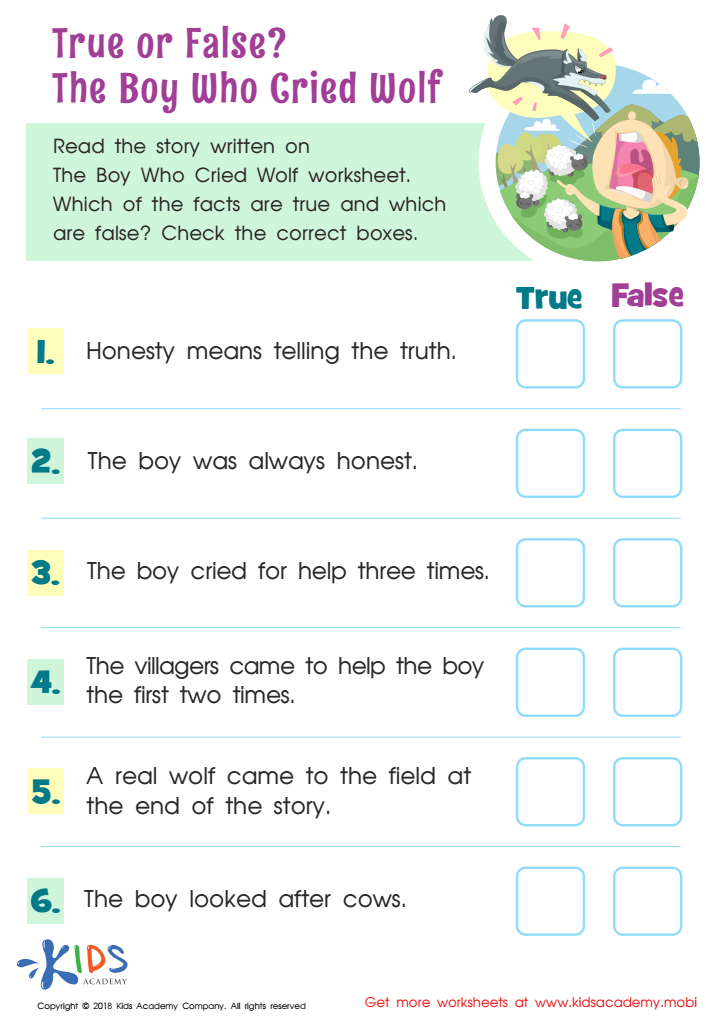
True or False? The Boy Who Cried Wolf Worksheet
Test students' understanding of The Boy Who Cried Wolf with this free downloadable worksheet. It contains true/false questions to assess comprehension of key events. Easy to complete, it checks students can recall facts from the story. Try it and see!
True or False? The Boy Who Cried Wolf Worksheet
Worksheet
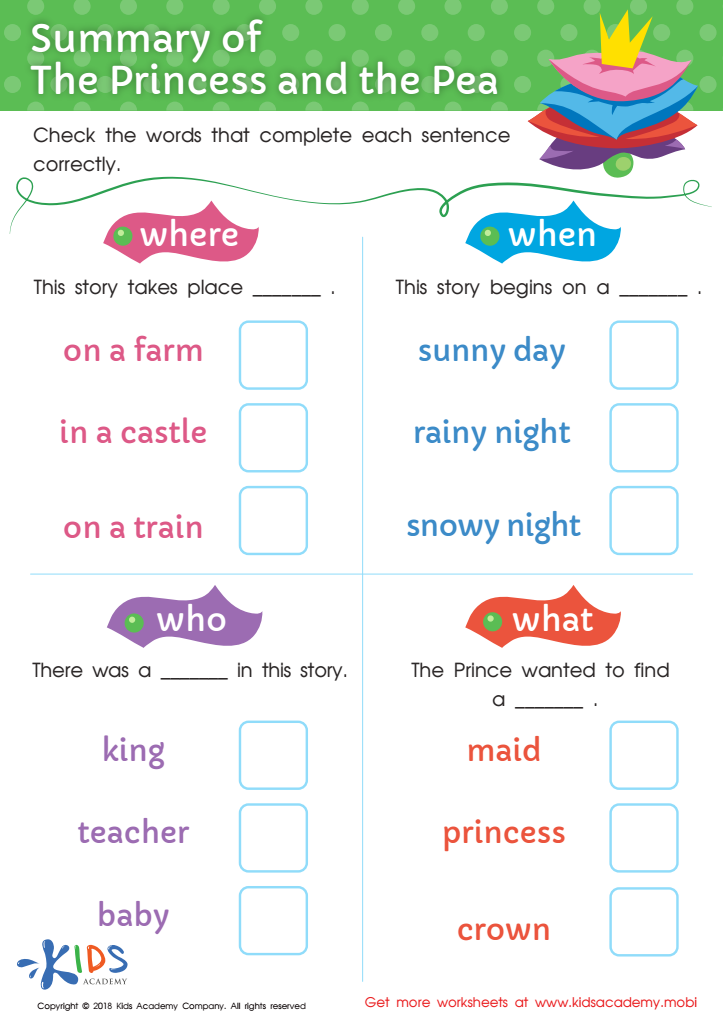
The Summary of the Princess and the Pea Worksheet
Test your student’s knowledge of the story The Princess and the Pea with this quick worksheet. With who, what, when and where questions, it's a great way to assess comprehension skills. It's a perfect resource for school or home classrooms. Download it now and start improving comprehension skills!
The Summary of the Princess and the Pea Worksheet
Worksheet
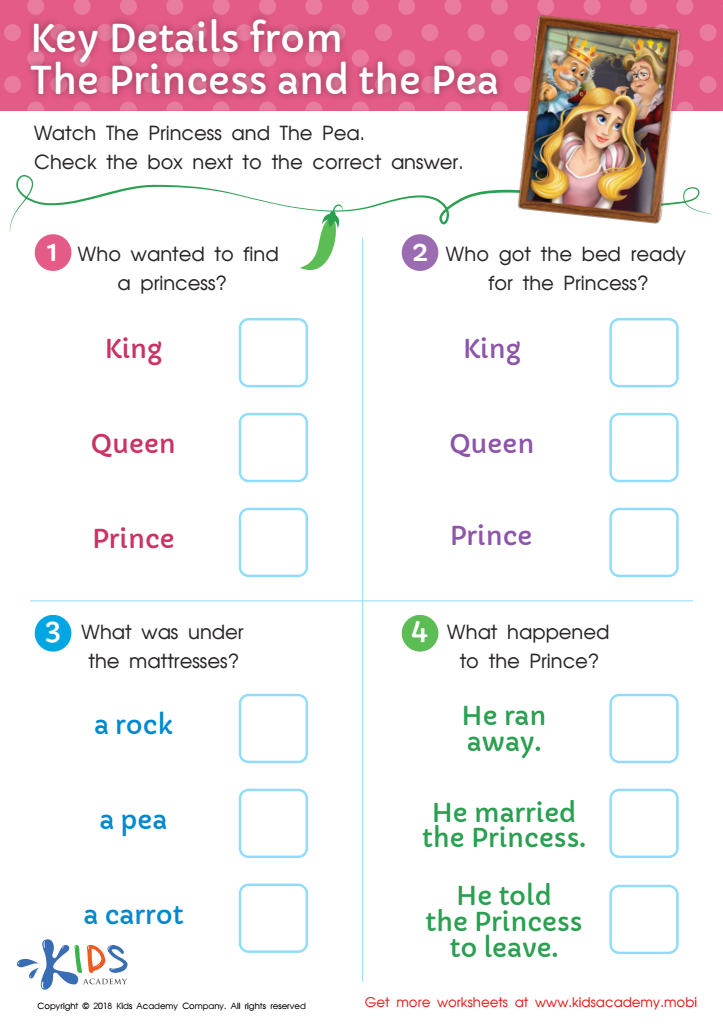
Key Details from the Princess and the Pea Worksheet
After reading The Princess and the Pea, ask your students questions to assess their comprehension of the story. Check their knowledge of key details. This printable can be used to help evaluate their understanding. Encouraging the recall of story events helps build important reading skills.
Key Details from the Princess and the Pea Worksheet
Worksheet
Join Kids Academy for Free
Who is primarily going to use this learning content?