Reading Worksheets for Ages 5-7 - Page 18
411 filtered results
-
From - To
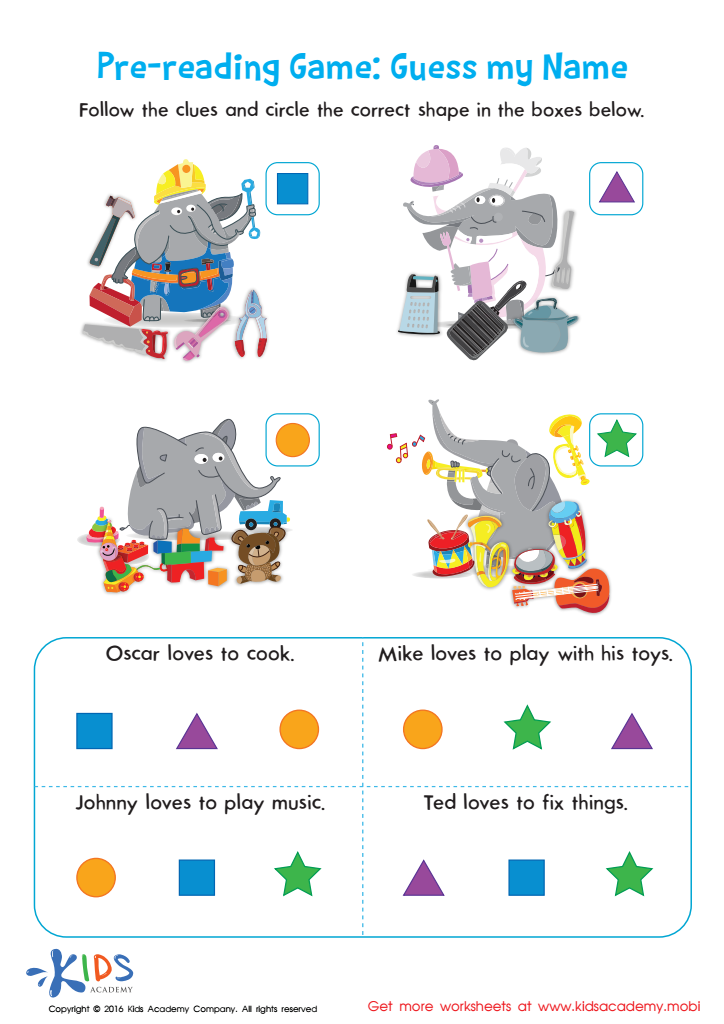
Pre Reading Worksheet Guess My Name
 Assign to My Students

Rhyming Words Rhyming Worksheet
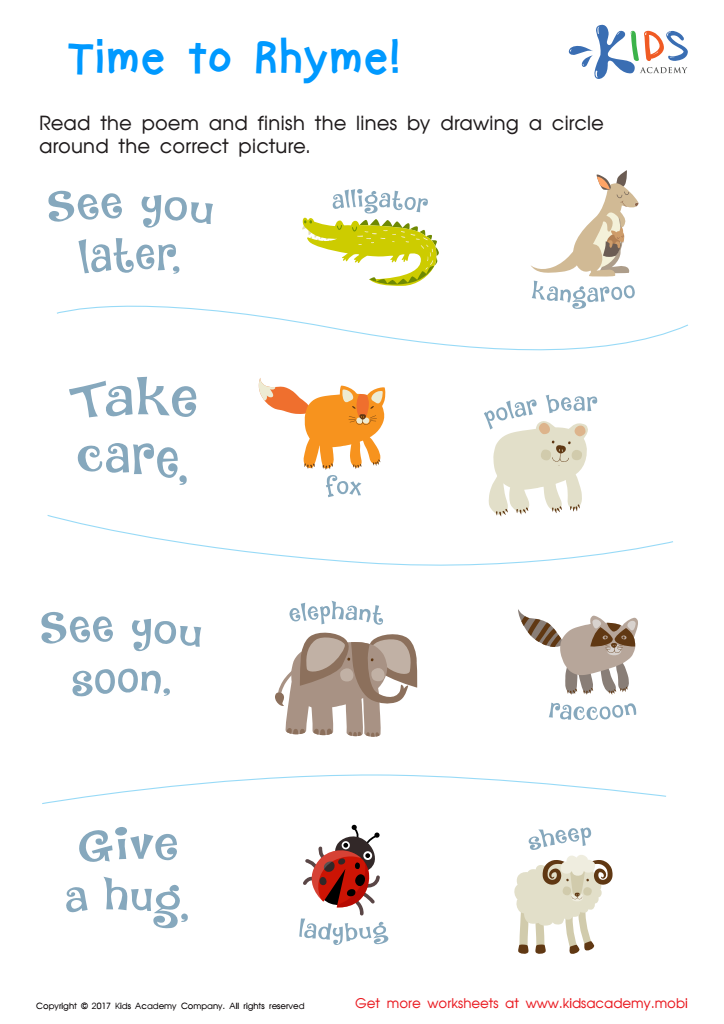
Time to Rhyme Rhyming Worksheet








Reading for ages 5-7 is crucial for a child's development and academic success. At this stage, children are transitioning from learning to read to reading to learn. Developing strong reading skills fosters comprehension, vocabulary, and critical thinking—all foundational elements of education. This age group is highly impressionable, so positive early experiences with reading can instill a lifelong love of literature and learning.
Moreover, strong reading skills correlate with better performance in other subjects, allowing children to grasp complex concepts as they progress through school. Reading also enhances emotional and social development, encouraging empathy and understanding through diverse stories and characters. It provides a doorway to knowledge, perspective, and creativity.
For parents and teachers, promoting reading at this age can lead to more confident learners. Engaging children in regular reading routines improves their concentration and discipline, which are essential skills for future academic and life success. Furthermore, it helps in identifying and addressing any potential reading difficulties early on. Investing time in reading with children, therefore, not only guides their intellectual growth but also strengthens the bond between them and their caregivers, paving the way for a supportive learning environment.








