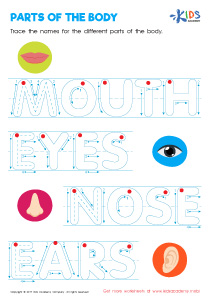
Physical Science Worksheets for Ages 5-7
3 filtered results
-
From - To
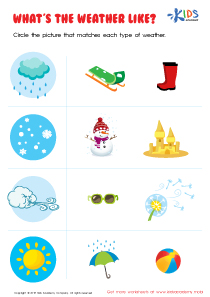
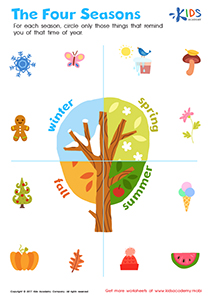
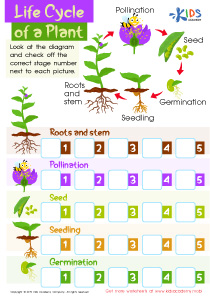
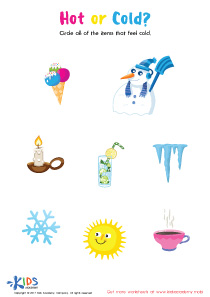
Explore our engaging Physical Science Worksheets designed for children ages 5-7! These printable resources introduce young learners to fundamental concepts such as matter, energy, forces, and the scientific method in an enjoyable way. Each worksheet is crafted to encourage curiosity and hands-on learning through fun activities, illustrations, and real-world applications. Ideal for use at home or in the classroom, our materials support early STEM education and help children discover the wonders of the world around them. Dive into science today and empower your child with the knowledge and skills they need for a bright future!
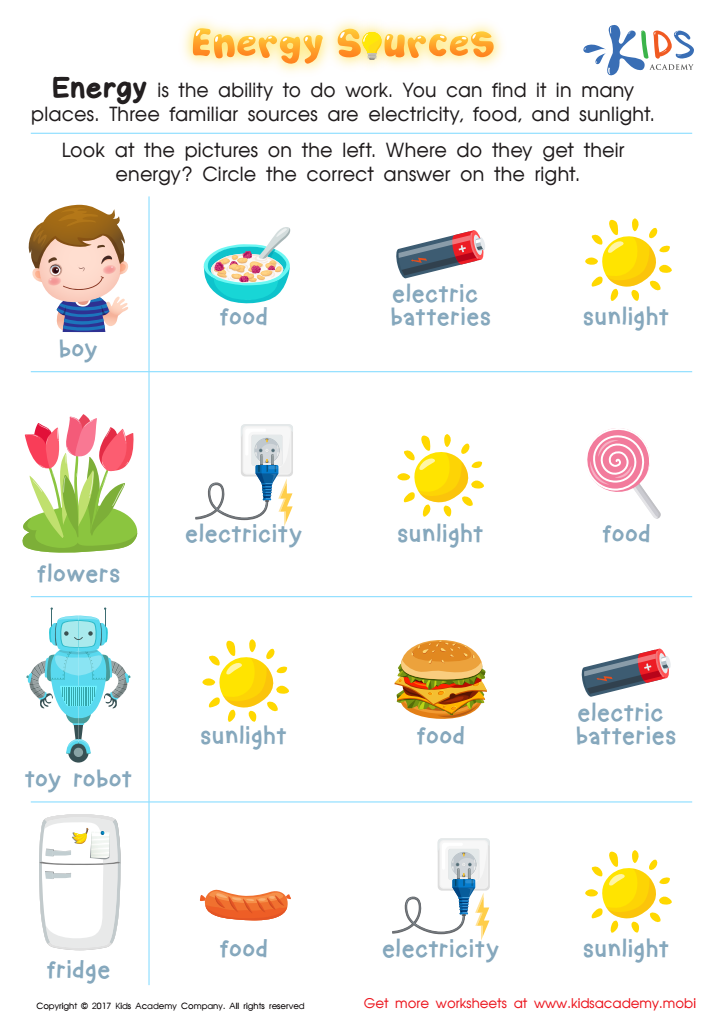
Energy Sources Printable
 Assign to My Students
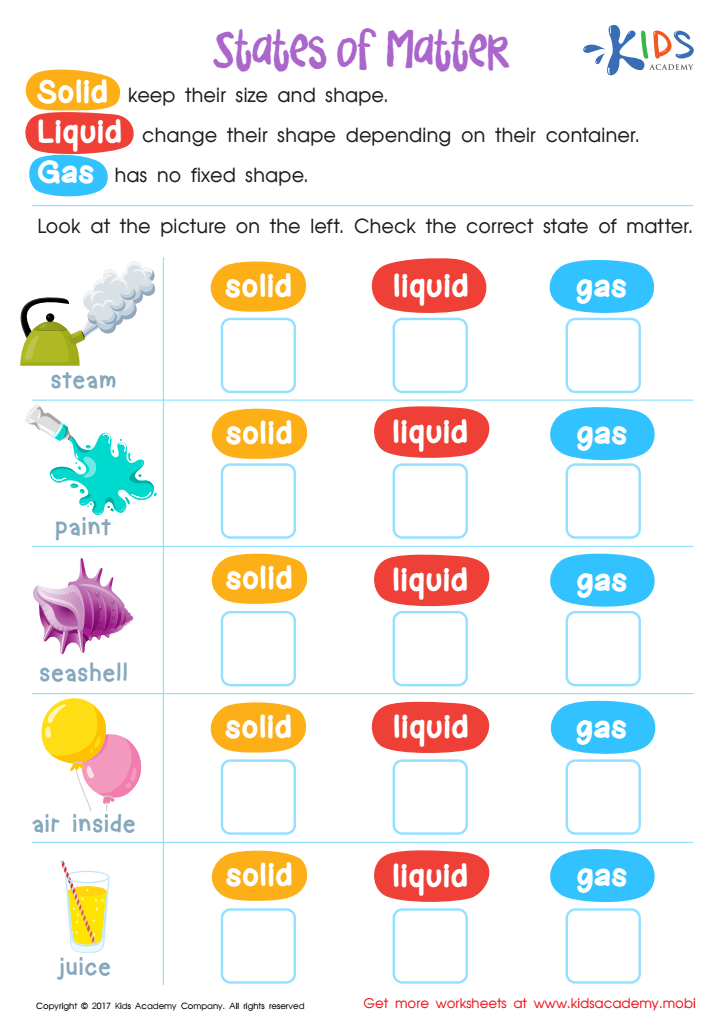
Physical Science: States of Matter Worksheet
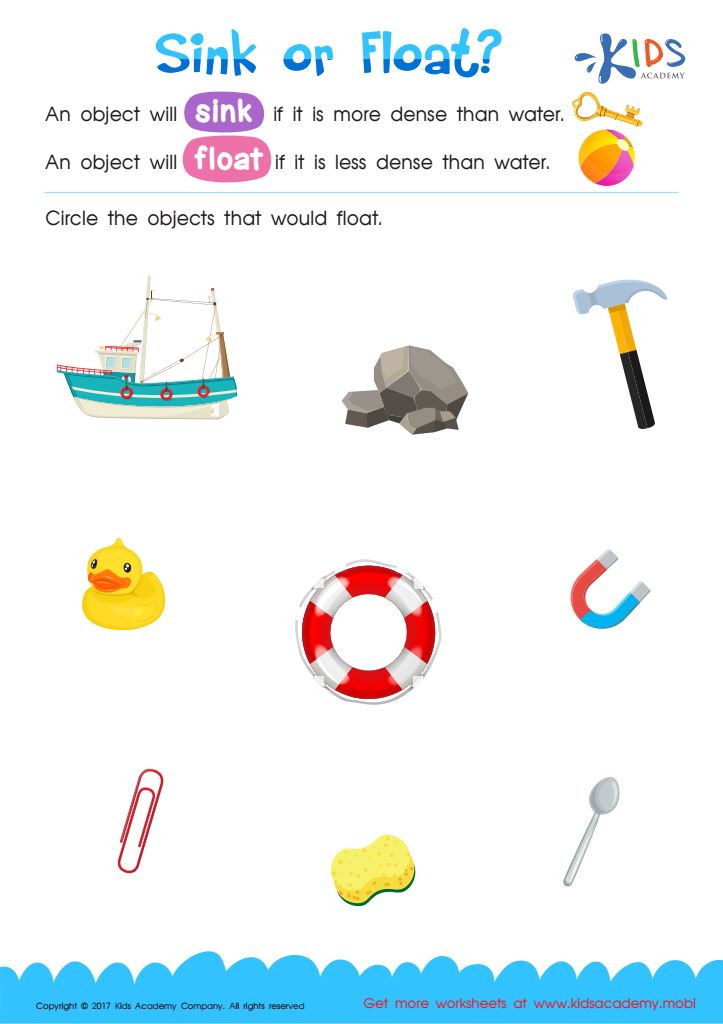
Sink or Float Printable





Parents and teachers should prioritize Physical Science education for children aged 5-7 because it lays the foundation for critical thinking and curiosity about the world around them. At this stage, young learners are naturally inquisitive, often asking questions about how things work. Introducing basic concepts of Physical Science—such as matter, motion, and energy—captures their imagination and encourages exploratory learning.
Understanding fundamental scientific principles enhances problem-solving skills and fosters a sense of wonder. By engaging in simple experiments or hands-on activities, children develop important skills such as observation, prediction, and analysis. These experiences not only boost cognitive skills but also promote collaboration, as kids often work together, share ideas, and learn from each other.
Moreover, Physical Science education is vital in nurturing future innovators and informed citizens. As kids grow, this early exposure prepares them for more advanced scientific concepts crucial for success in an increasingly technology-driven world. Finally, nurturing an interest in science at a young age can instill a lifelong love of learning, ensuring they remain curious, engaged, and equipped to understand and improve the world around them.