Silent Vowels Worksheets for Ages 5-8
5 filtered results
-
From - To
Enhance your child's reading skills with our Silent Vowels Worksheets designed for ages 5-8! These engaging printable resources focus on identifying and understanding silent vowels in words. Your young learners will enjoy fun activities, including matching games, fill-in-the-blanks, and word searches that make exploring sounds exciting. Each worksheet encourages children to improve their phonemic awareness, boosting their confidence in reading. Perfect for both classroom and at-home practice, these worksheets are a fantastic tool to help kids recognize the subtle nuances of silent vowels. Start your child’s journey to becoming a proficient reader today with our interactive and enjoyable resources!
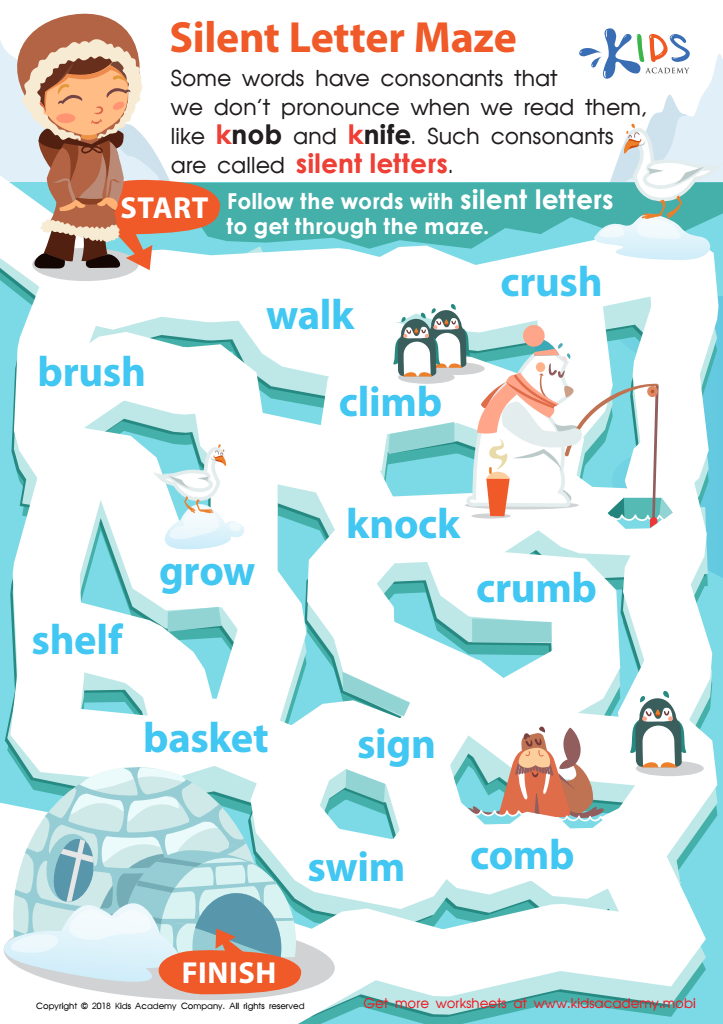
Silent Letter Maze Worksheet
 Assign to My Students
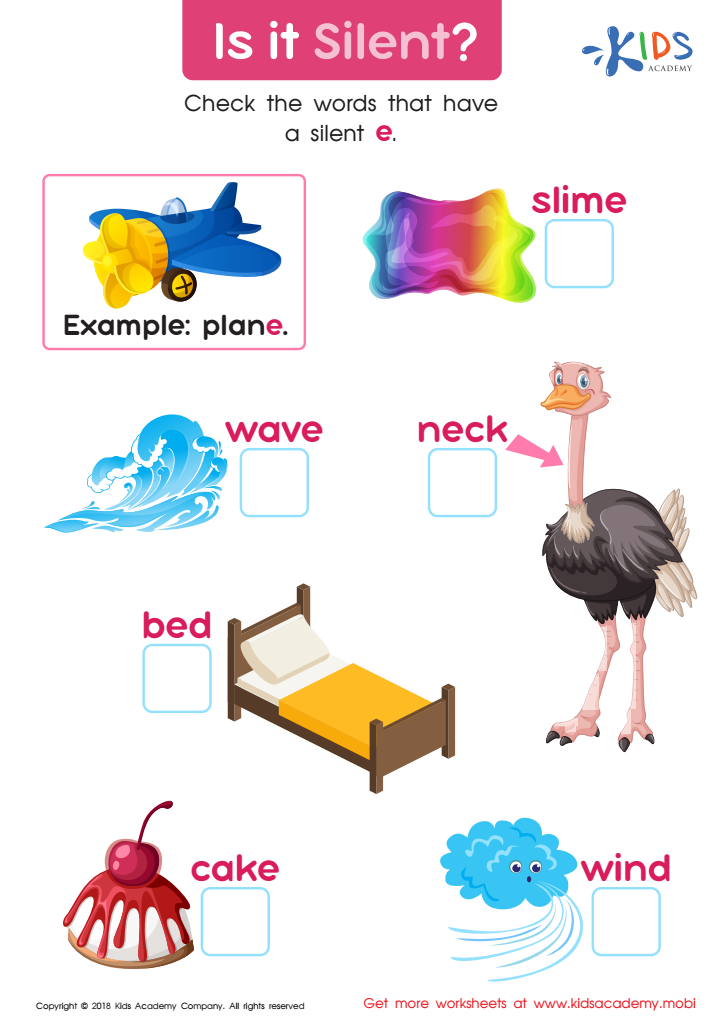
Is It Silent? Worksheet
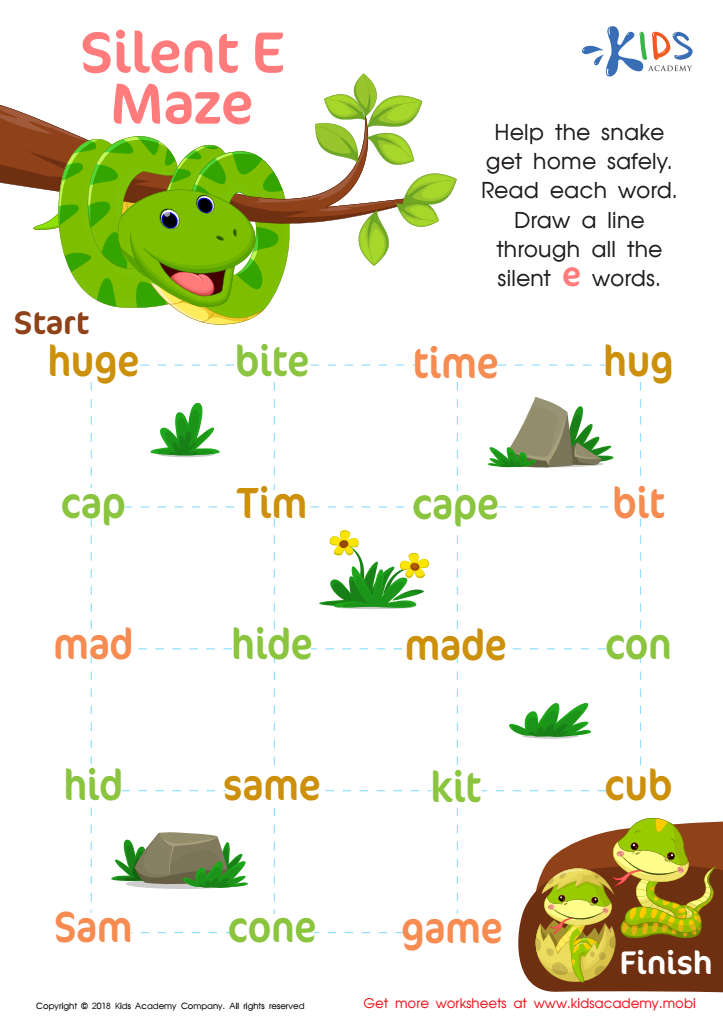
Silent E Maze Worksheet
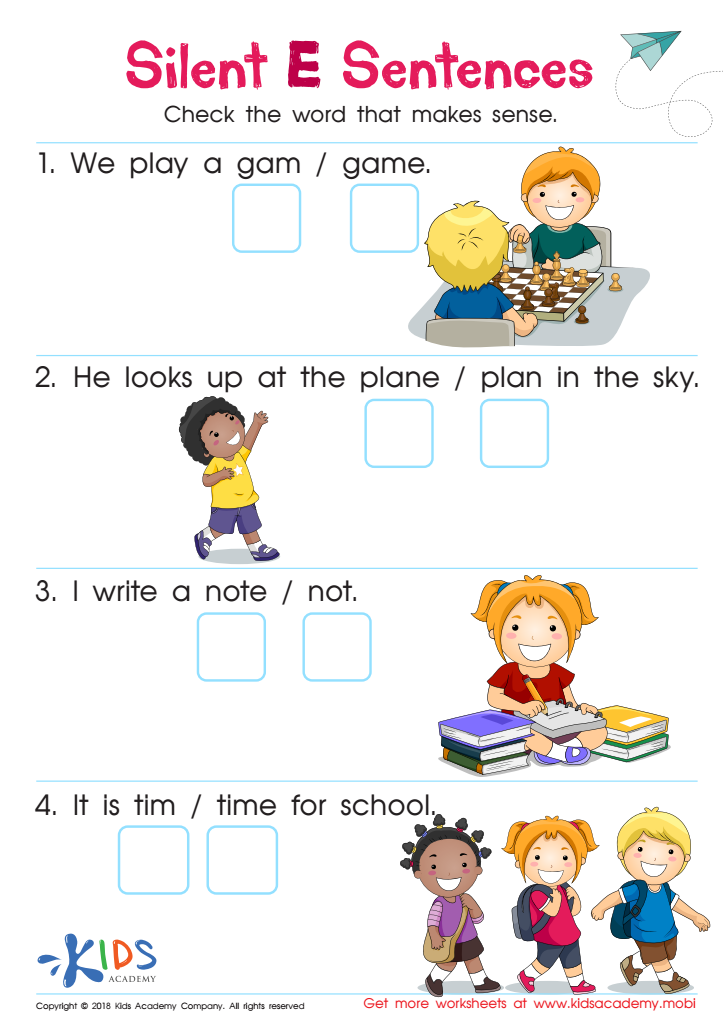
Silent E Sentences Worksheet
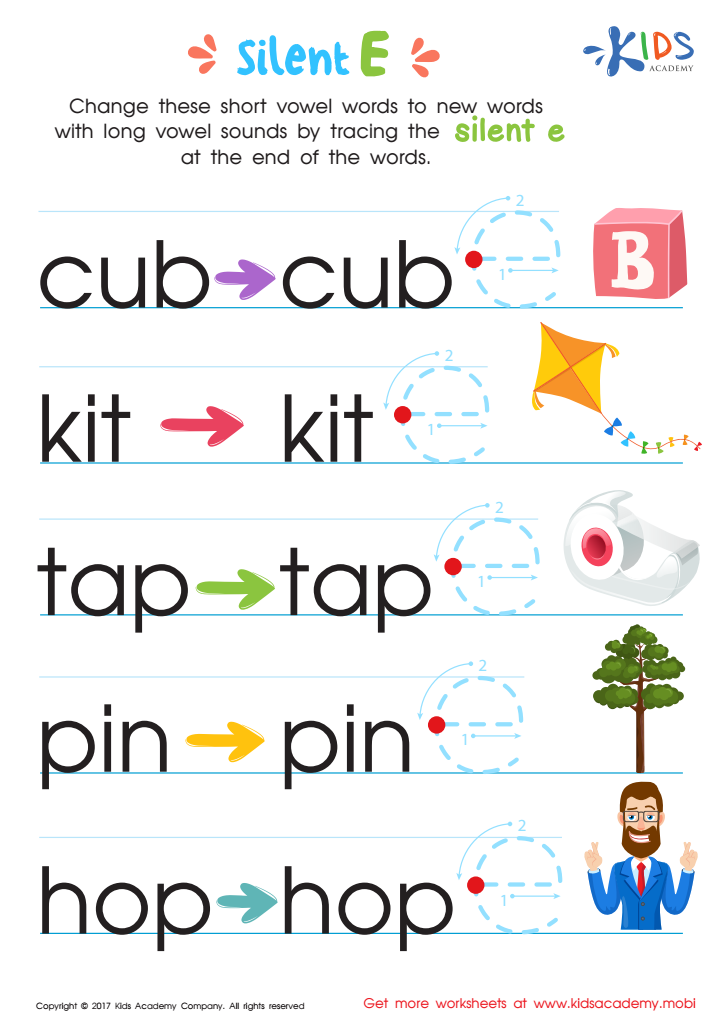
Silent E Words Worksheet


Parents and teachers should care about silent vowels for children ages 5-8 because understanding them enhances reading and spelling skills, which are foundational for literacy development. Silent vowels, like the ‘e’ in "bake," may not be pronounced but play a crucial role in determining the meaning and pronunciation of words. When children recognize how these vowels function, they can make more informed guesses about unfamiliar words, leading to better reading comprehension.
Moreover, grasping silent vowels fosters better writing skills. Children who understand silent vowels write more accurately, which builds their confidence in expressing their thoughts. It also helps in phonemic awareness—crucial in developing decoding skills that enable students to read fluently.
In essence, silent vowels support a balanced literacy curriculum. Teachers can create engaging activities centered on this concept, such as word games and reading sessions, which make learning enjoyable. For parents, incorporating everyday examples in conversation—like identifying items at home—reinforces this knowledge in a practical context. Overall, timely attention to silent vowels paves the way for successful literacy skills that are essential for future academic achievement and communication.