2D Shapes Worksheets for Ages 5-8 - Page 4
75 filtered results
-
From - To
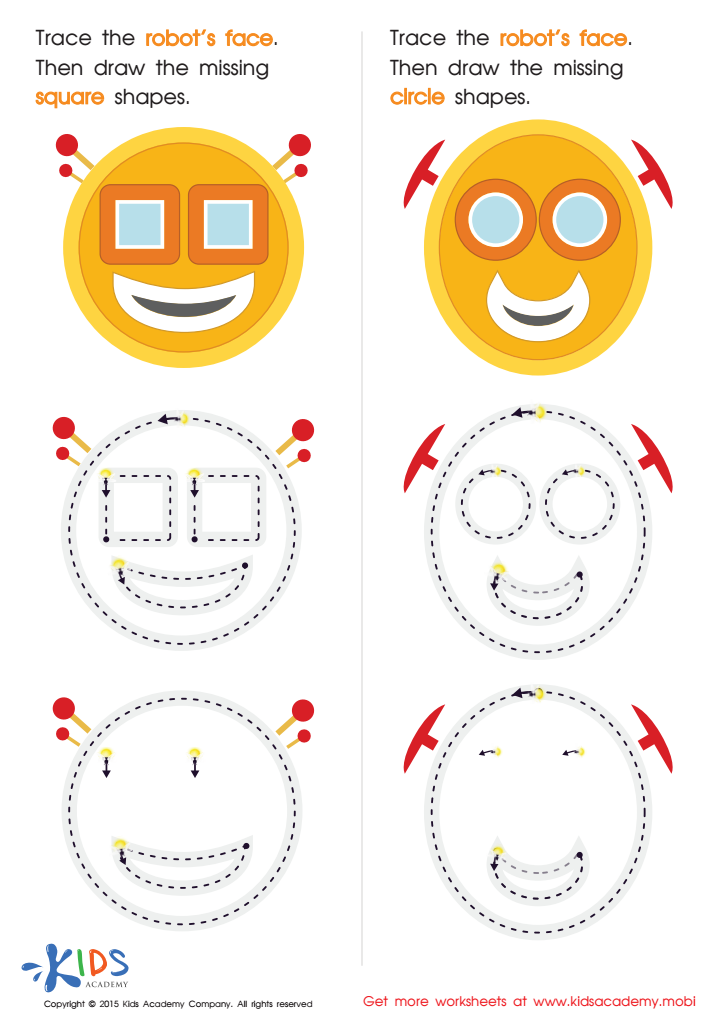
Practicing to Draw Circles And Squares Printable
 Assign to My Students


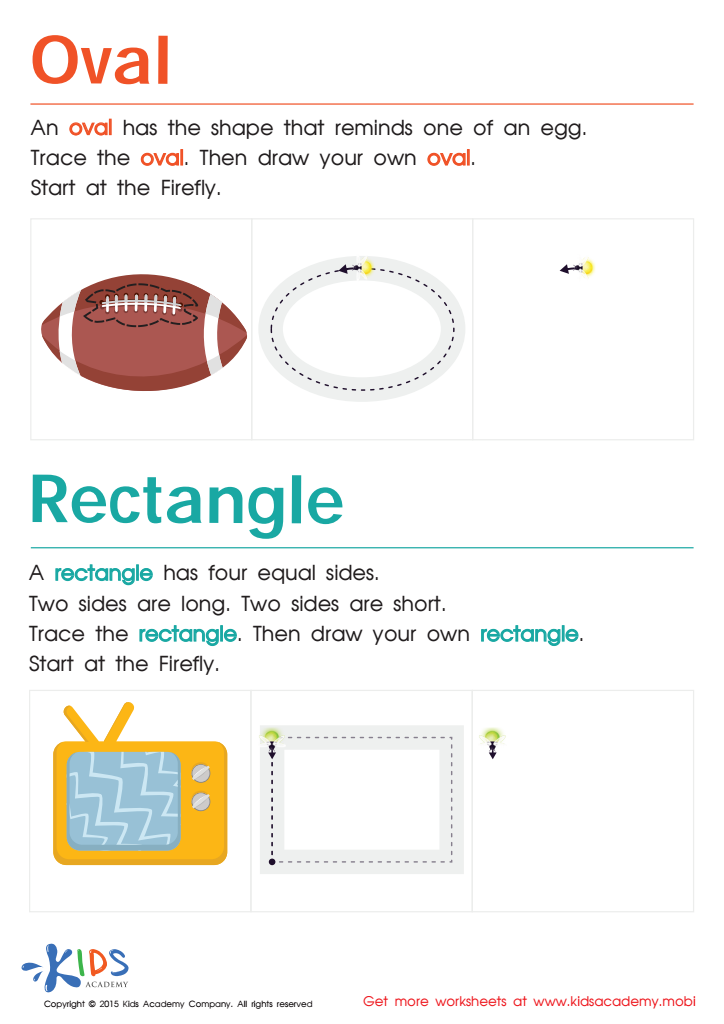
Easy Drawing of Ovals And Rectangles Worksheet
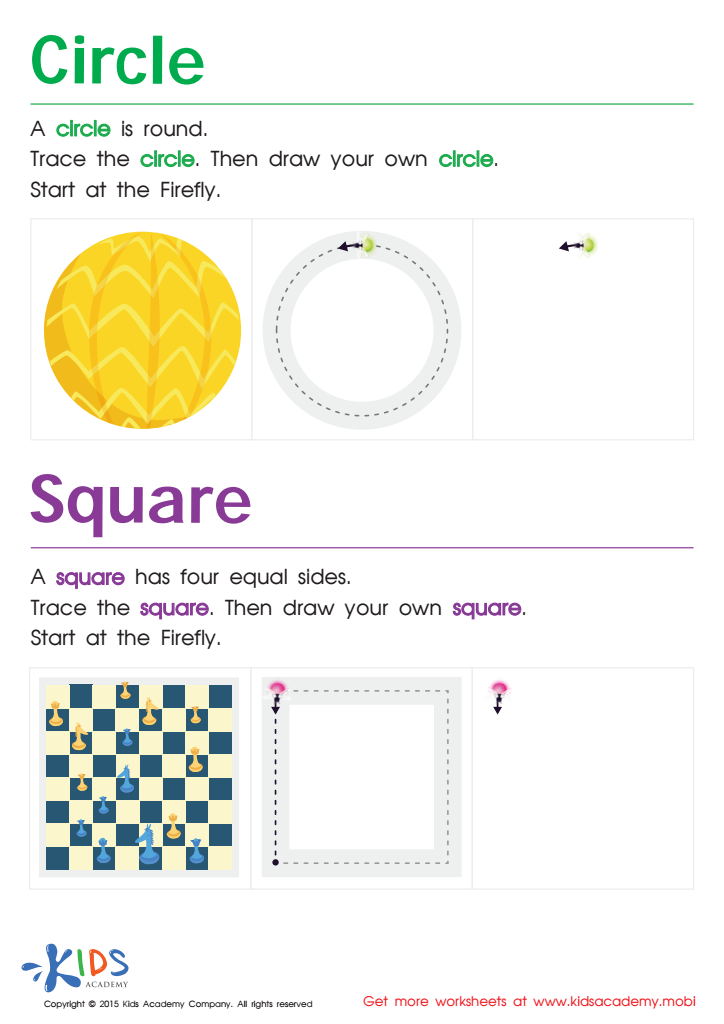
Trace And Draw a Circle And a Square Worksheet








Parents and teachers should prioritize the understanding of 2D shapes for children aged 5-8 because this foundational knowledge plays a critical role in cognitive development and everyday life. At this age, children are naturally curious and adept at exploring their environment, making it the perfect opportunity to introduce geometric concepts. Recognizing and naming shapes enhances their spatial awareness and visualization skills, both of which are essential for later learning in mathematics and science.
Moreover, understanding 2D shapes lays the groundwork for stronger problem-solving abilities. By engaging with shapes, children learn to classify, compare, and manipulate different forms, fostering critical thinking skills. Additionally, these concepts are often integrated into various areas of learning, such as art, where children express their creativity through shape design, or in science, as they learn about real-world structures.
Encouraging conversations about shapes during play, crafts, or day-to-day activities can deepen children's learning while also enhancing their vocabulary. Early shape awareness can also correlate with better performance in math as they progress in school. Ultimately, a solid grasp of 2D shapes equips children with essential skills they will build upon throughout their educational journey.