Fractions of Shapes Worksheets for Ages 5-8
38 filtered results
-
From - To
Discover our engaging Fractions of Shapes Worksheets designed specifically for children ages 5-8! These interactive resources help young learners visually understand fractions through fun and appealing shapes. Our worksheets enable kids to explore concepts like halves, thirds, and quarters, enhancing their abilities in identifying and comparing fractional parts. With colorful illustrations and simple instructions, these activities make learning fractions enjoyable and accessible. Ideal for classroom use or home practice, our worksheets provide endless opportunities for hands-on learning while reinforcing important math skills. Explore our collection today and spark your child's interest in mathematics with exciting fractions activities!
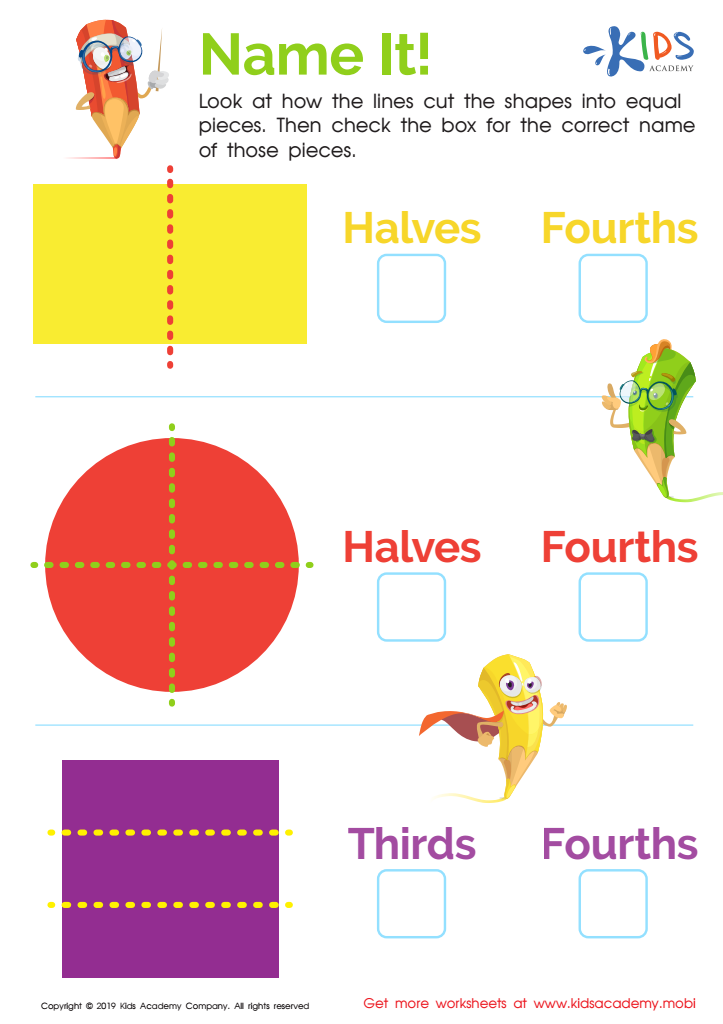
Name It! Worksheet
 Assign to My Students
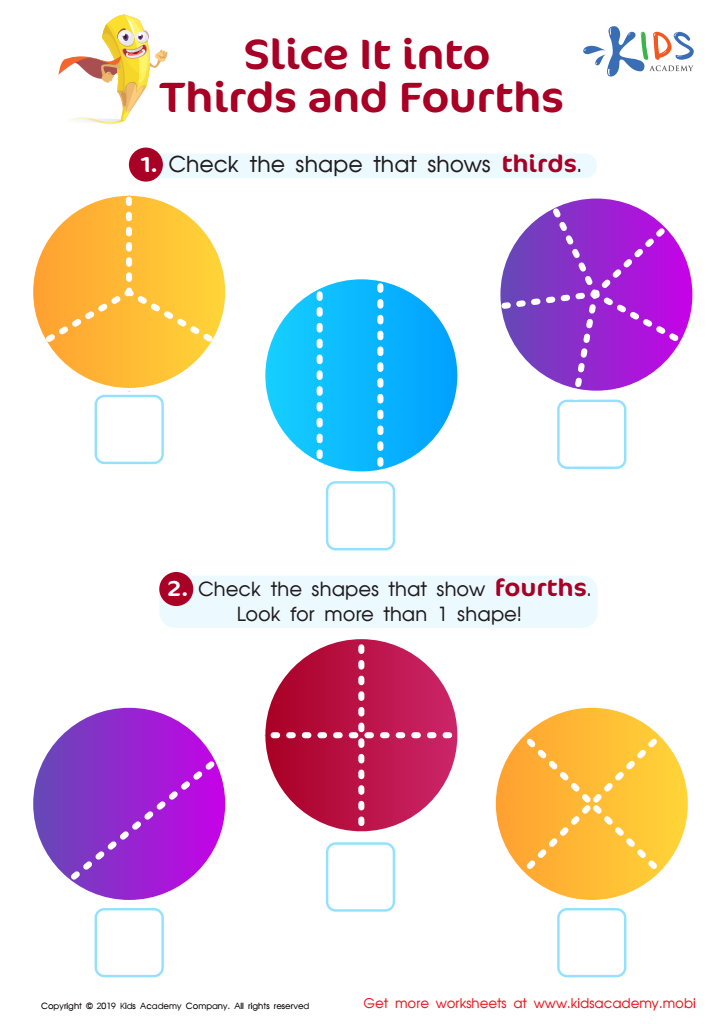
Slice in Thirds Fourths Worksheet
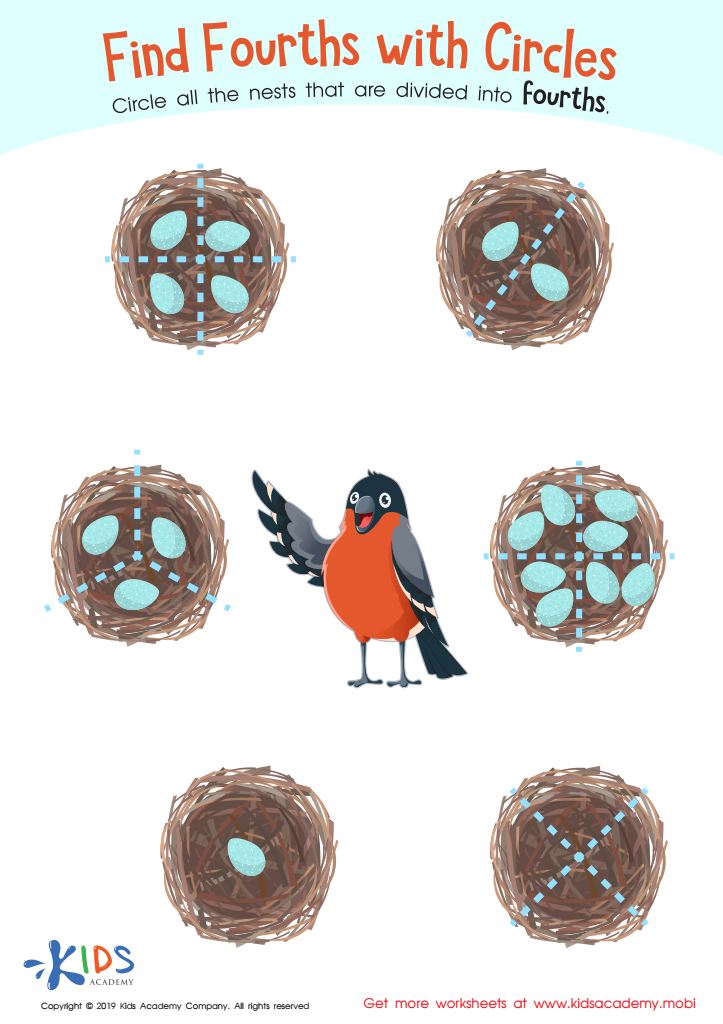
Find Fourths Circles Worksheet
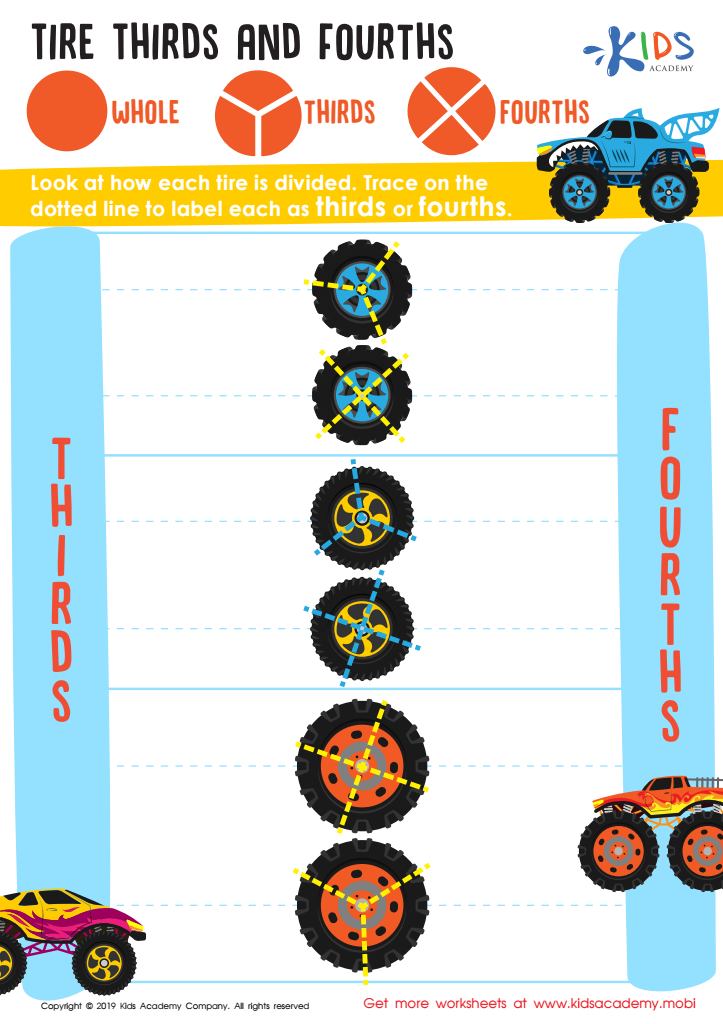
Tire Thirds and Fourths Worksheet
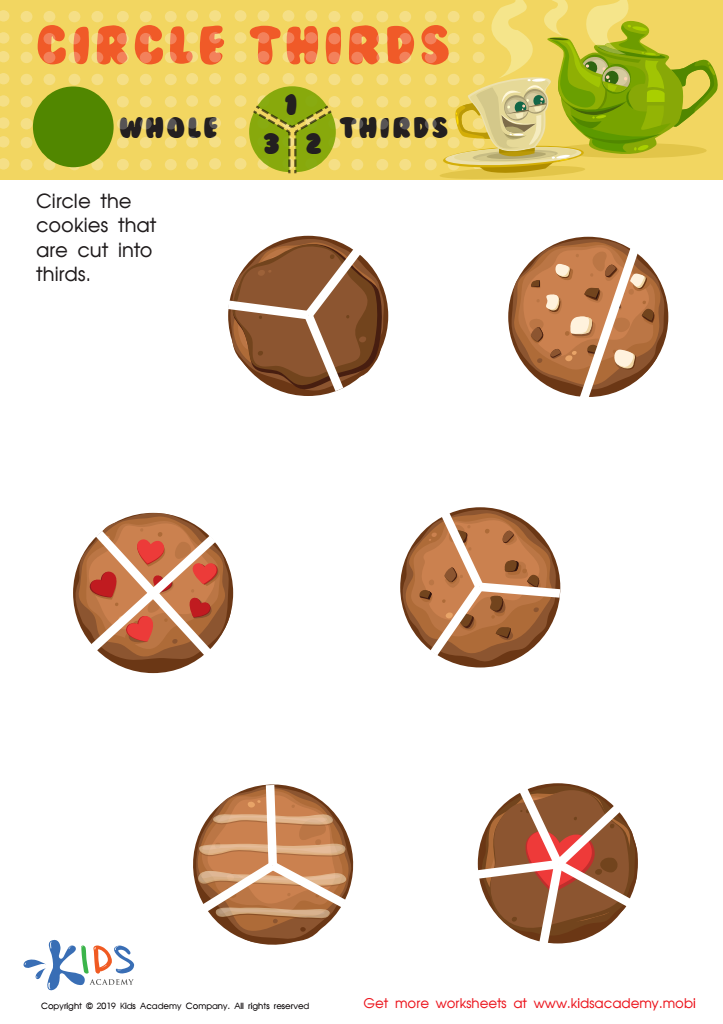
Circle Thirds Worksheet
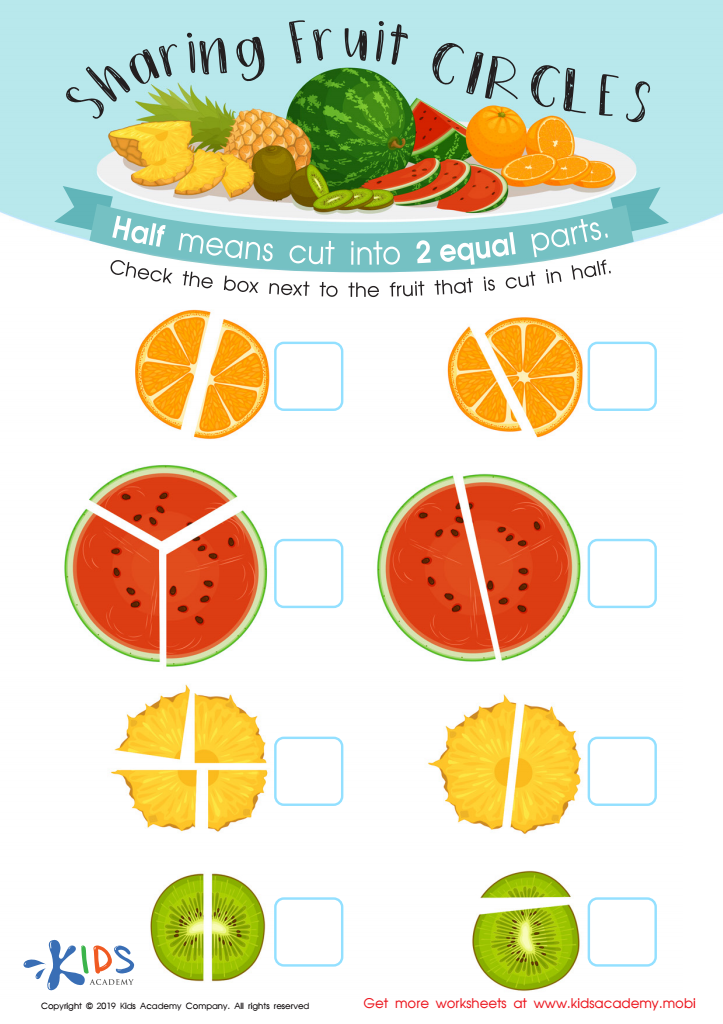
Sharing Fruit Circles Worksheet
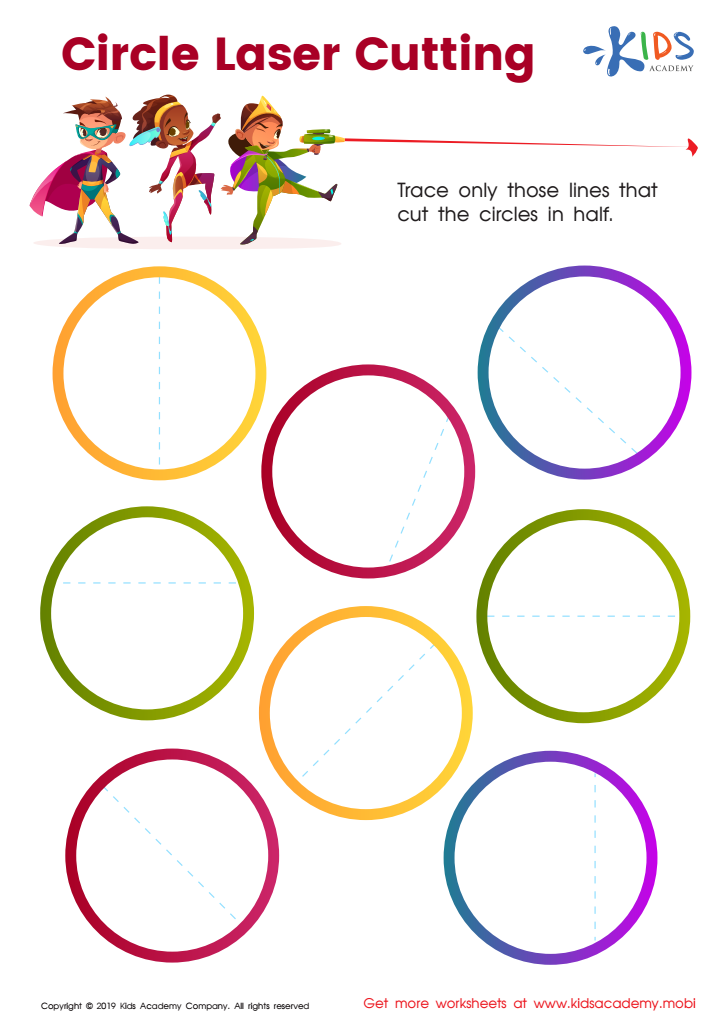
Circle Laser Cutting Worksheet
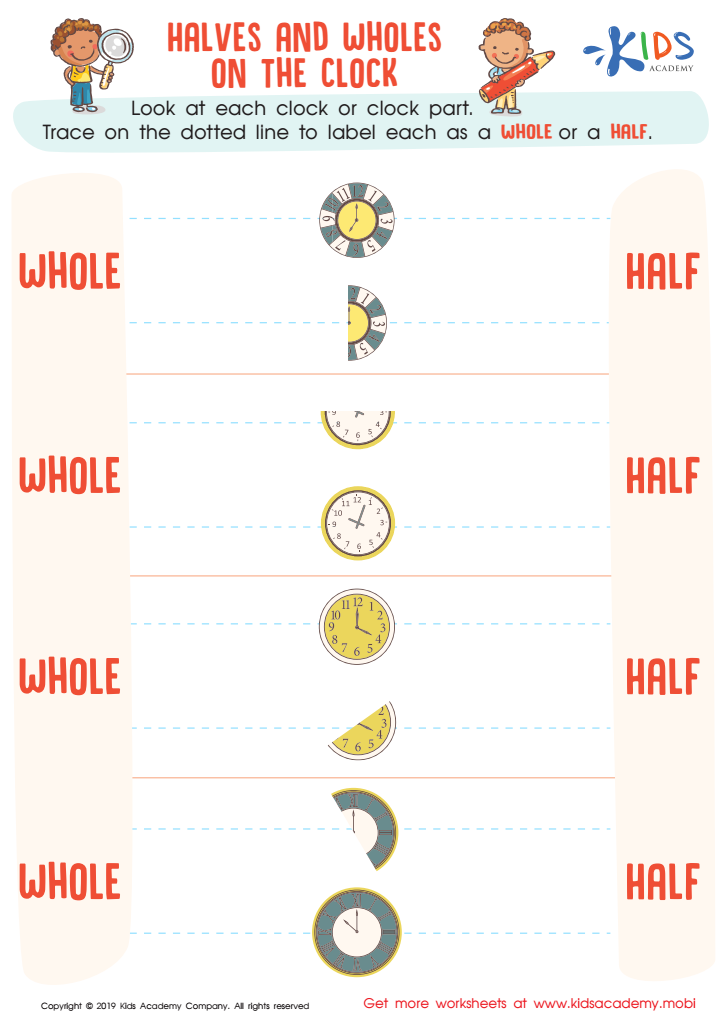
Halves and Wholes on the Clock Worksheet
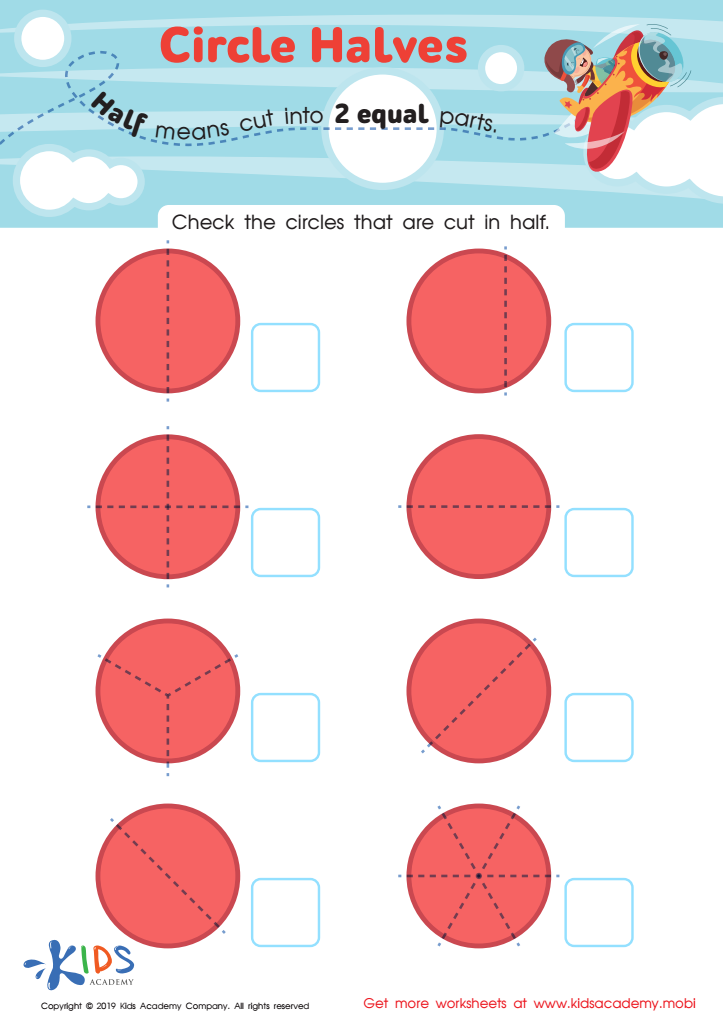
Circle Halves Worksheet
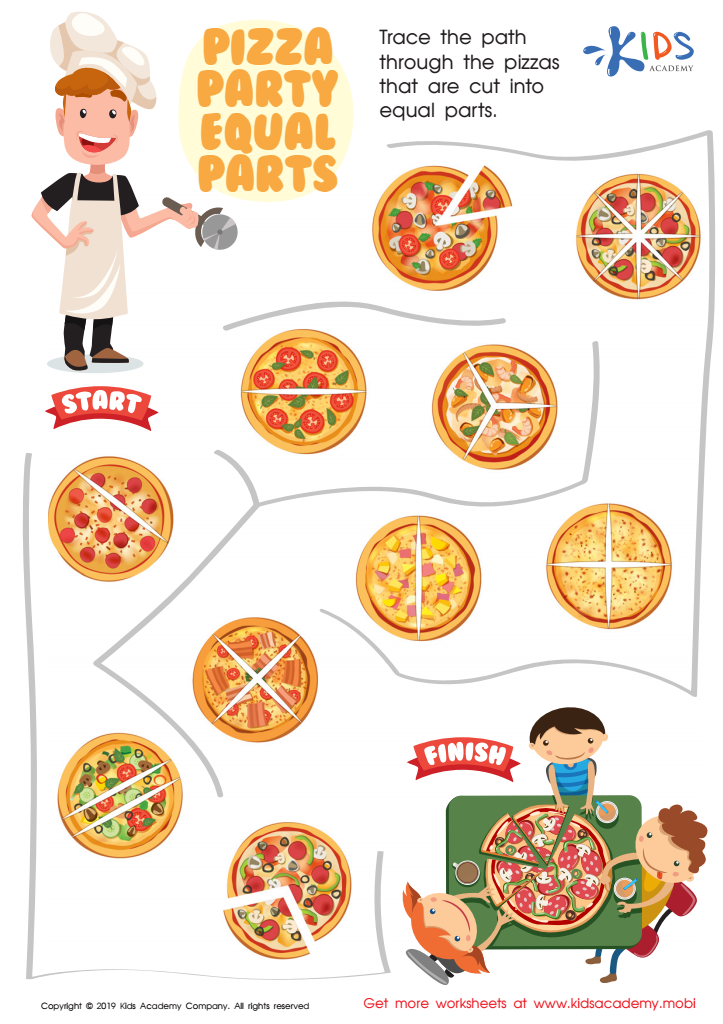
Pizza Party Equal Parts Worksheet
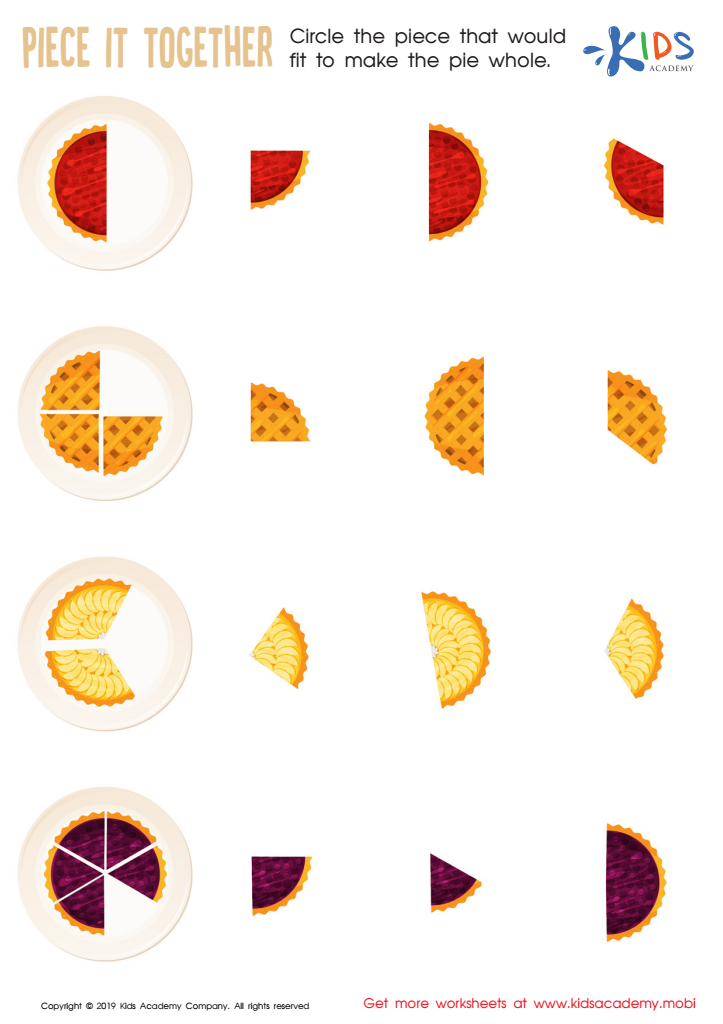
Piece it together Worksheet
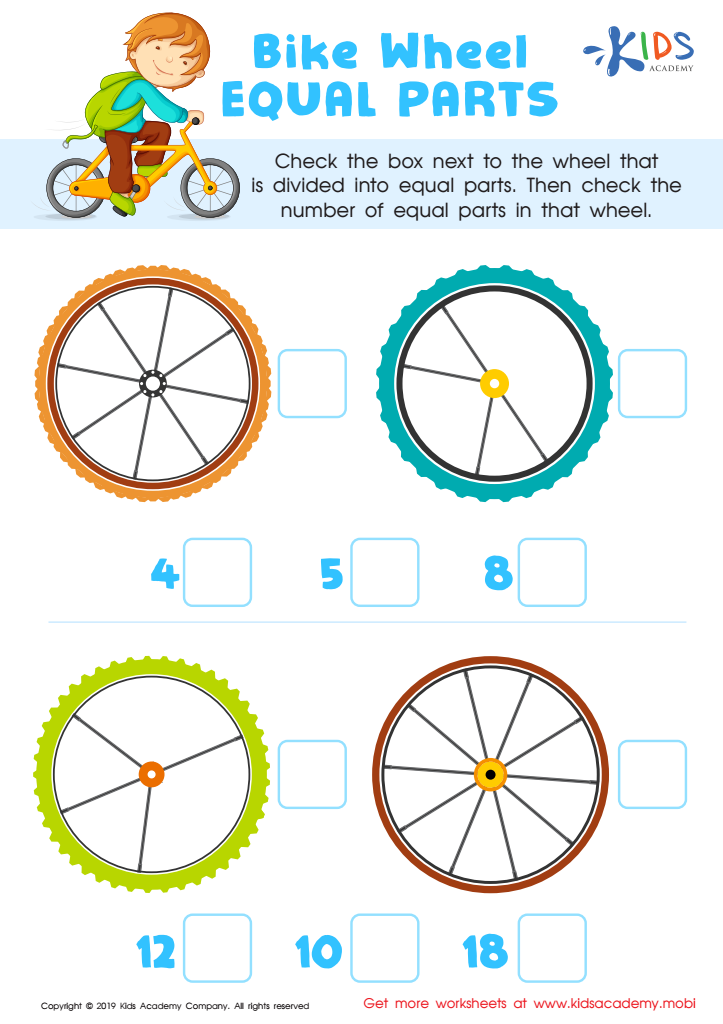
Bike Wheel Equal Parts Worksheet
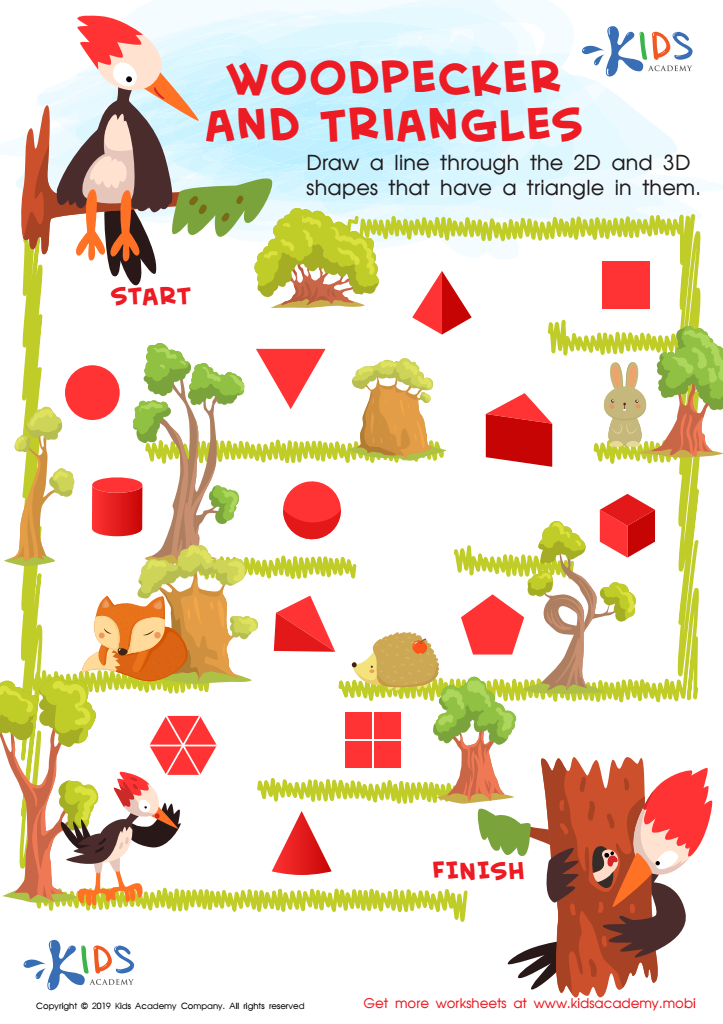
Woodpecker and Triangles Worksheet
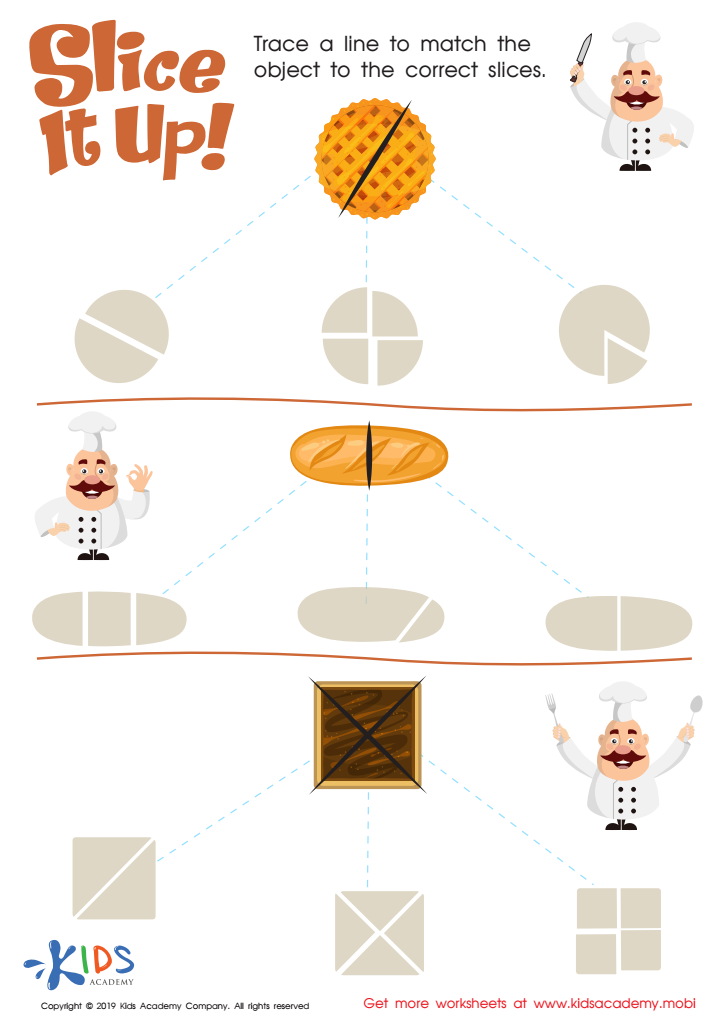
Slice It Up Worksheet
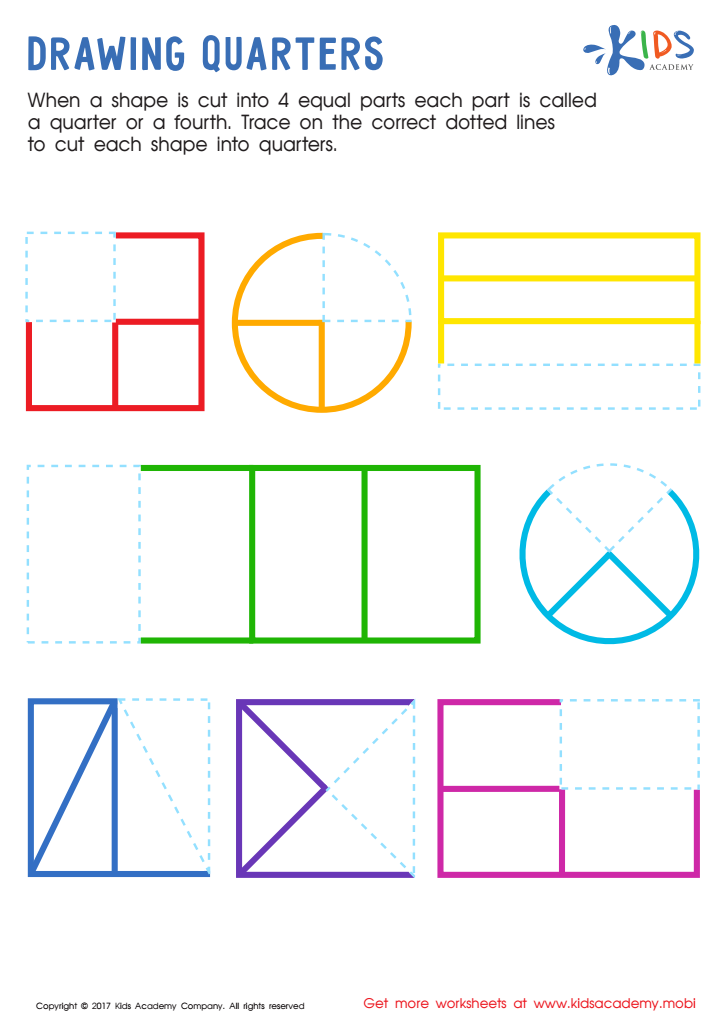
Drawing Quarters Worksheet
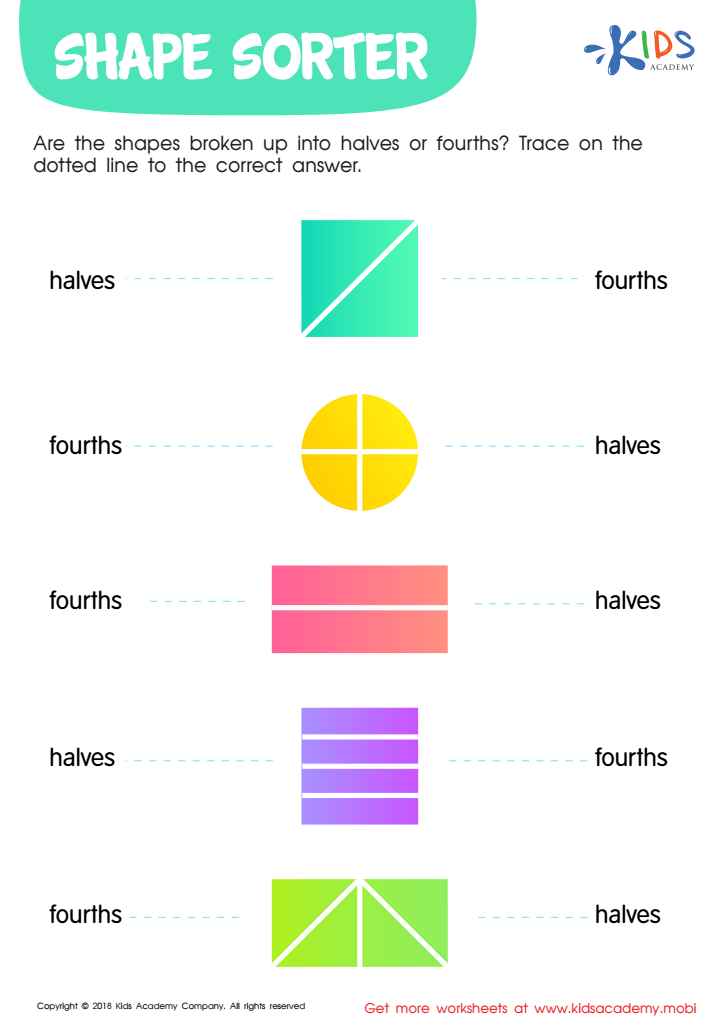
Shape Sorter Worksheet
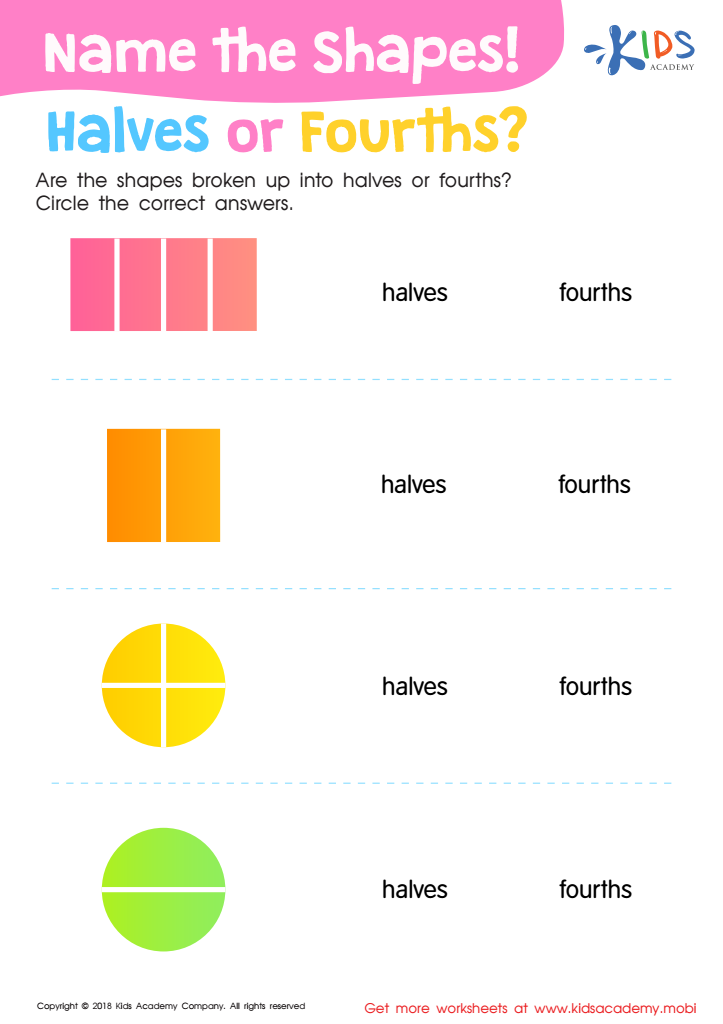
Name the Shapes Halves or Fourths? Worksheet
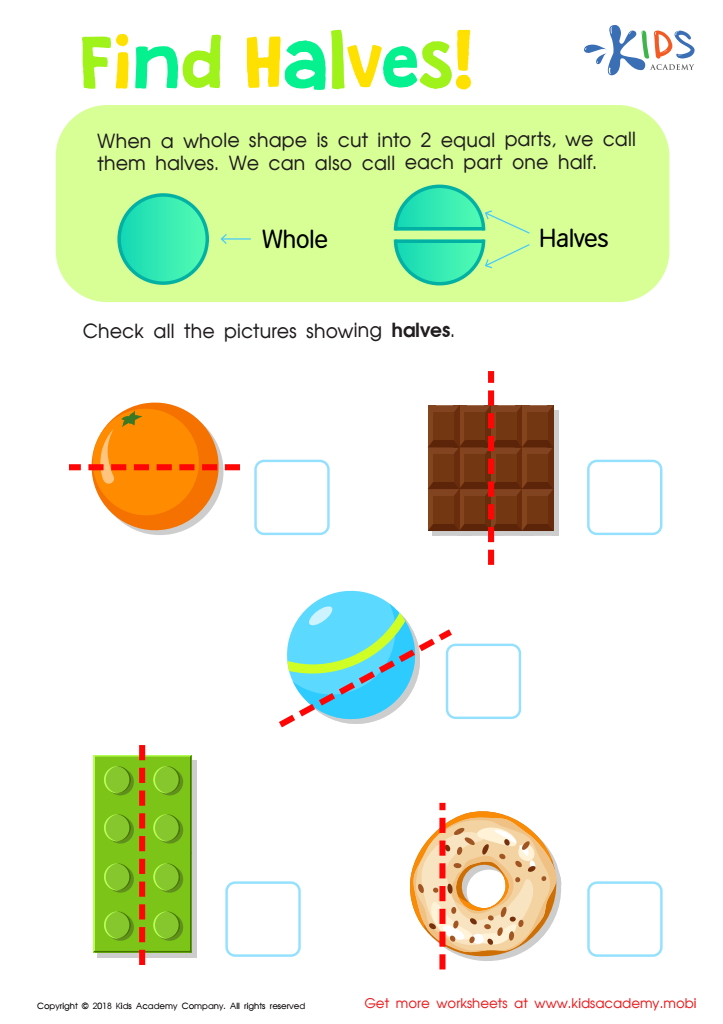
Find Halves Worksheet
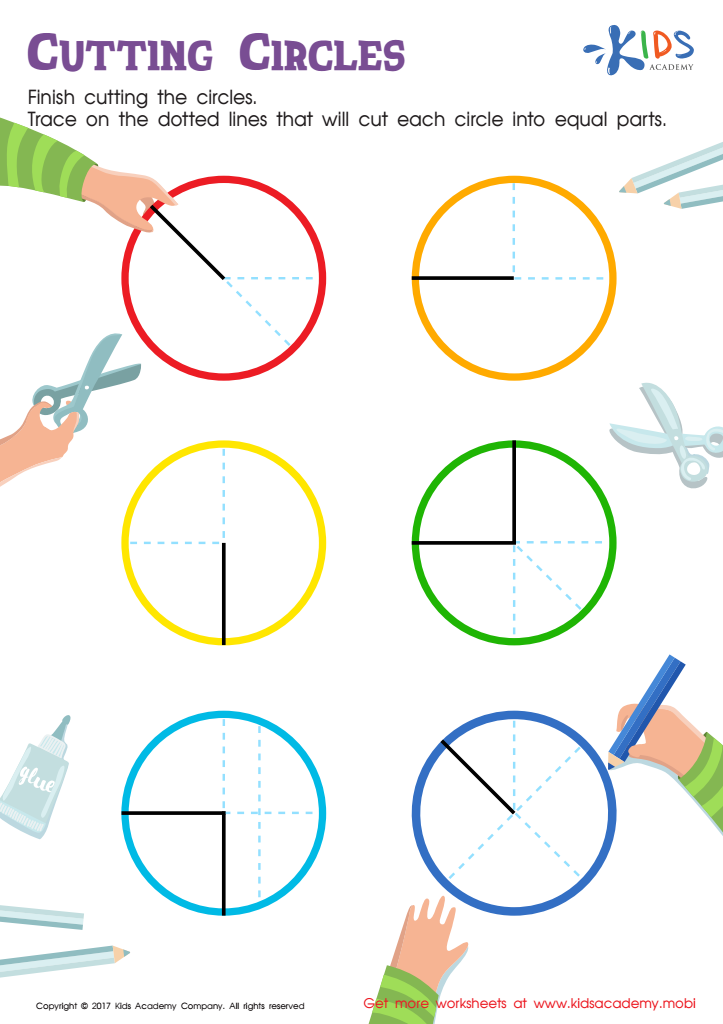
Cutting Circles Worksheet
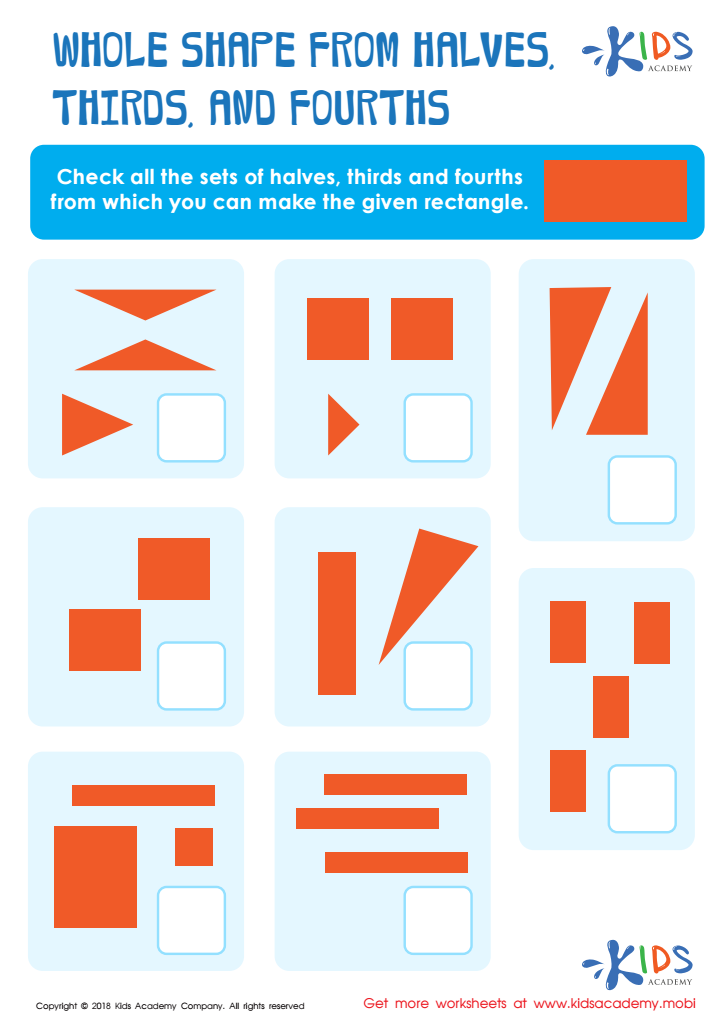
Whole Shape from Halves, Thirds and Fourths Worksheet
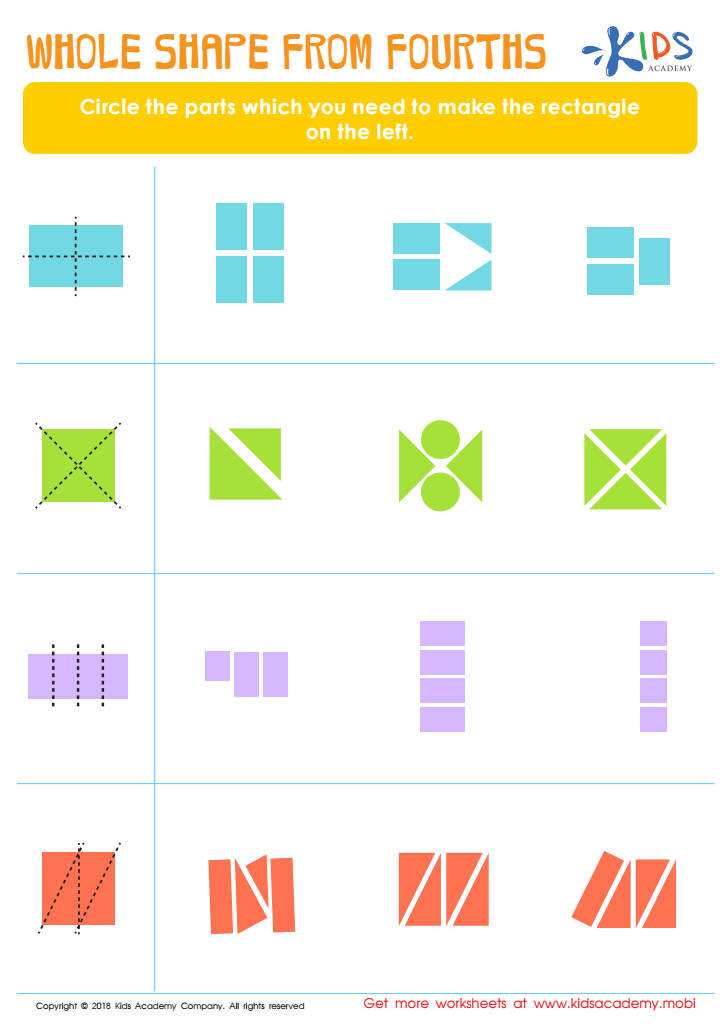
Whole Shape from Fourths Worksheet
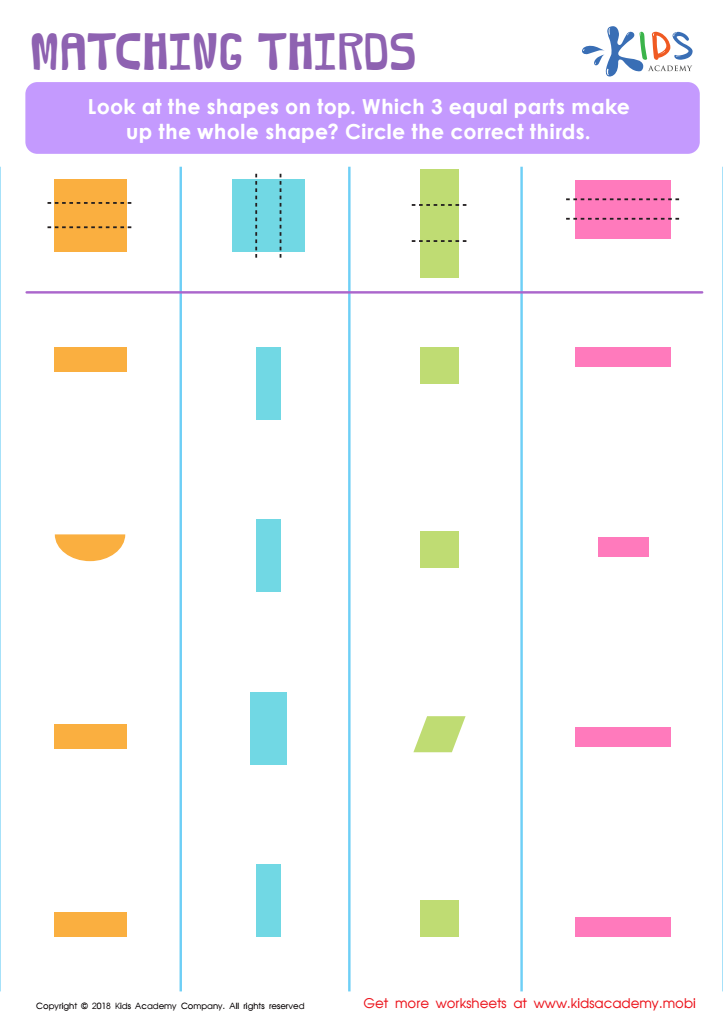
Matching Thirds Worksheet
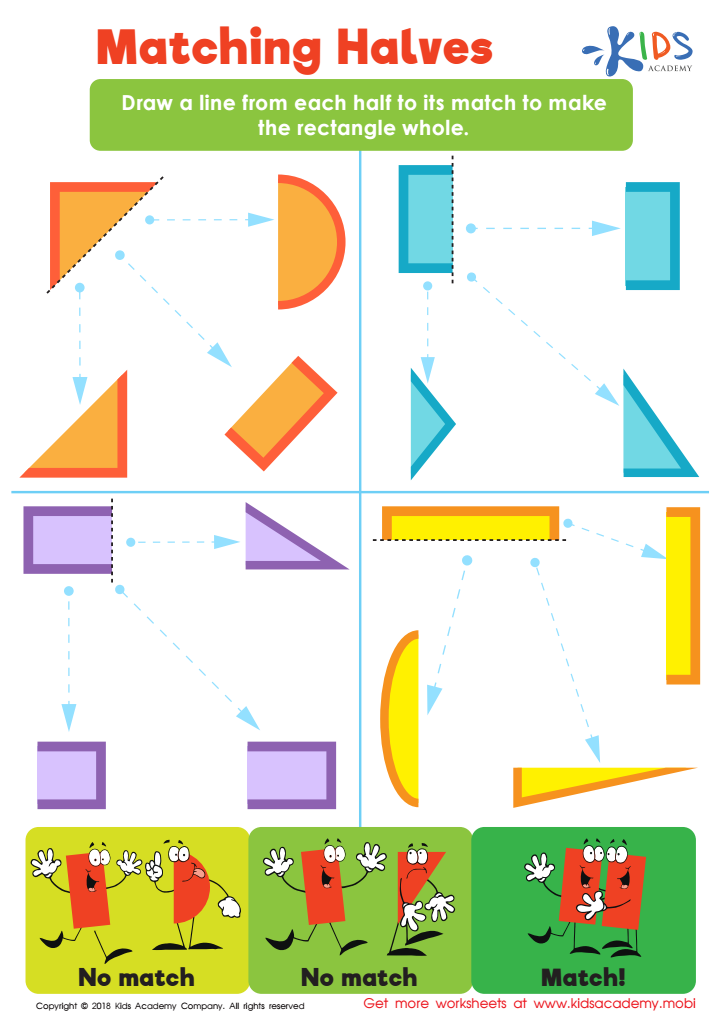
Matching Halves Worksheet
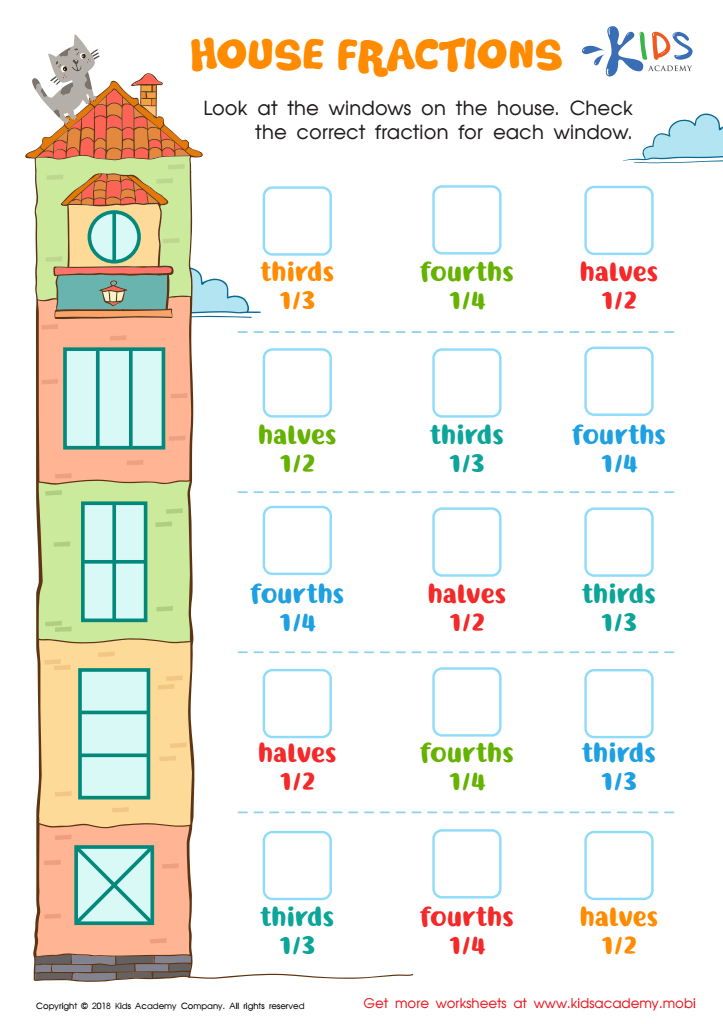
House Fractions Worksheet








Understanding fractions of shapes is a foundational skill for children aged 5-8 that significantly contributes to their overall mathematical development. First, grasping fractions helps children develop spatial awareness and enhances their ability to recognize and manipulate different shapes. This understanding is crucial as it lays the groundwork for more complex mathematical concepts in later grades.
Furthermore, learning about fractions engages students in hands-on activities, making mathematics relatable and enjoyable. For instance, using visual aids, such as pizza slices or pie charts, helps children visualize parts of a whole, thereby solidifying their comprehension. This interactive approach not only fosters a love for learning but also encourages critical thinking and problem-solving skills, which are essential beyond math.
Parents and teachers play a vital role in facilitating this learning. By incorporating playful, real-life examples of fractions, they can create a rich learning environment that piques children’s curiosity. Understanding fractions is not merely an academic requirement; it equips children with the skills to interpret everyday situations, such as sharing and dividing items. In conclusion, an early grasp of fractions lays a solid foundation for future success in mathematics and supports well-rounded cognitive development.