Vocabulary enhancement Building Vocabulary Worksheets for Ages 5-8 - Page 2
72 filtered results
Difficulty Level
Grade
Age
-
From - To
Subject
Activity
Standards
Favorites
With answer key
Interactive
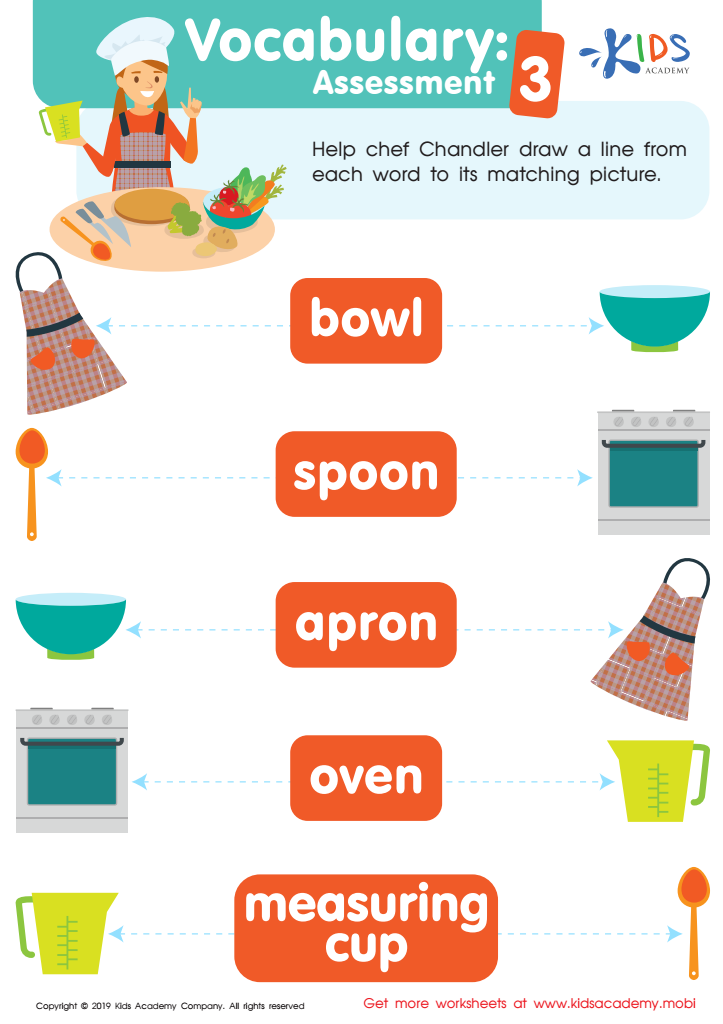
Vocabulary: Assessment 3 Worksheet
Let your child help the chef! In this fun kitchen-themed worksheet, have them read and match each word with its picture. With words like measuring cup, apron, and oven, it will boost their reading and help them understand the meaning of the words. Ask them to recall how they have used any of these items in their own kitchen.
 Assign to My Students
Vocabulary: Assessment 3 Worksheet
Worksheet











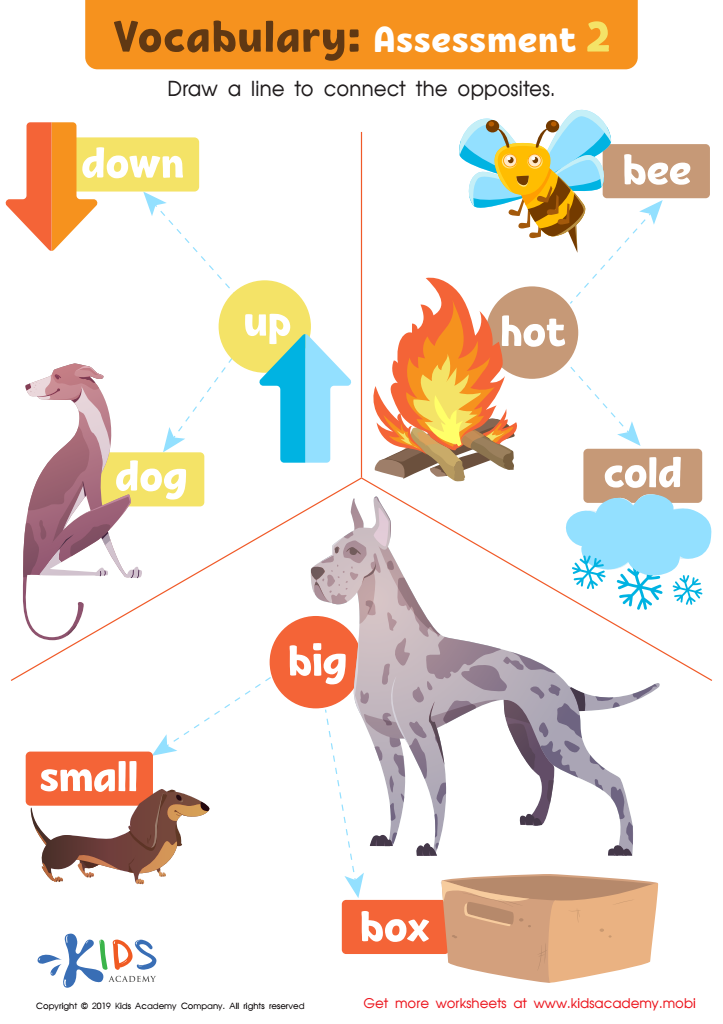
Vocabulary: Assessment 2 Worksheet
Opposites attract! Boost your preschooler's vocabulary by reviewing antonyms with this fun worksheet. View the images, read the words, and find the opposites. Guide your learner with the illustrations, then discuss each one before they trace the dotted lines to match. Have fun and reinforce learning!
Vocabulary: Assessment 2 Worksheet
Worksheet
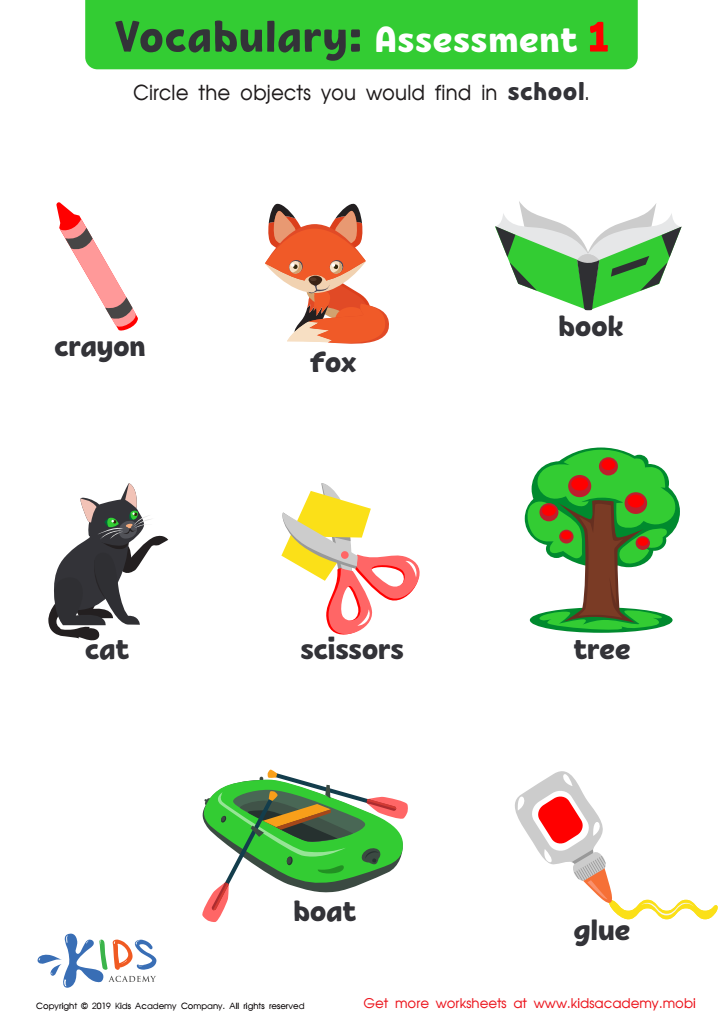
Vocabulary: Assessment 1 Worksheet
Want to check your child's vocabulary? This worksheet has kids identify objects from school through picture clues. It reinforces reading and fine motor skills, while providing an assessment of their reading growth and needs.
Vocabulary: Assessment 1 Worksheet
Worksheet
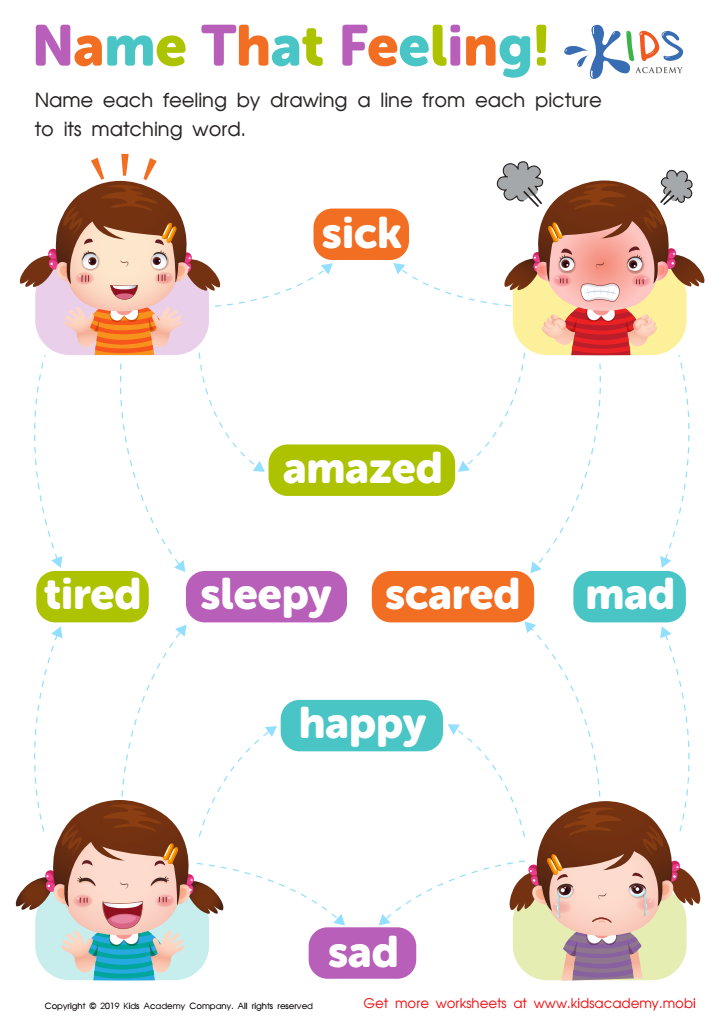
Name that Feeling Worksheet
Fostering your child's emotional intelligence is essential for their development. This worksheet helps them associate feelings with words, improving their social skills and fine motor coordination. They'll trace pictures and words to learn the feeling vocabulary.
Name that Feeling Worksheet
Worksheet
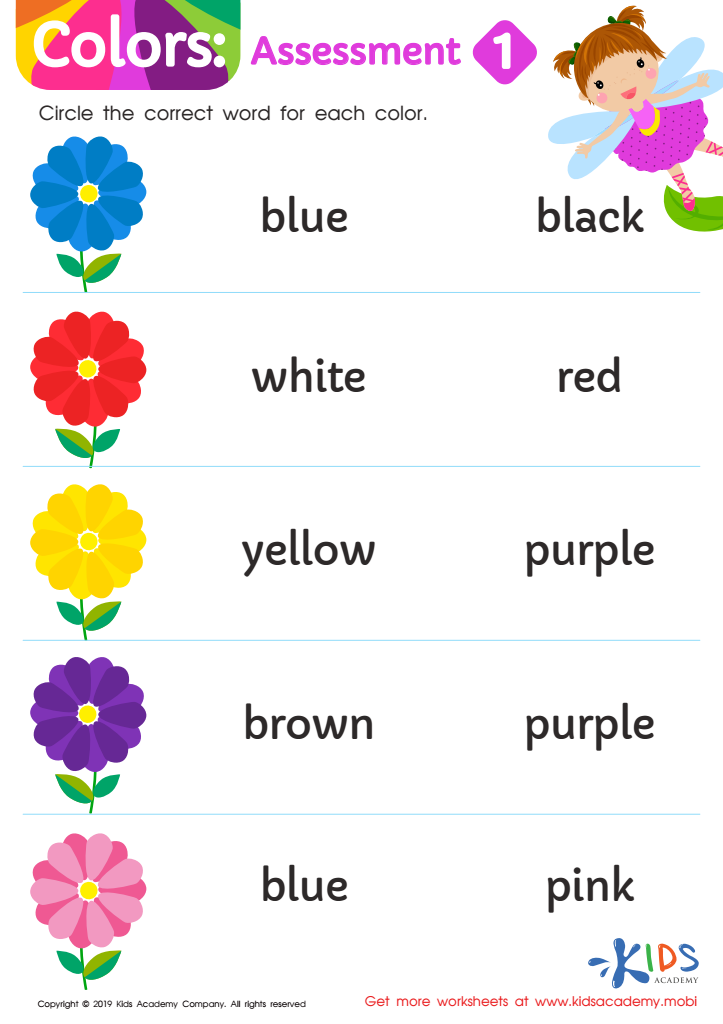
Colors: Assessment 1 Worksheet
Children can decode unfamiliar words by sounding them out or by recognizing sight words. Color words are an important part of sight word knowledge, so add them to your child's list! This color word worksheet is an effective assessment tool for teachers to use with preschool and kindergarten students. It checks their knowledge of five color words - they simply look at the flower and circle the appropriate color word!
Colors: Assessment 1 Worksheet
Worksheet
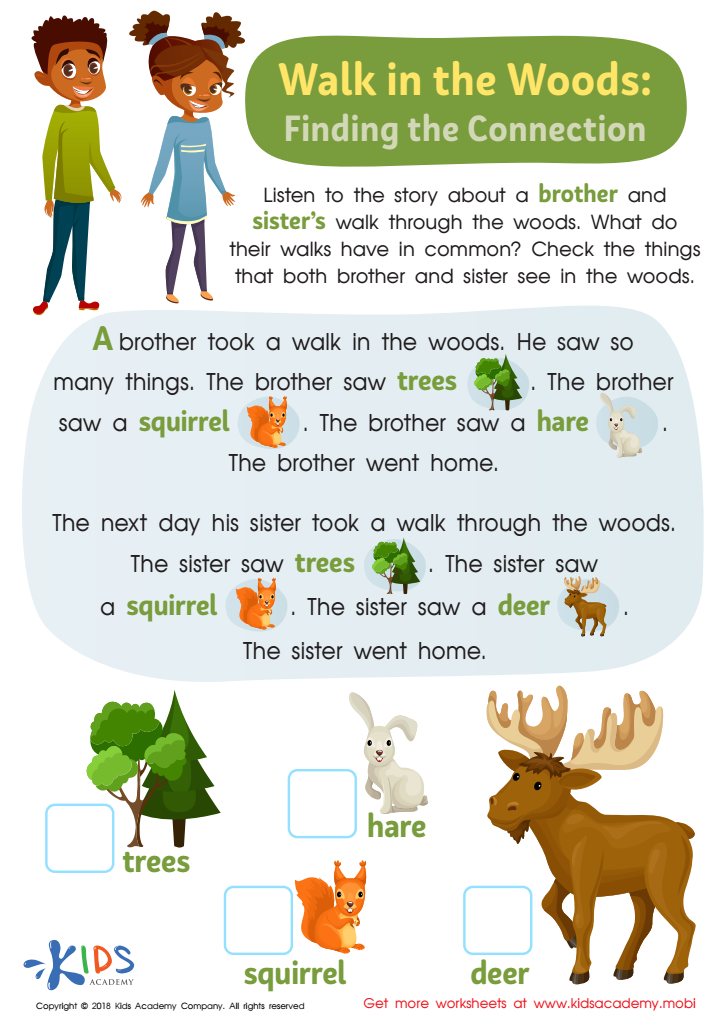
Walk In the Woods: Finding Connections Worksheet
Brother and sister took a walk in the woods to connect with nature and get some exercise. As they went, they noted different things like birds and plants, which they share in this story. Read it to your little ones, and help them check off the items the two saw. It's a great way to learn about nature and enjoy the outdoors.
Walk In the Woods: Finding Connections Worksheet
Worksheet
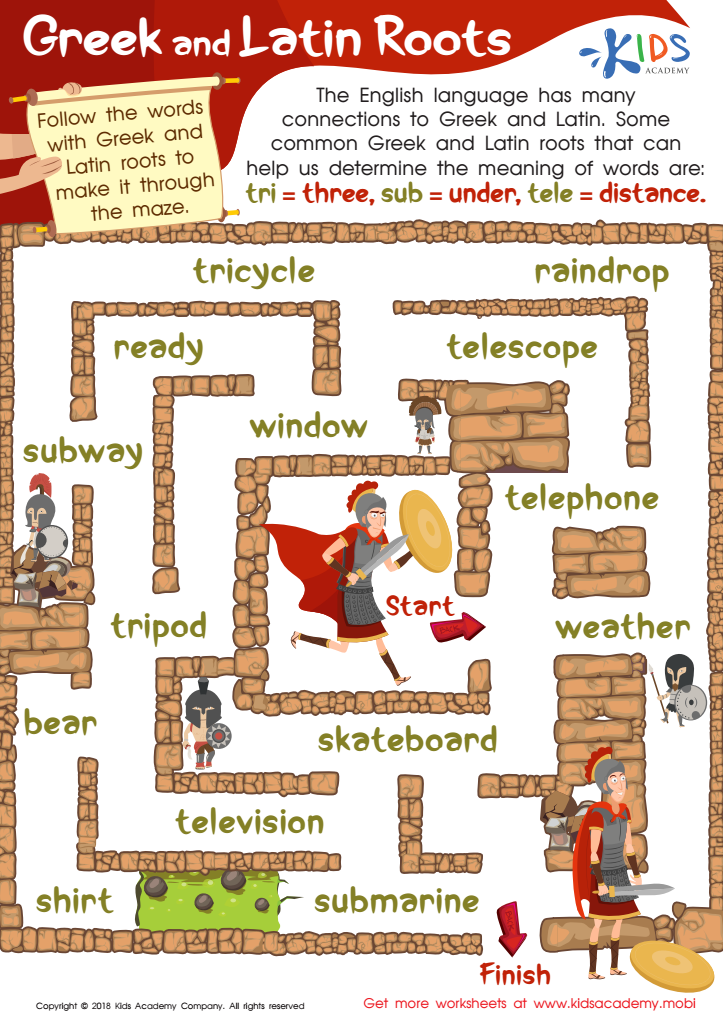
Greek and Latin Roots Worksheet
English borrows lots of words from other languages, and it has many ties to Greek and Latin. For example, 'tri', 'sub' and 'tele' (all from Greek and Latin) mean 'three', 'under' and 'distance' respectively. Help your child understand the meanings of words by having them work through a maze with words from these languages.
Greek and Latin Roots Worksheet
Worksheet
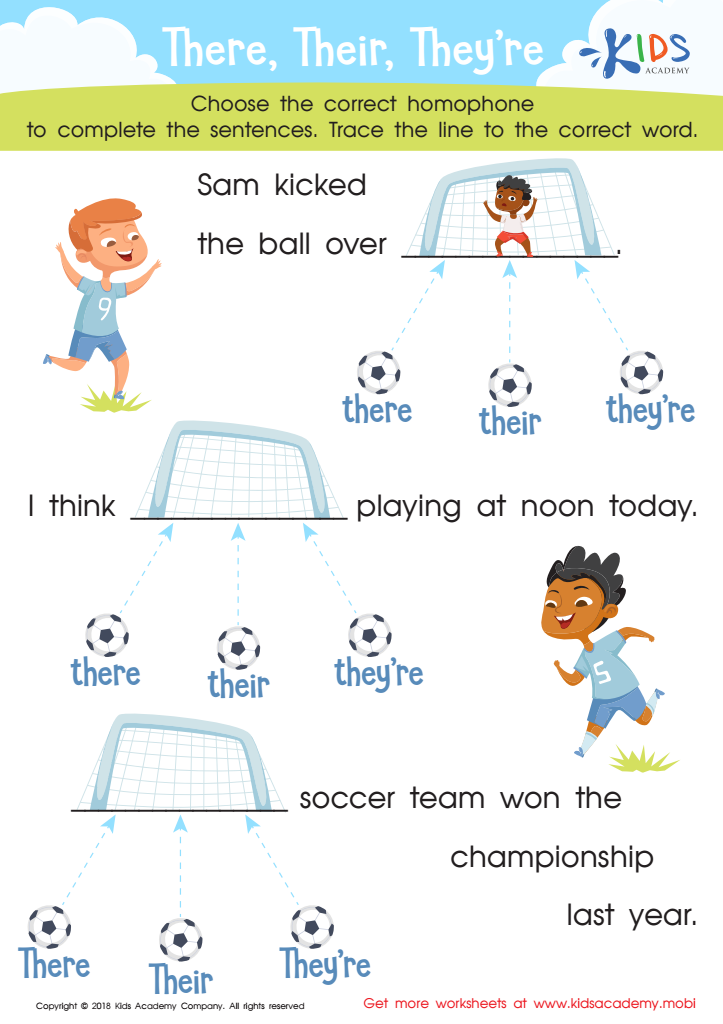
There, Their, They're Worksheet
Explain to your kids the difference between 'there', 'their' and 'they're'. These three words are homophones - spelt similarly but with different meanings. Help them choose the correct homophones when completing sentences, and trace the line to the right word.
There, Their, They're Worksheet
Worksheet
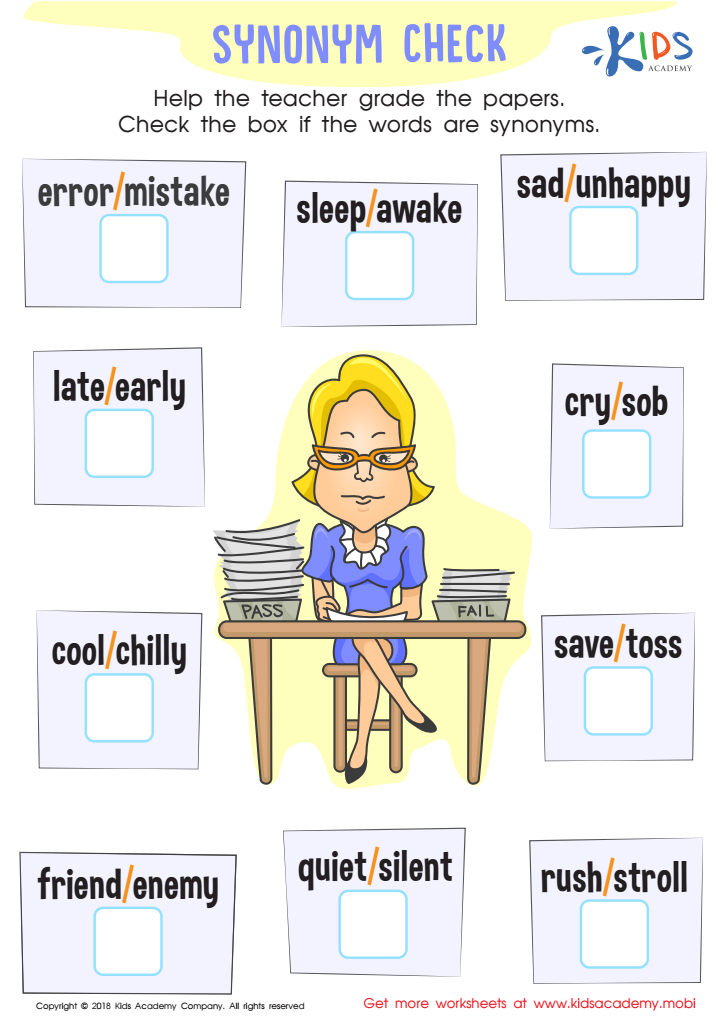
Synonym Check Worksheet
Ask your kids what a synonym is, and listen to their definitions. If needed, explain it's a word that has a similar meaning to another. Give examples, then ask them to do the same. For this worksheet, get them to help grade the papers. Have them check the boxes if the words are synonyms.
Synonym Check Worksheet
Worksheet
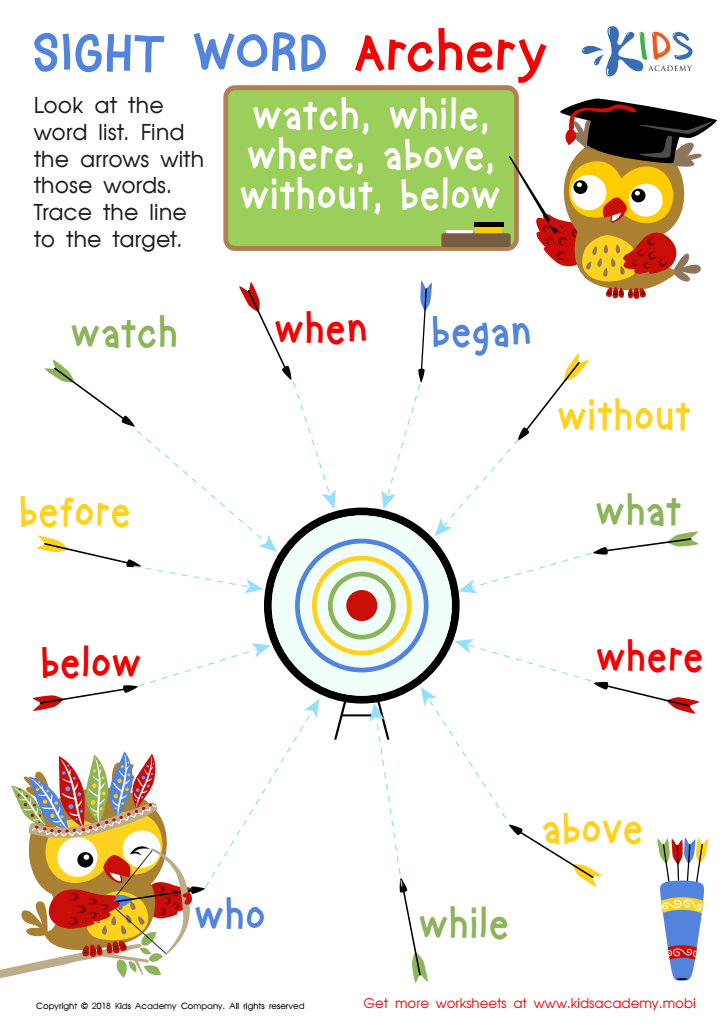
Sight Word Archery Worksheet
Read the words list with your kids, pointing at each one. Ask them to do the same. Help them find the arrows with those words and trace the line to the target in the centre.
Sight Word Archery Worksheet
Worksheet
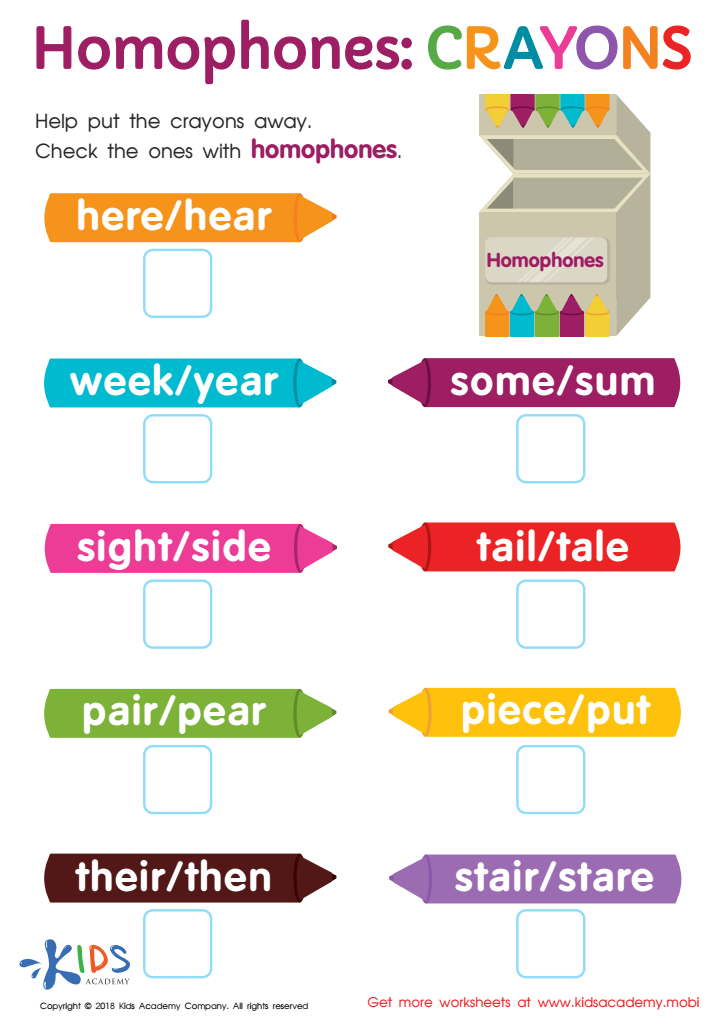
Homophones: Crayons Worksheet
Ask your kids: "What are homophones?" Explain that homophones are words that sound alike but have different meanings, like 'dare' and 'deer'. Ask them to identify homophones by putting the crayons in this printout away according to the words.
Homophones: Crayons Worksheet
Worksheet
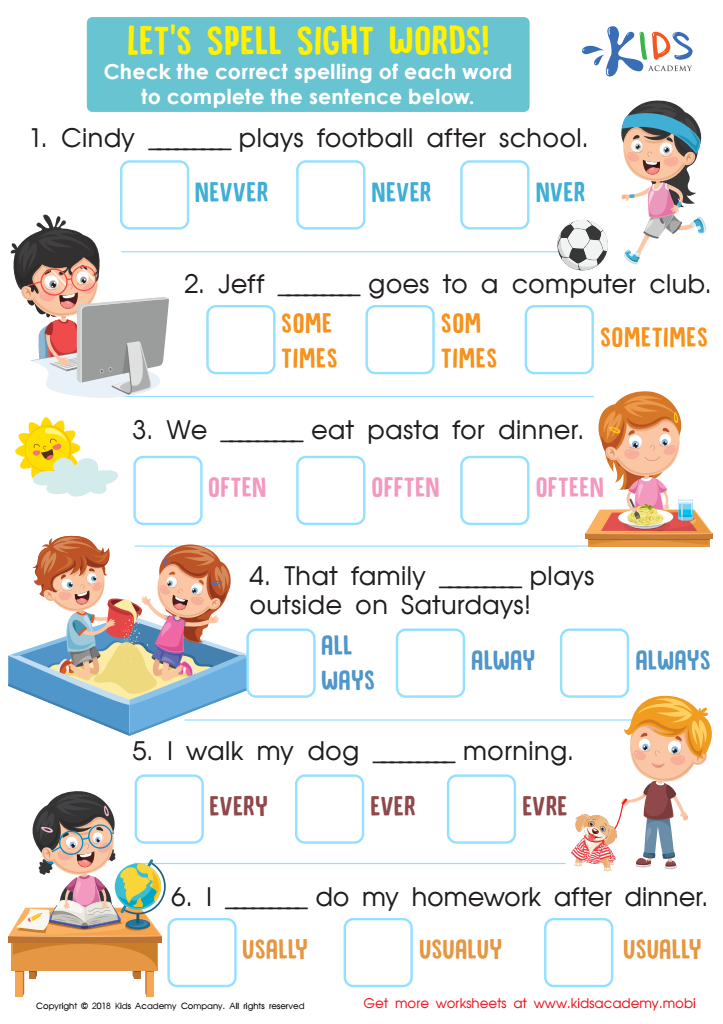
Let's Spell Sight Words Worksheet
Help your kids spell tricky sight words by asking them to spot differences in the sentences of activities they do regularly. This worksheet contains incomplete sentences, with the correct spelling of the word in the options for them to fill in. Get them to look out for words with the wrong spellings.
Let's Spell Sight Words Worksheet
Worksheet
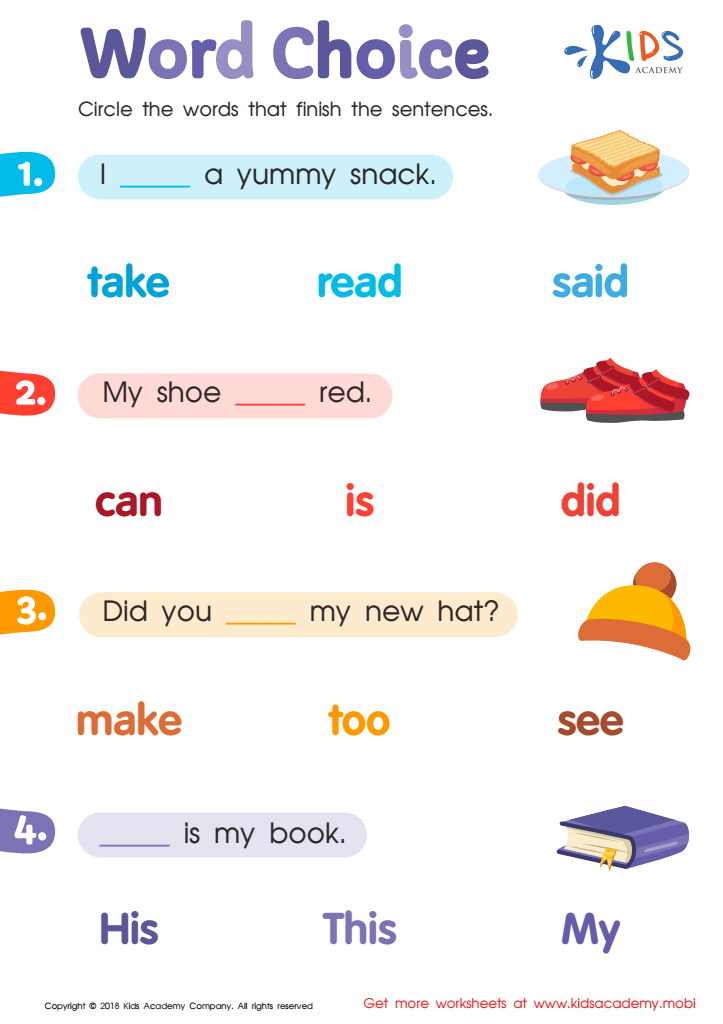
Word Choice Worksheet
This worksheet can help your children become better readers. By now, you should have an idea of their reading level. Read the incomplete sentences aloud and point to the missing piece. Have your students pick the correct word they think best fits the sentence out of the options given.
Word Choice Worksheet
Worksheet
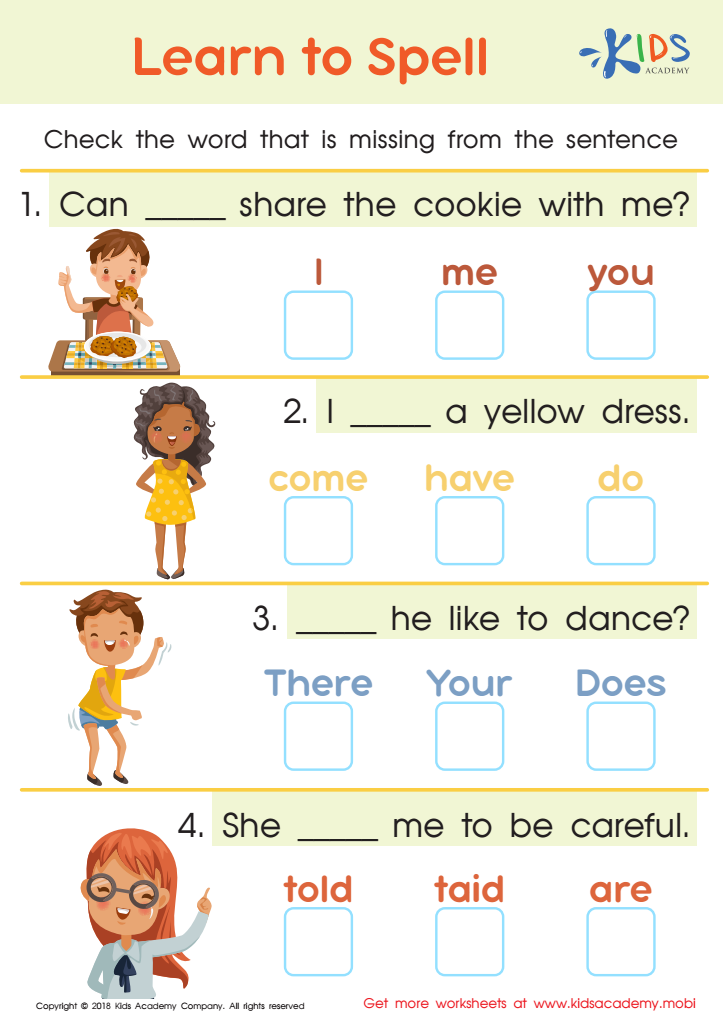
Learn to Spell Worksheet
Help sharpen spelling skills with a simple worksheet. Read sentences aloud and show which word is missing. Ask students to pick the correct word from the options. Ensure they check the missing word for accuracy.
Learn to Spell Worksheet
Worksheet
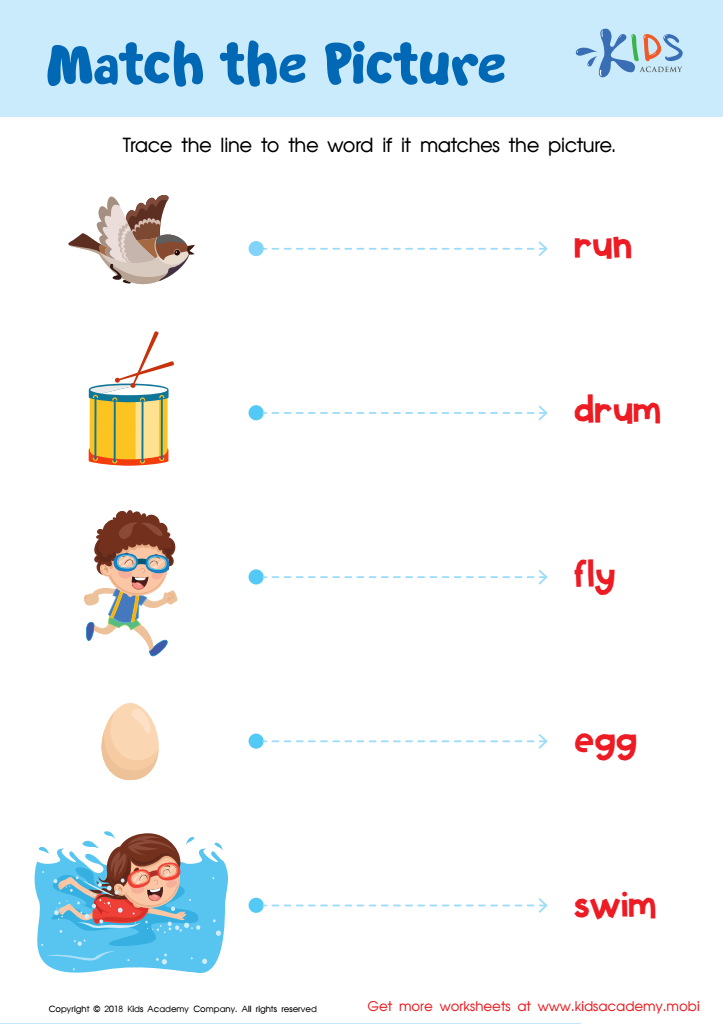
Match the Picture Worksheet
This tracing worksheet is a fun way to teach little ones that learning can be fun! Ask them to name the five images on the left and then read the words on the right. Do they match? Help them trace the line connecting the picture to the word that matches. Learning doesn't have to mean stuffy classrooms and drudgery!
Match the Picture Worksheet
Worksheet
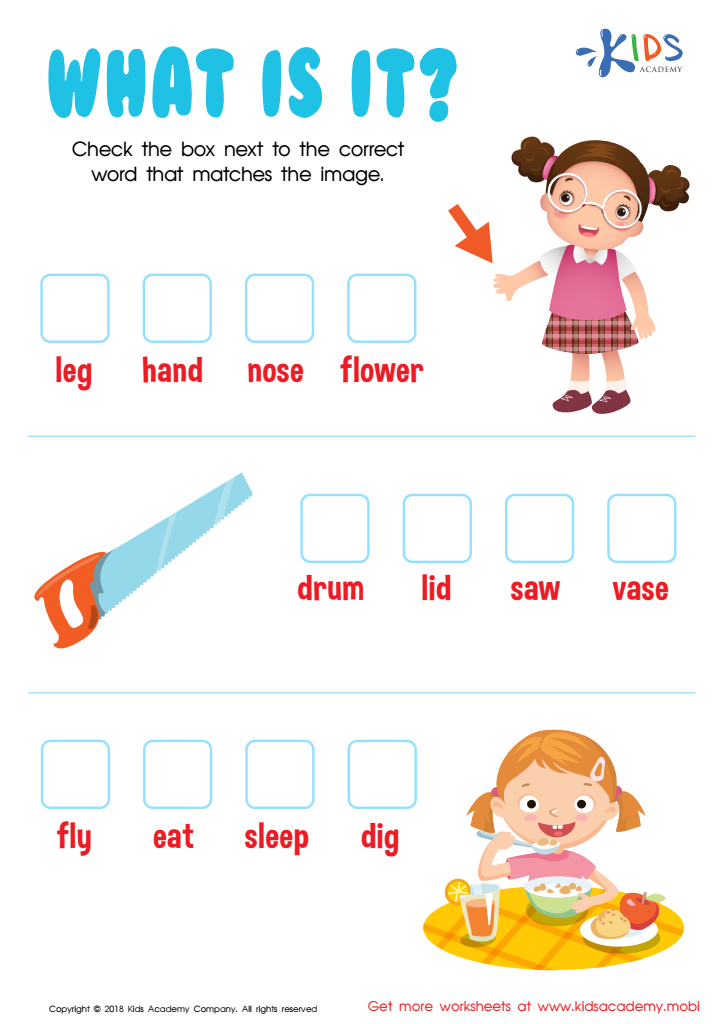
What Is It? Worksheet
Test your kids' object recognition skills with this worksheet. Have them identify each picture, then check the box next to the correct word. Point to the image and ask your child what it is; then help them select the correct answer. It's a great way to see how well they can recognize objects from pictures.
What Is It? Worksheet
Worksheet
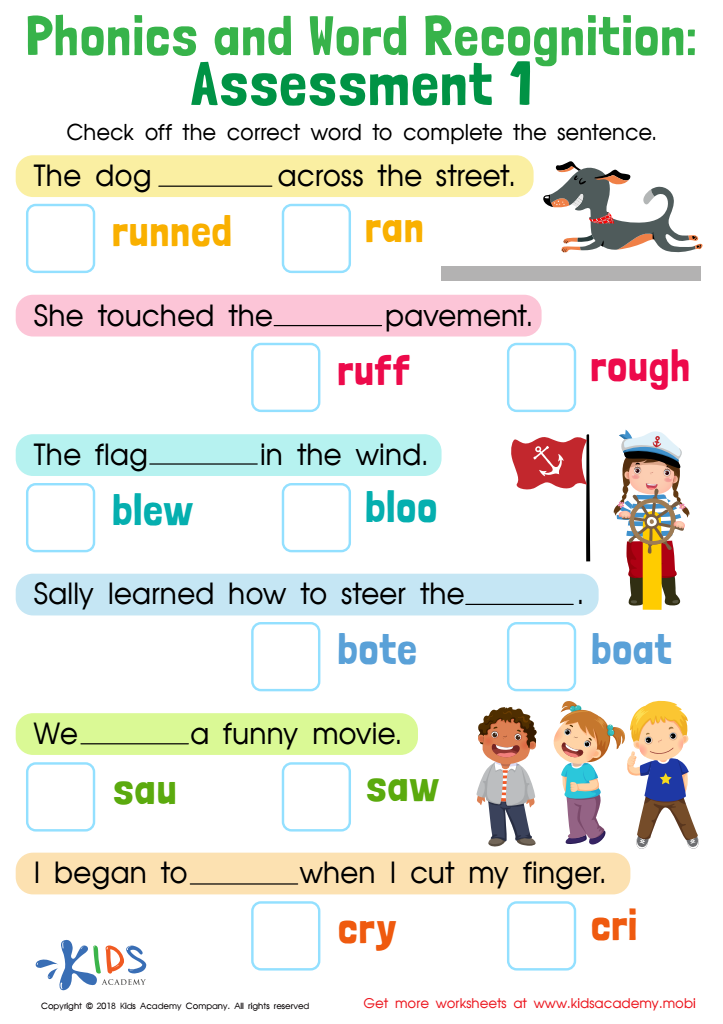
Phonics and Word Recognition: Assessment 1 Worksheet
This worksheet tests phonetics and word recognition. Students should be familiar with past tense verbs. Read incomplete sentences, then read multiple options and help students select the correct one.
Phonics and Word Recognition: Assessment 1 Worksheet
Worksheet
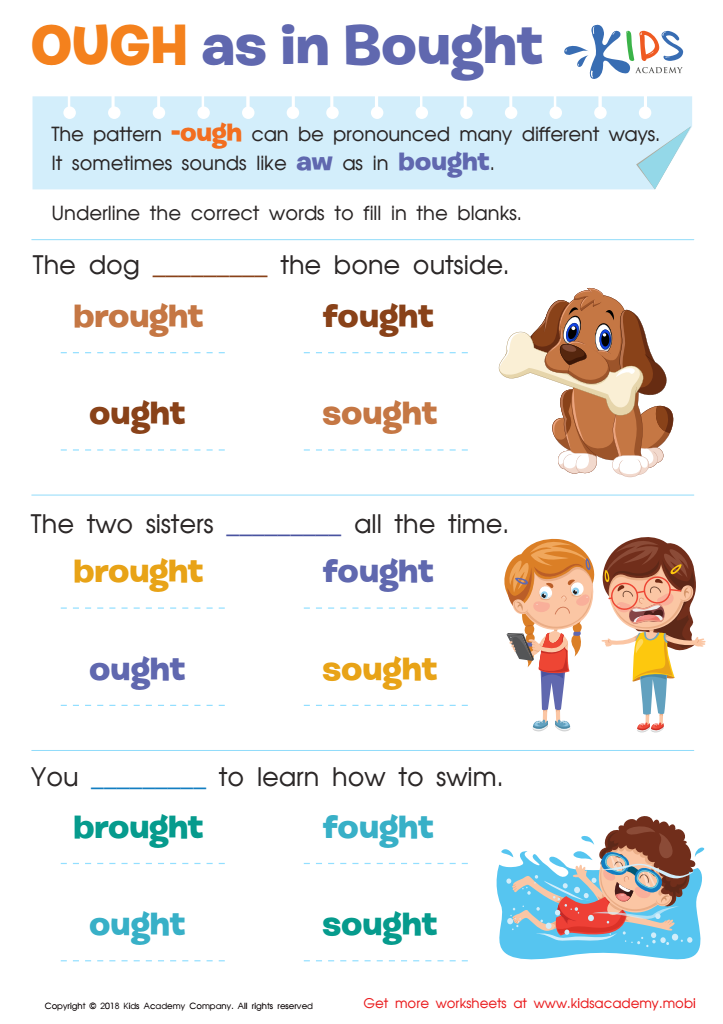
OUGH as in Bought Worksheet
Use this worksheet to teach your child the different pronunciations of -ough. For example, -ough can sound like ‘aw’ in ‘bought’. Ask your child to give more examples and help them underline the correct answers to fill in the blanks.
OUGH as in Bought Worksheet
Worksheet
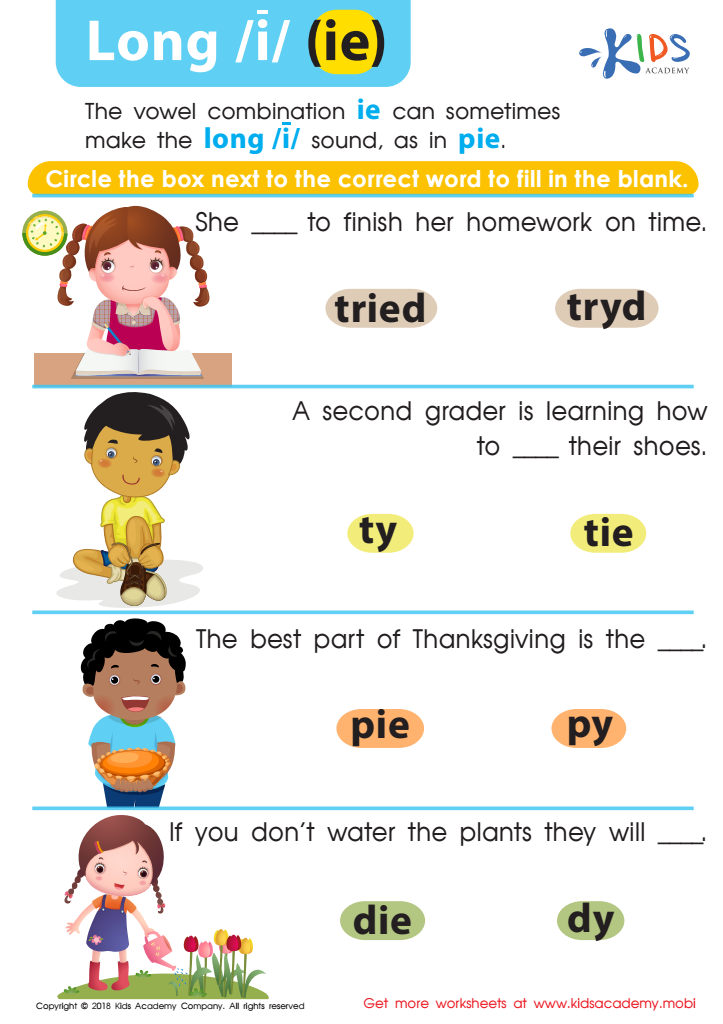
Reading: Long I and IE Worksheet
Have your child list words with the long /i/ sound (eg. 'pie'), and if needed, help them out with some examples. Read each word in the worksheet together and check their answer by having them circle the correct word.
Reading: Long I and IE Worksheet
Worksheet
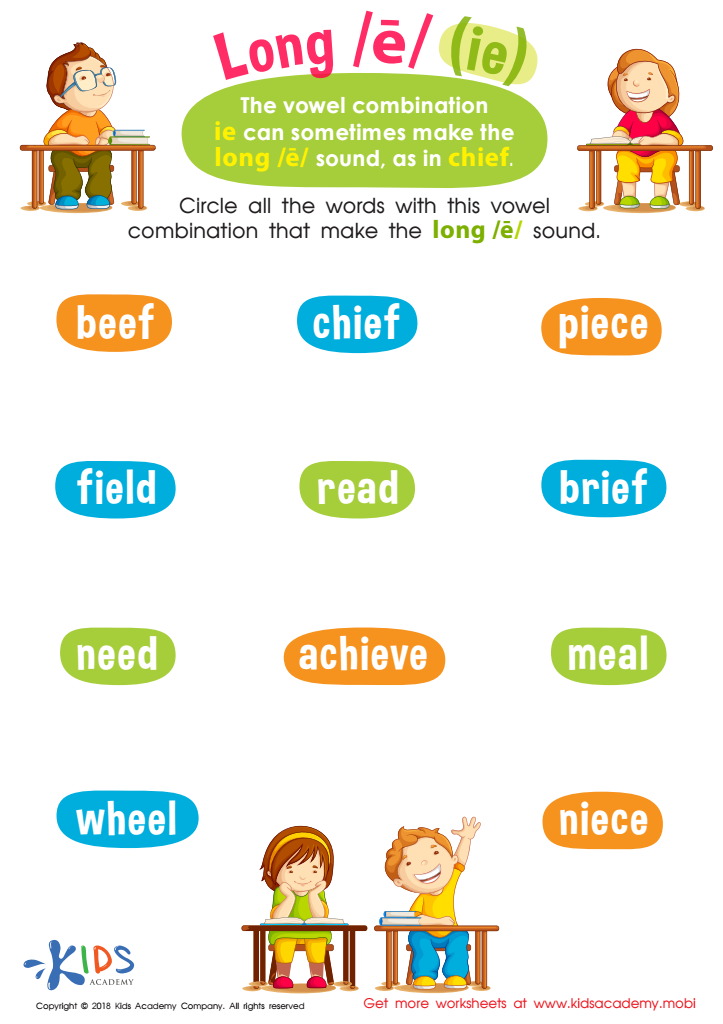
Reading: Long E and IE Worksheet
Ask your child to name some words with the long /e/ sound they hear every day. Then, read aloud all the words in the worksheet with them. Ask them to circle the words containing ie that make this sound.
Reading: Long E and IE Worksheet
Worksheet
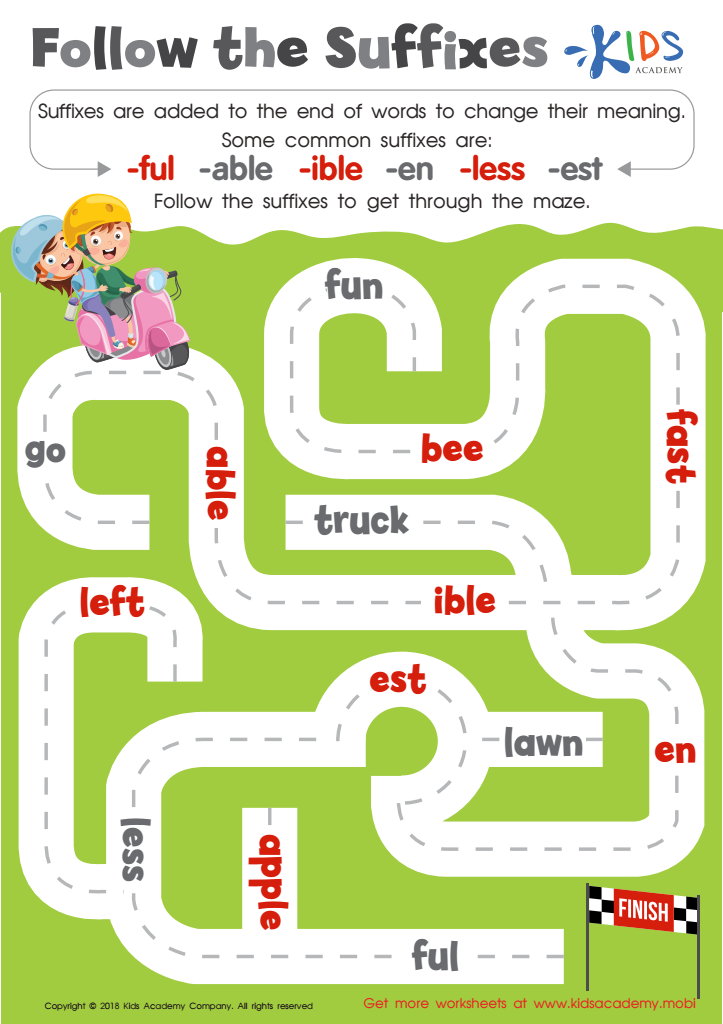
Reading: Follow the Suffixes Worksheet
Students use suffixes to find the right way through a maze in this enjoyable activity! Understanding suffixes helps kids decode and comprehend more words, leading to better reading fluency. A great addition to your reading classes, keep this printable close!
Reading: Follow the Suffixes Worksheet
Worksheet
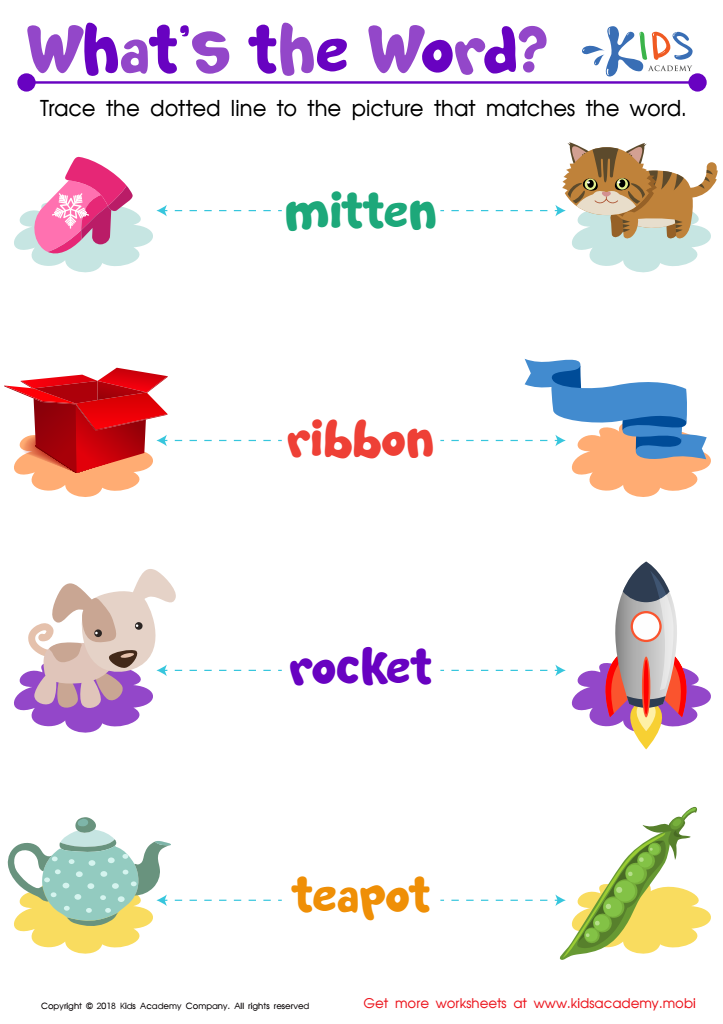
Reading: What's Word Worksheet
Teaching reading? This worksheet can help! Students read the word and draw a line to the picture for clues if needed. This will boost their vocabulary and fluency, increasing confidence and reading skills. Watch their progress as new words are added!
Reading: What's Word Worksheet
Worksheet
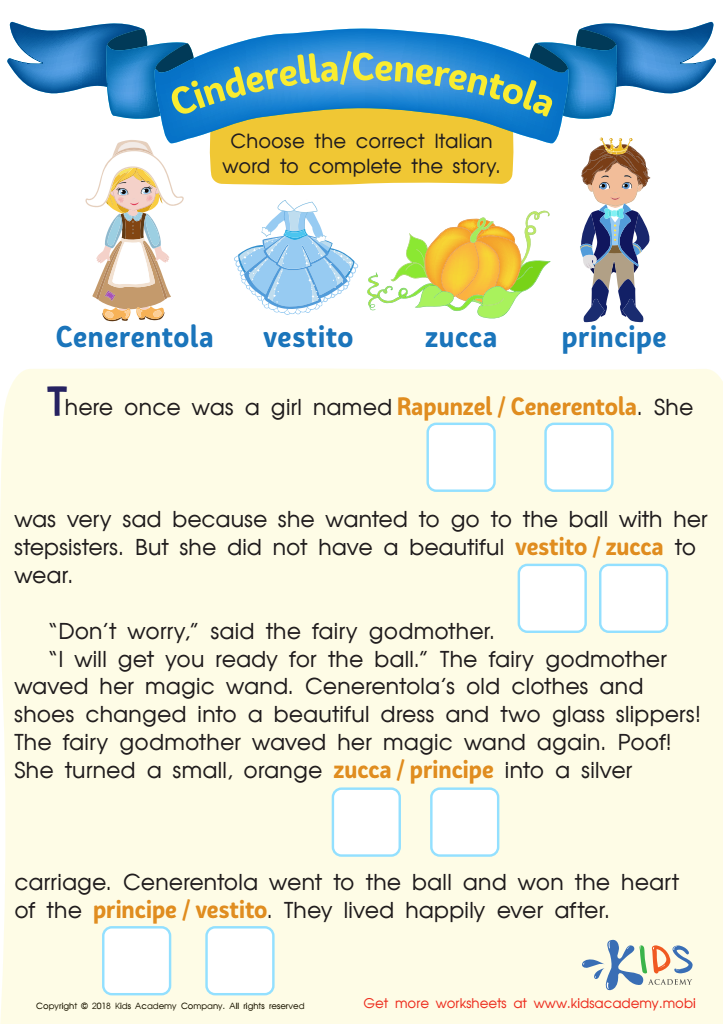
Cinderella / Cenerentola Worksheet
Children will love this fairytale about a princess trying to get to the royal ball. With colorful images and context clues, they'll learn Italian words without even realizing it. They'll fill in the correct boxes and help Cenerentola get to her happily-ever after. This free worksheet will delight and teach at once!
Cinderella / Cenerentola Worksheet
Worksheet
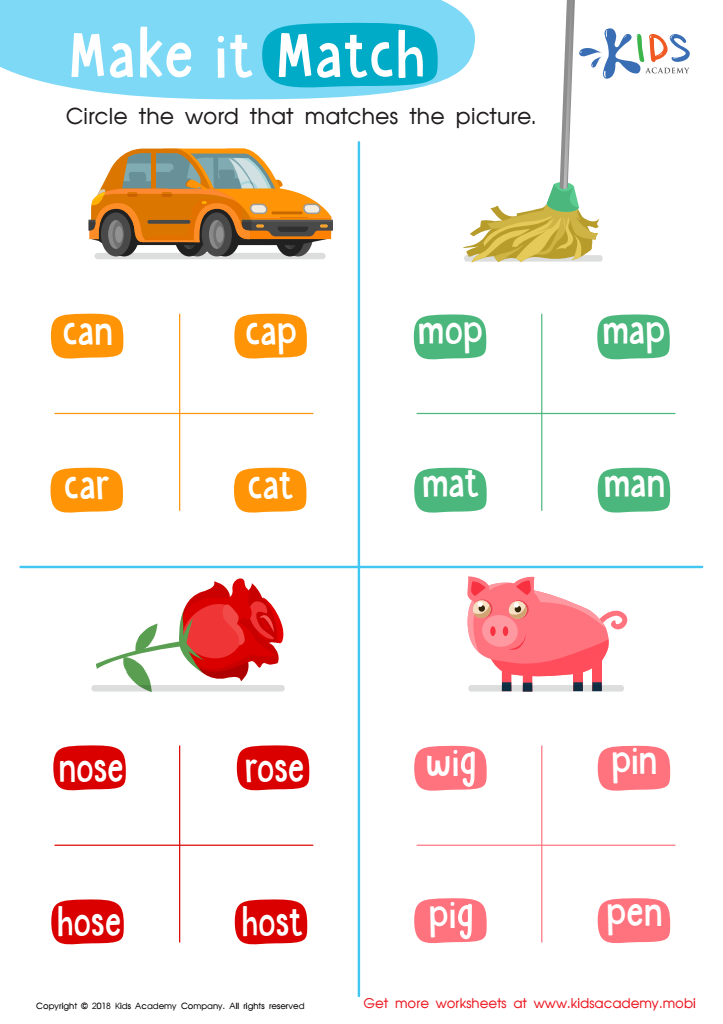
Make It Match Worksheet
This bright, cheery worksheet helps students practice discerning between mono-syllabic words with similar short vowel sounds. With familiar pictures and bold colors, they'll circle the word that matches each given picture, honing both reading and visual discrimination skills. A great tool for emerging readers!
Make It Match Worksheet
Worksheet
Join Kids Academy for Free
Who is primarily going to use this learning content?


.jpg)













