Filters

31 filtered results

Clear all filters
Favorites
With answer key
Interactive

31 filtered results

Difficulty Level

Grade


Subject

    Check out this FREE Trial Lesson on Letter Sounds for age 5-9!

    Review

    Favorites
    With answer key
    Interactive
    • 5-9
    • Interactive
    • Letter Sounds
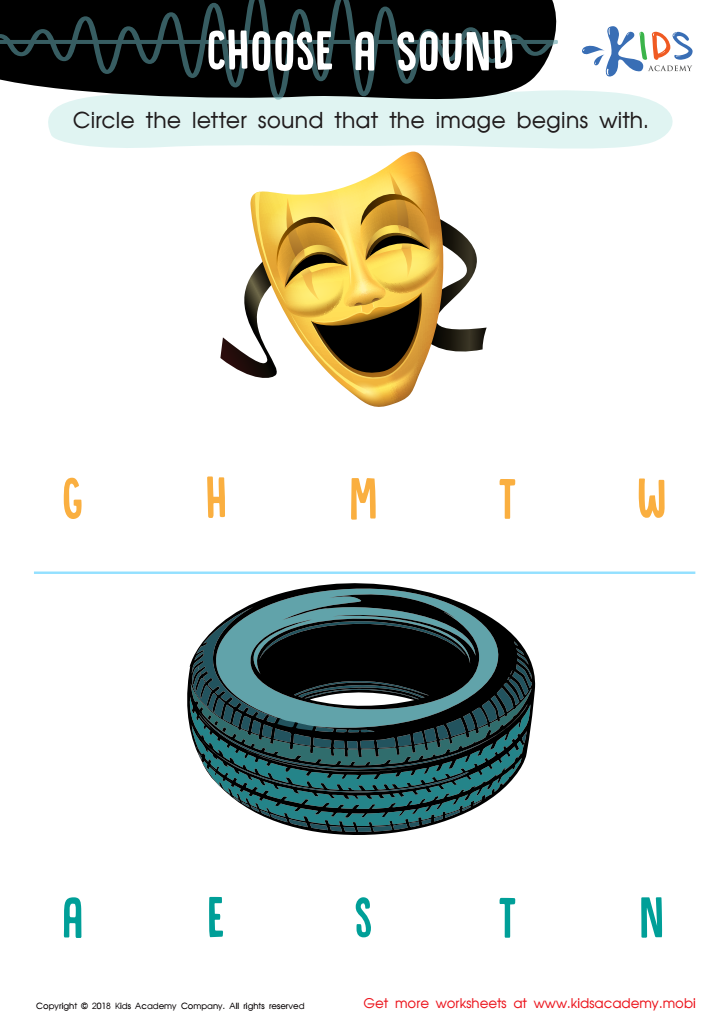
    Choose a Sound Worksheet
    Choose a Sound Worksheet

    Choose a Sound Worksheet

    Help your child hone pre-reading skills with this colorful worksheet! They'll practice tracing letter sounds, develop phoneme awareness, and gain confidence. Plus, it's a fun way to work on their fine motor skills.
    Choose a Sound Worksheet
    Worksheet
    Is It m or n? Worksheet
    Is It m or n? Worksheet

    Is It m or n? Worksheet

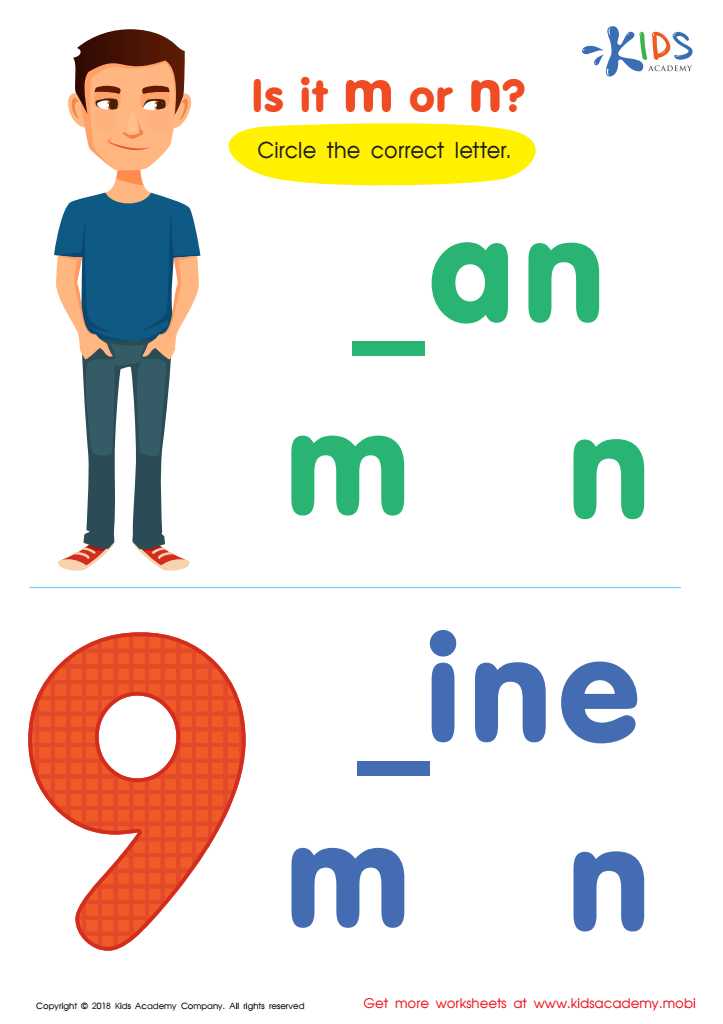
    Help your child circle the letter that begins the words "man" and "nine" in the picture. This is a great way for them to learn the alphabet.
    Is It m or n? Worksheet
    Worksheet
    Identify the Written Words Worksheet
    Identify the Written Words Worksheet

    Identify the Written Words Worksheet

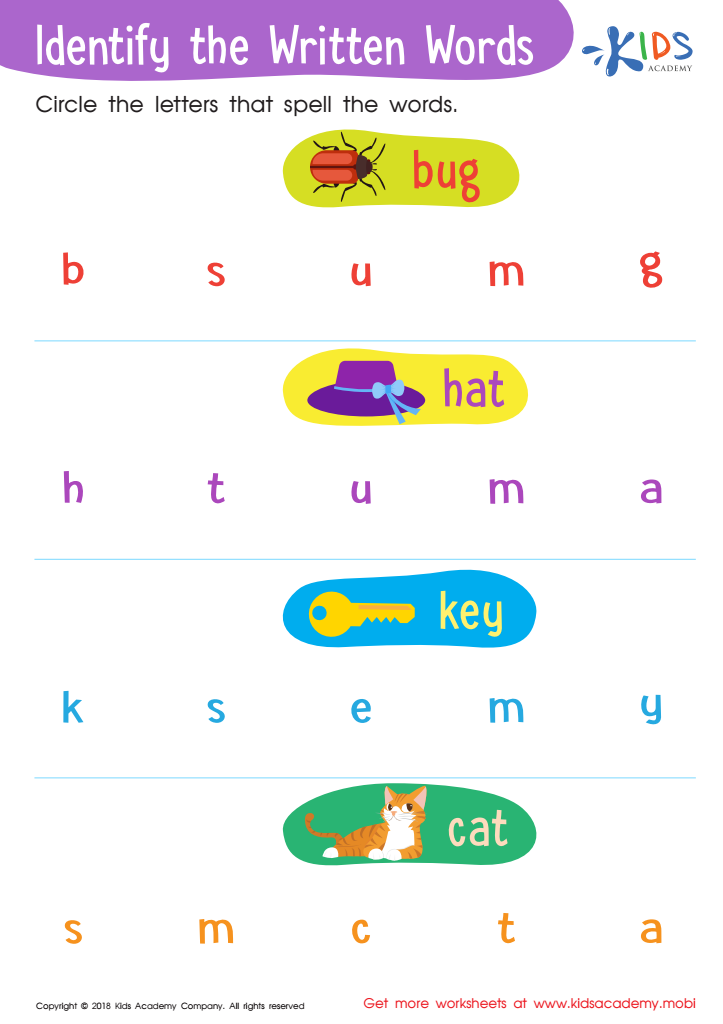
    Have your students identify the objects on the printout, then spell the words. If they already know how to spell, this exercise should be easy. Help them circle the correct letters from the set to spell out the words. This is a great way to reinforce reading and spelling skills. Max 80 words.
    Identify the Written Words Worksheet
    Worksheet
    What Sound Is it? Worksheet
    What Sound Is it? Worksheet

    What Sound Is it? Worksheet

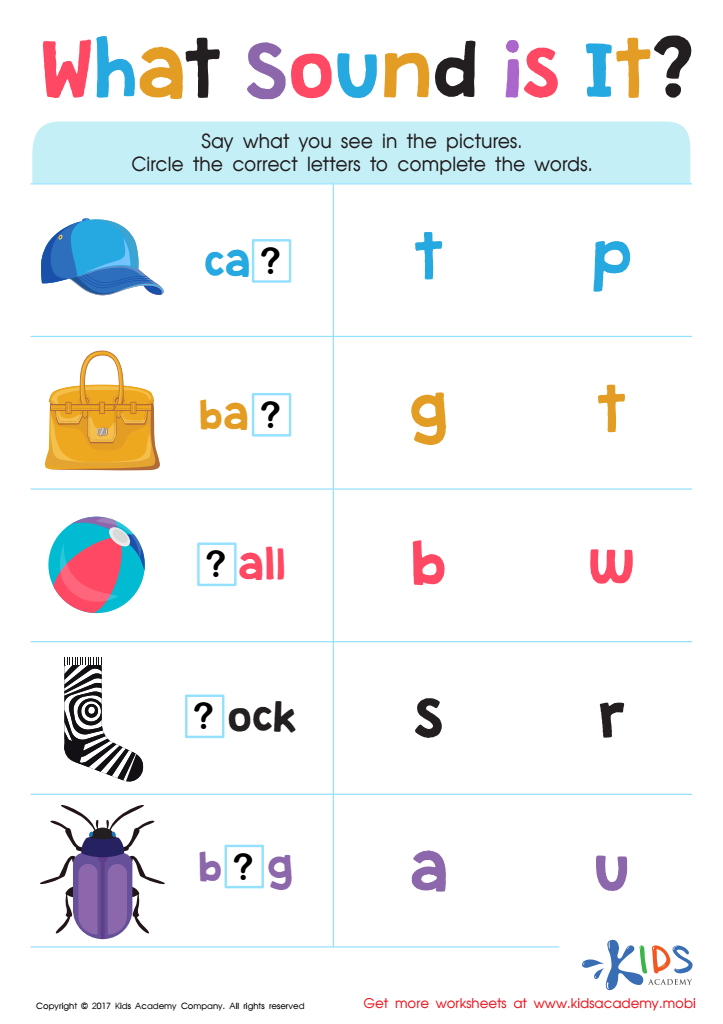
    Have your child say the words for the pictures on this fun worksheet. As he or she sounds out the word, your child will use the provided letter choices to complete it, building reading and phonics skills. Visual cues make it easier to identify the correct beginning, middle, or end sound.
    What Sound Is it? Worksheet
    Worksheet
    Letter p sound worksheet
    Letter p sound worksheet

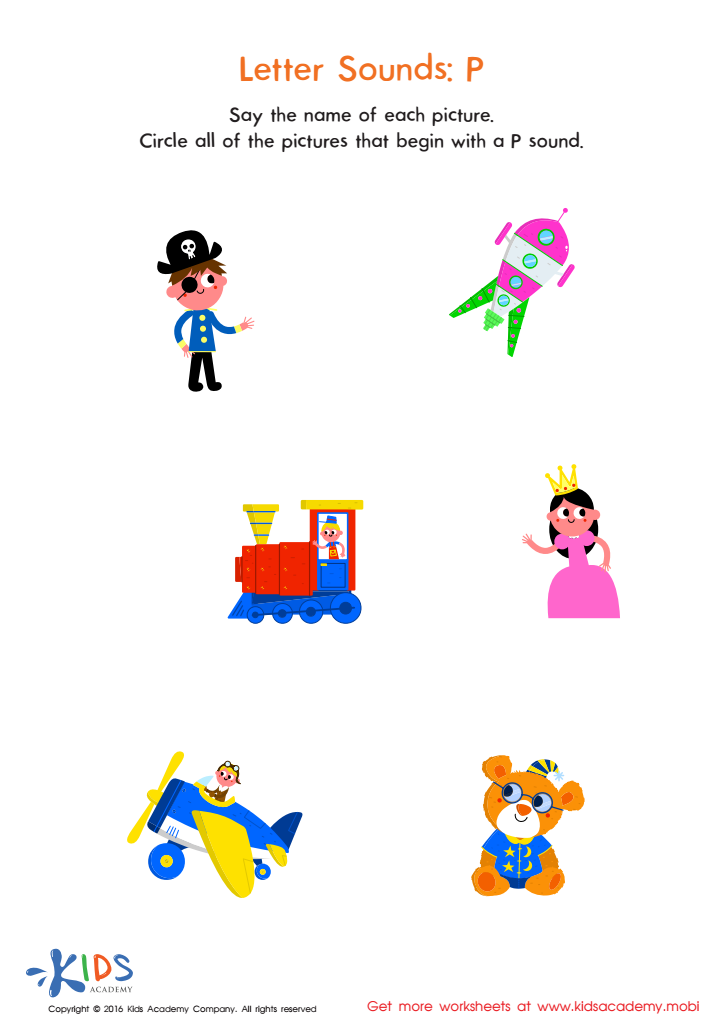
    Letter P Sound Worksheet

    Think P! Kids practice phonics with this fun letter P worksheet. With delightful illustrations, they'll sound out simple words and get closer to reading.
    Letter P Sound Worksheet
    Worksheet
    Letter t sounds worksheet
    Letter t sounds worksheet

    Letter T Sounds Worksheet

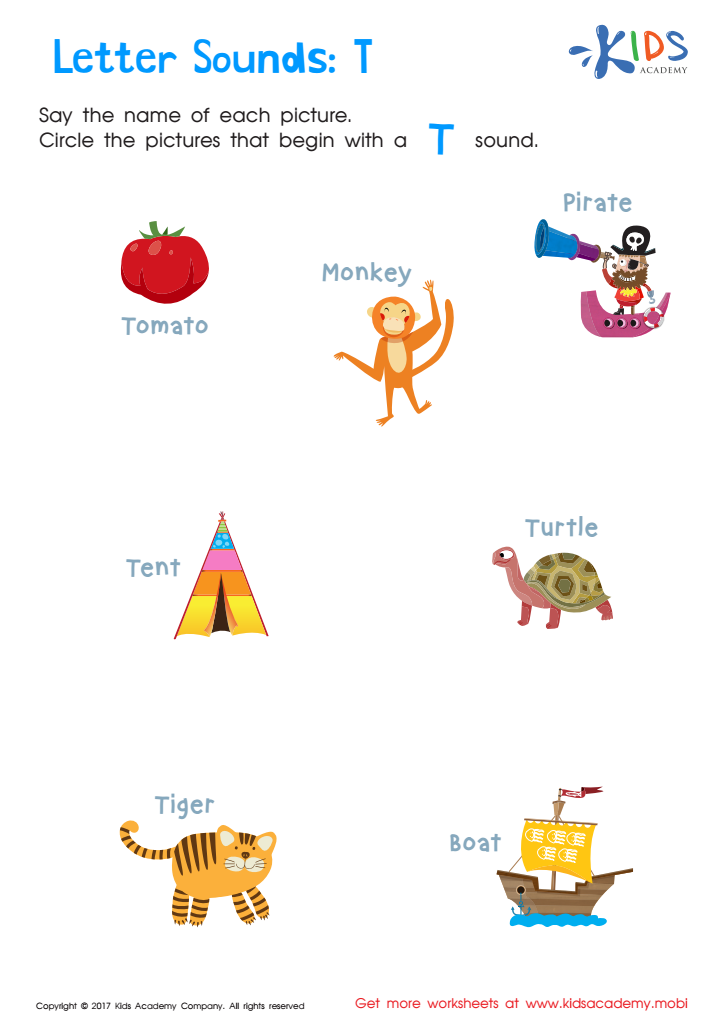
    This worksheet is a fun way to help kids learn the t sound. It has familiar pictures and an easy-to-follow format, so kids can quickly recognize and learn the letter t.
    Letter T Sounds Worksheet
    Worksheet
    Letter f sounds worksheet
    Letter f sounds worksheet

    Letter F Sounds Worksheet

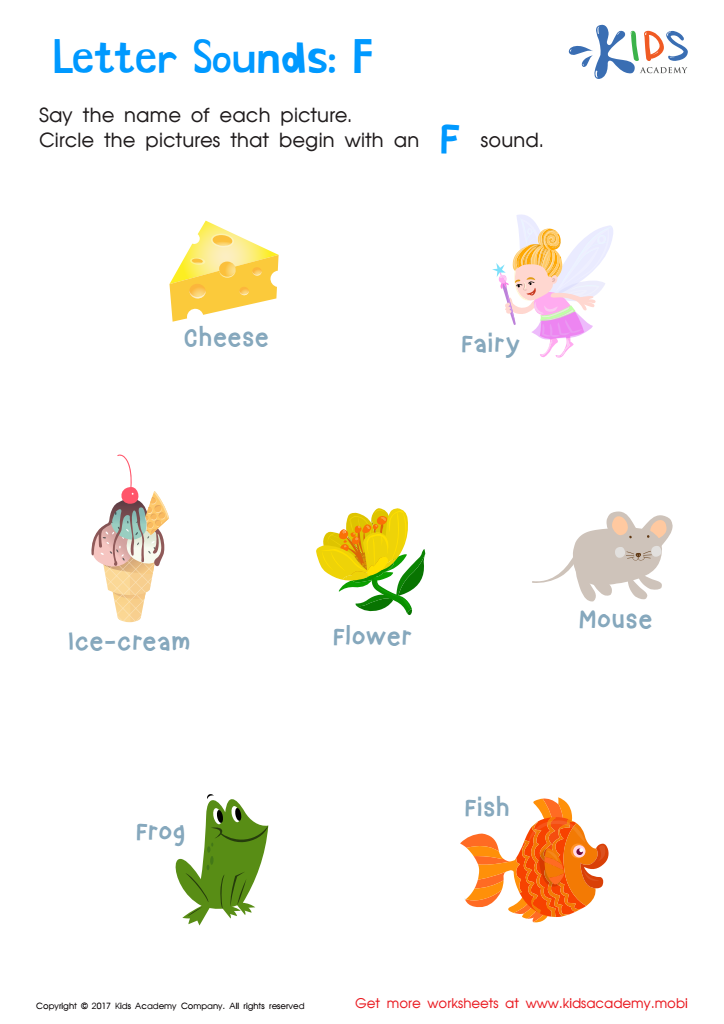
    Kids will practice identifying 'f' words, tracing, and coloring the letter F for a great way to learn phonics. Help your child discover the wonders of the letter 'F' with this fun worksheet! Kids will practice identifying 'F' words, tracing and coloring the letter, and building early reading skills. Stimulate their learning and let them connect letter sounds to words they know. An enjoyable way to practice phonics!
    Letter F Sounds Worksheet
    Worksheet


    Understanding letter sounds is essential for children aged 5 to 9, as it serves as the foundation for literacy development. During these formative years, kids are typically learning to read and write, and a solid grasp of letter sounds sets the stage for phonemic awareness, which is crucial for decoding words. When children learn to associate sounds with letters, they can begin to blend sounds together to form words, facilitating reading fluency and comprehension.

    Teachers and parents play a critical role in reinforcing letter sounds through playful activities, such as games, songs, and discussions about familiar objects. Engaging children in these fun—and often interactive—ways enhances their enthusiasm for learning and makes the process enjoyable. Additionally, understanding letter sounds helps children develop confidence in their language skills, paving the way for successful communication.

    Moreover, when educators and families focus on letter sounds, they are investing in a child's overall academic success. Strong literacy skills correlate with improved performance across all subjects. In essence, prioritizing letter sounds not only builds essential reading competencies but also fosters a love of learning that can help children thrive in school and beyond.