Upper & Lowercase Letters Worksheets for Ages 5-9 - Page 3
50 filtered results
-
From - To
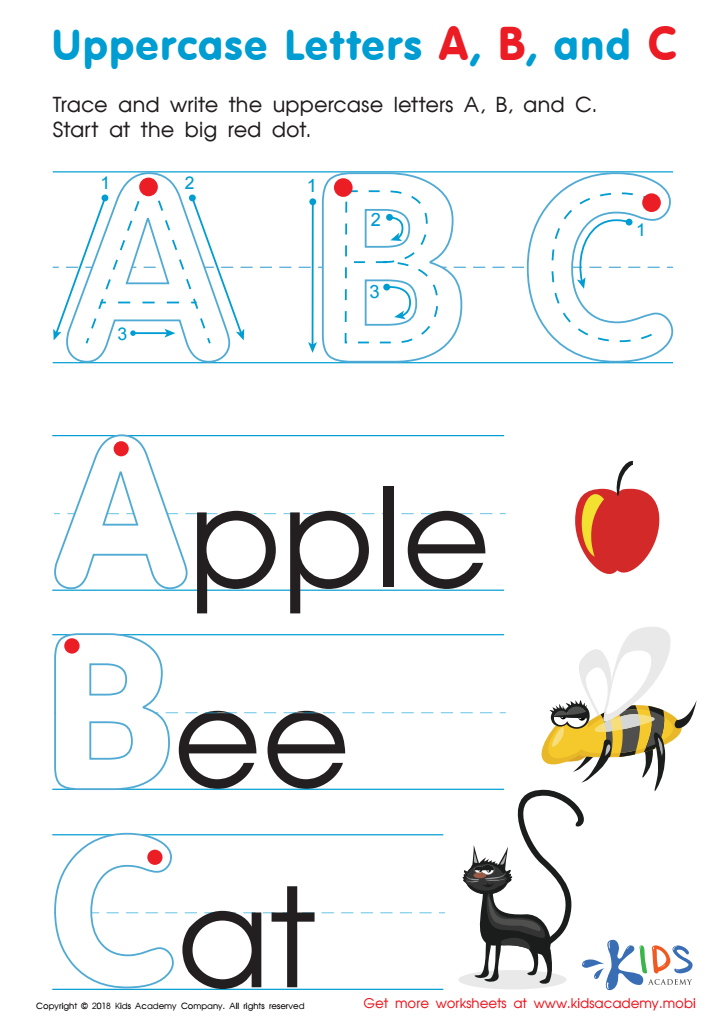
Uppercase Letters A, B, and C Worksheet
 Assign to My Students


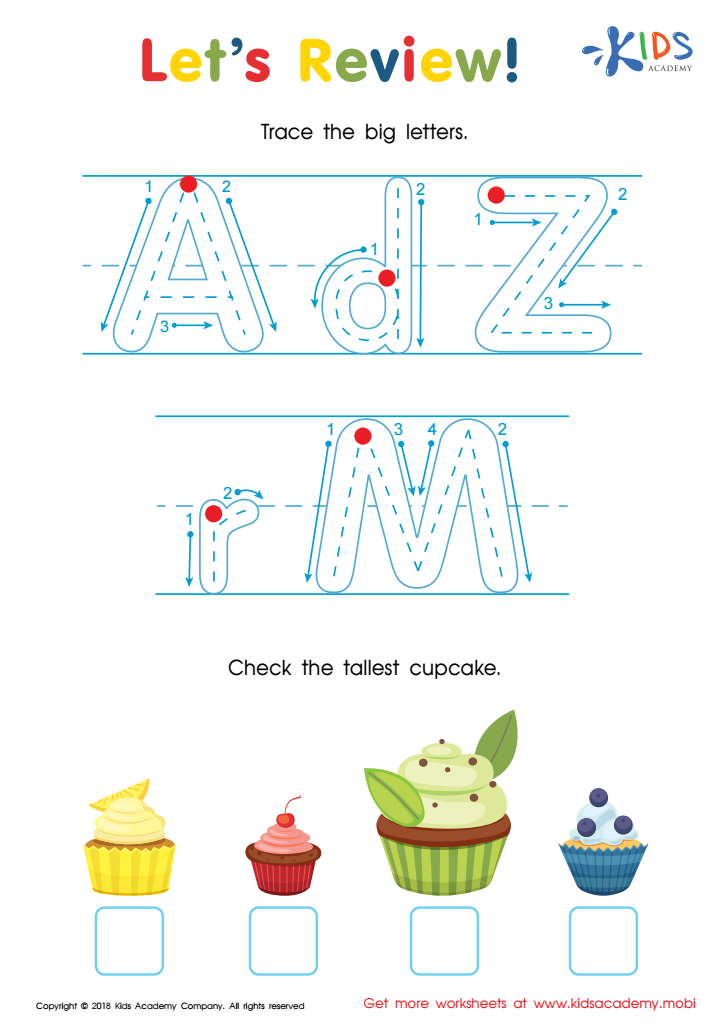
Let's Review! Big Letters Worksheet






Parents and teachers should care about upper and lowercase letters for ages 5-9 because mastering them is foundational for literacy development. During these formative years, children are learning to read and write, skills essential for succeeding in school and beyond. Uppercase letters, like "A," "B," and "C," are often introduced first because they are simpler in design and easier for young children to recognize and reproduce. However, lowercase letters, such as "a," "b," and "c," are more prevalent in reading and writing. Understanding both upper and lower case letters helps children recognize word patterns more easily and improves reading fluency.
Proficiency in recognizing and using both cases also reinforces comprehension, spelling, and writing skills. When children know when to use uppercase letters, like at the beginning of sentences and for proper nouns, they write more clearly and according to standard grammatical rules. This, in turn, enhances their ability to communicate effectively. Furthermore, consistency in teaching both letter cases minimizes confusion and boosts confidence. By investing the time and effort into teaching upper and lowercase letters, parents and teachers lay a solid groundwork for lifelong reading and writing success, thereby empowering children with essential communicative tools to thrive academically.







