Silent Vowels Worksheets for Ages 6-8
5 filtered results
Difficulty Level
Grade
Age
-
From - To
Subject
Activity
Standards
Discover our engaging Silent Vowels Worksheets designed specifically for children ages 6-8! These fun and interactive resources help young learners master the concept of silent vowels through a variety of exercises, including word searches, fill-in-the-blank activities, and matching games. Each worksheet is tailored to enhance phonemic awareness, spelling skills, and reading comprehension. With colorful visuals and age-appropriate challenges, these worksheets make learning enjoyable and effective. Perfect for classroom use or at-home learning, our Silent Vowels Worksheets promote independent practice and boost confidence in your child's reading abilities. Start exploring today and watch your child excel in their literacy journey!
Favorites
With answer key
Interactive
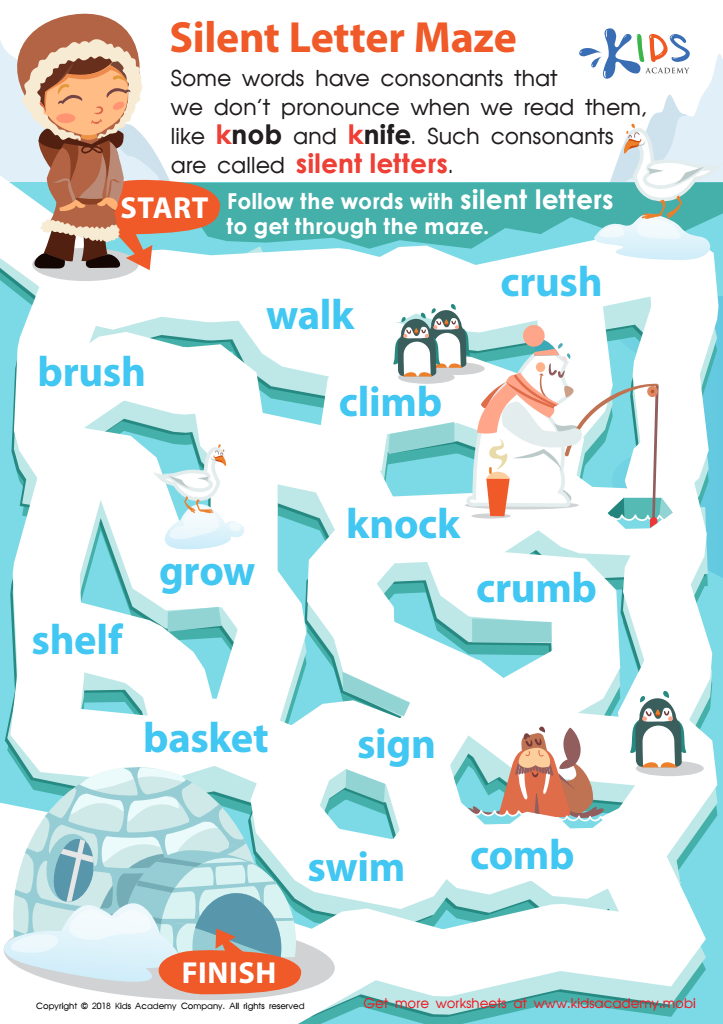
Silent Letter Maze Worksheet
Learning to read can be tricky, especially with words with irregular pronunciations. Explain to your child that some words have consonants we do not pronounce when reading. Ask them for examples like 'knife' and 'knob'. These consonants are called silent letters. Download this pdf to practice words with silent letters and complete the maze.
 Assign to My Students
Silent Letter Maze Worksheet
Worksheet
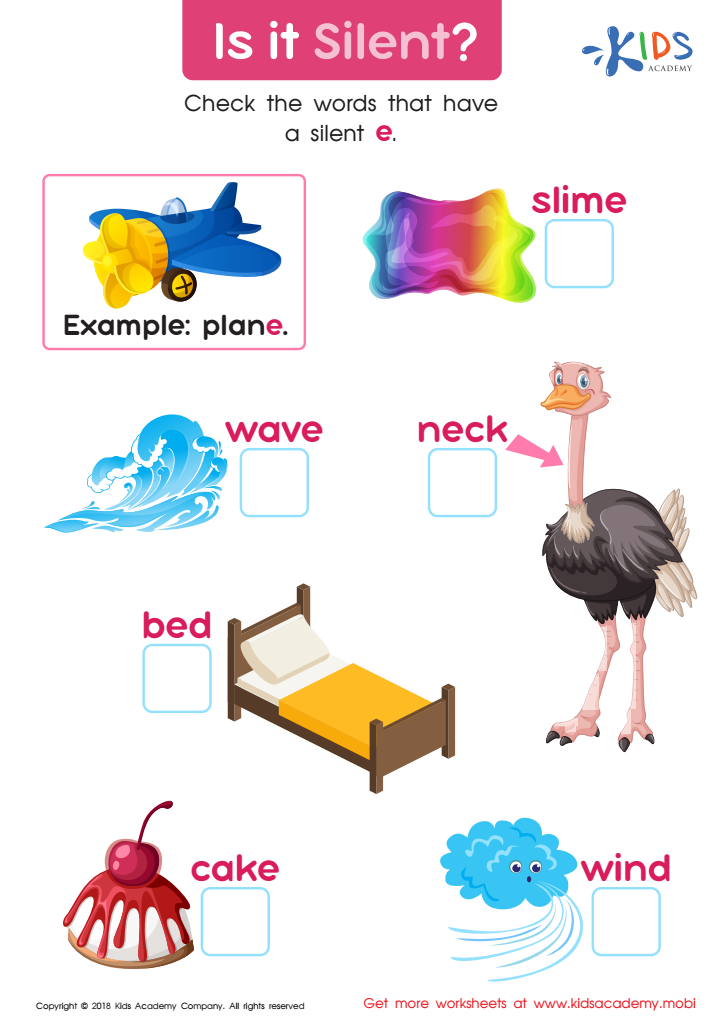
Is It Silent? Worksheet
Phonetics can be tricky, like the sound of /e/ in 'egg' vs. the silent /e/ at the end of 'slime'. Ask your students to give more examples. Read out the words in this worksheet with your kids and ask them to identify the silent /e/ ones.
Is It Silent? Worksheet
Worksheet
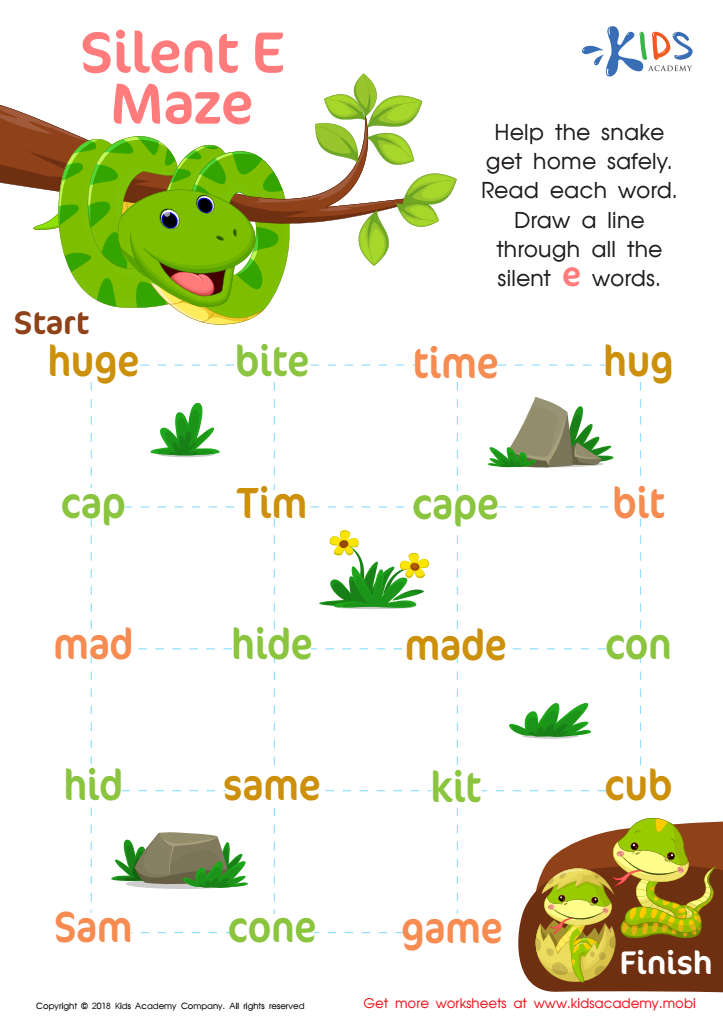
Silent E Maze Worksheet
Kids love mazes! This fun printable worksheet lets them help a mama snake get home to her babies, using Silent E words. They'll practice fine motor skills, while they draw lines through words that have Silent E and words with closed syllables that don't. It's a great way to help them recognize Silent E words!
Silent E Maze Worksheet
Worksheet
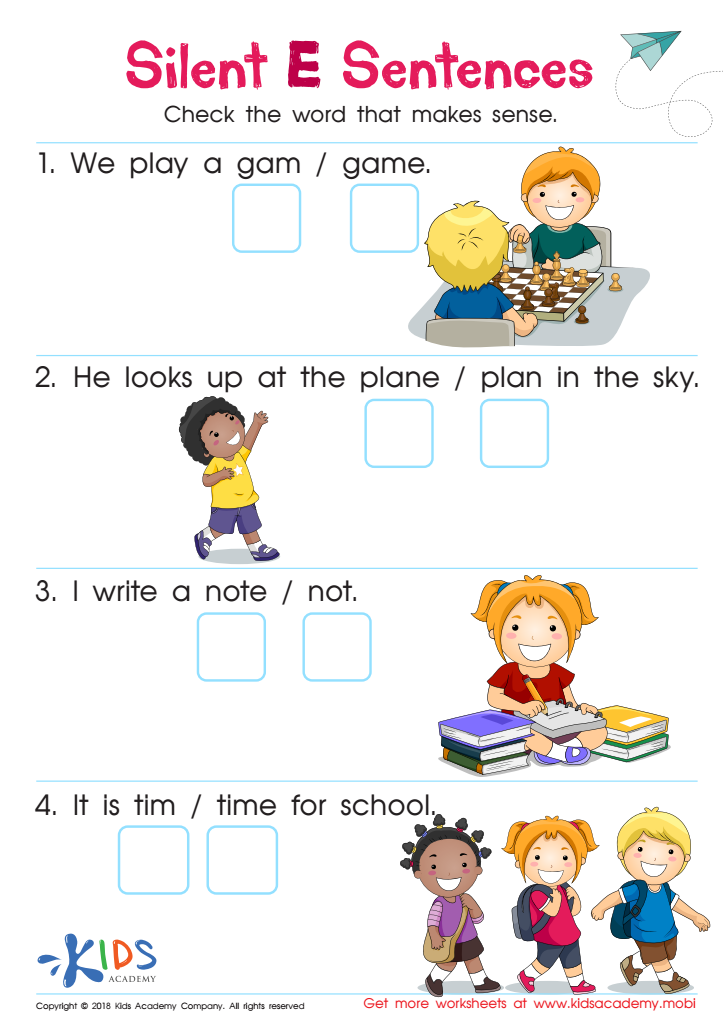
Silent E Sentences Worksheet
Young readers can find learning Silent E tricky, so this helpful worksheet can help! It teaches them to distinguish words that look the same but for the Silent E and choose the right word for sentence blanks. Kids can mark the correct answer and become familiar with closed syllables and words that require the E.
Silent E Sentences Worksheet
Worksheet
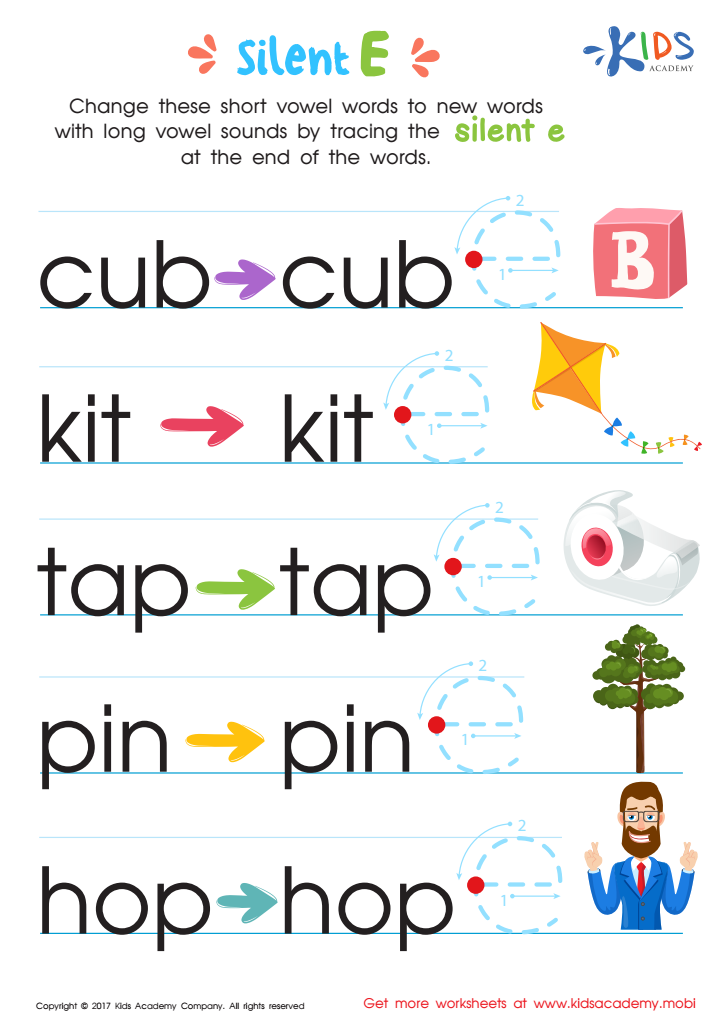
Silent E Words Worksheet
The letter e is amazing - it changes words without making a sound! Boost spelling and phonics with this Silent e worksheet from Kids Academy - fun and colorful!
Silent E Words Worksheet
Worksheet
Join Kids Academy for Free
Who is primarily going to use this learning content?


Silent vowels, although seemingly minor, play a crucial role in literacy development for children ages 6 to 8. Understanding silent vowels helps enhance phonemic awareness, which is vital for reading and writing skills. When children learn that some vowels in words like "lace" or "mixture" are not pronounced, it fosters better decoding strategies, allowing them to recognize words more easily despite variations in spelling.
Furthermore, grasping the concept of silent vowels aids in vocabulary expansion. As children encounter more complex words, recognizing silent vowels establishes a foundation for spelling accuracy and comprehension. This understanding contributes to their ability to tackle unfamiliar words, promoting confidence in reading.
In addition, discussions around silent vowels encourage critical thinking and problem-solving, as children must analyze and decode words independently. This skill not only enhances literacy but can also have a positive impact on other academic areas.
Finally, support from parents and teachers in recognizing and practicing silent vowels can create a supportive learning environment, making literacy engaging and fun. By focusing on these seemingly small elements, educators and parents can significantly contribute to a child’s reading proficiency and overall love for learning.