Vocabulary enhancement Worksheets for Ages 6-8 - Page 3
279 filtered results
Difficulty Level
Grade
Age
-
From - To
Subject
Activity
Standards
Favorites
With answer key
Interactive
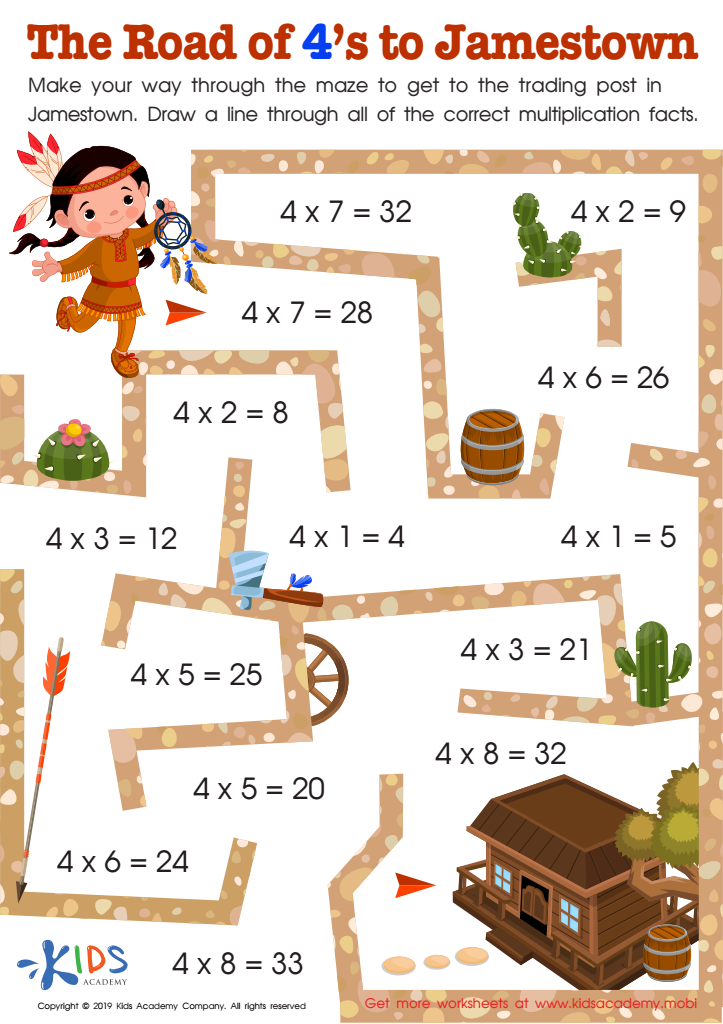
The Road of 4’s to Jamestown Worksheet
Does your child enjoy trips? Help them remember the best ones with this fun worksheet maze! Get your kid to look at the picture and draw a line through all the right multiplication facts to get to Jamestown's trading post. This worksheet is a great way to stimulate their problem-solving skills.
 Assign to My Students
The Road of 4’s to Jamestown Worksheet
Worksheet
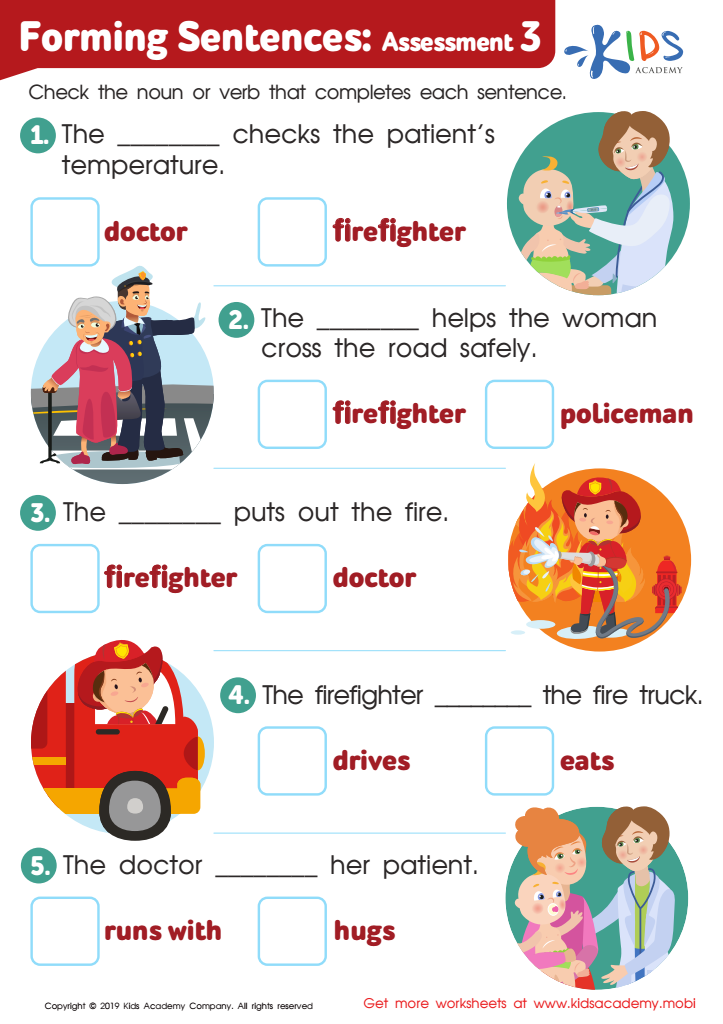
Forming Sentences: Assessment 3 Worksheet
Students must master sentence formation to be successful English learners. After grasping the ABCs and basic words, the next step is to construct sentences using those words. Worksheets like this one can help teach kids how to make sentences; they need to look at the pictures and select the correct noun or verb to complete each sentence.
Forming Sentences: Assessment 3 Worksheet
Worksheet
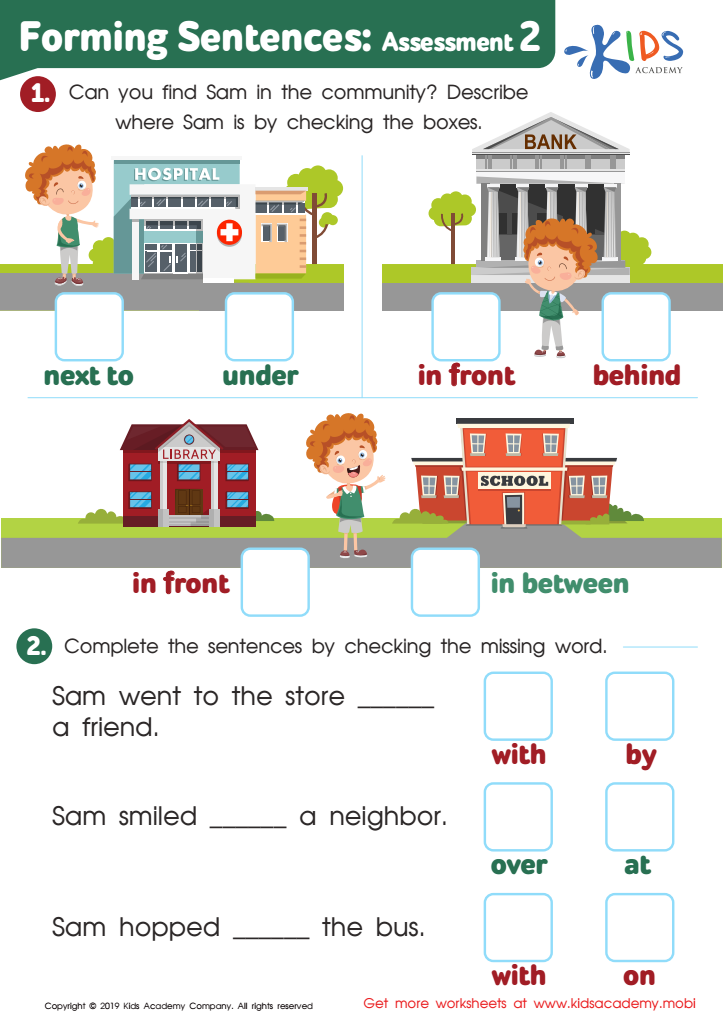
Forming Sentences: Assessment 2 Worksheet
A community is an area with different people, buildings and professionals. Ask students to list buildings in their area, then help find Sam. Describe where he is and check the boxes in the worksheet. At the bottom, help complete the sentences by checking the missing word.
Forming Sentences: Assessment 2 Worksheet
Worksheet
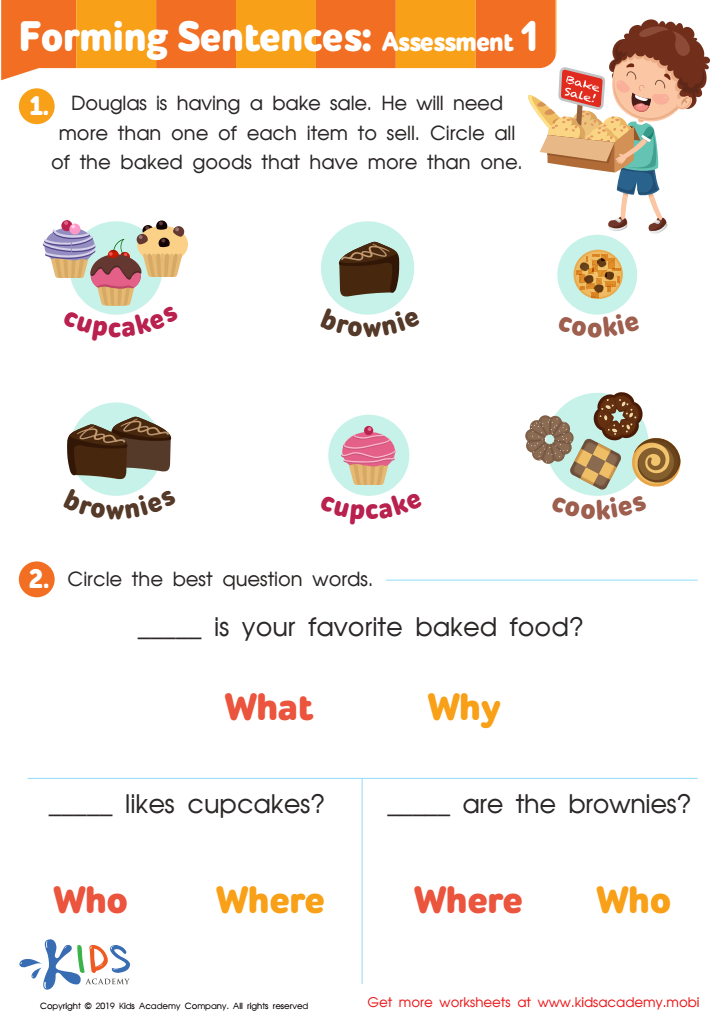
Forming Sentences: Assessment 1 Worksheet
Bake sales are great fun, offering a variety of goodies and treats! Kids also have a chance to make a bit of money. Help your students circle all the yummy baked goods with more than one in this worksheet - Douglas is hosting a bake sale and needs items in bulk!
Forming Sentences: Assessment 1 Worksheet
Worksheet
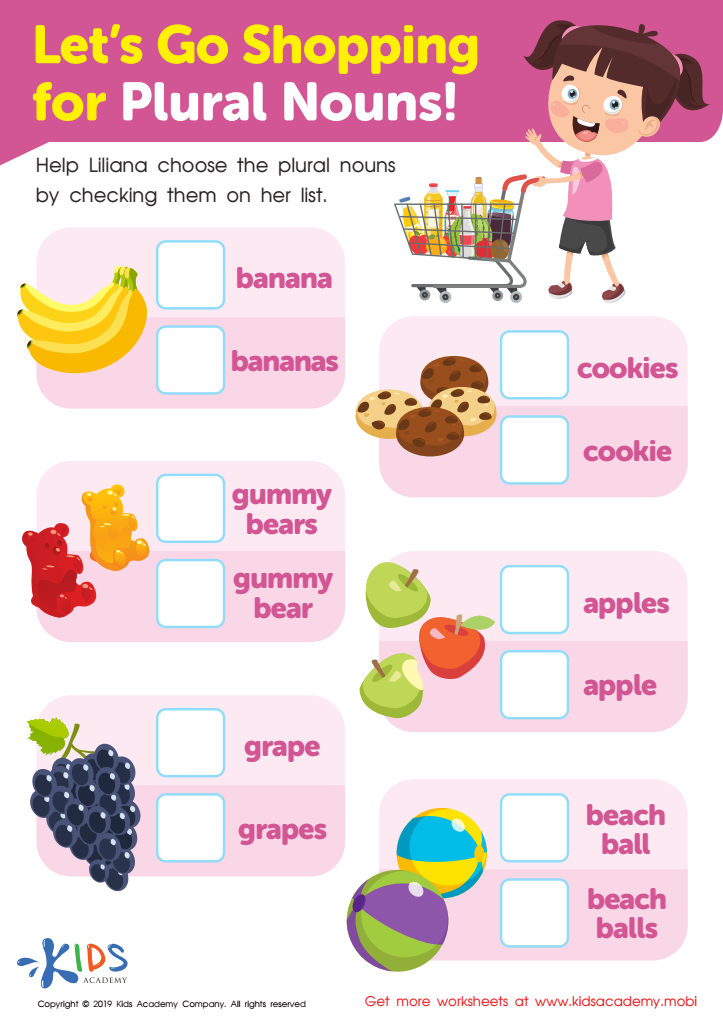
Let's Go Shopping for Plural Nouns! Worksheet
Help your students figure out the plural nouns in Lilliana's checklist. Look at the six objects in this PDF and add 's' to the nouns to make them plural. Show students how words can be tricky and explain how adding an 's' often changes the noun to its plural form.
Let's Go Shopping for Plural Nouns! Worksheet
Worksheet
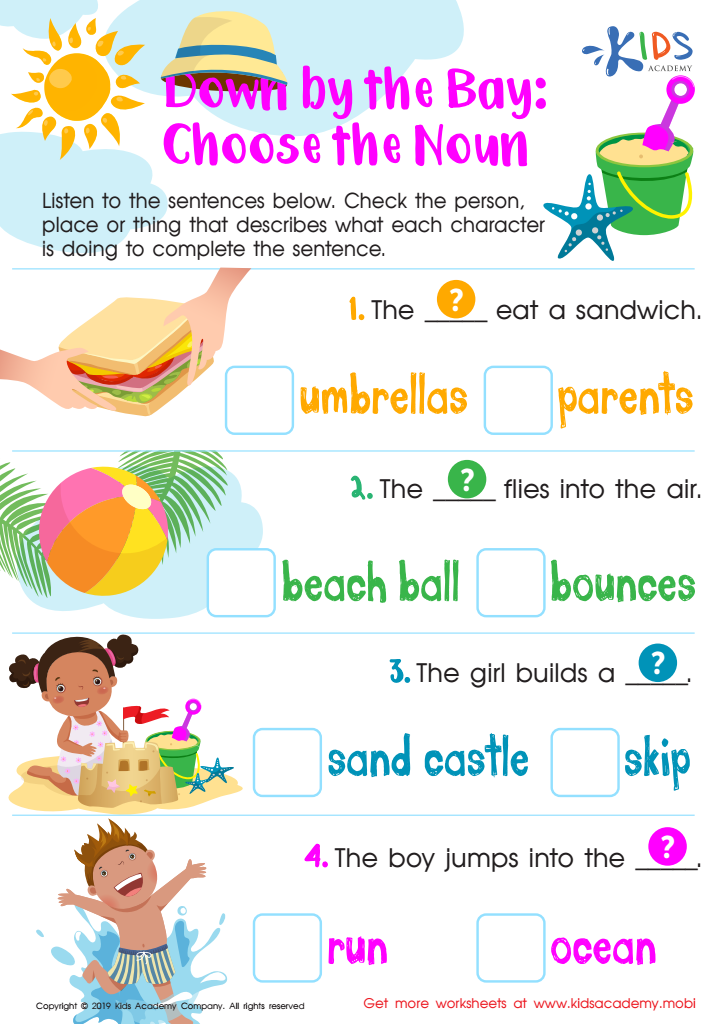
Down by the Bay: Choose the Noun Worksheet
Teach your child the basics of speaking and constructing English, like the parts of speech. Nouns are especially important; they are names of people, animals, objects, places, or things. Go through this worksheet with your kids and have them identify the nouns in the sentences. This exercise will help them understand the concept better.
Down by the Bay: Choose the Noun Worksheet
Worksheet
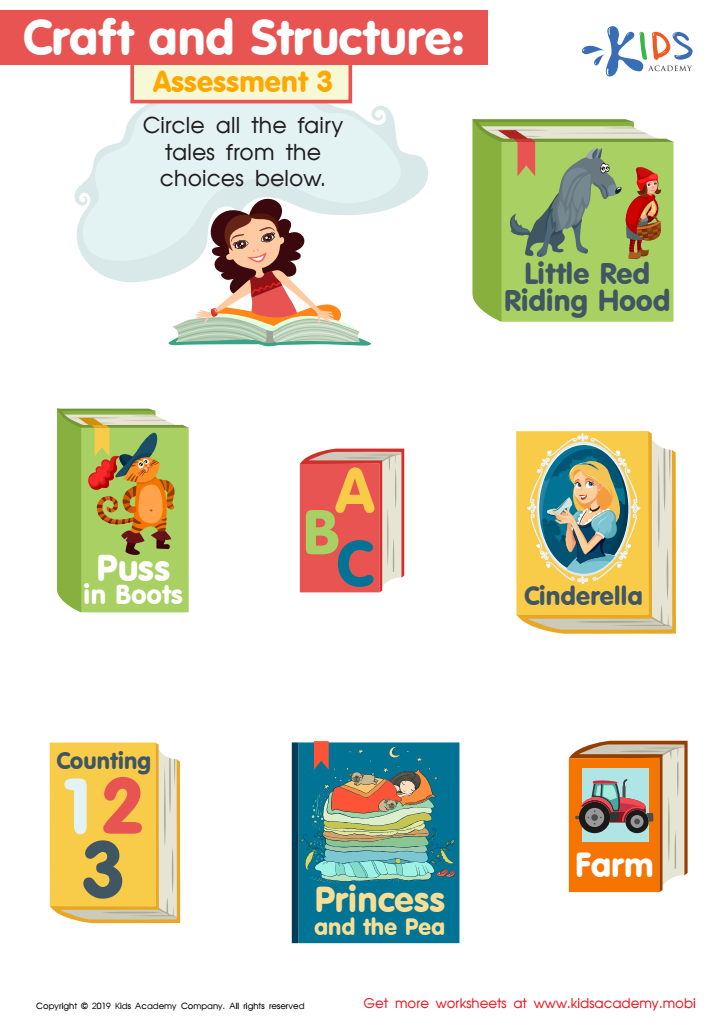
Craft and Structure: Assessment 3 Worksheet
Before starting the worksheet, ask your kids to recall their favorite bedtime stories. What characters and events can they remember? Four popular children's stories are hidden among pictures of other objects - help them search and circle the fairy tales in this PDF.
Craft and Structure: Assessment 3 Worksheet
Worksheet
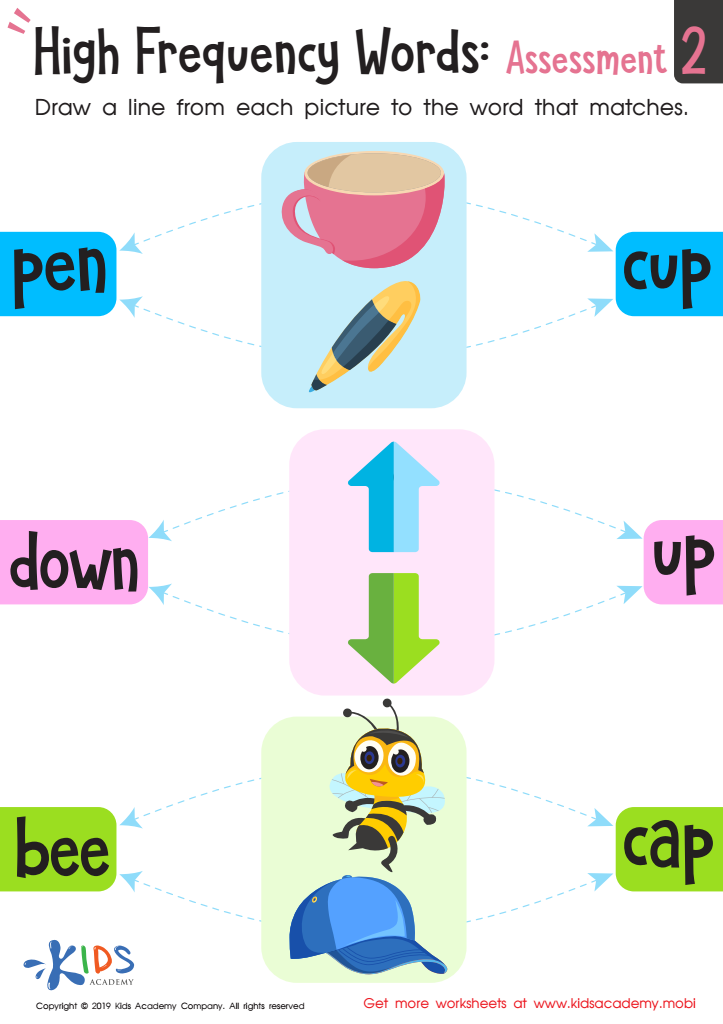
High Frequency Words: Assessment 2 Worksheet
Having knowledge of high frequency words can make emergent readers stronger and boost comprehension. This free assessment worksheet uses traceable lines to connect the picture to its corresponding words, allowing them to feel successful. It's a great way to reinforce high frequency words with familiar imagery.
High Frequency Words: Assessment 2 Worksheet
Worksheet
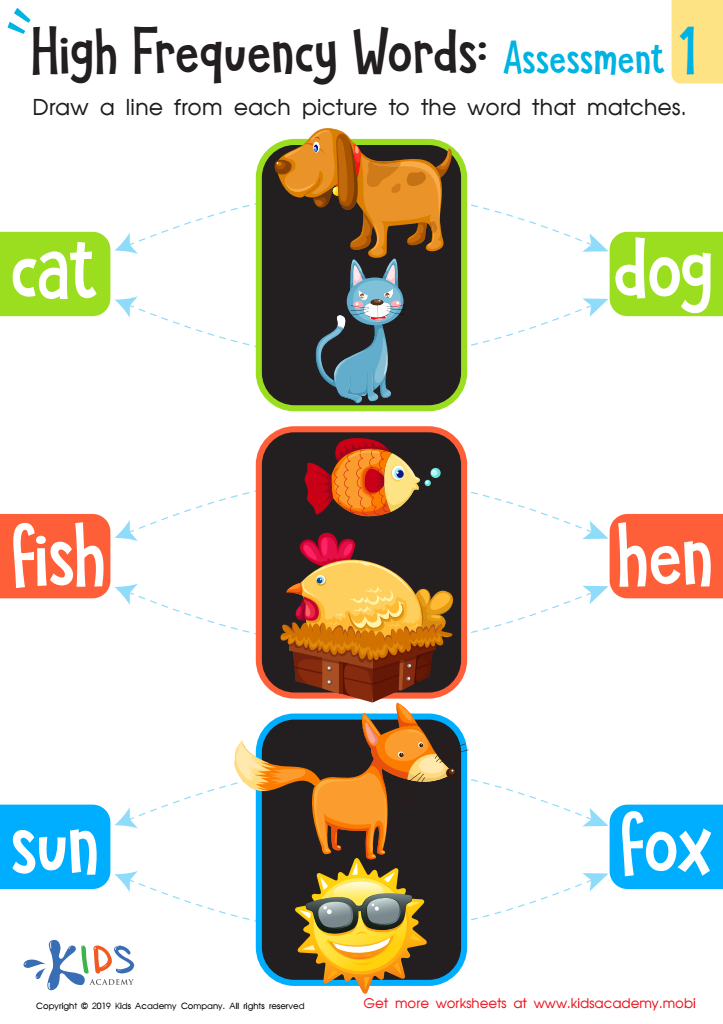
High Frequency Words: Assessment 1 Worksheet
Emergent readers need to know high-frequency words accurately and quickly to develop fluency. Connecting these words to colorful, fun pictures helps reading prosody. This assessment worksheet uses traceable lines to help learners match pictures to words.
High Frequency Words: Assessment 1 Worksheet
Worksheet
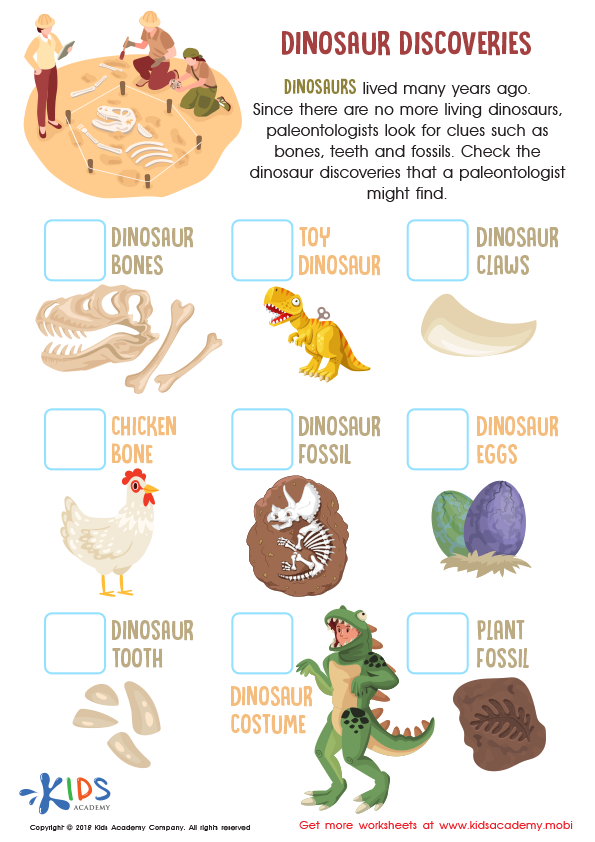
Dinosaur Discoveries Worksheet
Kids love the fascinating world of dinosaurs! This free worksheet educates them on how archeologists discover clues from their fossils, teeth, and bones. They'll identify items that are fossils with the help of pictures and choices provided. Learning has never been this fun!
Dinosaur Discoveries Worksheet
Worksheet
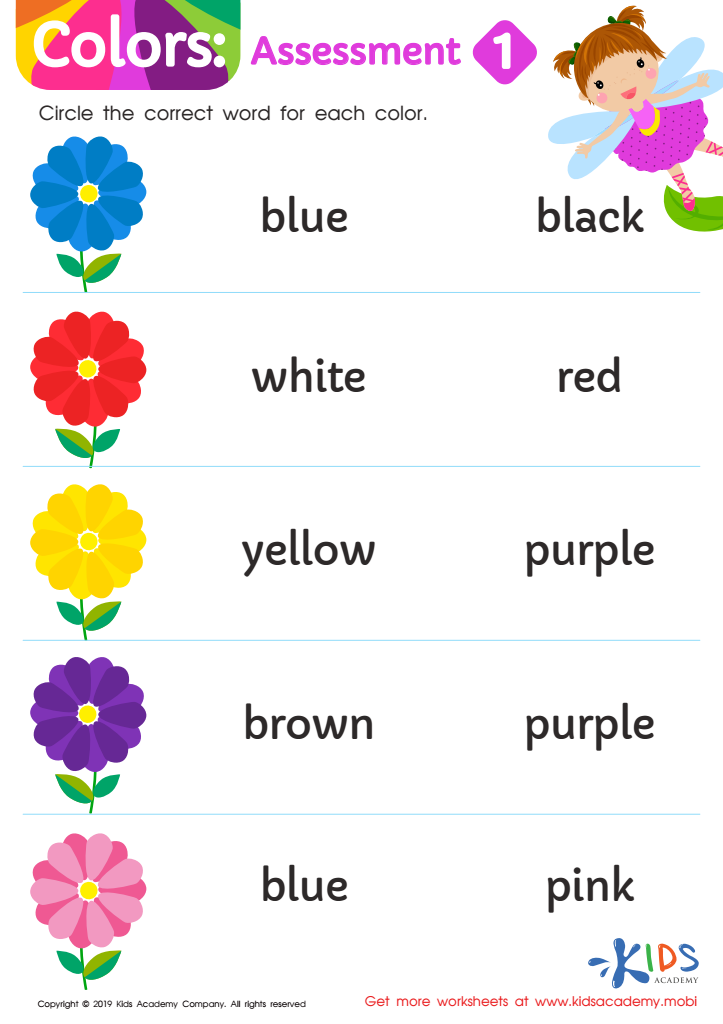
Colors: Assessment 1 Worksheet
Children can decode unfamiliar words by sounding them out or by recognizing sight words. Color words are an important part of sight word knowledge, so add them to your child's list! This color word worksheet is an effective assessment tool for teachers to use with preschool and kindergarten students. It checks their knowledge of five color words - they simply look at the flower and circle the appropriate color word!
Colors: Assessment 1 Worksheet
Worksheet
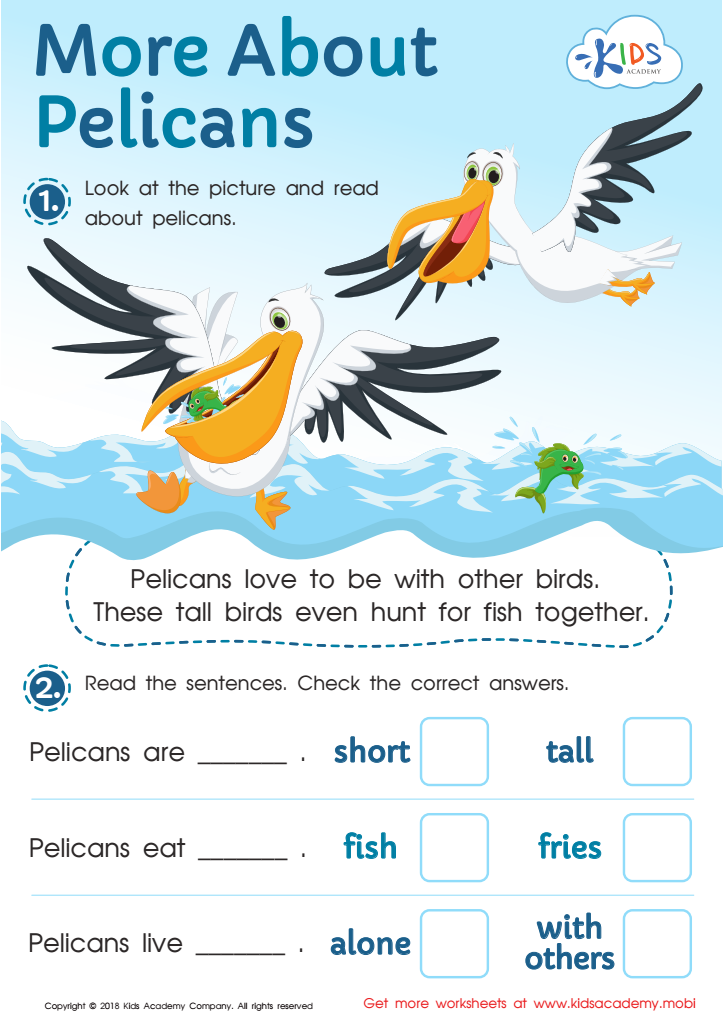
More About Pelicans Worksheet
Train your reader to look for clues in words with this fun worksheet about pelicans! As they read each sentence, they'll learn more about these majestic birds. Once they finish, answer the questions and explore even more!
More About Pelicans Worksheet
Worksheet
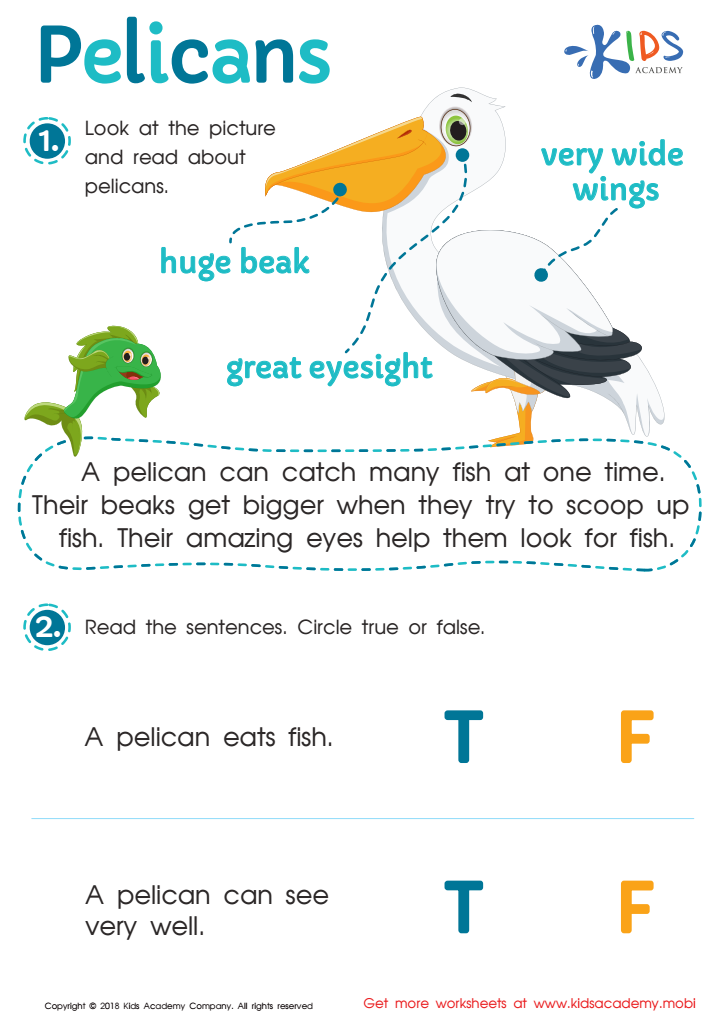
Pelicans Worksheet
This printable worksheet will help your child learn to read and analyze informational passages. It's fun and educational, featuring an animal science topic about pelicans. Read the passage and view the graph, then answer the questions by indicating if the statements are true or false.
Pelicans Worksheet
Worksheet
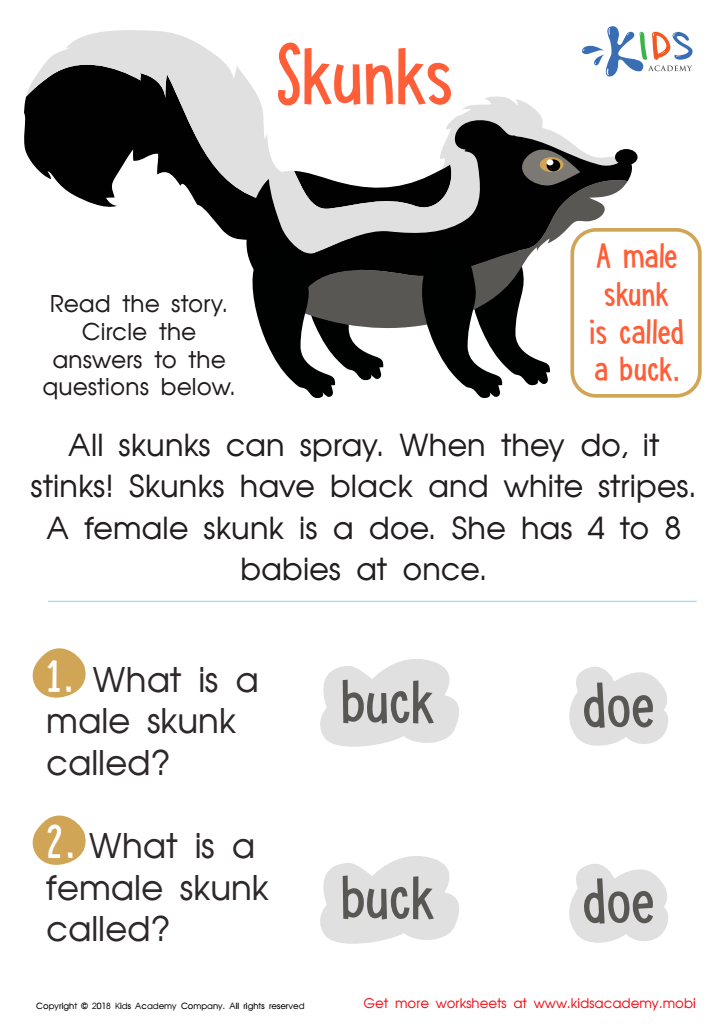
Skunks Worksheet
Kids can learn fascinating information about a beloved and smelly animal with this fun worksheet. They'll read articles, texts, and look at an accompanying picture while reading. Captions and sidebars can give extra details. Finally, answer the given questions by selecting the correct response. Reading is a fun and informative way to gain knowledge!
Skunks Worksheet
Worksheet
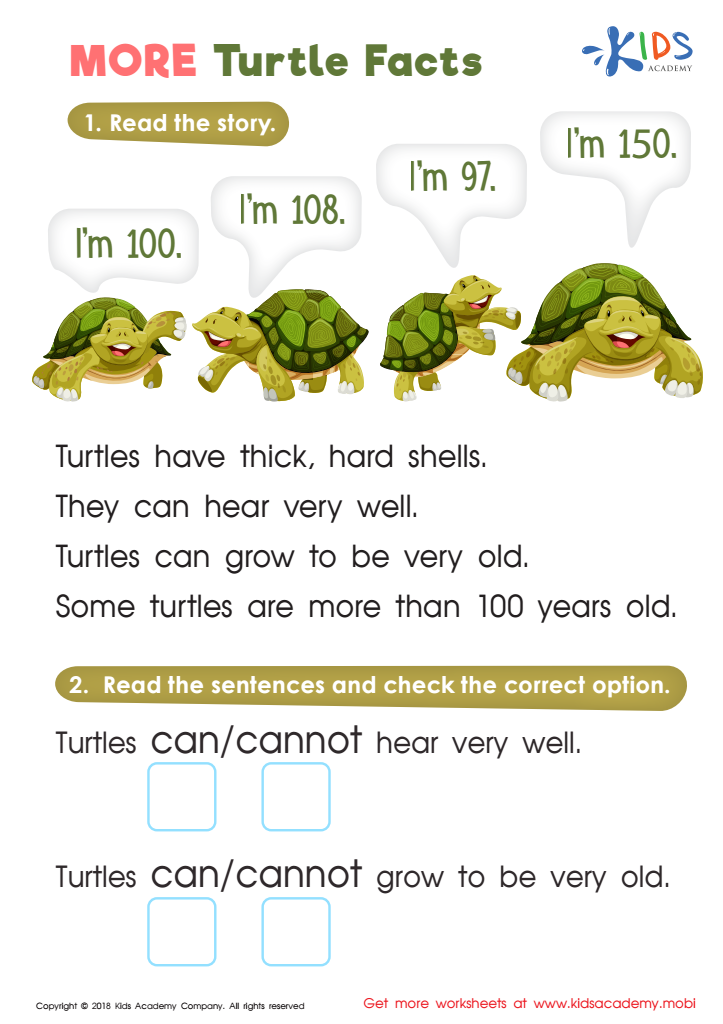
More Turtle Facts Worksheet
Discover more fun facts about turtles with this reading worksheet! Read through the paragraph, check out the pictures, then answer the questions at the bottom to see how well your child remembers what they learned. Find out what turtles can and can't do by ticking the boxes. Let the turtle-filled learning begin!
More Turtle Facts Worksheet
Worksheet
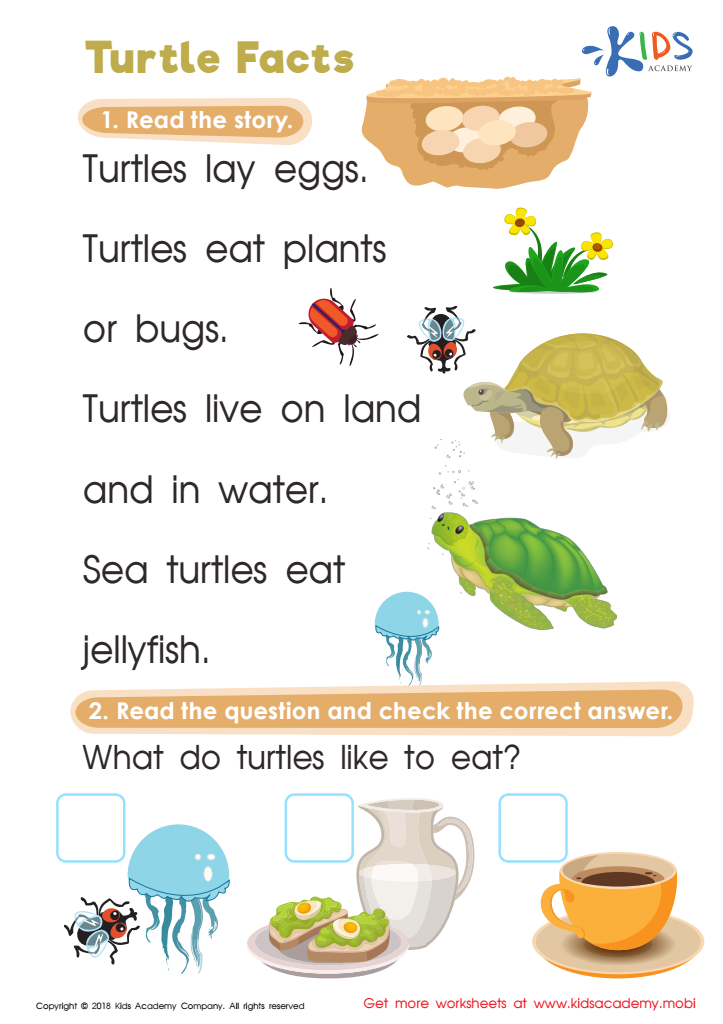
Turtle Facts Worksheet
Reading has many advantages, like being able to learn from informational texts! This worksheet teaches kids about turtles using a fun paragraph with pictures! Encourage students to read the text and use the visuals as a guide. Then, answer the question at the bottom by checking the image that matches the info they just read.
Turtle Facts Worksheet
Worksheet
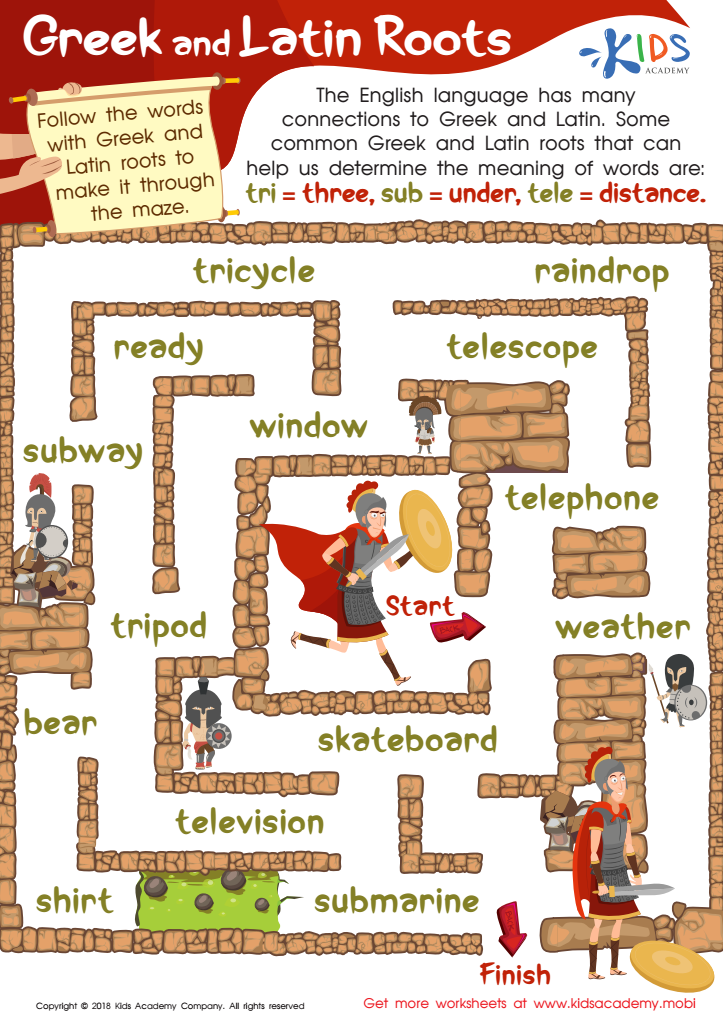
Greek and Latin Roots Worksheet
English borrows lots of words from other languages, and it has many ties to Greek and Latin. For example, 'tri', 'sub' and 'tele' (all from Greek and Latin) mean 'three', 'under' and 'distance' respectively. Help your child understand the meanings of words by having them work through a maze with words from these languages.
Greek and Latin Roots Worksheet
Worksheet
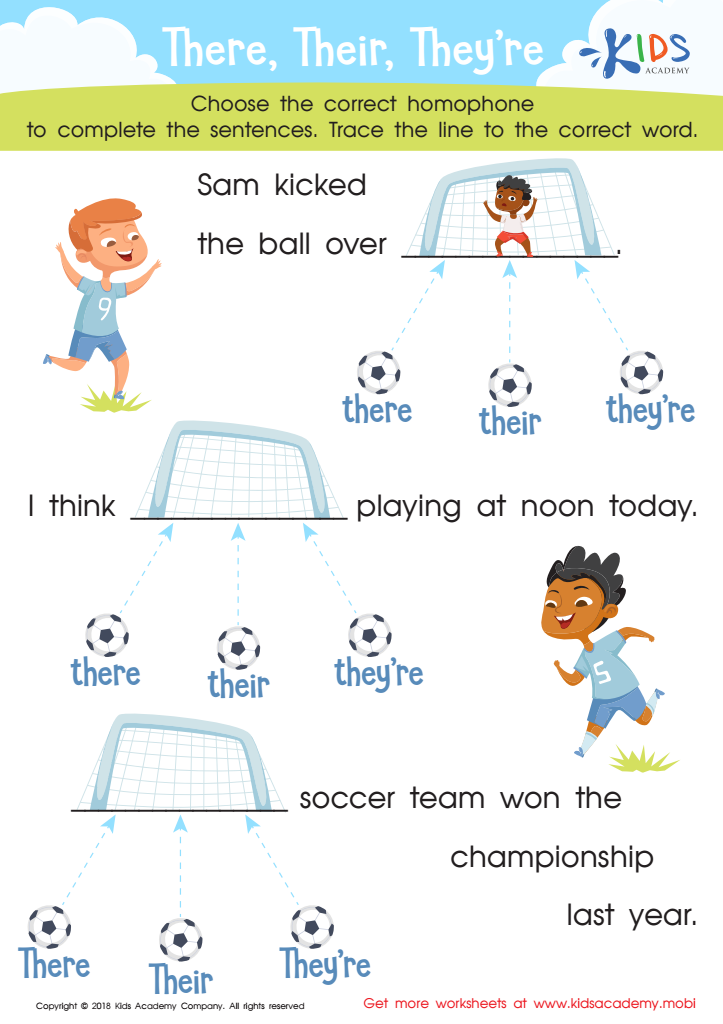
There, Their, They're Worksheet
Explain to your kids the difference between 'there', 'their' and 'they're'. These three words are homophones - spelt similarly but with different meanings. Help them choose the correct homophones when completing sentences, and trace the line to the right word.
There, Their, They're Worksheet
Worksheet
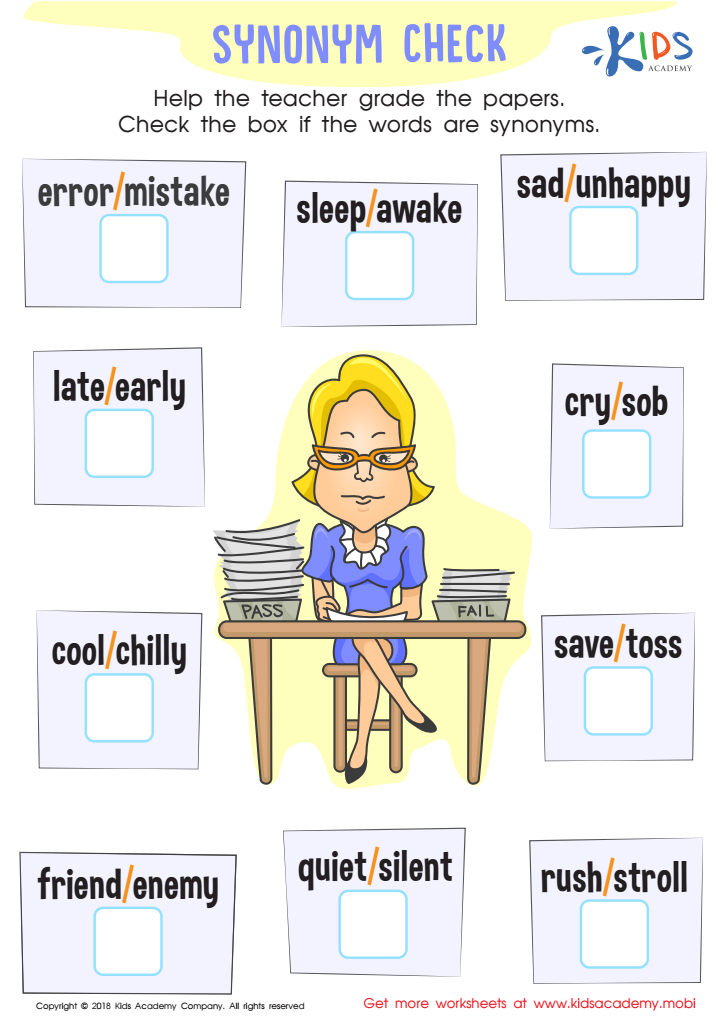
Synonym Check Worksheet
Ask your kids what a synonym is, and listen to their definitions. If needed, explain it's a word that has a similar meaning to another. Give examples, then ask them to do the same. For this worksheet, get them to help grade the papers. Have them check the boxes if the words are synonyms.
Synonym Check Worksheet
Worksheet
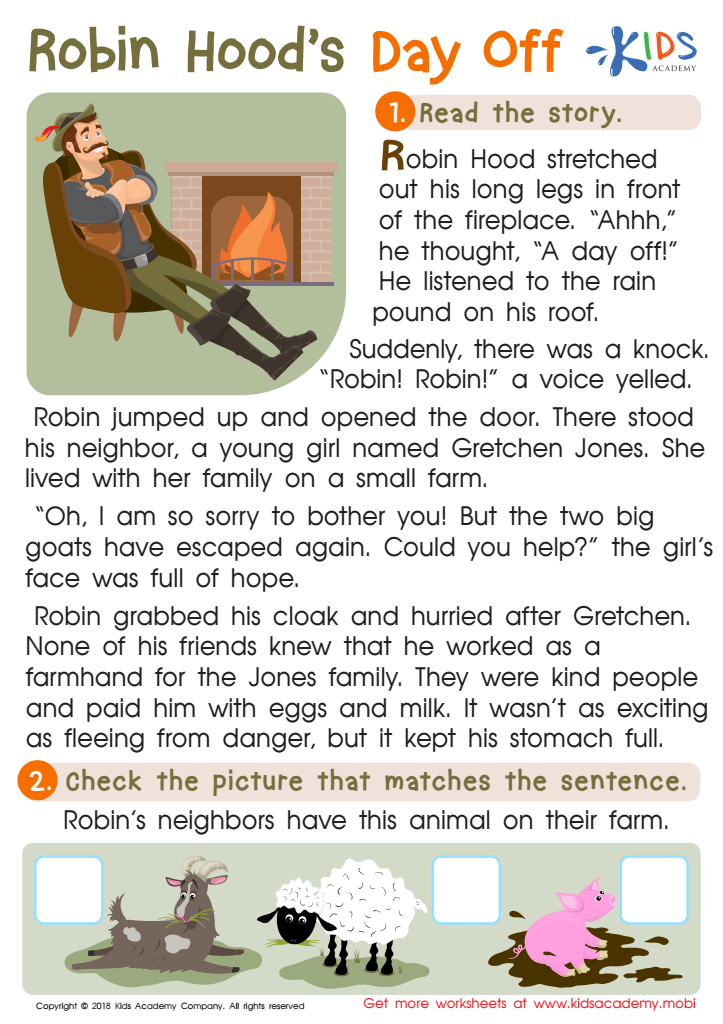
Robin Hood's Day Off Worksheet
Encourage your child to express their personality by writing stories. Show them this worksheet's short story about Robin Hood and read it slowly and carefully. Read it again if needed and ask the question below the story. This will help your child use their knowledge to answer it.
Robin Hood's Day Off Worksheet
Worksheet
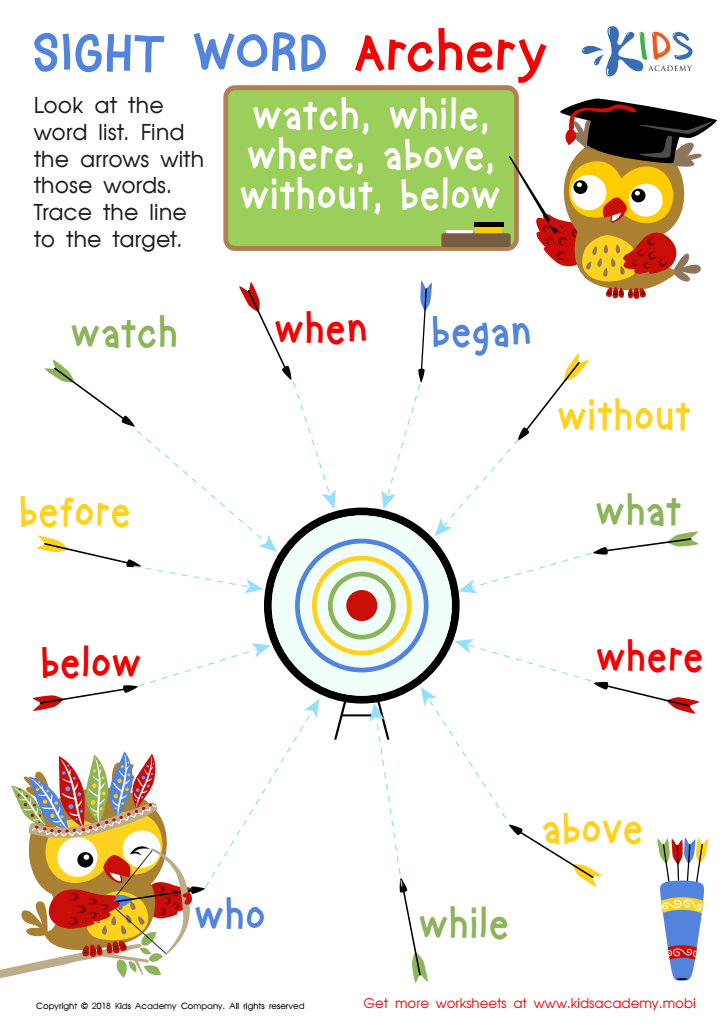
Sight Word Archery Worksheet
Read the words list with your kids, pointing at each one. Ask them to do the same. Help them find the arrows with those words and trace the line to the target in the centre.
Sight Word Archery Worksheet
Worksheet
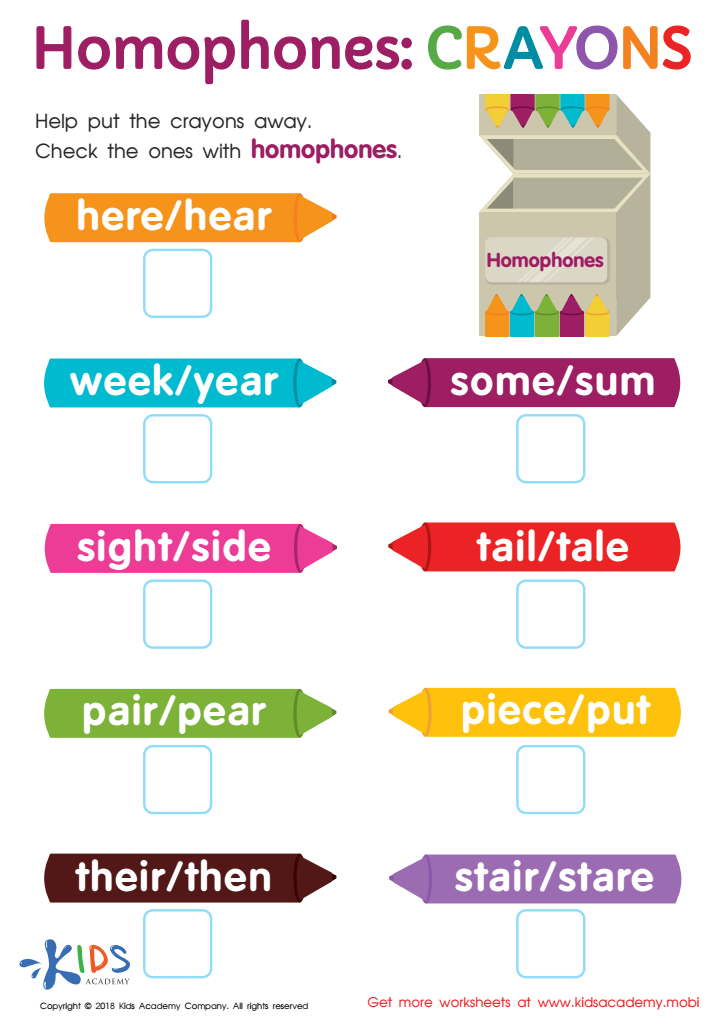
Homophones: Crayons Worksheet
Ask your kids: "What are homophones?" Explain that homophones are words that sound alike but have different meanings, like 'dare' and 'deer'. Ask them to identify homophones by putting the crayons in this printout away according to the words.
Homophones: Crayons Worksheet
Worksheet
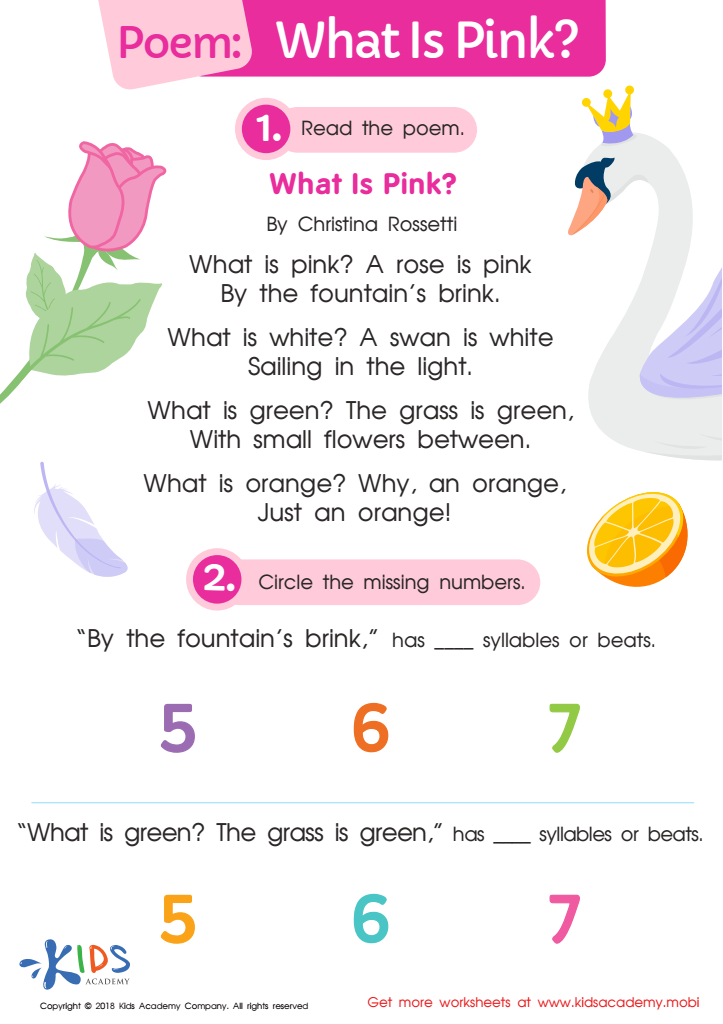
Poem: What Is Pink? Worksheet
Help your kids learn with short, fun, interesting poems! Read it aloud to them and point out the rhyme patterns. Have them circle the missing numbers to answer two questions. Show examples of objects with the colors in the poem. This will help them learn to read, and also understand colors better.
Poem: What Is Pink? Worksheet
Worksheet
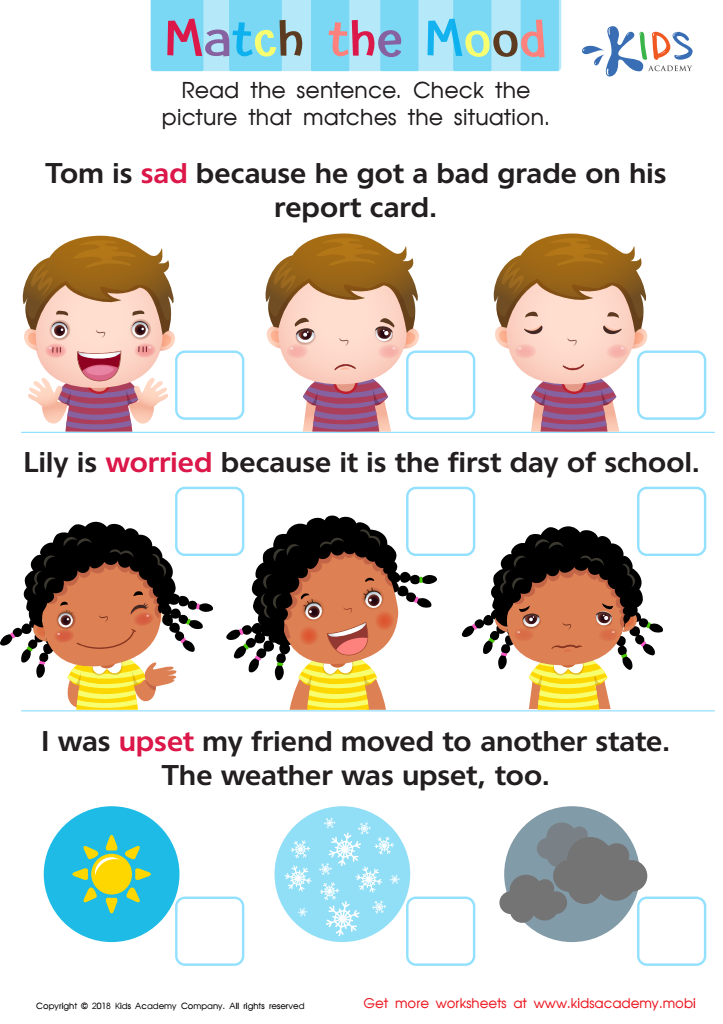
Match The Mood Worksheet
Ask your kid what kind of moods they usually experience; e.g. sad, happy, hurt or worried. Read aloud the sentences in the worksheet and help them match the situation to the picture. Max 80 words.
Match The Mood Worksheet
Worksheet
Join Kids Academy for Free
Who is primarily going to use this learning content?